
In renewable energy IoT deployments, touch interfaces often sit near inverters, battery systems, HVAC controllers, and outdoor enclosures where environmental stress quietly changes sensor behavior.
For technical evaluators, capacitive touch sensitivity tuning drift is not a cosmetic UI issue. It affects false triggers, missed touches, maintenance costs, and device trust.
The practical answer is simple: drift happens when the sensor baseline changes faster, longer, or less predictably than the controller can compensate.
What evaluators should understand first
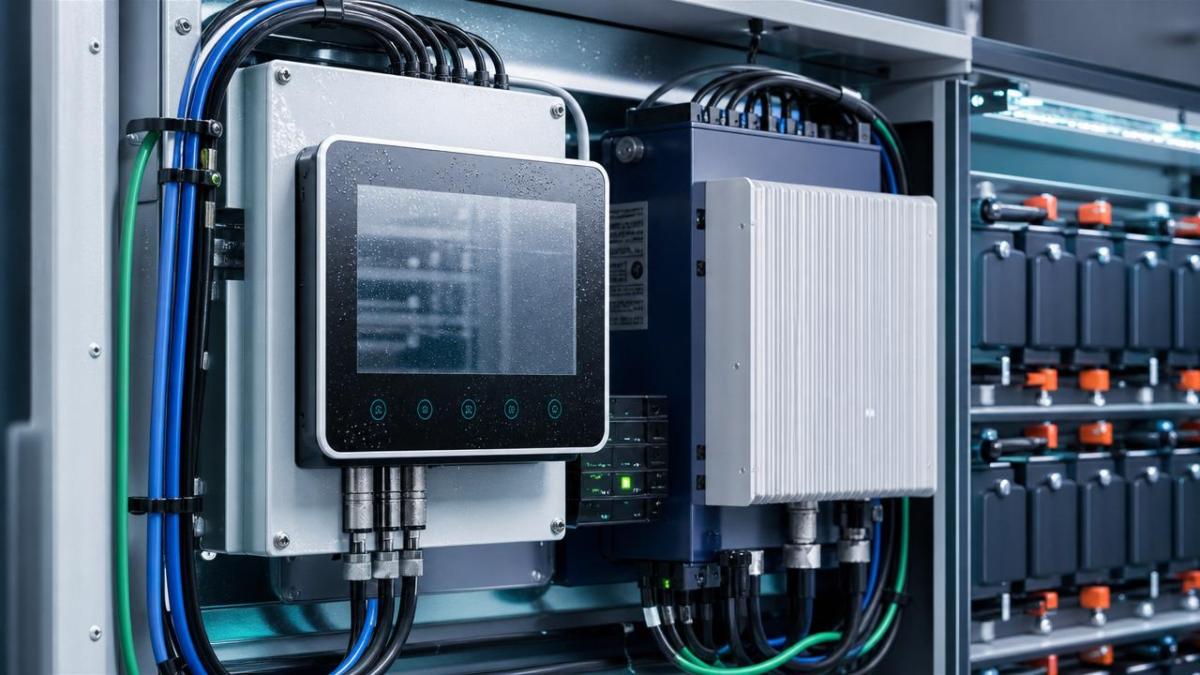
A capacitive touch button measures small changes in electric field coupling between an electrode, surrounding materials, ground reference, and the user’s finger.
Sensitivity tuning defines how much change is required before firmware decides that a valid touch event has occurred.
Drift begins when the “untouched” reference condition is no longer stable, even though nobody has physically changed the product interface.
In lab conditions, the baseline may appear clean. In renewable energy systems, the same interface can face heat, humidity, inverter noise, and unstable grounding.
This is why a touch panel that passes a short bench test may become unreliable after weeks inside an energy storage cabinet.
The main reason sensitivity tuning drifts
The dominant cause is baseline shift. The controller continuously estimates the normal capacitance level and compares future readings against that reference.
When temperature, moisture, enclosure material, or electrical noise changes the normal level, the threshold may become too close or too far away.
If the threshold becomes too close, the device may trigger without a finger. If it becomes too far, genuine touches may be ignored.
Capacitive touch sensitivity tuning is therefore a balance between responsiveness and immunity, not a single fixed setting that remains perfect forever.
Good engineering assumes the baseline will move. Poor engineering assumes the installation environment will behave like a clean evaluation board.
Temperature changes can move the electrical baseline
Renewable energy devices often operate near power electronics, sealed enclosures, sun-exposed walls, or battery packs with changing thermal loads.
Temperature affects dielectric constants, PCB leakage paths, sensor IC characteristics, overlay materials, adhesives, and even the mechanical spacing around electrodes.
Small changes may be harmless individually. Combined over a daily thermal cycle, they can shift capacitance enough to disturb touch thresholds.
A common failure pattern is acceptable behavior at room temperature, followed by missed touches during cold starts or false triggers during hot soak.
Technical evaluators should request test data across realistic temperature ramps, not only static high and low temperature points.
Humidity and condensation are major drift accelerators
Humidity is especially important for outdoor solar gateways, heat pump controllers, EV charging interfaces, and battery energy storage monitoring panels.
Moisture changes surface conductivity and dielectric behavior, creating a slow capacitance shift that firmware may mistake for environmental background.
Condensation is worse because water films can bridge surfaces, reduce insulation resistance, and create unstable coupling paths near the electrode.
After repeated wet-dry cycles, residues from dust, salt, cleaning agents, or industrial pollution may leave conductive contamination on overlays.
This is why IP rating alone does not prove touch reliability. Water ingress protection and capacitive stability are related but not identical.
EMI from inverters and power electronics can imitate touch signals
Renewable energy systems are electrically noisy. Solar inverters, DC-DC converters, contactors, motors, and battery management systems generate switching noise.
This noise can couple into touch electrodes, sensor traces, flex cables, ground planes, or the user’s body during interaction.
When noise amplitude or frequency overlaps the sensing method, the controller may see unstable readings that look like rapid capacitance changes.
The result may be intermittent false touches, delayed response, or lockout behavior when the firmware rejects noisy samples too aggressively.
Evaluators should verify performance during real switching events, including inverter ramp-up, load shedding, relay operation, and wireless transmission bursts.
Grounding shifts make field behavior different from bench behavior
Capacitive sensing depends on a reference system. In the field, grounding quality often differs from the designer’s assumptions.
A device may be floating, earth-referenced, mounted on metal, installed near conductive frames, or connected through long cables to other equipment.
Each installation changes parasitic capacitance and return paths, which can alter both raw sensor counts and user coupling strength.
This is especially relevant for wall controllers, smart breakers, cabinet HMIs, and access panels installed across different building topologies.
A robust design should tolerate reasonable grounding variation without requiring a firmware retune for every deployment site.
Mechanical design and materials can create slow drift
The overlay is not passive. Glass, plastic, paint, adhesive, air gaps, gaskets, and protective films all affect capacitive coupling.
Material aging can change thickness, dielectric properties, compression, and adhesion, particularly under heat, ultraviolet exposure, or chemical cleaning.
If an air gap appears between the electrode and overlay, sensitivity may fall. If moisture fills the gap, sensitivity may increase unpredictably.
Touch tuning performed on early prototypes may not represent mass production units when adhesives, tolerances, or coating suppliers change.
For technical evaluation, mechanical stack-up control is as important as the sensor IC selection.
Firmware compensation can help, but it can also hide problems
Modern capacitive controllers use baseline tracking, filtering, debounce logic, automatic calibration, and environmental compensation to maintain stable operation.
These tools are necessary, but they are not magic. Overactive compensation can slowly recalibrate a real finger as background.
Underactive compensation can preserve an outdated baseline until the threshold becomes unusable after environmental change.
Good firmware distinguishes between slow environmental drift, fast touch events, electrical noise, and abnormal stuck-key conditions.
Evaluators should ask suppliers how baseline tracking behaves during long contact, water presence, EMI bursts, and rapid temperature transitions.
Why short qualification tests miss the problem
Capacitive drift is often time-dependent. A thirty-minute functional test rarely reveals failures caused by thermal cycling, absorption, contamination, or aging.
Devices can appear stable immediately after production because materials are clean, dry, new, and tested under controlled factory conditions.
After installation, the same product may experience enclosure heat, rain exposure, dust, static discharge, and noisy load conditions.
Another issue is sample bias. Golden samples may receive better assembly control than normal production lots.
NHI-style evaluation should prioritize repeatable datasets from multiple units, multiple lots, and realistic system-level stress conditions.
How to evaluate capacitive touch sensitivity tuning properly
Start with raw count visibility. A supplier should provide access to baseline counts, delta counts, thresholds, noise levels, and recalibration events.
Without raw data, evaluators can only observe symptoms. With raw data, they can understand margins before the interface fails.
Test across temperature ramps, humidity exposure, condensation recovery, ESD events, conducted noise, radiated noise, and grounding variations.
Include wet-finger, gloved-finger, dry-finger, and no-touch conditions, because renewable energy interfaces serve technicians in varied field environments.
Record false trigger rate, missed touch rate, response latency, recovery time, and threshold margin after each stress phase.
What good tuning looks like in field-ready hardware
A well-tuned system maintains adequate signal-to-noise ratio without making the interface so sensitive that every disturbance becomes a touch.
It should recover gracefully after condensation, reject short noise spikes, and avoid permanent lockout after a prolonged environmental shift.
It should also support production calibration limits, so manufacturing variance does not consume the entire sensitivity margin.
For outdoor or industrial renewable energy products, guard traces, proper shielding, controlled routing, and stable grounding strategy are usually necessary.
The best designs combine hardware margin, mechanical consistency, and transparent firmware behavior instead of relying on one aggressive software filter.
Questions technical evaluators should ask suppliers
Ask whether capacitive touch sensitivity tuning was validated on final mechanical tooling, final overlay materials, and production-intent PCB layouts.
Ask for raw capacitance drift data under temperature and humidity cycling, not just a pass-or-fail functional checklist.
Ask how the product behaves near inverters, relays, wireless modules, and battery management communication lines during actual system operation.
Ask whether the design supports field firmware updates, adjustable thresholds, diagnostic logs, and failure flags for stuck or unstable channels.
Finally, ask what the false-touch and missed-touch rates are over time, across units, and under combined environmental stress.
When drift becomes a business risk
For energy products, an unreliable touch interface can trigger truck rolls, warranty claims, user mistrust, and unnecessary replacement of working devices.
False input on a thermostat, inverter gateway, or storage controller may also create energy inefficiency or operational confusion.
In commercial buildings, repeated interface failures can damage confidence in the entire smart energy management system.
The cost of better validation is usually lower than the cost of diagnosing intermittent failures after installation.
This is why capacitive touch reliability belongs in procurement scoring, not only in late-stage UI testing.
Conclusion: drift is predictable when the right data is measured
Capacitive touch sensitivity tuning drifts because the sensing environment changes: temperature, humidity, EMI, grounding, materials, and aging all shift baselines.
The strongest products do not claim immunity in vague terms. They demonstrate margin through raw data, stress testing, and stable recovery behavior.
For technical evaluators in renewable energy IoT, the key is to test the interface as part of the real electrical and mechanical system.
If a supplier can explain drift mechanisms, provide evidence, and show repeatable performance, the design is more likely to survive deployment.
If the answer is only “our touch is sensitive,” the evaluation is incomplete. Sensitivity matters, but controlled stability matters more.