
Synthesizers OEM Manufacturing: PCBA, Firmware, and Testing Requirements
author
Synthesizers OEM Manufacturing Is Moving Toward Measurable Engineering Proof
For technical evaluation, synthesizers OEM capability is no longer defined by brochure claims or generic factory capacity.
In renewable-energy control systems, measurable PCBA quality, firmware stability, and production testing now decide long-term field reliability.
Solar inverters, wind monitoring nodes, smart meters, and storage controllers depend on stable timing, low noise, and predictable protocol behavior.
A synthesizers OEM partner must therefore prove performance through traceable data, not attractive claims about integration or scalability.
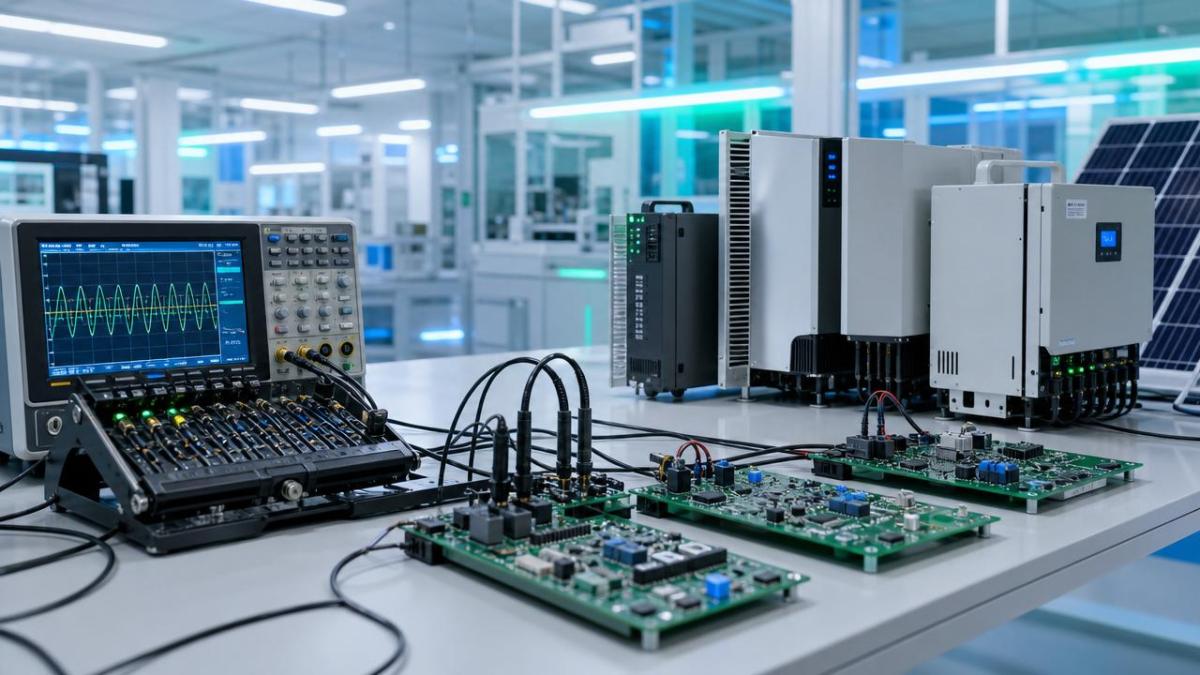
The strongest suppliers show discipline at PCB layout, SMT placement, MCU firmware validation, RF shielding, and final test automation.
This shift reflects a broader renewable-energy trend: connected power infrastructure is becoming more data-driven, distributed, and compliance-sensitive.
Why Renewable-Energy Systems Are Raising Synthesizers OEM Requirements
Renewable-energy deployments are no longer isolated electrical assets. They are connected devices within smart-grid and IoT ecosystems.
That change increases dependence on timing accuracy, clean signal generation, stable communications, and resilient embedded software.
A synthesizers OEM project may support clock generation, RF transmission, test instrumentation, grid-synchronization equipment, or control electronics.
When these assemblies operate near inverters, converters, relays, and high-current paths, noise margins can collapse quickly.
This is why PCBA process control has become a strategic requirement, not only a production detail.
- Higher inverter switching frequencies create tougher EMI and grounding conditions.
- Distributed energy resources require stable communication across gateways and sensors.
- Battery systems demand low standby consumption and predictable wake-up behavior.
- Smart-grid compliance increases documentation and traceability expectations.
- Remote assets make field failure expensive and difficult to diagnose.
These factors push synthesizers OEM manufacturing toward quantified validation across hardware, firmware, and test coverage.
PCBA Quality Is Becoming the First Reliability Signal
For synthesizers OEM programs, PCBA quality begins before components reach the SMT line.
Design-for-manufacturing review should examine impedance paths, ground strategy, crystal placement, shielding zones, and thermal behavior.
Renewable-energy environments often combine vibration, temperature cycling, electrical noise, and long operating hours.
A weak solder joint or unstable reference oscillator can become a system-level failure months later.
High-quality synthesizers OEM manufacturing should verify solder paste height, placement accuracy, reflow profile control, and X-ray inspection results.
For mixed-signal boards, inspection must also cover analog routing, isolation gaps, via quality, and connector retention strength.
A capable synthesizers OEM factory treats these records as standard operating data, not optional paperwork.
Firmware Stability Now Defines Manufacturing Maturity
Firmware is where many synthesizers OEM risks become visible after shipment.
A board can pass electrical inspection but still fail through timing errors, memory leaks, or unstable communication handling.
Renewable-energy devices frequently operate unattended, making firmware recovery behavior extremely important.
Watchdog logic, safe bootloaders, rollback protection, and fault logging should be validated before mass production.
For connected control nodes, synthesizers OEM firmware should also support secure updates and version traceability.
Protocol stacks may include UART, SPI, I2C, CAN, Modbus, BLE, Wi-Fi, Thread, or Ethernet gateways.
Each interface must be tested under noise, packet loss, reset cycles, and boundary-value conditions.
- MCU clock configuration must match oscillator tolerance and temperature range.
- Nonvolatile memory writes should avoid excessive wear.
- Firmware updates should prevent bricking after power interruption.
- Error logs should capture resets, communication faults, and calibration drift.
- Security keys should be injected through controlled, auditable processes.
Strong synthesizers OEM engineering links firmware releases to BOM versions, test scripts, and production batches.
Production Testing Is Shifting From Sampling to Data Coverage
Traditional sample inspection is no longer enough for critical renewable-energy electronics.
A modern synthesizers OEM line should generate unit-level test records for every finished assembly.
Functional testing should verify output frequency, phase noise indicators, signal amplitude, current draw, and communication response.
Where relevant, RF or clock performance must be tested across defined operating modes, not only default startup settings.
Burn-in testing is especially valuable for identifying weak solder joints, marginal oscillators, and unstable regulators.
Temperature cycling can reveal intermittent failures hidden during room-temperature inspection.
A serious synthesizers OEM supplier should provide test-limit logic, calibration frequency, and failure-disposition procedures.
Compliance and Traceability Are Becoming Commercial Differentiators
Renewable-energy projects increasingly require documentation that connects design intent with production reality.
For synthesizers OEM programs, this includes BOM control, approved vendor lists, change notices, and material declarations.
RoHS, REACH, EMC, safety, and radio certification requirements may apply depending on the finished device.
Even when certification belongs to the final product, factory records influence approval speed and audit confidence.
Component substitution is a major hidden risk in synthesizers OEM manufacturing.
A substitute capacitor, regulator, oscillator, or RF component can change noise performance or temperature stability.
Therefore, engineering change control should require technical review before any alternate part enters production.
- BOM revision history must be clear and accessible.
- Critical components should have approved alternates only after validation.
- Serial numbers should link boards to firmware, test data, and material lots.
- Failure analysis should include photos, measurements, and corrective actions.
- Packaging should protect against ESD, moisture, vibration, and mishandling.
This data-driven approach aligns with the engineering transparency expected across advanced smart-energy supply chains.
Business Impact: Faster Scaling, Fewer Field Surprises
The impact of better synthesizers OEM discipline reaches beyond the factory floor.
Reliable PCBA and firmware practices shorten debug cycles, reduce warranty exposure, and improve deployment predictability.
For renewable-energy platforms, predictable electronics help maintain uptime in harsh and remote installations.
Stable modules also support more accurate data collection for power forecasting, load balancing, and equipment maintenance.
Poor synthesizers OEM control has the opposite effect. Problems often appear as unexplained resets, drift, noise, or network instability.
Those symptoms can be misdiagnosed as software, cloud, or installation issues, delaying root-cause discovery.
The market direction is clear: engineering evidence is becoming part of commercial value.
Key Priorities for Evaluating a Synthesizers OEM Partner
Evaluation should focus on repeatable capability, not isolated sample quality.
A polished prototype means little if production controls cannot maintain the same electrical behavior.
- Review PCBA process data, including AOI, ICT, X-ray, and reflow records.
- Confirm firmware version control, bootloader protection, and update validation.
- Request unit-level functional test logs with clear pass-fail thresholds.
- Check calibration methods for instruments, fixtures, and reference equipment.
- Validate traceability from components to finished serialized boards.
- Audit engineering change control before accepting alternate components.
- Assess environmental testing for temperature, humidity, vibration, and EMI exposure.
The best synthesizers OEM conversations are specific, measurable, and connected to operating conditions.
Questions should lead to evidence: test reports, fixtures, limits, logs, revisions, and corrective-action records.
Practical Next Steps for Lower-Risk Manufacturing Decisions
The next phase of synthesizers OEM selection should begin with a technical evidence package.
This package should define performance limits, firmware behavior, environmental conditions, and required test coverage.
NexusHome Intelligence views this shift as part of a larger move toward transparent, benchmarked connected hardware.
In smart-energy ecosystems, trust is earned through data, protocol discipline, and stress-tested engineering integrity.
Before approving a synthesizers OEM program, request measurable PCBA records, firmware validation logs, and full production test evidence.
Use those records to compare suppliers, identify risk early, and build renewable-energy devices that perform consistently in the field.
Protocol_Architect
Dr. Thorne is a leading architect in IoT mesh protocols with 15+ years at NexusHome Intelligence. His research specializes in high-availability systems and sub-GHz propagation modeling.
Related Recommendations
- NHI Data Lab (Official Account)How Customizable IoT Components Enable Scalable Solar and Energy Monitoring Systems
- NHI Data Lab (Official Account)Hardware Benchmarking for Vibration Testing: Metrics for Comparing Test Systems
- NHI Data Lab (Official Account)IoT Sourcing Guide for Distributors: Vet Suppliers, Certifications, and Supply Risk
- NHI Data Lab (Official Account)How to Evaluate a CNC Automation Manufacturer for Custom Production Lines
- NHI Data Lab (Official Account)Interactive Brokers Adds Bucharest Exchange Trading Access
- NHI Data Lab (Official Account)How to Plan RoHS Compliance for Commercial IoT Devices Before Mass Production
- NHI Data Lab (Official Account)How to Assess Supplier Capability in Southeast Asia for Renewable Energy Projects
- NHI Data Lab (Official Account)How Surface Mount PCB Assembly Improves Reliability in Renewable Energy Devices
- NHI Data Lab (Official Account)Sensor Surge Extends South China PCBA Lead Times
- NHI Data Lab (Official Account)SLA 3D Printing China: How to Evaluate Quality, Lead Time, and Export Support
Analyst