
Japan Cancels WF6 Shutdown, Easing PCBA Supply Stress
author
On June 18, 2026, a planned permanent shutdown of tungsten hexafluoride (WF6) production in Japan was withdrawn after negotiations related to Chinese tungsten powder export controls made progress. For companies involved in advanced PCBA etching and CVD processes, this is not just a supply update but a trade-and-rule signal that can affect sourcing stability, delivery planning, and quality consistency for precision IoT modules such as smart locks, biometric sensors, and Vision AI cameras.
What has been confirmed so far
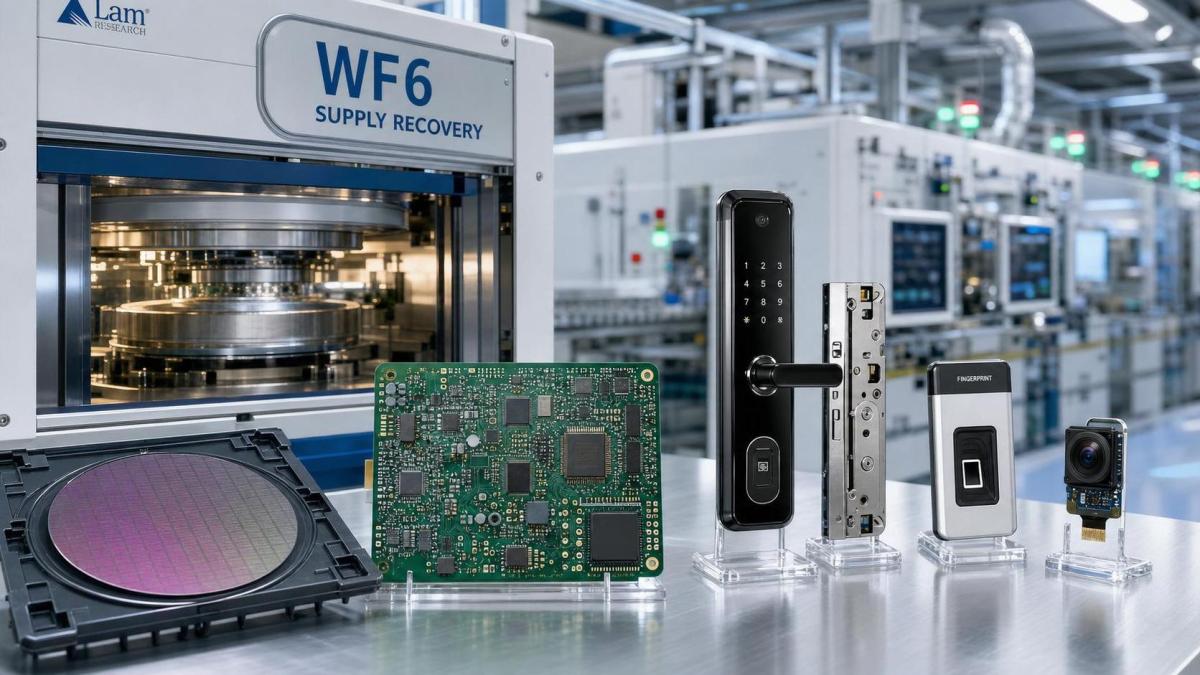
The confirmed facts are limited and clear. A permanent WF6 production shutdown previously scheduled for July 1, 2026 by Kanto Denka and Central Glass in Japan has been canceled. The stated reason is a breakthrough in negotiations connected to Chinese tungsten powder export controls. WF6 is a key precursor used in high-end PCBA etching and CVD processes, and its supply stability directly affects yield and delivery timing for high-precision IoT modules including smart locks, biometric sensors, and Vision AI cameras.
Why the rule signal matters across the chain
For material sourcing and procurement teams
These teams may be affected because WF6 availability is closely tied to upstream trade conditions and export-control discussions. The immediate business impact is likely to fall on purchase scheduling, supplier communication, and delivery risk assessment. From an industry perspective, what deserves closer attention is whether procurement files, supplier confirmations, and future allocation terms begin to reflect a more stable supply expectation or remain cautious.
For PCBA processors and module manufacturers
Manufacturers using WF6 in etching or CVD-related steps may see short-term pressure ease in production planning. The most relevant business links are process continuity, yield management, and shipment commitments for precision devices. Analysis shows these companies should pay attention to whether internal qualification records, process documents, and customer delivery commitments need adjustment as the supply outlook changes, while avoiding the assumption that one canceled shutdown fully removes supply risk.
For buyers and downstream device brands
Buyers of smart locks, biometric sensing products, and Vision AI camera modules may be affected through lead-time expectations and quality consistency. The impact is less about direct trade handling and more about order planning, approved supplier coordination, and delivery assurance. Observably, procurement and quality teams should watch for updates in supplier notices, technical documentation, and any contract language tied to component availability or production continuity.
For supply-chain service and compliance functions
Logistics, trade compliance, and supply-chain support teams may not consume WF6 directly, but they still need to track the implications of export-control negotiations and any resulting changes in transaction documentation or risk review. The practical focus is on document consistency, origin-related records where relevant, and communication alignment between suppliers and customers. It is more appropriate to understand this as a signal to keep compliance review active rather than as evidence that all trade constraints have been resolved.
What companies should track next
Watch the wording of follow-up notices
The cancellation of the shutdown changes the immediate expectation, but the input does not provide detailed execution terms. Analysis shows companies should monitor how future official or supplier statements describe continuity, timing, and any conditions attached to supply.
Recheck supplier qualification and technical files
Where WF6 supply stability affects process yield or delivery commitments, businesses should review supplier qualification status, technical documents, and customer-facing records to ensure they still match current operating assumptions. This is especially relevant where high-precision IoT modules depend on tightly controlled production steps.
Adjust purchasing and delivery planning carefully
Observably, procurement and operations teams may need to revisit near-term purchase plans and shipment coordination, but the available facts do not justify treating the market as fully normalized. A cautious planning approach remains more appropriate than an aggressive reset of sourcing strategy.
Keep traceability and after-sales readiness aligned
Where delivery timing or yield has customer implications, companies should make sure traceability records, quality documentation, and after-sales communication remain consistent with any changes in production scheduling or material availability. This is a practical compliance step even when no new certification requirement has been confirmed.
How this should be interpreted at this stage
From an industry perspective, this development is best read as an execution signal rather than a final policy conclusion. It indicates that trade-control negotiations can quickly reshape material availability for specialized semiconductor and PCBA processes. At the same time, the current information does not establish a broader regulatory settlement, a permanent easing of all constraints, or a complete return to normal procurement conditions. Continued attention to market feedback, supplier practice, and future rule wording remains necessary.
A measured reading for the market
The cancellation of the WF6 shutdown reduces immediate pressure on parts of the semiconductor PCBA supply chain, particularly where precision etching and CVD inputs affect yield and delivery. Still, the more balanced interpretation is that this is a near-term easing tied to a trade-control negotiation breakthrough, not a confirmed end to compliance or supply-chain uncertainty. For industry participants, the most practical response is to treat this as a meaningful but still evolving signal.
Basis of this article and what still needs verification
This article is based on the user-provided news title, event date, and event summary. For developments of this kind, commonly relevant source types include official announcements, regulator releases, customs or trade authority information, industry association updates, standards-related documents, and reporting by authoritative media. No specific official source link was provided in the input, so the underlying official references still require ongoing verification. What still needs to be watched includes later policy detail, implementation wording, certification or compliance interpretation, tender-document changes, industry feedback, and how companies actually execute procurement and delivery adjustments.
Protocol_Architect
Dr. Thorne is a leading architect in IoT mesh protocols with 15+ years at NexusHome Intelligence. His research specializes in high-availability systems and sub-GHz propagation modeling.
Related Recommendations
- NHI Data Lab (Official Account)How Customizable IoT Components Enable Scalable Solar and Energy Monitoring Systems
- NHI Data Lab (Official Account)Hardware Benchmarking for Vibration Testing: Metrics for Comparing Test Systems
- NHI Data Lab (Official Account)IoT Sourcing Guide for Distributors: Vet Suppliers, Certifications, and Supply Risk
- NHI Data Lab (Official Account)How to Evaluate a CNC Automation Manufacturer for Custom Production Lines
- NHI Data Lab (Official Account)Interactive Brokers Adds Bucharest Exchange Trading Access
- NHI Data Lab (Official Account)How to Plan RoHS Compliance for Commercial IoT Devices Before Mass Production
- NHI Data Lab (Official Account)How to Assess Supplier Capability in Southeast Asia for Renewable Energy Projects
- NHI Data Lab (Official Account)How Surface Mount PCB Assembly Improves Reliability in Renewable Energy Devices
- NHI Data Lab (Official Account)Sensor Surge Extends South China PCBA Lead Times
- NHI Data Lab (Official Account)SLA 3D Printing China: How to Evaluate Quality, Lead Time, and Export Support
Analyst