
Where Smart Home Micro-Sensors Create Hidden Costs
author
Smart home micro-sensors often promise efficiency, yet hidden costs emerge through battery drain, protocol latency, and compliance gaps. For buyers, operators, and decision-makers navigating the IoT supply chain, NexusHome Intelligence delivers IoT hardware benchmarking, Matter protocol data, and smart home hardware testing that expose real performance behind marketing claims and support trusted sourcing decisions.
Why do micro-sensors create hidden costs in renewable energy smart environments?
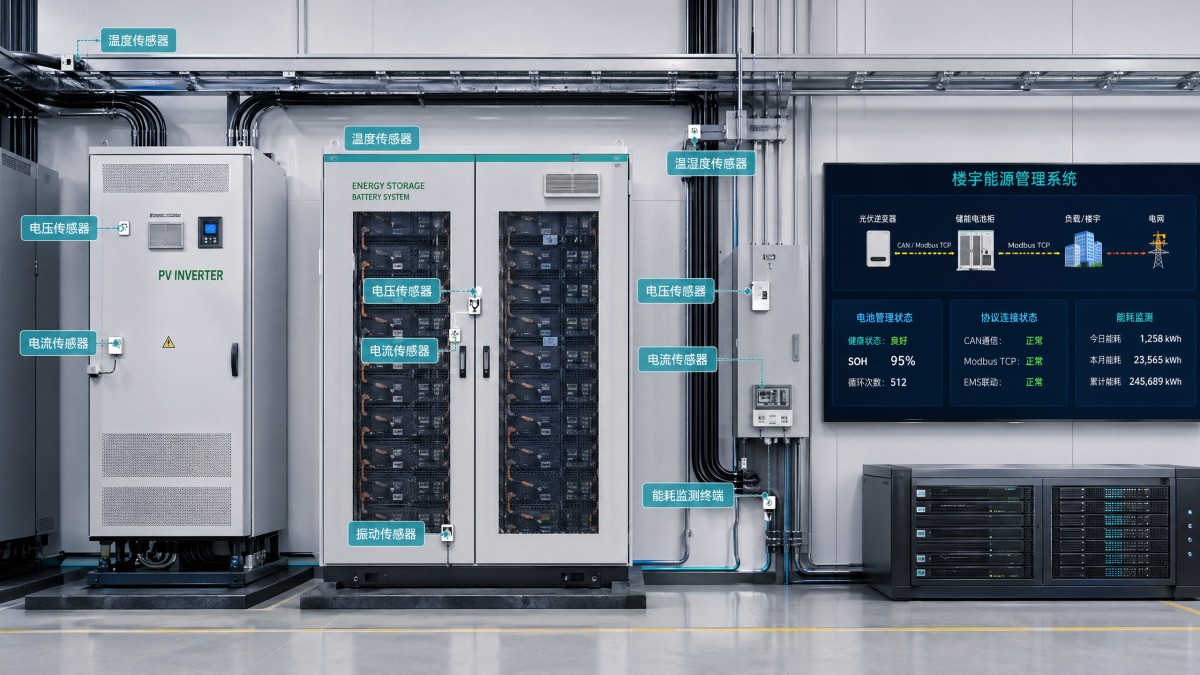
In renewable energy projects, smart home micro-sensors are no longer limited to comfort automation. They now sit inside distributed energy systems, battery storage rooms, HVAC optimization loops, and building-level load balancing networks. A temperature, occupancy, current, vibration, or humidity sensor that looks inexpensive on a unit-price sheet can become costly once it interacts with gateways, inverters, relays, meters, and cloud dashboards across a 24/7 operating cycle.
The hidden cost usually appears in four layers. First comes power consumption drift, especially when “ultra-low power” claims are measured only in idle mode rather than in real polling intervals such as every 30 seconds or every 5 minutes. Second comes protocol friction across Zigbee, Thread, BLE, Wi-Fi, and Matter bridges. Third comes maintenance overhead when batteries fail earlier than planned. Fourth comes compliance and procurement rework when documentation is incomplete for commercial building or grid-adjacent deployment.
For renewable energy operators, these issues are not abstract. A sensor reporting slowly in a solar-plus-storage building may delay load-shedding logic. A drifting environmental sensor may distort HVAC optimization in a net-zero office. A battery-powered occupancy node that lasts 9 months instead of the expected 3–5 years can force site visits across dozens of properties. The purchase price remains visible; the operational cost grows in the background.
This is where NexusHome Intelligence (NHI) becomes relevant. NHI does not treat smart home hardware as lifestyle gadgets. It evaluates the supply chain through engineering data, protocol compliance, and stress testing. For procurement teams and enterprise decision-makers, that means moving from brochure language to measurable questions: latency in milliseconds, standby draw in microwatts, battery discharge behavior over months, and interoperability under interference.
The cost categories most buyers underestimate
Many sourcing teams compare suppliers by BOM cost, quoted lead time, and claimed compatibility. That is not enough in renewable energy applications where sensor data affects control quality, uptime, and energy efficiency. A better cost model should include installation, battery replacement frequency, network troubleshooting, firmware management, and compliance review.
- Battery service cost: replacing hundreds of coin-cell or micro-lithium units every 12–18 months can be far more expensive than paying more upfront for lower-draw hardware.
- Latency cost: delays of even 200–800 ms across multi-hop networks can reduce the responsiveness of demand-control actions in energy-aware buildings.
- Data quality cost: long-term drift in MEMS or environmental sensing can undermine HVAC tuning, peak-load shifting, and occupancy-based automation.
- Compliance cost: incomplete technical files can extend project approval, pilot validation, or supplier onboarding by 2–4 weeks.
When these categories are ignored, the result is usually the same: the cheapest sensor is not the lowest-cost deployment. In renewable energy buildings, hardware reliability and energy-aware control accuracy matter more than marketing labels.
Which technical factors matter most before you buy?
Procurement teams often ask which specification deserves the highest weight. In practice, three groups of metrics should be reviewed together: power behavior, protocol behavior, and hardware stability. If one of these three is weak, the total lifecycle cost rises. This is especially true for mixed smart building and renewable energy environments where sensors support both occupant comfort and energy control.
Power behavior is more than nominal battery capacity. Buyers should examine sleep current, wake current, reporting interval, retransmission rate, and operating temperature range. A device tested at 20°C in a quiet lab may behave very differently in utility closets, rooftop enclosures, or plant rooms where heat, metal shielding, and interference are common. In many projects, the useful benchmark window is 12–36 months, not a single-day datasheet snapshot.
Protocol behavior is equally important. “Works with Matter” is not enough for a commercial renewable energy deployment. Teams should look at commissioning consistency, multi-node hop latency, packet reliability in congested RF conditions, and bridge dependence. A sensor that appears stable in a one-room demo can become unreliable when scaled across 50, 200, or 500 nodes.
Hardware stability sits at the PCB and component level. NHI’s verification philosophy is valuable here because it connects surface claims to real engineering signals: SMT precision, battery discharge curves, sensor drift rate, and stress behavior. This is crucial for enterprises that source from multiple OEM/ODM factories and need supply chain transparency rather than polished sales wording.
A practical metric framework for smart home hardware testing
The table below summarizes the most useful evaluation dimensions for micro-sensors used in renewable energy smart buildings, community energy projects, or energy-aware homes with storage and electrified HVAC.
For procurement and operations teams, this framework helps separate attractive unit pricing from actual lifecycle value. It also aligns with NHI’s role as an engineering filter, translating hardware claims into measurable sourcing criteria.
Questions to ask suppliers in the first 7–10 days
- What is the reporting interval used for the advertised battery-life estimate, and is retransmission included?
- Has the sensor been tested in multi-hop mesh environments with interference from Wi-Fi, metal cabinets, or neighboring devices?
- What is the expected drift or recalibration cycle for temperature, humidity, motion, or current sensing functions?
- Can the supplier provide technical files relevant to commercial building, electrical safety, radio compliance, and data handling requirements?
A supplier that cannot answer these questions early often creates delays later. In B2B projects, uncertainty is a cost driver just like hardware failure.
How do hidden costs change across renewable energy use cases?
Not all micro-sensor deployments behave the same way. The hidden cost profile changes depending on whether the sensor supports room-level comfort, distributed energy control, or site-wide monitoring. A motion sensor used only for lighting scenes has a different risk pattern than a temperature or current sensor feeding energy optimization logic.
In residential solar-plus-storage homes, homeowners and installers often prioritize app compatibility and basic automation. Yet the hidden cost shows up when sensor polling increases to support battery dispatch, EV charging coordination, or heat-pump scheduling. More frequent reporting can compress battery life from several years to a much shorter service cycle, especially where gateways are poorly placed.
In commercial buildings pursuing decarbonization, the issue is less about convenience and more about data fidelity. Micro-sensors may support occupancy-based HVAC setbacks, room-level zoning, or load reduction during peak tariff windows. If protocol latency rises during busy hours or if environmental drift accumulates over 6–12 months, the building management logic becomes less accurate and the expected energy savings narrow.
In microgrid or community energy contexts, interoperability risk becomes even larger. Different vendors, gateways, and control layers may coexist. Here, a sensor that behaves well inside one ecosystem can create hidden integration costs when connected to broader energy monitoring or analytics tools. NHI’s cross-protocol benchmarking is especially useful in this type of fragmented environment.
Use-case comparison for cost exposure
The next table helps decision-makers compare where hidden costs usually emerge first, and which test focus should come before volume purchasing.
This comparison shows why a one-size-fits-all sourcing policy fails. The right sensor decision depends on the control role, maintenance model, and integration depth of the renewable energy project.
Three scenario signals that justify deeper benchmarking
- You plan to scale from a 10–20 node pilot to a 100+ node deployment and need confidence in mesh behavior.
- Your site combines energy automation, HVAC control, and occupancy analytics, which increases data dependency.
- You source from multiple factories or regions and need objective hardware benchmarking before vendor consolidation.
In each of these scenarios, benchmarking data reduces the chance of hidden downstream costs more effectively than broad compatibility claims.
What should procurement and compliance teams verify before approval?
Procurement mistakes often happen because technical review and commercial review are separated. A sourcing team may secure an attractive quote and acceptable lead time, while engineering later discovers protocol instability or documentation gaps. In renewable energy projects, this split can delay rollout, especially when hardware touches smart relays, meters, HVAC controllers, or energy dashboards connected to critical building functions.
A practical procurement process should include at least 4 steps: requirement mapping, lab validation, pilot deployment, and supplier approval. Requirement mapping defines the reporting interval, expected battery service window, gateway architecture, and environmental range. Lab validation tests interoperability and stress conditions. Pilot deployment checks performance on a real site for 2–6 weeks. Supplier approval confirms documentation, change control, and communication quality.
Compliance should also be viewed pragmatically. Requirements vary by market and application, but teams commonly need to review radio compliance, electrical safety relevance, data handling expectations, and building integration documentation. When sensors support energy or occupancy decisions in commercial spaces, traceable technical records matter. Missing files can slow internal sign-off even when hardware is physically available.
NHI’s data-driven model helps here because it connects hardware sourcing with evidence-based validation. Instead of approving products on presentation quality, procurement leaders can compare sensor categories through protocol measurements, battery behavior, and hardware integrity signals that are much closer to field reality.
Procurement checklist for B2B renewable energy projects
- Confirm whether the sensor participates in comfort-only automation or in energy-affecting control logic. The second case requires stricter latency and drift review.
- Request battery-life assumptions with reporting frequency, temperature conditions, and retransmission conditions clearly stated.
- Check protocol architecture: native Zigbee, Thread, BLE, Wi-Fi, or bridged Matter, and whether the bridge introduces a single point of failure.
- Verify firmware update pathway, failure recovery behavior, and expected support window for commercial deployment.
- Review technical documentation for procurement approval, site acceptance, and ongoing operator handover.
These checks are particularly important when delivery schedules are tight. A fast shipment without validation can create a slower project overall.
Common buying mistakes that increase total cost
One common mistake is selecting sensors solely by protocol logo. Another is assuming a battery estimate based on one transmission profile applies to all deployments. A third is skipping a 2–4 week field pilot because the sample appears stable on a bench. In renewable energy settings, small testing shortcuts often create larger service burdens later.
A better approach is to approve sensors only after they pass a defined matrix: reporting interval test, interference test, basic environmental tolerance check, and documentation review. This approach supports better budgeting, fewer maintenance surprises, and smoother enterprise-scale rollout.
FAQ: how should teams judge hidden cost risk before scaling?
The questions below reflect common concerns from information researchers, site operators, procurement teams, and enterprise decision-makers evaluating smart home hardware testing for renewable energy applications.
How do I know whether a micro-sensor is suitable for energy-related control rather than simple automation?
Start by defining the decision cycle it supports. If the sensor only triggers non-critical lighting or comfort scenes, moderate latency may be acceptable. If it influences HVAC setbacks, room occupancy energy logic, or load coordination with solar, storage, or EV charging, then response consistency matters more. In such cases, ask for latency behavior, reporting interval assumptions, and stability data over at least several weeks of pilot use.
What battery-life claim should procurement teams trust?
Trust a battery-life claim only when the supplier states the test conditions clearly. Useful context includes transmission interval, event frequency, temperature range, and whether retries were included. A “multi-year” claim without these details is hard to compare across suppliers. For renewable energy buildings, test profiles at 1-minute and 5-minute reporting intervals are often more meaningful than a best-case idle scenario.
Are Matter-compatible sensors always the safer long-term choice?
Not automatically. Matter can improve interoperability, but deployment quality still depends on Thread behavior, bridge design, firmware maturity, and real mesh performance. A Matter label does not remove hidden costs caused by latency, edge-case commissioning problems, or weak battery management. That is why NHI’s focus on measured protocol behavior is more useful than logo-based sourcing.
What is a reasonable pilot period before volume purchase?
For many B2B projects, 2–6 weeks is a practical pilot window. It is long enough to observe connectivity behavior, commissioning repeatability, and early battery or reporting anomalies under daily operating conditions. If the project includes mixed protocols, difficult RF conditions, or integration with energy dashboards, a longer pilot can be justified before scaling.
Why choose NHI when hidden costs are difficult to see?
NexusHome Intelligence is built for buyers and technical teams that need more than product claims. Its value lies in independent, data-driven verification across connectivity, security, energy and climate control, IoT hardware components, and smart wearable-adjacent sensing technologies. For renewable energy stakeholders, this means access to a clearer engineering picture before committing to procurement, integration, or multi-site rollout.
NHI is especially useful when your challenge involves fragmented protocols, uncertain hardware quality, or sourcing from multiple OEM/ODM channels. By focusing on measurable performance rather than generalized marketing language, NHI helps reduce the risk of battery underperformance, protocol instability, and documentation gaps that often surface only after installation.
If you are comparing micro-sensors for smart energy homes, commercial decarbonization projects, or building-level automation linked to solar, storage, and electrified HVAC, the most productive next step is a structured technical review. That review can cover 3 core areas: parameter confirmation, interoperability risk, and lifecycle maintenance assumptions. It can also identify where sample testing or pilot validation should happen before a purchase order is released.
Contact NHI if you need support with sensor parameter confirmation, product selection, delivery planning, custom benchmarking scope, compliance-oriented document review, sample evaluation, or quotation-stage comparison. For teams working under tight delivery windows or complex integration conditions, an evidence-based sourcing decision is often the fastest way to avoid slow and expensive surprises later.
Protocol_Architect
Dr. Thorne is a leading architect in IoT mesh protocols with 15+ years at NexusHome Intelligence. His research specializes in high-availability systems and sub-GHz propagation modeling.
Related Recommendations
- NHI Data Lab (Official Account)PCBA Lead Times Stretch as Micro-Sensor Orders Fill Through Q4 2026
- NHI Data Lab (Official Account)Custom Brass CNC Parts in Europe: Tolerance, Lead Time, and MOQ Factors to Compare
- NHI Data Lab (Official Account)High Accuracy MEMS Sensors: How to Evaluate Drift, Noise, and Stability
- NHI Data Lab (Official Account)MEMS Lead Times Top 26 Weeks as Medical IoT Gains Priority
- NHI Data Lab (Official Account)Micro-Sensor Lead Times Stretch as China Alternatives Gain Review
- NHI Data Lab (Official Account)China Tightens Export Checks on Micro-Battery Shipments
- NHI Data Lab (Official Account)China Tightens UN38.3 Filings for Micro-Sensor Exports
- NHI Data Lab (Official Account)IEEE P2952 Draft Passes Final Vote on Wake-Up Frames
- NHI Data Lab (Official Account)Sterling Silver Clasps Explained: Types, Sizes, and How to Match Them to Jewelry Designs
- NHI Data Lab (Official Account)Pakistan Waives Duty on Cancer Drug Inputs
Analyst