
China Tightens Export Checks on Micro-Battery Shipments
author
Effective June 20, 2026, China customs has tightened export transport compliance for low-capacity lithium manganese and lithium cobalt batteries used in Micro-Sensors, Medical IoT, Fitness Tracking Sensors, and similar miniature devices. The immediate change is not about battery chemistry alone, but about documentation depth: exporters must now provide complete original UN38.3 third-edition test data before shipment, which puts battery suppliers, device manufacturers, exporters, customs filing teams, and logistics service providers under closer procedural scrutiny.
What the new filing requirement explicitly changes
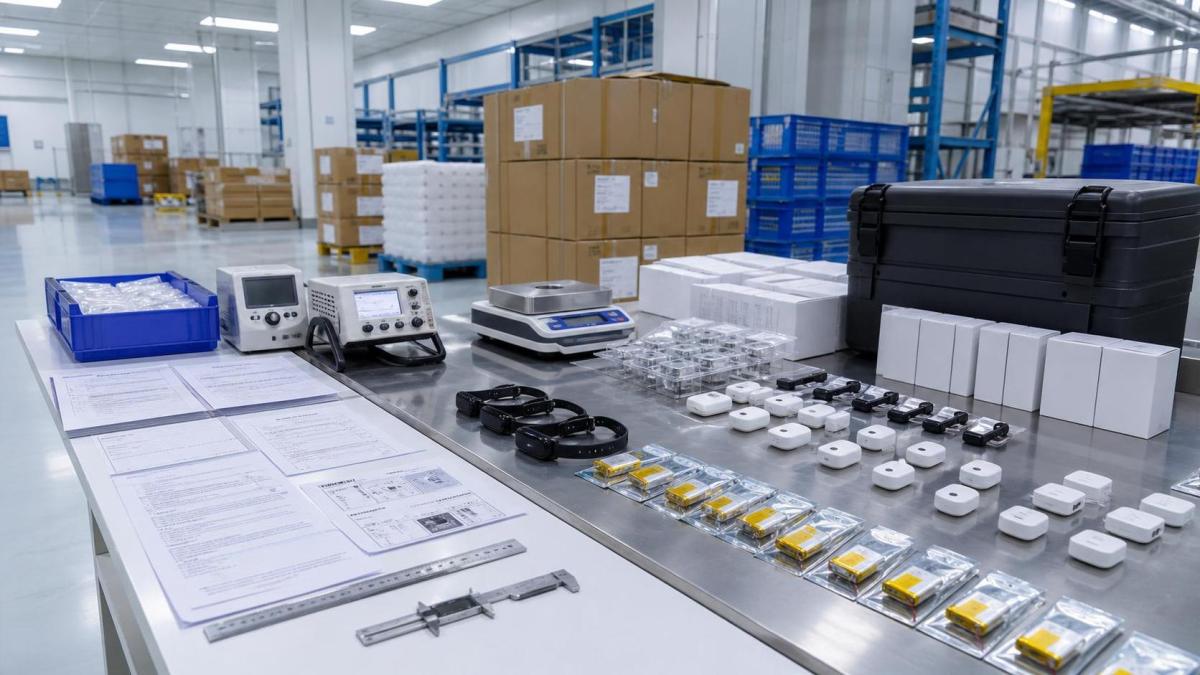
According to the information provided, on June 20, 2026, the Port Supervision Department of the General Administration of Customs of China issued an emergency notice on strengthening export transport compliance management for lithium battery cargoes. From that date, lithium manganese and lithium cobalt batteries with rated energy of 10Wh or below, when used in miniature equipment such as Micro-Sensors, Medical IoT, and Fitness Tracking Sensors, must be supported by the full set of original data from UN38.3 third-edition testing before export declaration.
The required materials include original records for all test items, specifically including altitude simulation, thermal cycling, vibration, and shock waveform data. The information provided also states that summary reports or CNAS certificates alone are no longer accepted for this purpose.
Where the operational impact is most likely to appear
Exporters and customs documentation teams face a higher evidence threshold
From an industry perspective, the most immediate impact is on the export filing stage. Companies that previously relied on summary test reports or certificate-based support may now need to reorganize document sets around original test records, which could affect declaration preparation, internal review, and submission timing.
Battery suppliers may come under closer document-delivery pressure
For upstream battery suppliers serving miniature-device applications, the likely pressure point is not only product compliance but document completeness. Analysis shows that customers may now ask for raw UN38.3 test records earlier in the transaction process, especially where shipments involve low-capacity cells that had been treated as routine from a paperwork perspective.
Device manufacturers using embedded micro-batteries may need to revisit shipment readiness
Manufacturers of Micro-Sensors, Medical IoT products, and fitness-tracking devices may be affected where batteries are integrated into final products but customs review focuses on the battery documentation itself. What deserves closer attention is whether internal shipping files, supplier handover packages, and customer delivery commitments remain aligned under the stricter submission standard.
Logistics and compliance service providers may need to adjust pre-check workflows
For freight, customs brokerage, and compliance support providers, the likely impact is procedural. Observably, shipments involving small lithium batteries may require earlier file verification and clearer communication on what counts as acceptable submission material, particularly because certificate-only support is no longer sufficient under the stated requirement.
What companies should watch now
Check whether raw UN38.3 records are already retrievable
The practical issue is whether the original data behind UN38.3 testing can be obtained in usable form, including the specified test records and waveform materials. Companies that cannot retrieve these files quickly may face friction at the export preparation stage.
Separate certificate possession from declaration readiness
Analysis shows that having a certificate is no longer the same as being ready for customs submission in this category. Businesses should distinguish between third-party proof of testing and the original underlying data now required for filing.
Review contracts and supplier handoff documents
What deserves closer attention is whether supply agreements, quality files, and delivery checklists clearly cover ownership, retention, and transfer of original test data. This is particularly relevant where battery makers, pack integrators, and finished-device exporters are different parties.
Prepare for customer and shipment-timing communication
Where export schedules are tight, companies may need to communicate earlier with buyers, logistics partners, and internal shipping teams about possible documentation bottlenecks. The immediate issue is less about market demand and more about whether supporting files are complete at the time of declaration.
Why this should be read as a compliance signal, not just a paperwork update
As an editorial observation, this development is more appropriately understood as a tightening of evidence standards in export transport compliance for a specific battery-use scenario, rather than a routine administrative adjustment. It does not by itself confirm broader policy expansion beyond the scope stated in the provided information, but it does indicate that small-format lithium battery shipments for miniature devices are receiving closer scrutiny at the documentation level.
Observably, the strongest signal here is procedural: summary-level proof is being treated as insufficient where customs now wants underlying test records. Whether this remains focused on the listed applications or evolves further is something the industry still needs to watch rather than assume.
How to interpret the development at this stage
At present, it is more appropriate to understand this as an immediately effective compliance change with direct operational consequences for export preparation, document management, and shipment coordination in the micro-device battery chain. The information provided supports a clear conclusion on stricter filing expectations, but not yet a broader conclusion on long-term market outcomes. For that reason, companies should treat the notice as both a near-term execution issue and a policy signal that warrants continued monitoring.
Basis of this article and what still needs verification
This article is based on the user-provided news title, execution date, and event summary. Typical source types relevant to this kind of development may include official customs notices, company compliance disclosures, industry association updates, authoritative media reports, and standard-related documents. No specific official source link was provided in the input, so the exact publication record and any later implementation clarifications still require ongoing verification. Follow-up attention should remain on any further official wording, filing practice updates, or scope clarifications related to affected battery categories and export procedures.
Protocol_Architect
Dr. Thorne is a leading architect in IoT mesh protocols with 15+ years at NexusHome Intelligence. His research specializes in high-availability systems and sub-GHz propagation modeling.
Related Recommendations
- NHI Data Lab (Official Account)PCBA Lead Times Stretch as Micro-Sensor Orders Fill Through Q4 2026
- NHI Data Lab (Official Account)Custom Brass CNC Parts in Europe: Tolerance, Lead Time, and MOQ Factors to Compare
- NHI Data Lab (Official Account)High Accuracy MEMS Sensors: How to Evaluate Drift, Noise, and Stability
- NHI Data Lab (Official Account)MEMS Lead Times Top 26 Weeks as Medical IoT Gains Priority
- NHI Data Lab (Official Account)Micro-Sensor Lead Times Stretch as China Alternatives Gain Review
- NHI Data Lab (Official Account)China Tightens Export Checks on Micro-Battery Shipments
- NHI Data Lab (Official Account)China Tightens UN38.3 Filings for Micro-Sensor Exports
- NHI Data Lab (Official Account)IEEE P2952 Draft Passes Final Vote on Wake-Up Frames
- NHI Data Lab (Official Account)Sterling Silver Clasps Explained: Types, Sizes, and How to Match Them to Jewelry Designs
- NHI Data Lab (Official Account)Pakistan Waives Duty on Cancer Drug Inputs
Analyst