
Vietnam Tightens Battery Clearance for Medical IoT
author
On July 11, 2026, Vietnam’s Ministry of Industry and Trade issued Circular 18/2026/TT-BCT, setting a new customs compliance condition for rechargeable lithium cells and battery packs used in imported Medical IoT devices. From October 1, 2026, clearance will require both an IEC 62133-2:2024 test report issued by a CNAS-accredited laboratory in China and a VINAQUATEST review confirmation from Vietnam. This is worth close attention because it directly affects import documentation, battery compliance review, procurement planning, and delivery readiness for companies moving Medical IoT products into the Vietnamese market.
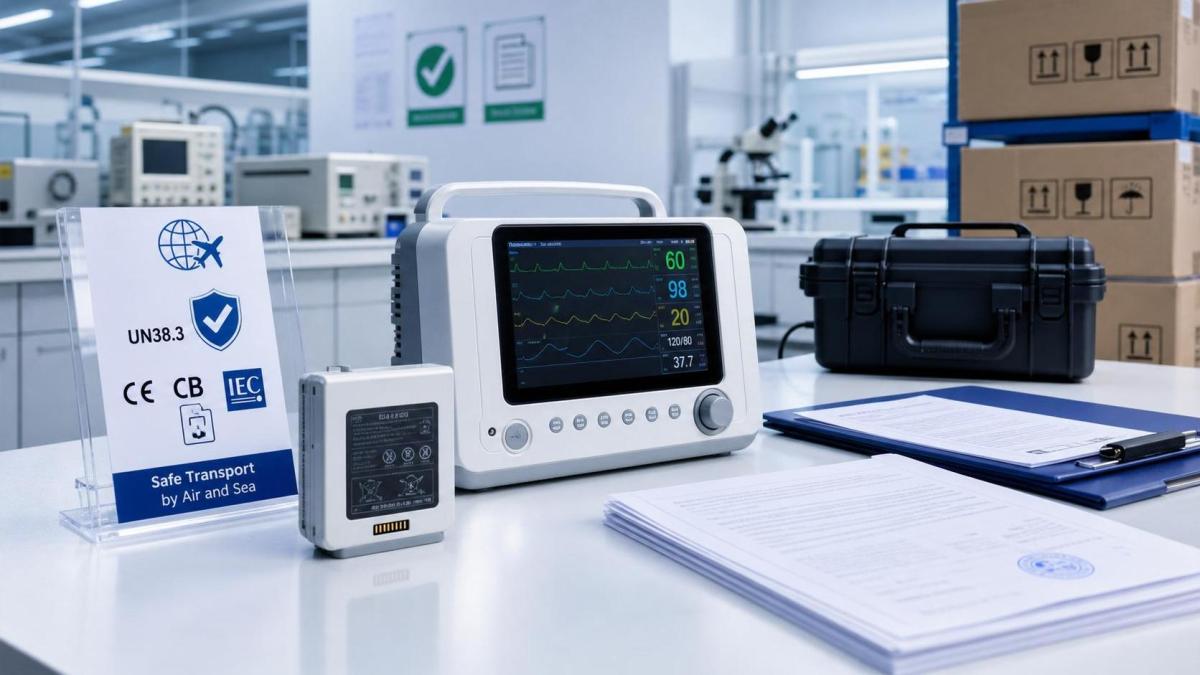
What the New Clearance Requirement Explicitly Says
The confirmed facts are limited but clear. Vietnam’s MOIT released Circular 18/2026/TT-BCT on July 11, 2026. The rule takes effect on October 1, 2026. It applies to rechargeable lithium cells and battery packs used in imported Medical IoT equipment. For customs clearance, importers must provide two items at the same time: an IEC 62133-2:2024 test report issued by a CNAS-recognized laboratory in China, and a review confirmation letter issued by Vietnam’s VINAQUATEST. The requirement is cumulative rather than alternative, meaning one document cannot replace the other.
Where the Pressure Will Appear Across the Transaction Chain
Import filing and customs preparation become more document-sensitive
From an industry perspective, the first impact is likely to fall on importers and customs-facing teams. Because the rule ties clearance to a dual-document condition, shipment readiness is no longer only about product availability; it also depends on whether the battery-related compliance file is complete and aligned with the new requirement. What deserves closer attention is the risk of shipment disruption if one document is available but the other is not.
Battery sourcing and product configuration need earlier compliance checks
For procurement teams and device manufacturers, the rule puts more weight on the battery component itself rather than only the finished Medical IoT device. Analysis shows that companies using rechargeable lithium cells or packs in products destined for Vietnam may need to verify earlier in the sourcing cycle whether the relevant IEC 62133-2:2024 report can be obtained from a CNAS-accredited laboratory in China and whether the related materials are suitable for VINAQUATEST review. That shifts part of the compliance burden upstream into supplier qualification and technical document collection.
Testing and certification coordination may become a delivery bottleneck
Certification-related service providers, laboratories, and export coordinators may also feel the change directly. The new requirement links a Chinese CNAS-based test report with a Vietnamese review confirmation, so cross-border coordination becomes part of the delivery path. Observably, this can affect document sequencing, submission timing, and handoff responsibilities between exporters, importers, and compliance partners, even where the underlying product design does not change.
Procurement and project execution teams will need tighter document control
For buyers, distributors, and project delivery teams handling Medical IoT equipment, the practical issue is whether battery compliance documents are already embedded into purchase orders, bid files, technical submission packages, and pre-shipment checklists. It is more appropriate to understand this as a rule change that can surface late in the transaction process if document ownership is unclear.
What Companies Should Watch Before the October Start Date
Check whether existing battery reports match the named standard edition
Analysis shows that companies should first review whether current battery test files actually correspond to IEC 62133-2:2024, rather than assuming older documentation will satisfy the new condition. The summary provided does not state any substitution rule, so firms should avoid treating similar reports as automatically acceptable.
Clarify who is responsible for the second review document
The rule requires a VINAQUATEST review confirmation in addition to the CNAS-based report. What deserves closer attention is internal responsibility mapping: whether the exporter, importer, local representative, or a compliance service partner will prepare and submit the materials needed for that second document. The input does not provide the operating procedure, so this remains an execution point that companies should monitor carefully.
Update procurement and shipment control points
For companies shipping Medical IoT devices into Vietnam, it would be prudent to review contract terms, supplier onboarding documents, battery specifications, and pre-clearance checklists. Observably, any team that waits until final shipment preparation to verify battery paperwork may face avoidable delivery friction once the October 1, 2026 effective date arrives.
Follow official wording and market practice as implementation approaches
The summary confirms the mandatory documents and the effective date, but it does not describe detailed review criteria, submission format, or case handling. From an industry perspective, companies should continue watching for official clarifications, operational interpretations, and any market-facing implementation guidance that may affect how the rule is applied in practice.
How This Change Is Best Read at This Stage
Observably, this development is more than a general policy signal because it includes a named circular, a defined effective date, a specific product scope, and explicit documentary conditions for clearance. At the same time, it should not yet be overstated as a fully transparent operating framework, because the provided information does not include detailed execution mechanics. It is more appropriate to understand this as a concrete compliance threshold with implementation details still worth monitoring closely.
Why the Market Will Keep Watching This Rule
In practical terms, the significance of this update lies in how it converts battery compliance for imported Medical IoT devices into a dual-document clearance requirement tied to both testing and local review. Analysis shows that the immediate relevance is not abstract regulation, but its likely effect on procurement timing, shipment preparation, and document completeness. For now, the most balanced reading is that this is an enacted rule change with real operational implications, while the finer points of execution still require continued observation.
Basis of This Article and What Still Needs Verification
This article is based on the user-provided news title, event date, and event summary. For developments of this kind, commonly relevant source categories may include official regulatory notices, releases from trade or industry authorities, customs-related notices, industry association updates, standards documents, and reporting from established professional media. No specific official source link was included in the input, so the exact official publication link still needs to be verified on an ongoing basis. Subsequent attention should remain on detailed implementation language, certification interpretation, tender document changes, market feedback, and how companies execute against the requirement in practice.
Protocol_Architect
Dr. Thorne is a leading architect in IoT mesh protocols with 15+ years at NexusHome Intelligence. His research specializes in high-availability systems and sub-GHz propagation modeling.
Related Recommendations
- NHI Data Lab (Official Account)How Procurement Teams Can Build Clear Project Specifications for Renewable Energy RFQs
- NHI Data Lab (Official Account)What Affects Smart Rings Standby Time and How to Compare Battery Life Claims?
- NHI Data Lab (Official Account)How to Choose a High Payload AG Drone: Payload, Flight Time, and Spray Efficiency
- NHI Data Lab (Official Account)Vietnam Tightens Battery Clearance for Medical IoT
- NHI Data Lab (Official Account)Vietnam Tightens Battery Clearance for Medical IoT
- NHI Data Lab (Official Account)Vietnam Makes Dual Battery Reports Mandatory for Medical IoT Imports
- NHI Data Lab (Official Account)UL Sets Dual Standard Path for Solid-State Micro Batteries
- NHI Data Lab (Official Account)Fixed Wing Parachute Recovery: Key Design Trade-Offs for UAV Safety and Landing Reliability
- NHI Data Lab (Official Account)How to Choose Battery Packs With Protection Circuit for Solar Storage and Portable Energy Systems
- NHI Data Lab (Official Account)UL Solutions Opens Dual-Standard Battery Testing Track
Analyst