
UL Solutions Opens Dual-Standard Battery Testing Track
author
On July 1, 2026, UL Solutions formally launched a new Battery Tech certification channel that allows lithium-based miniature batteries, including solid-state thin-film batteries, to undergo UN38.3 transport safety testing and IEC 62133-2:2026 safety testing in parallel, with a one-stop report. For companies shipping high-energy-density wearable products such as fitness tracking sensors and Medical IoT devices to North America and Southeast Asia, this is worth attention because it directly affects battery compliance timing, sample submission workflows, and export preparation.
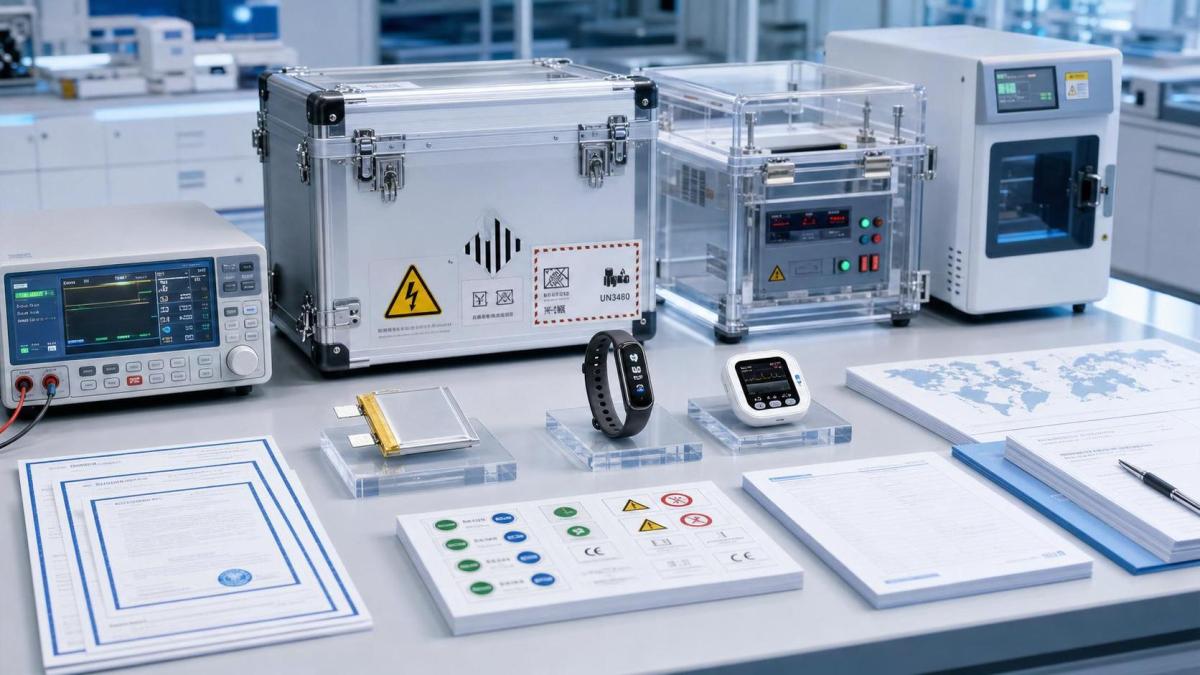
What the new testing channel confirms
The confirmed information is limited but commercially relevant. UL Solutions stated that the new Battery Tech pathway became active on July 1, 2026. The service is described as the first to support parallel testing for lithium-based miniature batteries under both UN38.3 and the updated IEC 62133-2:2026 standard. It also provides a consolidated reporting route rather than requiring separate reporting processes. The stated application focus includes high-energy-density wearable devices, specifically fitness tracking sensors and Medical IoT products. According to the event summary, the practical effect is to shorten the battery compliance cycle for exports to North America and Southeast Asia and reduce the cost associated with repeated sample submissions.
Where the operational impact is likely to appear
Export-facing device makers may see the clearest process change
From an industry perspective, manufacturers of wearable electronics aimed at overseas markets are the most immediate group to watch. The reason is straightforward: battery qualification often sits on the critical path for shipment readiness. If parallel testing and a one-stop report reduce duplicated submissions, the main impact is likely to appear in launch scheduling, export document preparation, and cross-team coordination between product, compliance, and logistics functions.
Battery and component suppliers will face new documentation expectations
Suppliers serving miniature lithium battery programs may also be affected because their customers will likely pay closer attention to whether product data, sample readiness, and technical documentation can support a combined testing route. The influence may show up in earlier requests for sample consistency, specification alignment, and communication around which battery designs are intended for North America or Southeast Asia-bound products.
Testing, certification, and supply-chain service teams may need to adjust handoffs
Service providers involved in certification, export support, and shipment preparation could see workflow changes as parallel testing alters the timing of submissions and reporting. What deserves closer attention is not only the testing itself, but also how handoffs are reorganized between laboratories, compliance managers, sourcing teams, and customers expecting faster approval cycles.
What companies should track next
Watch how official scope and wording are applied in practice
Analysis shows that the headline value of this update lies in parallel execution and a one-stop report, but companies still need to track how the service scope is described in formal documentation and customer communications. In practice, the wording used in quotations, project plans, and export files can affect expectations around timing and deliverables.
Review which product lines fit this route best
The event summary points to fitness tracking sensors and Medical IoT devices, so companies in those segments should review whether their battery configurations, especially miniature lithium-based cells and solid-state thin-film designs, align with this testing path. The key business question is less about broad strategy and more about which SKUs or programs would benefit first from reduced repeat submissions.
Separate market promise from execution detail
Observably, a shorter compliance cycle is commercially useful only when internal planning matches the new process. Teams should distinguish between the existence of a testing route and the actual execution requirements tied to sampling, report delivery, and customer acceptance. That distinction matters for quotation lead times, shipping commitments, and discussions with overseas buyers.
Prepare supplier and customer communication in advance
For procurement, operations, and account teams, one practical focus is whether current supplier qualification files, battery specifications, and compliance records are organized well enough to support faster project starts. On the customer side, businesses may also need clearer communication on expected testing windows and document availability when using the new channel.
Why this reads as a process signal rather than a finished market outcome
Analysis shows that this development is better understood as an operational signal inside the battery compliance chain than as a standalone market conclusion. The confirmed information points to a more streamlined route for certain wearable-device battery projects, especially where export timing and duplicated testing work have been friction points. At the same time, the announcement alone does not prove broad market adoption, universal applicability across battery types, or a guaranteed reduction in all approval timelines. It is more appropriate to understand this as a concrete process change with near-term practical value and medium-term implications that still require observation.
How to read the significance at this stage
At this stage, the industry value of the update lies in workflow efficiency rather than in a claim of structural market change. For companies working with high-energy-density wearable products, the launch suggests that battery compliance planning may become more integrated when transport and product safety testing can move in parallel. A neutral reading is that this is an actionable near-term development for export-oriented programs, while its broader effect on supplier behavior, customer requirements, and regional certification practice still needs continued tracking.
Basis of this article and what still needs verification
This article is based on the user-provided news title, event date, and event summary. For this type of industry update, commonly relevant source categories may include official company announcements, laboratory or certification body notices, industry association updates, authoritative media reports, and standard-related documentation. A specific official source link was not provided in the input, so that part still requires ongoing verification. Follow-up attention should focus on any later official clarification about service scope, applicable battery categories, reporting details, and how the process is implemented in actual export projects.
Protocol_Architect
Dr. Thorne is a leading architect in IoT mesh protocols with 15+ years at NexusHome Intelligence. His research specializes in high-availability systems and sub-GHz propagation modeling.
Related Recommendations
- NHI Data Lab (Official Account)How Procurement Teams Can Build Clear Project Specifications for Renewable Energy RFQs
- NHI Data Lab (Official Account)What Affects Smart Rings Standby Time and How to Compare Battery Life Claims?
- NHI Data Lab (Official Account)How to Choose a High Payload AG Drone: Payload, Flight Time, and Spray Efficiency
- NHI Data Lab (Official Account)Vietnam Tightens Battery Clearance for Medical IoT
- NHI Data Lab (Official Account)Vietnam Tightens Battery Clearance for Medical IoT
- NHI Data Lab (Official Account)Vietnam Makes Dual Battery Reports Mandatory for Medical IoT Imports
- NHI Data Lab (Official Account)UL Sets Dual Standard Path for Solid-State Micro Batteries
- NHI Data Lab (Official Account)Fixed Wing Parachute Recovery: Key Design Trade-Offs for UAV Safety and Landing Reliability
- NHI Data Lab (Official Account)How to Choose Battery Packs With Protection Circuit for Solar Storage and Portable Energy Systems
- NHI Data Lab (Official Account)UL Solutions Opens Dual-Standard Battery Testing Track
Analyst