
UL Launches Medical IoT Battery SOH Transparency Certification Pilot
author
On May 11, 2026, UL Solutions launched a pilot program for its Medical IoT Battery State of Health (SOH) Transparency Certification — a new requirement mandating real-time, encrypted reporting of battery health metrics from device-integrated battery management systems (BMS). This initiative directly impacts manufacturers of micro-sensors and fitness tracking sensors, particularly those supplying into U.S. medical markets, as it intersects with FDA 510(k) clearance pathways and UL certification timelines.
Event Overview
UL Solutions initiated the Medical IoT Battery ‘State of Health (SOH) Transparency’ Certification pilot on May 11, 2026. The pilot applies to select medical-grade wearable and implantable devices, including continuous glucose monitors (CGM), wearable ECG patches, and fall-detection wristbands. It requires embedded battery management systems to calculate and securely transmit SOH data—including capacity fade rate and internal resistance trend—in real time from the device endpoint. The pilot is currently in its initial phase and covers no other device categories beyond those explicitly named.
Industries Affected
Micro-Sensor Manufacturers
Manufacturers producing micro-sensors used in CGMs or cardiac monitoring patches are affected because SOH transparency must be implemented at the device level — meaning sensor modules integrated into certified medical wearables must support BMS interoperability and cryptographic data reporting. Impact manifests in revised design validation protocols, extended firmware development cycles, and tighter integration requirements with battery suppliers.
Fitness Tracking Sensor Suppliers
Suppliers of optical, inertial, or bioimpedance sensors deployed in FDA-regulated fitness-to-medical transition devices (e.g., hybrid heart-rate + arrhythmia detection wearables) face added compliance overhead. Their components may now require documentation of SOH-related signal integrity, power budgeting margins, and timestamped telemetry logging — even if the end product is not yet classified as a medical device under FDA rules.
UL Certification Service Providers
Third-party labs and certification consultants supporting Chinese and Asian OEMs must adapt test plans to include SOH data capture validation, encryption key handling verification, and real-time BMS output latency assessment. The pilot introduces new test criteria not covered under existing UL 2849 or IEC 62368-1 frameworks.
OEMs Targeting FDA 510(k) Clearance
OEMs pursuing FDA 510(k) for wearable diagnostics face potential delays if their battery health reporting architecture does not align with UL’s pilot expectations. Although UL certification remains voluntary, FDA reviewers increasingly reference UL’s emerging safety benchmarks during substantive equivalence assessments — especially for devices relying on long-term battery reliability as a critical performance parameter.
What Relevant Enterprises or Practitioners Should Focus On and How to Respond
Monitor official updates from UL and FDA on scope expansion
The pilot is explicitly labeled a ‘trial’; its formalization, timeline for mandatory adoption, and possible extension to non-medical wearables (e.g., wellness trackers under FDA enforcement discretion) remain unannounced. Stakeholders should subscribe to UL’s Regulatory Updates portal and FDA’s Digital Health Center of Excellence alerts.
Review BMS architecture and firmware capabilities for current product lines
Manufacturers should audit whether existing battery management implementations support real-time SOH calculation (not just voltage/temperature sampling), local encryption of health metadata, and standardized data serialization (e.g., IEEE 1645-compliant payloads). Legacy BMS ICs without secure boot or cryptographic acceleration may require hardware revision.
Distinguish between regulatory signal and binding requirement
This pilot does not constitute a new UL standard or FDA regulation. Analysis shows it functions primarily as a de facto benchmark for risk-based review — influencing how UL assesses battery-related failure modes and how FDA weighs durability claims in 510(k) submissions. Its immediate legal effect is limited to participants who opt in.
Initiate cross-functional alignment between hardware, firmware, and regulatory teams
SOH transparency spans electrical design, embedded software, cybersecurity, and clinical validation. Companies should convene joint working sessions to map data flow from cell-level sensing → BMS processing → encrypted transmission → cloud-side decryption (if applicable), documenting each step for future audit readiness.
Editorial Perspective / Industry Observation
Observably, this pilot signals UL’s strategic shift toward certifying *system-level functional safety attributes*, rather than component-level electrical compliance alone. It reflects growing industry recognition that battery degradation is no longer a passive reliability concern but an active clinical risk factor — especially in life-sustaining or diagnostic-grade wearables. From an industry perspective, the initiative is best understood not as an imminent mandate, but as an early indicator of how functional transparency will increasingly shape medical device certification logic. Continuous monitoring is warranted because precedent suggests UL pilots often evolve into ANSI-accredited standards within 12–24 months — though no such timeline has been confirmed here.
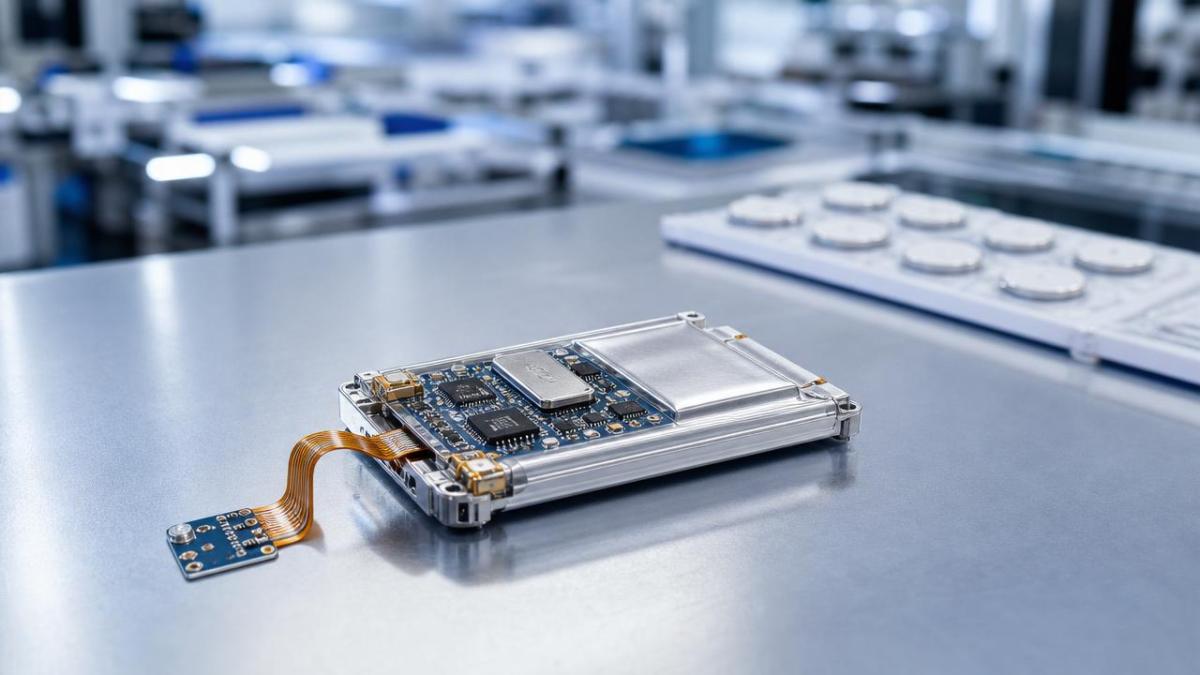
In summary, UL’s SOH Transparency pilot marks a procedural inflection point for battery-dependent medical IoT hardware — one that elevates battery health from a background specification to a verifiable, reportable system function. For stakeholders, the current significance lies less in immediate compliance obligations and more in recognizing a directional shift in how functional safety, cybersecurity, and regulatory evidence intersect in next-generation connected medical devices.
Source: UL Solutions official announcement (May 11, 2026); scope and eligibility details confirmed via UL’s public pilot documentation portal. Note: Expansion beyond the stated device categories (CGM, ECG patches, fall-detection wristbands) and timeline for broader implementation remain under observation and are not yet publicly defined.
Protocol_Architect
Dr. Thorne is a leading architect in IoT mesh protocols with 15+ years at NexusHome Intelligence. His research specializes in high-availability systems and sub-GHz propagation modeling.
Related Recommendations
- NHI Data Lab (Official Account)UL Launches Medical IoT Battery SOH Transparency Certification Pilot
- NHI Data Lab (Official Account)First Global Medical IoT Battery Safety White Paper Released
- NHI Data Lab (Official Account)Commercial drone payload capacity benchmark by real flight conditions
- NHI Data Lab (Official Account)Heavy duty AGV manufacturer comparisons should start with floor conditions
- NHI Data Lab (Official Account)UL Launches SOH Transparency Pilot for Medical IoT Devices
- NHI Data Lab (Official Account)Commercial Drone Payload Benchmarks by Mission Type
- NHI Data Lab (Official Account)What Affects Commercial Drone Payload Capacity Most?
- NHI Data Lab (Official Account)What Separates a Reliable Heavy Duty AGV Manufacturer
- NHI Data Lab (Official Account)Heavy Duty AGV Manufacturer Questions to Ask Before Approval
- NHI Data Lab (Official Account)Commercial drone payload capacity benchmark for mapping accuracy tradeoffs
Analyst