
First Global Medical IoT Battery Safety White Paper Released
author
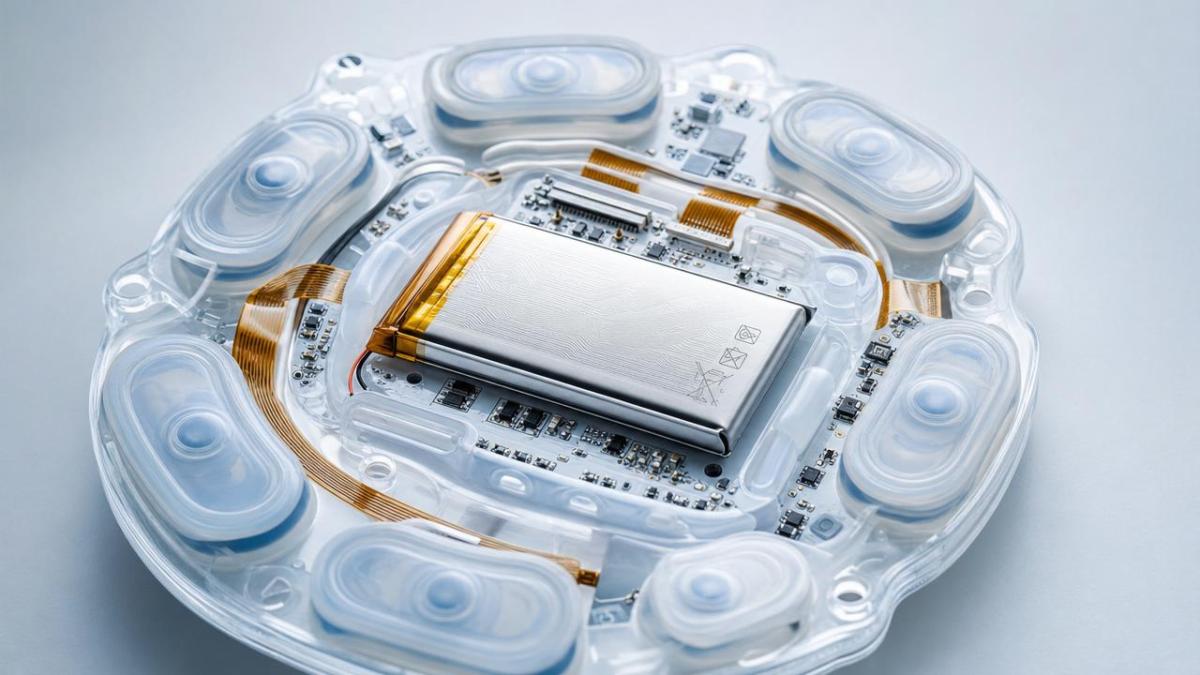
On May 8, 2026, the International Battery Association (IBA) published the Medical IoT Rechargeable Lithium Battery Safety White Paper (v1.0), establishing the first globally harmonized safety benchmarks for micro-lithium batteries used in medical-grade IoT devices. This development is especially relevant for manufacturers of implantable sensors, wearable diagnostics, battery-integrated PCBA modules, and regulatory affairs teams supporting FDA 510(k) submissions.
Event Overview
On May 8, 2026, the International Battery Association (IBA) released the Medical IoT Rechargeable Lithium Battery Safety White Paper (v1.0). The document defines 11 technical safety metrics for rechargeable lithium batteries in medical IoT applications—including a thermal runaway propagation threshold of ≤1.2 W/g and an allowable state-of-health (SOH) algorithm deviation of ±2.5%. Two China-based PCBA solution providers participated as the only Asian entities in all 23 stress tests; their test data were included in Appendix B of the white paper. The document is designated as a key reference for FDA 510(k) premarket notifications.
Impact on Specific Industry Segments
PCBA Solution Providers & Medical Device OEMs:
These entities are directly affected because the white paper introduces quantifiable, test-validated thresholds that influence design validation, component selection, and system-level safety certification. Impact manifests in revised internal testing protocols, tighter battery supplier qualification criteria, and increased scrutiny during design transfer and verification phases.
Battery Cell & Module Suppliers:
Suppliers must now align product specifications—particularly thermal behavior under fault conditions and SOH estimation accuracy—with the white paper’s 11 hard metrics. Non-compliant cells may face rejection in medical IoT integrations, even if they meet general IEC 62133 or UN 38.3 requirements.
Regulatory Affairs & Quality Assurance Teams:
Teams supporting FDA 510(k) submissions will need to map existing battery safety documentation against the white paper’s benchmarks. Gaps may require supplemental testing or updated risk analysis reports—especially for devices relying on embedded rechargeable micro-batteries.
What Relevant Enterprises or Practitioners Should Focus On and How to Respond Now
Monitor official adoption signals from FDA and other regulators
While the white paper is not yet a regulatory requirement, its designation as a “key reference” for 510(k) submissions means FDA reviewers may begin requesting alignment evidence. Enterprises should track upcoming FDA guidance updates and public docket comments referencing this document.
Review current battery sourcing and qualification processes against the 11 defined metrics
Specifically assess thermal runaway propagation data, SOH algorithm validation reports, and cycle-life degradation consistency under medical-use duty cycles—not just standard lab conditions. Prioritize requalification for batteries deployed in Class II and Class III connected medical devices.
Distinguish between policy signal and enforceable compliance
The white paper sets technical expectations but does not replace FDA regulations or ISO 14971 risk management requirements. Current compliance remains anchored in existing standards (e.g., IEC 62366-1, ISO 13485); however, deviations from the white paper’s metrics may trigger additional reviewer questions during submission.
Prepare internal alignment across R&D, QA, and regulatory functions
Initiate cross-functional gap assessments before Q3 2026. Include battery vendors in early-stage reviews. Document how existing designs meet—or plan to meet—the white paper’s thresholds, particularly for thermal propagation and SOH tolerance, to support future audit readiness.
Editorial Perspective / Industry Observation
Observably, this white paper functions primarily as a technical coordination milestone—not a binding regulation. Its value lies in crystallizing previously fragmented safety expectations into measurable, testable parameters. Analysis shows it reflects growing consensus around the unique failure modes of micro-lithium batteries in long-term, low-power, human-coupled medical environments. From an industry perspective, it signals increasing convergence between battery safety engineering and medical device risk management frameworks. It is more accurately understood as a forward-looking benchmark than an immediate compliance mandate—but one with clear implications for product lifecycle planning starting in 2026.
Conclusion
This white paper marks the first formal effort to define objective, application-specific safety boundaries for rechargeable lithium batteries in medical IoT systems. Its significance resides not in regulatory force, but in its role as a shared technical reference point across design, manufacturing, and regulatory review. Currently, it is best understood as an anticipatory framework—one that informs near-term validation priorities and shapes longer-term supply chain expectations, rather than triggering immediate compliance deadlines.
Source Attribution
Main source: International Battery Association (IBA), Medical IoT Rechargeable Lithium Battery Safety White Paper (v1.0), published May 8, 2026.
Note: Ongoing observation is warranted regarding FDA’s formal acknowledgment of the white paper in future 510(k) review templates or guidance documents.
Protocol_Architect
Dr. Thorne is a leading architect in IoT mesh protocols with 15+ years at NexusHome Intelligence. His research specializes in high-availability systems and sub-GHz propagation modeling.
Related Recommendations
- NHI Data Lab (Official Account)How Procurement Teams Can Build Clear Project Specifications for Renewable Energy RFQs
- NHI Data Lab (Official Account)What Affects Smart Rings Standby Time and How to Compare Battery Life Claims?
- NHI Data Lab (Official Account)How to Choose a High Payload AG Drone: Payload, Flight Time, and Spray Efficiency
- NHI Data Lab (Official Account)Vietnam Tightens Battery Clearance for Medical IoT
- NHI Data Lab (Official Account)Vietnam Tightens Battery Clearance for Medical IoT
- NHI Data Lab (Official Account)Vietnam Makes Dual Battery Reports Mandatory for Medical IoT Imports
- NHI Data Lab (Official Account)UL Sets Dual Standard Path for Solid-State Micro Batteries
- NHI Data Lab (Official Account)Fixed Wing Parachute Recovery: Key Design Trade-Offs for UAV Safety and Landing Reliability
- NHI Data Lab (Official Account)How to Choose Battery Packs With Protection Circuit for Solar Storage and Portable Energy Systems
- NHI Data Lab (Official Account)UL Solutions Opens Dual-Standard Battery Testing Track
Analyst