
How Battery Benchmarks Expose Weak IoT Hardware Design
author
Battery benchmarks reveal what brochures hide: weak power architecture, unstable firmware, and poor component choices that undermine real-world IoT performance. At NexusHome Intelligence, our IoT hardware benchmarking turns battery data into actionable IoT engineering truth, helping buyers and engineers compare verified IoT manufacturers, strengthen IoT supply chain audit decisions, and validate Matter standard compatibility, protocol latency benchmark results, and lithium battery for IoT reliability.
Why battery benchmarks matter in renewable energy IoT procurement
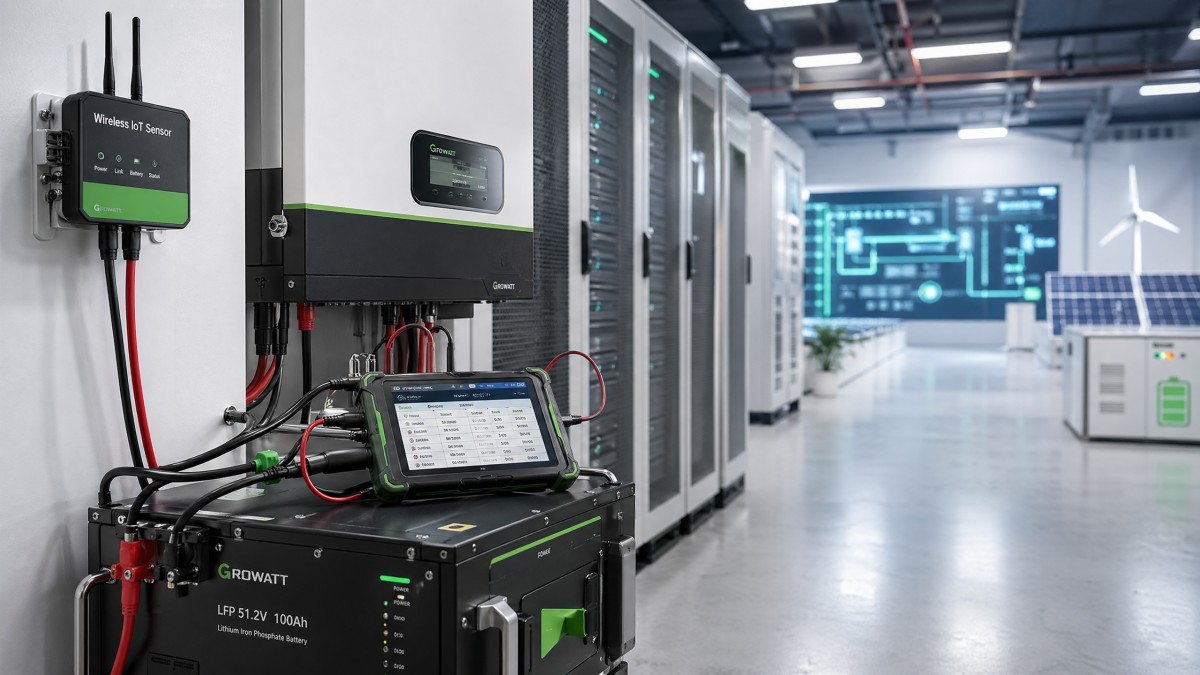
In renewable energy systems, battery-powered IoT devices do far more than report room temperature or occupancy. They support solar asset monitoring, distributed energy control, HVAC optimization, metering, relay switching, and edge sensing across buildings, microgrids, and remote infrastructure. When a sensor node drains too fast, the cost is not limited to battery replacement. It can trigger blind spots in energy data, delayed load balancing, service calls, and unreliable automation decisions.
This is why battery benchmarks are a design diagnostic, not a marketing metric. A stable device should maintain predictable discharge behavior across 3 core conditions: active transmission, standby sleep, and burst event reporting. In real deployments, weak hardware often exposes itself within 2–8 weeks through voltage sag, connection retries, or rapid standby loss. For procurement teams, that pattern is more useful than a brochure claim such as “ultra-low power.”
At NexusHome Intelligence, the focus is not only on runtime. The goal is to identify whether battery results point to deeper issues in PCB layout, radio tuning, firmware scheduling, sensor polling frequency, or protocol inefficiency. In fragmented ecosystems where Zigbee, Thread, BLE, Z-Wave, and Matter overlap, poor interoperability often shows up first as battery stress. That makes battery benchmarking an early warning tool for renewable energy IoT risk control.
For information researchers, operators, buyers, and commercial evaluators, the question is practical: can a device keep working through seasonal load shifts, interference, and maintenance intervals of 6–12 months? If the answer depends on ideal lab settings, the product is not ready for smart buildings or energy management networks. Verified IoT hardware benchmarking provides a more realistic basis for supplier comparison.
What weak battery data usually exposes
Battery underperformance rarely comes from one isolated cause. It usually reflects a stack of design compromises that were hidden during product positioning but become visible in field-like testing. For renewable energy use cases, these flaws become expensive because distributed devices may be installed on rooftops, in plant rooms, in outdoor enclosures, or across multi-floor buildings.
- Overactive firmware loops that wake the MCU too often, increasing idle draw during periods when the device should remain in deep sleep.
- Poor radio path design, forcing repeated joins or retransmissions under interference common in commercial buildings and inverter-dense environments.
- Low-grade lithium battery selection with unstable discharge curves at temperature swings such as 0°C–40°C in semi-outdoor installations.
- Sensor sampling intervals set for showroom responsiveness rather than realistic energy monitoring intervals, resulting in unnecessary power drain.
When these issues combine, the result is not just shorter battery life. It can also degrade protocol latency benchmark outcomes, create false offline events, and reduce trust in energy dashboards used for load control or carbon reporting. That is why battery data should be read together with connectivity and protocol compliance evidence.
How to read battery benchmarks beyond the runtime claim
A useful battery benchmark does not stop at “lasts 2 years” or “supports low-power mode.” Buyers need a structured view of what is being measured, under which duty cycle, and with what communication load. In renewable energy IoT, a device may transmit every 5 minutes, every 15 minutes, or only on event triggers. Those profiles produce very different battery behaviors, so the benchmark method must be visible.
The most decision-relevant benchmarks usually combine 4 dimensions: sleep current, peak transmit current, recovery after repeated network activity, and discharge stability over time. A sensor that looks efficient in the first 72 hours can still fail over a 30–90 day evaluation if voltage drop accelerates after frequent reconnection events. This is especially important in smart energy systems where nodes can be exposed to transient interference and maintenance cannot be weekly.
The table below summarizes how procurement and technical teams can interpret battery benchmark signals when screening IoT hardware for renewable energy applications. It is designed to support IoT supply chain audit decisions and help separate usable engineering data from generic battery marketing language.
For business evaluators, the table highlights a key point: battery benchmarks are also supplier transparency benchmarks. A manufacturer that cannot define test intervals, reporting cycles, or fallback behavior during packet loss is unlikely to offer reliable long-term support for renewable energy deployments. Runtime without context is not evidence.
Which benchmark conditions deserve extra attention
Three conditions are commonly overlooked during product screening. First, communication retries under interference should be tested, because inverter environments, electrical rooms, and dense buildings can distort lab assumptions. Second, low-temperature and elevated-temperature operation should be reviewed when devices are mounted near windows, ceilings, rooftops, or utility cabinets. Third, standby-to-burst transition behavior matters for event-driven systems such as access alerts, occupancy-based energy control, and protective switching.
A practical review window is often 2–4 weeks for initial comparison and 30–90 days for deeper confidence building. This range helps teams detect whether power drain is linear, front-loaded, or unstable after protocol rejoin activity. In many cases, unstable battery behavior correlates with protocol latency spikes, which is why Matter standard compatibility should never be judged by pairing success alone.
Checklist for technical reviewers
- Confirm whether battery results were measured under real reporting intervals such as 5-minute, 15-minute, or hourly telemetry cycles.
- Ask if the benchmark includes packet retry scenarios, multi-node mesh hops, or gateway reconnection events.
- Check whether the lithium battery for IoT was tested only at room temperature or across a broader installation range.
- Request correlation between battery behavior and protocol latency benchmark records, not just battery charts in isolation.
Where weak IoT hardware design hurts renewable energy operations most
In renewable energy, battery-powered IoT hardware is often chosen to reduce wiring cost and speed deployment. That benefit disappears when maintenance visits increase or energy data becomes unreliable. The damage is operational as well as financial. An unstable sensor in a heat pump control loop, solar monitoring branch, or occupancy-driven HVAC scheme can distort optimization logic and weaken carbon reduction outcomes.
Not every application has the same tolerance for battery weakness. Some sites can absorb manual replacement every quarter. Others, especially distributed buildings or remote assets, need service intervals closer to 6–18 months. The table below helps map common renewable energy scenarios to battery benchmark priorities, so procurement teams can choose hardware according to deployment risk rather than price alone.
These scenario differences explain why a single battery-life claim is not enough. For operators, the most important question is maintenance predictability. For buyers, it is total service cost over 12–24 months. For commercial teams, it is whether the device supports a trustworthy performance narrative in tenders, audits, and long-cycle facility contracts.
Typical failure patterns seen after deployment
Weak IoT hardware design often follows a recognizable pattern. Devices pass initial commissioning, then degrade when network density rises or weather changes. In week 1, everything appears stable. By weeks 3–6, support teams begin to see retries, battery drops, or delayed reporting. By month 3, the cost of maintenance planning starts to exceed the original price advantage of the lower-grade device.
This is exactly where independent benchmarking becomes valuable. NHI’s engineering filter approach is relevant because supply chains are crowded with OEM and ODM products that look similar externally but differ materially in SMT quality, component sourcing discipline, and firmware maturity. Battery benchmark evidence helps reveal those hidden differences before contracts expand.
For renewable energy stakeholders, a weak battery profile can also interfere with sustainability metrics. Data gaps, maintenance travel, and replacement cycles all create hidden operational overhead. Better hardware design supports not just uptime, but cleaner measurement for energy optimization and emissions planning.
How buyers should compare suppliers, protocols, and battery-related design claims
Procurement teams often face a difficult comparison problem: several vendors offer similar enclosures, similar protocol logos, and similar low-power claims. Yet field performance differs sharply. The most effective response is to compare suppliers across a short list of measurable checkpoints rather than rely on feature sheets alone. This is especially important when evaluating verified IoT manufacturers for smart energy and building decarbonization projects.
A strong comparison process usually includes 5 key checks: battery benchmark method, protocol latency benchmark evidence, firmware revision discipline, component traceability, and practical maintenance assumptions. If one vendor presents battery life at a 60-minute interval while another uses a 5-minute interval, the figures are not comparable. Context must come before ranking.
A practical supplier screening framework
The framework below is useful for information researchers, procurement officers, and business evaluators who need a balanced shortlist before sample testing or quotation rounds. It is intentionally focused on decision clarity rather than generic product promotion.
- Request benchmark conditions in writing, including reporting interval, network topology, firmware version, and battery chemistry.
- Compare behavior under at least 2 communication states: normal reporting and interference or reconnection stress.
- Check whether Matter standard compatibility is supported by measurable latency and stability records, not only certification roadmap language.
- Review whether the supplier can explain PCB-level and power-path design choices in a technical meeting within 30–60 minutes.
- Estimate service burden over a 12-month cycle, including battery replacement, access labor, and outage risk.
This approach helps avoid a common B2B mistake: choosing the lowest unit price while ignoring service overhead. In renewable energy environments, the real cost difference often appears after installation, when battery instability drives extra maintenance, troubleshooting, and confidence loss across project stakeholders.
Common misconceptions that distort purchasing decisions
One misconception is that larger battery capacity automatically means better field life. In reality, poor firmware or repeated mesh retries can erase that advantage quickly. Another is that a device that joins a Matter network once is therefore deployment-ready. Without latency consistency and stable energy behavior over time, that conclusion is premature.
A third misconception is that all lithium battery for IoT options behave similarly. They do not. Chemistry selection, voltage tolerance, thermal profile, and regulator matching all affect real-world results. For projects tied to energy control or climate automation, these differences deserve procurement-level attention, not just engineering review.
FAQ: what decision-makers ask before selecting battery-powered IoT hardware
The questions below reflect common search intent from teams comparing hardware for smart buildings, renewable energy retrofits, and multi-protocol IoT deployments. Each answer is focused on practical selection, risk control, and supplier communication.
How long should a battery benchmark test run before procurement approval?
For early filtering, 2–4 weeks can reveal obvious standby drain, reconnection issues, and unstable power behavior. For higher-confidence procurement, especially in commercial energy systems, a 30–90 day observation window is more useful. That longer period captures voltage curve changes, event-burst handling, and the effect of protocol retries that short demos often miss.
Which renewable energy scenarios are most sensitive to poor battery design?
Scenarios with distributed assets and difficult access are the most sensitive. Examples include rooftop solar-linked controls, plant-room environmental sensing, occupancy-driven HVAC optimization, and remote relay nodes in commercial energy management. In such cases, a weak battery profile raises maintenance cost and can directly reduce the quality of energy data used for optimization or peak-load shifting.
What should buyers ask vendors about Matter and battery performance?
Ask whether Matter standard compatibility has been tested under multi-node, interference, and rejoin conditions. Also ask for the reporting interval used during battery measurement, the network role of the device, and whether latency and battery results were reviewed together. A vendor that can explain these relationships is usually more prepared for serious deployment than one that only shares pairing screenshots or feature slides.
Can battery data help with IoT supply chain audit decisions?
Yes. Battery behavior often reflects upstream manufacturing discipline. Irregular discharge, excessive standby draw, or unstable event performance may point to inconsistent SMT execution, weak component sourcing, or immature firmware control. For that reason, battery benchmarks are useful not only in product selection, but also in comparing supplier maturity and long-term reliability potential.
Why work with NexusHome Intelligence on battery benchmark-driven sourcing
NexusHome Intelligence is built for organizations that need more than catalog browsing. In fragmented IoT ecosystems, renewable energy projects require a data-driven bridge between hardware claims and operational truth. NHI’s role is to turn battery benchmark results, protocol behavior, and hardware design evidence into a clearer sourcing decision for engineers, buyers, and commercial evaluators.
Our advantage is methodological clarity. We do not treat battery life as an isolated sales number. We connect power results with protocol latency benchmark findings, component-level design judgment, and realistic deployment risk across smart buildings, climate control, and distributed energy scenarios. That helps reduce uncertainty before sample approval, vendor onboarding, or broader OEM and ODM engagement.
If your team is comparing verified IoT manufacturers, planning an IoT supply chain audit, or validating lithium battery for IoT performance under Matter, Zigbee, Thread, BLE, or mixed-protocol conditions, you can consult NHI on several practical topics. These include parameter confirmation, supplier comparison logic, expected delivery cycle ranges, sample evaluation priorities, protocol risk review, and scenario-based hardware screening.
Contact NexusHome Intelligence when you need support with battery benchmark interpretation, product selection for renewable energy IoT, custom evaluation criteria, certification-related questions, sample planning, or quotation-stage technical clarification. In a market full of claims, NHI helps you make procurement and engineering decisions based on evidence that can survive real deployment.
Protocol_Architect
Dr. Thorne is a leading architect in IoT mesh protocols with 15+ years at NexusHome Intelligence. His research specializes in high-availability systems and sub-GHz propagation modeling.
Related Recommendations
- NHI Data Lab (Official Account)Wireless Certification for Solar-Powered Wearables: FCC and EU RED Requirements
- NHI Data Lab (Official Account)How Procurement Teams Can Build Clear Project Specifications for Renewable Energy RFQs
- NHI Data Lab (Official Account)What Affects Smart Rings Standby Time and How to Compare Battery Life Claims?
- NHI Data Lab (Official Account)How to Choose a High Payload AG Drone: Payload, Flight Time, and Spray Efficiency
- NHI Data Lab (Official Account)Vietnam Tightens Battery Clearance for Medical IoT
- NHI Data Lab (Official Account)Vietnam Tightens Battery Clearance for Medical IoT
- NHI Data Lab (Official Account)Vietnam Makes Dual Battery Reports Mandatory for Medical IoT Imports
- NHI Data Lab (Official Account)UL Sets Dual Standard Path for Solid-State Micro Batteries
- NHI Data Lab (Official Account)Fixed Wing Parachute Recovery: Key Design Trade-Offs for UAV Safety and Landing Reliability
- NHI Data Lab (Official Account)How to Choose Battery Packs With Protection Circuit for Solar Storage and Portable Energy Systems
Analyst