
Matter Gateway Price Explained: What Affects Cost in Smart Building Projects?
author
Matter Gateway Price Explained: What Affects Cost in Smart Building Projects?
For finance teams in renewable-energy smart building projects, matter gateway price rarely starts and ends with the box itself.
A low quote can look attractive early, then expand once certification, integration, and maintenance enter the budget.
That is why procurement decisions need a full-cost view, not just a hardware line item.
In practice, matter gateway price depends on protocol support, cybersecurity depth, deployment scale, energy-system compatibility, and service expectations.
The more demanding the project environment, the less useful a simple per-unit comparison becomes.
This article breaks down the main cost drivers, where budget risk usually hides, and how to judge value more accurately.
Why Matter Gateway Price Is More Than a Device Cost
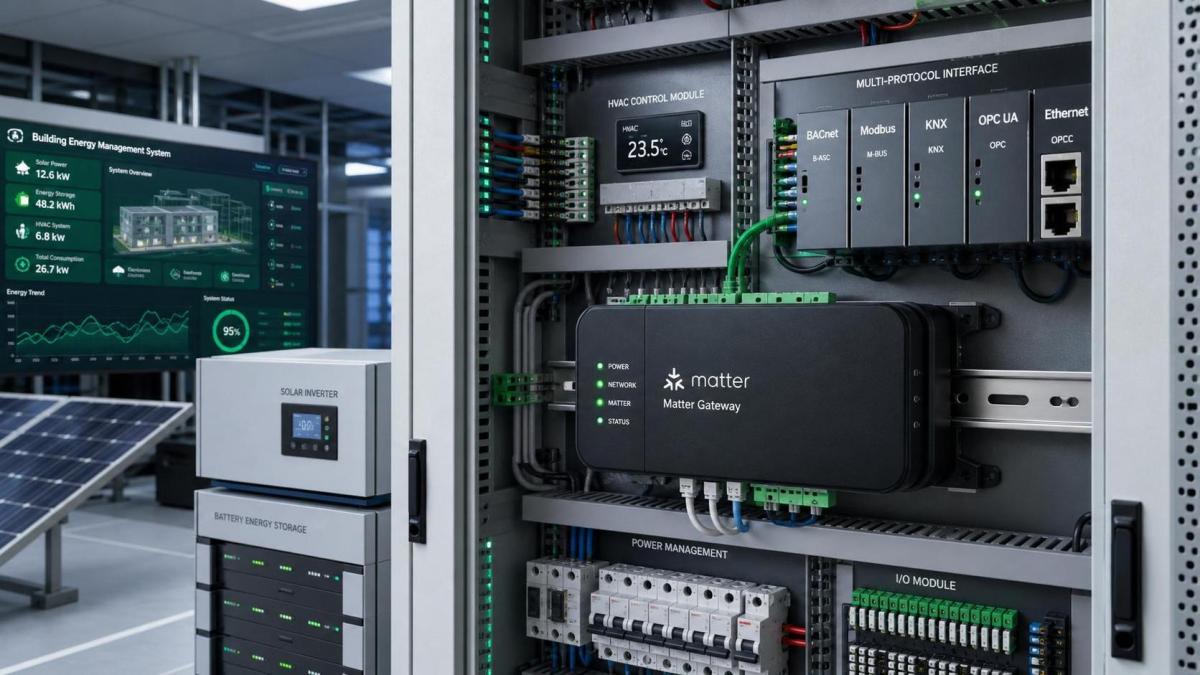
A Matter gateway sits between devices, building controls, and cloud or local management platforms.
Its role becomes critical when solar assets, storage systems, HVAC controls, and occupancy logic must exchange reliable data.
That technical role directly affects matter gateway price because reliability costs money to engineer.
Projects with simple room automation usually need less from the gateway than buildings using demand response or peak-load shifting.
Once the gateway influences energy performance, downtime risk gets more expensive.
This changes the purchasing logic.
You are no longer buying only connectivity.
You are buying protocol translation, security posture, firmware resilience, and future upgrade capacity.
The Main Factors That Increase Matter Gateway Price
Several technical and commercial variables shape matter gateway price in real procurement cycles.
The biggest ones usually appear in five areas.
1. Multi-Protocol Support
A gateway supporting Matter only will often cost less than one bridging Matter, Zigbee, Thread, BLE, and Wi-Fi together.
More radios, more antenna design, and more interoperability testing all raise matter gateway price.
In retrofit buildings, this premium may still be justified because it reduces device replacement costs later.
2. Certification and Compliance Scope
Certified hardware generally carries a higher upfront matter gateway price than products with vague compatibility claims.
But certified products usually lower integration delays, rework, and dispute risk during deployment.
That tradeoff matters in projects tied to construction milestones or energy-performance guarantees.
3. Cybersecurity Architecture
Secure boot, encrypted storage, hardware root of trust, and signed firmware updates all add development and component cost.
So when security features deepen, matter gateway price rises for understandable reasons.
In commercial energy environments, weak security can trigger operational shutdowns, insurance issues, and expensive remediation.
4. Edge Processing Power
Some gateways simply pass messages.
Others run local rules, energy optimization logic, occupancy analytics, and failover modes.
More memory and processing headroom increase matter gateway price, but they may reduce cloud dependency and latency.
5. Vendor Support and Lifecycle Commitments
The cheapest vendor quote may exclude long-term firmware support, API documentation, patch response times, or local technical assistance.
A higher matter gateway price often includes those lifecycle protections.
That matters when buildings operate for years, not quarters.
How Renewable-Energy Projects Change the Cost Equation
In renewable-energy smart buildings, matter gateway price should be evaluated against energy outcomes, not only procurement limits.
The gateway may affect how efficiently distributed assets respond to building loads and occupancy patterns.
For example, a gateway can help coordinate lighting, HVAC, battery storage, and solar generation under one operational strategy.
If data arrives late or devices drop offline, that strategy weakens quickly.
This is where NHI’s data-first thinking becomes useful.
Marketing claims about seamless integration say little about actual building performance.
Latency under heavy interference, packet stability, and standby power all deserve attention.
A slightly higher matter gateway price can be the rational choice when it protects measurable efficiency gains.
Hidden Costs Often Missed During Procurement
Many budget overruns appear after the purchase order, not before it.
That is why matter gateway price should be reviewed with hidden cost categories in mind.
- Commissioning time: Poor documentation and unstable onboarding raise labor costs fast.
- Firmware recovery: Weak update tools create site visits and emergency support expense.
- Interoperability gaps: Unsupported devices can force middleware purchases or redesign work.
- Security remediation: Missing controls may require later hardening and audit spending.
- Downtime impact: Failed gateways can disrupt occupancy comfort and energy optimization schedules.
When these costs are modeled early, a low matter gateway price sometimes turns out to be the most expensive option.
A Practical Framework for Evaluating Matter Gateway Price
A structured comparison usually produces better decisions than a hardware-only bid review.
Use a simple scoring approach across technical, financial, and operational criteria.
This method makes matter gateway price easier to defend internally because it links cost to risk reduction and performance value.
Questions Worth Asking Suppliers Before Approval
Good supplier questions often reveal more than a polished datasheet.
They also help confirm whether the stated matter gateway price reflects real readiness.
- Which protocol combinations are supported today, not just on the roadmap?
- What certification documents can be shared for Matter and related wireless standards?
- How does the gateway perform under dense node counts and signal interference?
- What is the firmware update process if a failed update occurs on site?
- How long will security patches and software maintenance be provided?
- Can the gateway integrate with building energy management and local edge rules?
These questions turn matter gateway price into a procurement conversation about evidence, not assumptions.
When a Higher Matter Gateway Price Makes Financial Sense
A higher matter gateway price is usually easier to justify in three situations.
First, the project includes multiple legacy and emerging protocols.
Second, the building depends on energy orchestration for cost savings or sustainability targets.
Third, the operational environment demands strong security and long support windows.
In those cases, the gateway becomes a control-layer asset, not a commodity adapter.
That distinction should guide the approval process.
Final Takeaway on Matter Gateway Price
The smartest way to assess matter gateway price is to connect it with integration depth, resilience, security, and long-term operating value.
A cheaper gateway may reduce upfront spending while increasing lifecycle exposure.
A better-engineered gateway may cost more while protecting efficiency goals and delivery timelines.
In renewable-energy smart building projects, that difference can be material.
Review supplier evidence, model hidden costs, and compare total value before approval.
That is the clearest path to a matter gateway price decision that stands up both technically and financially.
Protocol_Architect
Dr. Thorne is a leading architect in IoT mesh protocols with 15+ years at NexusHome Intelligence. His research specializes in high-availability systems and sub-GHz propagation modeling.
Related Recommendations
- Dr. Aris ThorneHow to Build a Voice-Enabled Smart Home Ecosystem That Works Across Brands
- Dr. Aris ThorneHow to Choose a Jewelry Pliers Set for Precision Wirework and Small Repairs
- Dr. Aris ThorneSupplier Capability Criteria for Renewable Energy Projects: A Procurement Checklist
- Dr. Aris ThorneCustom Printed Lanyards for Renewable Energy Sites: What Buyers Should Specify
- Dr. Aris ThorneSmart Home Protocol Analysis: How to Compare Matter, Zigbee, and Wi-Fi for Device Interoperability
- Dr. Aris ThorneMatter 1.4 Released as EU CE Rules Add Mandatory Thread/Zigbee Interoperability Tests
- Dr. Aris ThorneNorth America Property Technology: Market Opportunities, Adoption Drivers, and Key Challenges
- Dr. Aris Thorne7075 vs 6061 Aluminum in Europe: Which Alloy Fits Renewable Energy Structures?
- Dr. Aris ThorneMatter Compatibility Certification: What Device Makers Need to Pass Testing
- Dr. Aris ThorneEU EN 303 647 v2.1.1 Makes New EMC Tests Mandatory
Analyst