
What Matters Most in a Smart Home Hub OEM
author
In a fragmented IoT landscape, choosing the right smart home hub OEM is no longer about price alone. Buyers now need verified IoT manufacturers with proven Matter standard compatibility, protocol latency benchmark results, and reliable IoT hardware benchmarking data. This guide explores what defines trusted smart home factories and how NexusHome Intelligence brings IoT engineering truth to smart home supplier directory research and sourcing decisions.
Why Smart Home Hub OEM Selection Has Become a Renewable Energy Decision
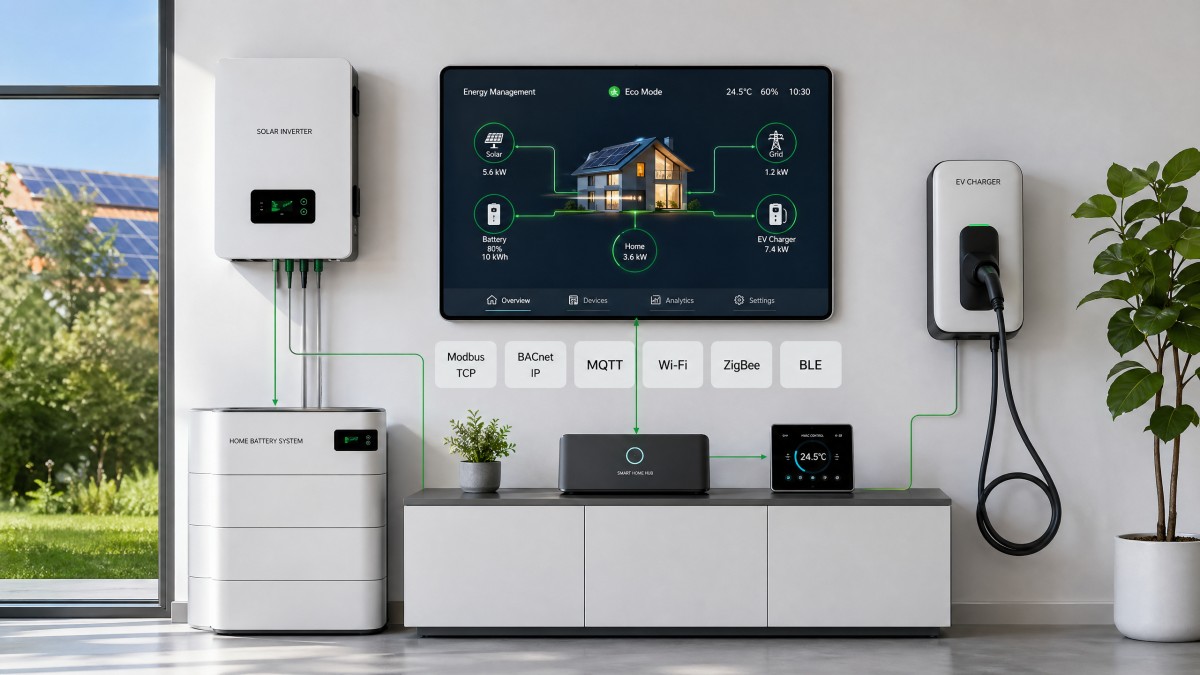
A smart home hub is no longer just a convenience gateway for lighting or locks. In renewable energy environments, it often becomes the coordination layer between solar inverters, home batteries, HVAC controls, EV charging, metering devices, and occupancy-driven automation. When an OEM hub fails to manage protocol diversity or edge latency, the consequence is not merely a poor user experience. It can affect load balancing, energy reporting, and demand-response execution across a building portfolio.
This is why procurement teams, operators, and enterprise decision-makers now evaluate a smart home hub OEM through a wider lens. They need to know whether the device can maintain stable communication across 3–5 common smart building protocols, whether local automation still works during internet disruption, and whether standby power remains suitable for energy-sensitive deployments. For renewable energy projects, the hub must support both ecosystem interoperability and measurable energy control logic.
NexusHome Intelligence addresses this problem by focusing on verifiable engineering data rather than broad marketing claims. Instead of accepting “Works with Matter” at face value, a data-driven sourcing process asks harder questions: What is the latency range during multi-node communication? How does the hub behave under RF interference? Can it maintain reliable orchestration when battery storage, smart relays, and climate control rules run simultaneously for 24–72 hours?
For information researchers, this means better filtering of supplier claims. For operators, it means fewer field failures. For procurement teams, it means clearer total-cost judgment. For executives, it reduces the risk of selecting a low-cost OEM that later causes delayed commissioning, firmware escalation, or protocol-level incompatibility across renewable energy assets.
What changes when the hub is used in energy-aware buildings?
In a conventional residential setup, hub instability may be annoying. In an energy-aware site, it can disrupt scheduled load shifting, occupancy-based climate logic, or battery-supported backup routines. Renewable energy use cases often require event response within sub-second to low-second ranges depending on the control layer, especially when multiple devices participate in localized automation rather than cloud-only commands.
- Solar-plus-storage homes need consistent local control between generation data, smart relays, and priority loads.
- Commercial buildings need reliable multi-zone automation for HVAC, occupancy, and peak-load reduction.
- Microgrid-adjacent projects require protocol resilience when internet access is unstable or segmented.
- Energy service providers need audit-ready device behavior, firmware traceability, and maintenance visibility.
These conditions make smart home hub OEM evaluation much closer to industrial sourcing discipline than consumer gadget buying. That is exactly where benchmarking, protocol verification, and hardware-level transparency become commercially valuable.
What Should Buyers Check First in a Smart Home Hub OEM?
A practical sourcing decision starts with the right evaluation framework. Many buyers compare outward features, app screenshots, or quoted unit prices, but the more important questions are architectural. Does the OEM support the protocol mix required by the project? Is there enough local processing for automation continuity? Can the hardware platform survive long deployment cycles of 3–7 years common in renewable energy and smart building investments?
The table below summarizes the most useful first-pass procurement dimensions for a smart home hub OEM serving renewable energy applications. These are not lab guarantees; they are buyer-side review areas that help separate brochure language from sourcing reality.
The key takeaway is simple: a smart home hub OEM should be judged by deployment evidence, not by broad compatibility claims. In renewable energy projects, one weak point in local control or protocol bridging can create downstream costs in commissioning, support, and retrofitting.
The 5 most important checks before RFQ
Before sending a request for quotation, buyers should complete 5 core checks. This is especially useful when comparing 2–4 OEM candidates in parallel and trying to reduce engineering rework later.
- Map the required device ecosystem, including meters, relays, HVAC endpoints, battery interfaces, and occupancy sensors.
- Confirm whether the project needs local-first automation, cloud-assisted control, or hybrid operation.
- Request benchmark-oriented proof for latency, device count handling, and interference tolerance.
- Review firmware support windows and the OEM’s patch and rollback process.
- Clarify pilot quantity, ramp quantity, and expected lead time, often in phases such as sample, validation, and mass deployment.
This process helps procurement teams translate functional demand into measurable supplier criteria. It also gives enterprise decision-makers a clearer view of lifecycle risk, not just invoice cost.
How to Compare OEM Options Beyond Price and Marketing Claims
The most common mistake in smart home supplier directory research is assuming that all hub OEMs offer similar real-world performance. They do not. Two products may list the same protocols, yet differ significantly in local compute headroom, radio design, firmware maturity, and field maintainability. In renewable energy applications, those differences affect occupancy-based climate control, battery-aware scheduling, and peak-load response quality.
The comparison table below outlines three broad OEM sourcing profiles often seen in the market. It is not a ranking. Instead, it helps teams understand trade-offs between low entry price, balanced engineering readiness, and benchmark-oriented sourcing for energy-sensitive deployments.
The decision point is not whether a hub is cheap or expensive. The real question is whether the OEM’s technical evidence fits the consequence of failure in your use case. If the hub orchestrates solar-aware loads, EV charging rules, and building climate schedules, a low-price choice can become costly within 6–18 months through support incidents and revalidation work.
Where NexusHome Intelligence adds value
NexusHome Intelligence is positioned for teams that need an engineering filter, not another promotional directory. Its strength lies in translating hard-to-compare OEM claims into verifiable decision inputs. That matters when supply chain decisions involve multiple protocols, compliance expectations, and long maintenance horizons.
A more useful sourcing lens for decision-makers
Instead of asking whether a smart home hub OEM looks modern on paper, NHI’s methodology encourages buyers to ask whether the device survives practical stress. Can it maintain stability in dense RF conditions? How does it behave when 30–100 endpoints trigger near-simultaneously? Is the claimed interoperability still valid when renewable energy devices and building controls run together in one workflow?
That shift is especially relevant for property developers, energy system integrators, and enterprise procurement leads. Their risk is rarely a missing feature alone. Their risk is deployment friction: unstable mesh behavior, weak gateway firmware, battery drain, or inconsistent local automation logic that only appears after installation.
Which Technical and Compliance Factors Matter Most During Procurement?
A strong smart home hub OEM evaluation should combine technical performance, maintainability, and compliance readiness. In renewable energy settings, technical reliability affects system efficiency, while compliance discipline affects rollout speed and market access. Buyers do not always need every certification at the same time, but they do need a realistic path for documentation, testing, and deployment approval.
Common review points include wireless coexistence, cybersecurity update practices, electrical safety documentation, and environmental operating range. In field deployments, typical checks may cover indoor operating conditions, power backup behavior, firmware version control, and communication persistence during intermittent network loss. These are practical concerns, not paperwork exercises.
For renewable energy and smart building integrations, a hub often sits near critical controls such as thermostats, relays, sensors, occupancy devices, and visualization dashboards. That means a buyer should clarify 4 categories early: protocol conformance, local control continuity, security maintenance, and installation environment. Missing clarity in any one category can delay project acceptance by 2–6 weeks.
A practical compliance and deployment checklist
- Protocol documentation: confirm supported stacks, bridge logic, and any limitations for multi-protocol coexistence.
- Firmware governance: ask how updates are signed, scheduled, rolled back, and documented across versions.
- Environmental suitability: verify operating range, enclosure assumptions, and heat behavior for always-on deployment.
- Security posture: review local data handling, credential management, and the OEM’s response process for vulnerabilities.
- Integration readiness: check API or platform hooks for energy dashboards, building systems, and monitoring tools.
When buyers follow this checklist, they reduce the chance of selecting a hub that appears compatible but becomes difficult to commission. That is especially important in projects with phased rollouts such as pilot units first, then building-level deployment, then regional expansion over 2–4 quarters.
Common Misconceptions, FAQ, and the Smartest Next Step
Even experienced teams can misread the smart home hub OEM market because vendor language tends to flatten important differences. A hub that works in a demo room may not perform the same way in a smart apartment block, an energy-managed villa, or a light commercial property running mixed wireless traffic. The goal is not to distrust every supplier. The goal is to structure better questions and get more useful answers.
Below are common questions from researchers, operators, procurement teams, and enterprise decision-makers involved in renewable energy-linked smart home sourcing.
How do I know if a smart home hub OEM is truly suitable for energy management scenarios?
Start by checking whether the hub can support local automation across the devices that influence energy behavior: smart relays, HVAC controls, metering endpoints, occupancy sensors, and battery-aware schedules. Ask for evidence of protocol handling under realistic load, not just a compatibility badge. If your deployment includes 20–50 endpoints in one site, request performance information for that density range.
What is a reasonable procurement process for comparing suppliers?
A practical process usually has 4 steps: requirement mapping, shortlist screening, sample validation, and commercial negotiation. For many B2B projects, sample and evaluation can take 2–6 weeks depending on protocol complexity and integration scope. This is usually faster and less expensive than discovering interoperability problems after rollout.
Is Matter support enough to make a supplier low risk?
No. Matter support is helpful, but it does not automatically confirm real-world reliability, mesh stability, bridge quality, or edge automation performance. Buyers should still review multi-node behavior, firmware maturity, interference response, and how the hub interacts with legacy or parallel protocols that remain common in buildings.
What mistakes cause the highest hidden cost?
The most expensive mistakes are usually not the initial unit price. They include choosing an OEM without clear firmware maintenance, ignoring standby power in large fleets, assuming all protocol bridges behave equally, and failing to validate local automation before rollout. These issues can create repeated site visits, delayed handover, or premature replacement decisions within the first project cycle.
Why choose a data-driven sourcing partner like NexusHome Intelligence?
Because the smart home hub OEM market is crowded with claims that sound similar but perform differently in the field. NexusHome Intelligence helps buyers move from marketing language to engineering judgment. Its value lies in protocol benchmarking, hardware-level scrutiny, and a supply chain view shaped by measurable criteria rather than generic vendor narratives.
If your team is evaluating a smart home hub OEM for renewable energy, smart building, or mixed-protocol IoT deployment, you can start the conversation around concrete topics: protocol compatibility mapping, sample validation scope, latency and stability concerns, lead time expectations, firmware support model, customization options, certification path, and quotation structure for pilot and volume phases.
Contact NexusHome Intelligence when you need a clearer supplier comparison, benchmark-oriented research support, or a more disciplined path from product shortlist to sourcing decision. The most useful next step is not a generic brochure request. It is a focused technical discussion about your device matrix, deployment timeline, validation priorities, and the risks you want to eliminate before purchase.
Protocol_Architect
Dr. Thorne is a leading architect in IoT mesh protocols with 15+ years at NexusHome Intelligence. His research specializes in high-availability systems and sub-GHz propagation modeling.
Related Recommendations
- Dr. Aris ThorneHow to Build a Voice-Enabled Smart Home Ecosystem That Works Across Brands
- Dr. Aris ThorneHow to Choose a Jewelry Pliers Set for Precision Wirework and Small Repairs
- Dr. Aris ThorneSupplier Capability Criteria for Renewable Energy Projects: A Procurement Checklist
- Dr. Aris ThorneCustom Printed Lanyards for Renewable Energy Sites: What Buyers Should Specify
- Dr. Aris ThorneSmart Home Protocol Analysis: How to Compare Matter, Zigbee, and Wi-Fi for Device Interoperability
- Dr. Aris ThorneMatter 1.4 Released as EU CE Rules Add Mandatory Thread/Zigbee Interoperability Tests
- Dr. Aris ThorneNorth America Property Technology: Market Opportunities, Adoption Drivers, and Key Challenges
- Dr. Aris Thorne7075 vs 6061 Aluminum in Europe: Which Alloy Fits Renewable Energy Structures?
- Dr. Aris ThorneMatter Compatibility Certification: What Device Makers Need to Pass Testing
- Dr. Aris ThorneEU EN 303 647 v2.1.1 Makes New EMC Tests Mandatory
Analyst