
What Does Playground Safety Really Require in 2026?
author
In 2026, playground safety is no longer defined only by soft surfaces, guardrails, and routine visual inspections. For quality control teams and safety managers, the real challenge is verifying every material, sensor, access point, and maintenance record with measurable data. As smart infrastructure, renewable-powered monitoring, and IoT-enabled public spaces converge, safety decisions must move beyond compliance checklists toward evidence-based risk prevention. This article explores what modern playground safety truly requires—and how data-driven verification can help organizations protect children, reduce liability, and build more resilient community environments.
Why Playground Safety Now Depends on Energy, Data, and Hardware Verification
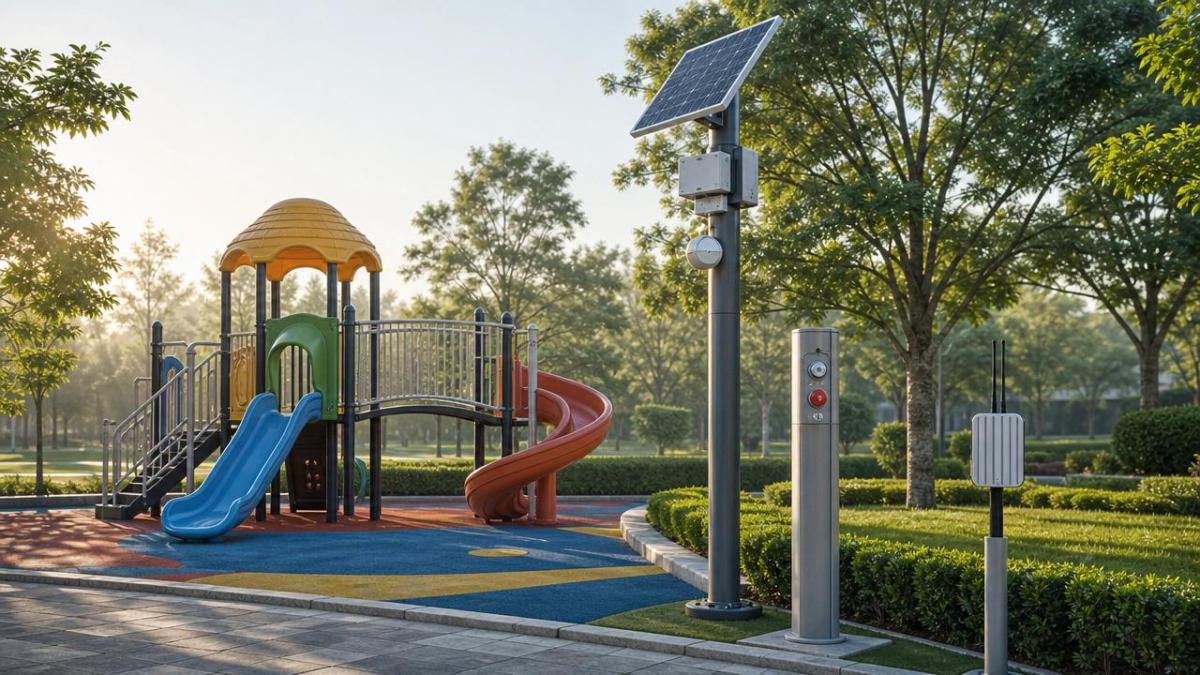
For safety managers, the playground has become a distributed outdoor system. It may include solar lighting, occupancy sensors, emergency call points, smart locks, cameras, and environmental monitors.
That shift creates a new playground safety burden: every connected device must perform reliably in heat, rain, vandalism, low battery conditions, and crowded peak-use periods.
Renewable energy makes these public spaces more resilient, but it also adds verification tasks. Solar panels, batteries, charge controllers, cables, and low-power IoT modules all affect safety availability.
The practical definition for 2026
Modern playground safety means preventing foreseeable injury through engineered surfaces, compliant structures, reliable monitoring, controlled access, documented maintenance, and verified energy continuity.
- Physical safety: impact attenuation, entrapment prevention, fall-zone clearance, corrosion resistance, and age-appropriate equipment selection.
- Operational safety: inspection schedules, fault escalation, incident logs, replacement thresholds, and accountable maintenance ownership.
- Digital safety: sensor accuracy, connectivity resilience, privacy controls, firmware management, and access authorization.
- Energy safety: battery autonomy, solar charging stability, electrical protection, low-voltage design, and backup behavior during outages.
NexusHome Intelligence approaches this environment as a fragmented IoT ecosystem, not as a marketing category. Claims such as “smart,” “green,” or “low power” require measurement.
What Should Safety Managers Verify Before Approval?
Approval should not depend on brochures. In playground safety procurement, a supplier’s promise must be translated into acceptance criteria that inspectors can test and repeat.
The following table summarizes the evidence quality control personnel should request when selecting renewable-powered monitoring or connected safety infrastructure.
This evidence helps turn playground safety from a subjective inspection routine into a traceable risk-control system. It also prevents hidden costs after installation.
Procurement red flags that deserve escalation
- A supplier claims long battery life but provides no discharge curve, load profile, or ambient-temperature test condition.
- Connectivity is described as “seamless,” yet no packet-loss, latency, or multi-node interference data is supplied.
- The monitoring platform stores inspection records, but cannot export usable audit files for compliance or insurance review.
- The solar subsystem is sized for average weather only, with no reserve calculation for seasonal low-light periods.
How Renewable Energy Changes Playground Safety Design
Renewable-powered playground infrastructure is attractive because many parks lack convenient grid access. Solar can support lighting, sensors, cameras, and emergency communications without trenching.
However, energy independence does not automatically mean dependable playground safety. Quality teams must evaluate whether the energy design matches site risk, climate, and operating hours.
Typical renewable-powered safety applications
The best configuration depends on whether the site is a school playground, municipal park, residential community, childcare facility, or remote recreational area.
These scenarios show why playground safety procurement must be site-specific. A sensor that works in a shaded school courtyard may fail in a coastal public park.
Energy parameters that deserve more attention
- Calculate daily energy consumption from real duty cycles, not only from datasheet standby current.
- Model seasonal solar yield using local shading, installation angle, and maintenance access constraints.
- Define minimum battery autonomy for critical devices such as lighting, access warnings, and emergency calls.
- Check enclosure ventilation and thermal behavior because battery aging affects monitoring reliability.
Which Standards and Compliance Signals Matter Most?
Compliance is the baseline, not the whole strategy. Playground safety programs commonly reference standards such as ASTM F1487, EN 1176, EN 1177, and related local codes.
Electrical and connected systems may also require attention to low-voltage safety, electromagnetic compatibility, cybersecurity practices, privacy law, and battery transport rules.
Compliance should be connected to operational proof
A certificate alone does not prove continued field performance. Safety managers need acceptance testing, inspection workflows, maintenance evidence, and failure response procedures.
- Confirm the applicable playground equipment and surfacing standards for the installation jurisdiction before finalizing specifications.
- Require installation records, torque checks, material batch documentation, and surface depth verification where relevant.
- For smart infrastructure, document firmware versions, network topology, power settings, and alert thresholds at handover.
- Create a corrective action workflow that defines response time, responsible role, and closure evidence.
Avoid confusing certification with risk elimination
Even compliant installations degrade. UV exposure, drainage failure, loose fasteners, depleted batteries, and network congestion can reduce playground safety after commissioning.
Smart Monitoring Options: What Should You Compare?
There is no universal monitoring architecture for playground safety. The right choice depends on power availability, privacy requirements, maintenance capacity, and acceptable alarm latency.
Before procurement, compare not only hardware price but also field performance under interference, data ownership, and the cost of missed alerts.
The comparison makes one point clear: playground safety technology should be selected by risk profile, not by the longest feature list.
Where NHI’s verification approach adds value
NHI evaluates smart infrastructure through data, protocol behavior, energy consumption, and hardware-level reliability. That is critical when playground safety relies on connected devices.
Instead of accepting “Works with Matter” or “ultra-low power,” the focus is latency, packet loss, battery discharge, sensor drift, and real operating constraints.
Implementation Checklist for Quality Control Teams
A disciplined rollout reduces project delays and avoids late-stage disputes. Safety managers should divide playground safety implementation into specification, testing, handover, and monitoring phases.
Recommended step-by-step workflow
- Define site risks, including age group, peak occupancy, climate exposure, lighting needs, and emergency response expectations.
- Translate risks into measurable specifications for surfaces, structures, renewable power, sensors, gateways, and maintenance records.
- Request supplier evidence, including test reports, installation manuals, environmental ratings, power budgets, and data export formats.
- Run acceptance checks on site, including connectivity mapping, alert response tests, battery verification, and physical inspection.
- Set inspection intervals based on usage and exposure, not only on minimum compliance schedules.
- Review incident data quarterly to identify recurring hazards, underperforming components, and training gaps.
Budget control without compromising safety
When budgets are limited, prioritize high-severity risks first. Surface performance, structural stability, lighting reliability, and emergency communication usually outrank cosmetic upgrades.
For connected systems, choose modular infrastructure. A basic solar power pole with open data interfaces can support future playground safety upgrades.
Common Misconceptions About Playground Safety in 2026
Many organizations still treat playground safety as a procurement checklist. That mindset misses the operational complexity of renewable-powered and connected public spaces.
Misconception 1: Smart monitoring replaces trained inspections
Sensors can detect patterns, but they cannot replace human judgment. Inspectors still need to evaluate wear, misuse, drainage, entrapment risks, and user behavior.
Misconception 2: Solar means maintenance-free
Solar panels require cleaning, orientation checks, enclosure inspection, and battery health monitoring. Neglect can silently reduce playground safety system availability.
Misconception 3: More data automatically means better safety
Data is useful only when it is accurate, actionable, and reviewed. Poorly tuned alarms can bury critical playground safety signals inside irrelevant notifications.
FAQ: Practical Questions from Safety and QC Teams
How often should playground safety inspections be performed?
Frequency depends on usage, climate, equipment type, and local rules. High-traffic public sites may need daily visual checks and scheduled detailed inspections.
Connected alerts can support the process, but inspection intervals should remain documented and risk-based, especially after storms, vandalism, or major events.
What should be checked first when buying solar-powered playground monitoring?
Start with the power budget. Confirm active current, standby current, transmission frequency, battery capacity, charging profile, and expected autonomy in poor sunlight.
Then evaluate enclosure rating, installation height, vandal resistance, network coverage, and whether maintenance staff can replace or service components safely.
Is video monitoring necessary for playground safety?
Not always. Video may help in high-risk or unsupervised areas, but it raises privacy, storage, power, and governance questions.
In many sites, lighting, access logs, emergency buttons, and maintenance sensors provide a more proportionate safety layer.
How can managers reduce liability after installation?
Maintain clear records. Keep inspection logs, corrective actions, supplier documents, calibration dates, firmware changes, and incident responses in an auditable format.
Liability risk decreases when the organization can show reasonable decisions, timely repairs, and evidence-based playground safety management.
Why Choose NHI for Data-Driven Playground Safety Decisions?
NexusHome Intelligence helps bridge fragmented ecosystems through data. For playground safety projects, that means connecting physical risk control with IoT verification and renewable energy reliability.
Our perspective is built for quality control teams, safety managers, procurement leaders, and solution architects who cannot rely on vague technical claims.
What you can consult before your next project
- Parameter confirmation for sensors, gateways, batteries, solar modules, enclosures, and alert platforms.
- Product selection support based on site risks, climate exposure, maintenance capacity, and compliance expectations.
- Delivery-cycle discussion for pilot testing, sample review, field verification, and staged deployment.
- Custom solution evaluation for renewable-powered lighting, access control, edge monitoring, and inspection records.
- Certification and documentation review to align playground safety requirements with local procurement and audit needs.
- Quotation communication support that compares total lifecycle cost, not only initial equipment price.
If your organization is planning a new playground, upgrading public park infrastructure, or evaluating smart monitoring suppliers, start with measurable requirements.
Contact NHI to discuss playground safety parameters, renewable energy constraints, protocol choices, sample validation, compliance documentation, and procurement-ready comparison data.
Protocol_Architect
Dr. Thorne is a leading architect in IoT mesh protocols with 15+ years at NexusHome Intelligence. His research specializes in high-availability systems and sub-GHz propagation modeling.
Related Recommendations
- Dr. Aris ThorneHow to Build a Voice-Enabled Smart Home Ecosystem That Works Across Brands
- Dr. Aris ThorneHow to Choose a Jewelry Pliers Set for Precision Wirework and Small Repairs
- Dr. Aris ThorneSupplier Capability Criteria for Renewable Energy Projects: A Procurement Checklist
- Dr. Aris ThorneCustom Printed Lanyards for Renewable Energy Sites: What Buyers Should Specify
- Dr. Aris ThorneSmart Home Protocol Analysis: How to Compare Matter, Zigbee, and Wi-Fi for Device Interoperability
- Dr. Aris ThorneMatter 1.4 Released as EU CE Rules Add Mandatory Thread/Zigbee Interoperability Tests
- Dr. Aris ThorneNorth America Property Technology: Market Opportunities, Adoption Drivers, and Key Challenges
- Dr. Aris Thorne7075 vs 6061 Aluminum in Europe: Which Alloy Fits Renewable Energy Structures?
- Dr. Aris ThorneMatter Compatibility Certification: What Device Makers Need to Pass Testing
- Dr. Aris ThorneEU EN 303 647 v2.1.1 Makes New EMC Tests Mandatory
Analyst