
IOTE to Spotlight Matter, Zigbee and Wi-Fi 7 Interoperability
author
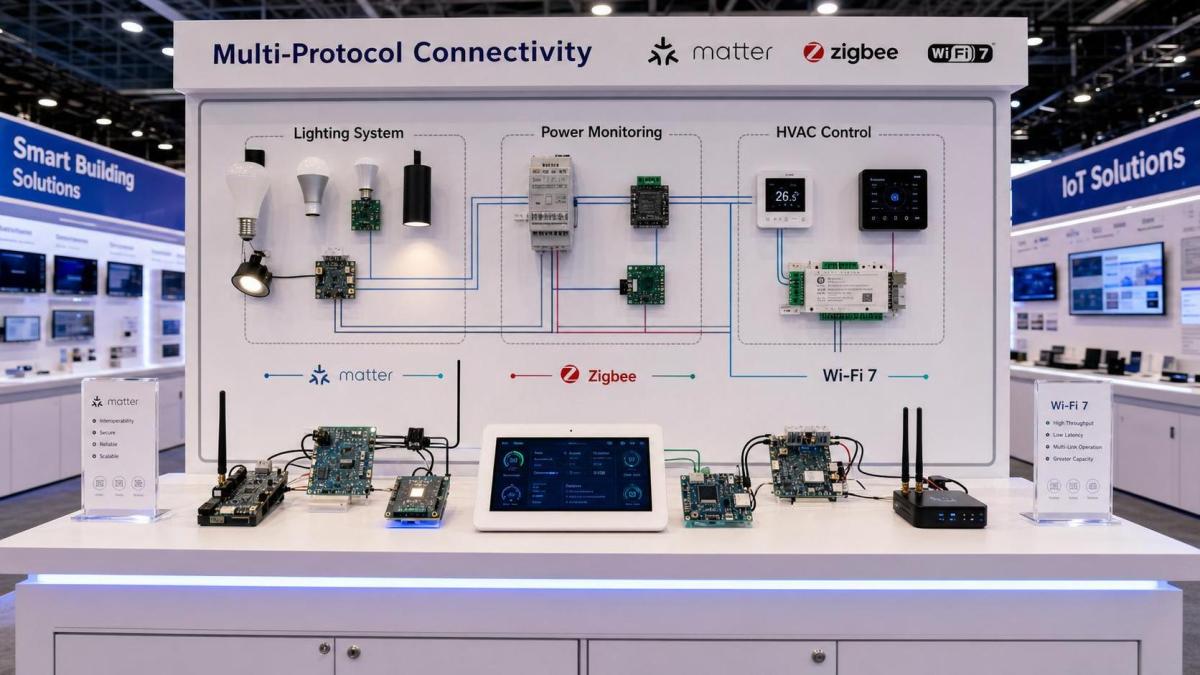
From July 22 to 24, 2026, the IOTE exhibition in Shenzhen is set to open a dedicated interoperability area centered on Matter, Zigbee and Wi-Fi 7. The event is notable not simply because of the protocols involved, but because it brings terminal reference designs, compatibility validation and supplier matchmaking into one setting, making it relevant for device makers, PCBA suppliers, sensor solution providers, overseas distributors and buyers assessing cross-protocol product readiness.
What has been confirmed for the Shenzhen event
According to the provided event information, IOTE in Shenzhen will run from July 22 to 24, 2026 and will include a “Multi-Protocol Interop Zone.” This area will focus on reference designs for smart lighting, power monitoring and HVAC automation terminals that support the coexistence of Matter, Zigbee and Wi-Fi 7. The same information states that the exhibition will attract more than 200 Chinese PCBA and sensor solution providers, and that it is intended to serve overseas distributors as a one-stop platform for cross-protocol compatibility verification and procurement matchmaking.
Why different market participants may pay attention
For device and terminal developers
From an industry perspective, the most direct signal is that interoperability is being presented around specific end-device categories rather than as a purely technical concept. For teams working on smart lighting, power monitoring or HVAC automation products, the practical impact may show up in product definition, interface planning and protocol support decisions. What deserves closer attention is whether buyers begin to treat multi-protocol coexistence as a baseline discussion point in these categories.
For PCBA and sensor solution providers
Analysis shows that the exhibition format may matter because it combines component-side supply with compatibility-oriented presentation. For PCBA companies and sensor firms, the likely impact is less about immediate volume conclusions and more about how they position themselves in upstream collaboration, design-in discussions and sample evaluation. Suppliers may need to watch whether customers increasingly ask not only for hardware capability, but also for clearer proof of cross-protocol integration readiness.
For overseas distributors and sourcing teams
Observably, the event is framed as a procurement and verification entry point for overseas distributors. That suggests a potential shift in how sourcing conversations are organized: not only around price and availability, but around whether compatibility can be checked efficiently across multiple protocols before purchasing decisions move forward. For distribution and procurement roles, the main area to watch is whether interoperability validation becomes a routine sourcing filter rather than an added technical step later in the process.
For downstream application and service businesses
Companies serving building, energy-management or connected-device deployment scenarios may also view this development as relevant. The stated focus on smart lighting, power monitoring and HVAC automation indicates where interoperability discussions are becoming more application-linked. The operational effect, if any, would likely emerge in solution selection, partner screening and pre-delivery coordination rather than in any immediate market conclusion.
What companies should track next
How interoperability is defined in practice
What deserves closer attention is the practical meaning of “coexistence” for Matter, Zigbee and Wi-Fi 7 in the showcased reference designs. Companies should distinguish between a display-level message and the specific validation scope that customers may later request in real projects, especially when preparing product documents, test materials and technical communication.
Which product categories are receiving early emphasis
The current information highlights smart lighting, power monitoring and HVAC automation. For manufacturers, distributors and sourcing teams, these are the categories most worth tracking first, because they may indicate where cross-protocol expectations are becoming more visible in customer-facing discussions and partner selection.
How procurement talks may change
Because the event is described as a one-stop platform for compatibility verification and procurement matchmaking, companies involved in sales and delivery should watch for changes in pre-sales workflows. That may include earlier requests for compatibility evidence, more detailed supplier qualification questions and tighter coordination between engineering and commercial teams during buyer engagement.
Whether follow-up communication becomes more standardized
Analysis shows that when interoperability becomes a headline topic, supplier communication often needs to become more structured. In this case, companies may need to prepare clearer materials on reference design fit, supported protocol combinations, validation boundaries and delivery coordination, even if the exhibition itself does not yet establish any broader industry rule.
How this development is best understood at this stage
Observably, this update is better read as an industry signal than as a confirmed market outcome. The confirmed facts show that interoperability is being foregrounded at a trade event through concrete application categories and a supply-side participation base. However, the information provided does not by itself confirm changes in standards adoption speed, order volume or long-term purchasing behavior. It is more appropriate to understand this as a structured indicator of where supplier-buyer discussions may be heading, while continuing to watch how the topic develops after the exhibition.
A measured takeaway for the market
The immediate significance of this event lies in how it connects multi-protocol terminal design, compatibility checking and sourcing access within one exhibition setting. For the industry, the more useful interpretation is not that outcomes are already settled, but that interoperability around Matter, Zigbee and Wi-Fi 7 is being framed more directly around product categories and procurement conversations. At this point, it is more appropriate to view the development as a near-term signal with possible longer-term implications, rather than as proof of a completed market shift.
Basis of this article and what still needs verification
This article is based on the user-provided news title, event date and event summary. For this type of industry update, commonly relevant source categories may include official event announcements, company statements, industry association information, authoritative media coverage and standards-related documents. A specific official source link was not provided in the input, so further verification remains necessary. Follow-up attention should focus on any later official wording, updates to exhibition disclosures and any post-event information that clarifies how interoperability verification and procurement matching are implemented in practice.
Protocol_Architect
Dr. Thorne is a leading architect in IoT mesh protocols with 15+ years at NexusHome Intelligence. His research specializes in high-availability systems and sub-GHz propagation modeling.
Related Recommendations
- Dr. Aris ThorneHow to Build a Voice-Enabled Smart Home Ecosystem That Works Across Brands
- Dr. Aris ThorneHow to Choose a Jewelry Pliers Set for Precision Wirework and Small Repairs
- Dr. Aris ThorneSupplier Capability Criteria for Renewable Energy Projects: A Procurement Checklist
- Dr. Aris ThorneCustom Printed Lanyards for Renewable Energy Sites: What Buyers Should Specify
- Dr. Aris ThorneSmart Home Protocol Analysis: How to Compare Matter, Zigbee, and Wi-Fi for Device Interoperability
- Dr. Aris ThorneMatter 1.4 Released as EU CE Rules Add Mandatory Thread/Zigbee Interoperability Tests
- Dr. Aris ThorneNorth America Property Technology: Market Opportunities, Adoption Drivers, and Key Challenges
- Dr. Aris Thorne7075 vs 6061 Aluminum in Europe: Which Alloy Fits Renewable Energy Structures?
- Dr. Aris ThorneMatter Compatibility Certification: What Device Makers Need to Pass Testing
- Dr. Aris ThorneEU EN 303 647 v2.1.1 Makes New EMC Tests Mandatory
Analyst