
How to Read a Matter Compatibility Chart
author
Reading a Matter compatibility chart correctly means answering one practical question first: will these devices actually work together in your building, energy, or smart home scenario without creating hidden performance, maintenance, or procurement risks? For renewable energy teams, operators, and decision-makers, a chart is not just a list of supported brands. It is a screening tool for interoperability, Thread border router dependence, HVAC integration with Matter, energy monitoring accuracy class 1.0, and even whether thread vs zigbee mesh range will affect stable control in the field.
If you are evaluating devices for smart buildings, distributed energy systems, or connected homes, the safest approach is this: do not read a Matter chart as a yes/no compatibility table. Read it as a layered document that reveals transport method, ecosystem dependency, feature scope, energy data quality, and control reliability under real deployment conditions.
What a Matter compatibility chart is really telling you
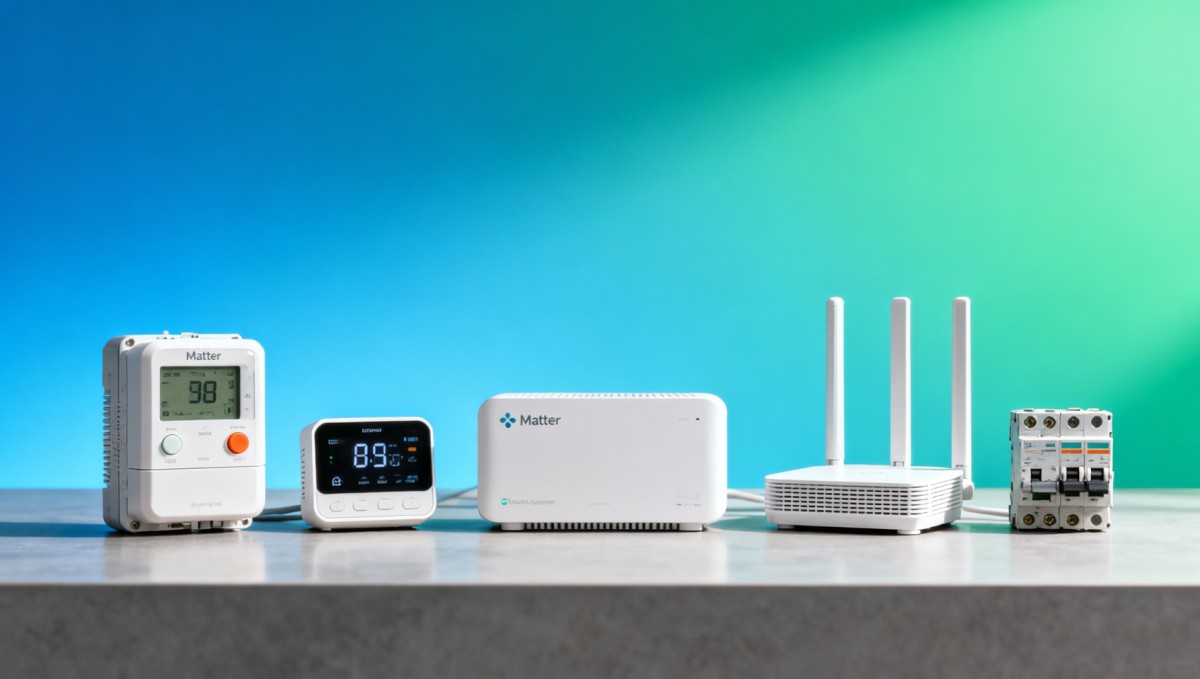
A Matter compatibility chart usually shows which devices, ecosystems, controllers, and transport layers can work together. On the surface, it may look simple: device type, supported platform, connection method, and certification status. But for professional buyers and technical evaluators, the chart is more useful when treated as a risk map.
In practice, a good chart helps you answer five questions:
- Is the device truly Matter-native, or does it rely on a bridge?
- Does it run over Thread, Wi-Fi, or Ethernet, and what does that mean for deployment?
- Which functions are available through Matter, and which remain locked inside a vendor app?
- Will it integrate into HVAC, energy monitoring, or load management workflows?
- Is the listed compatibility based on certification only, or on real-world tested behavior?
This distinction matters because two devices may both carry “Works with Matter” messaging while offering very different field performance. One may support direct local control with stable telemetry, while another may only expose basic on/off commands and fail to provide the data needed for peak load shifting or energy optimization.
Start with the most important distinction: native Matter device vs bridge-based compatibility
The first thing to look for in a Matter ecosystem compatibility chart is whether the product is a native Matter endpoint or merely compatible through a bridge. This changes everything from latency to feature availability.
Native Matter devices communicate directly within the Matter framework. These are generally easier to evaluate because the protocol path is clearer, and interoperability tends to be more predictable.
Bridge-based devices connect through a hub or gateway that translates another protocol such as Zigbee, BLE, or proprietary RF into Matter. These solutions can still be useful, especially in retrofit environments, but the chart should be read carefully.
For business evaluation, bridge-based compatibility raises several questions:
- Will all device features pass through the bridge, or only basic controls?
- What happens if the gateway fails or loses cloud connection?
- Does the bridge add delay that affects HVAC scheduling or demand response control?
- Can telemetry still support accurate energy monitoring and automation logic?
For example, in a renewable energy or smart building context, a bridged thermostat may show up as “compatible,” but if detailed operating states, sensor feedback, or advanced scheduling logic are missing, then the integration may be inadequate for serious building energy control.
How to read transport layers: Thread, Wi-Fi, Ethernet, and why they affect performance
Many users stop at the compatibility logo and overlook the transport layer. That is a mistake. A chart that lists Matter over Thread, Matter over Wi-Fi, or Matter over Ethernet is giving you a major clue about reliability, range, latency, and power behavior.
Matter over Thread is often preferred for low-power sensors, switches, and distributed control points. It can be efficient and resilient, but depends on mesh quality and the presence of a Thread border router. If your chart lists Thread-based devices, you should immediately ask whether the target environment has enough stable routing nodes and whether the site design supports the required coverage.
Matter over Wi-Fi is common for cameras, appliances, and devices needing higher bandwidth. It can be easier to deploy in some locations, but network congestion, power requirements, and router quality become more critical.
Matter over Ethernet is usually the most predictable choice for fixed infrastructure where uptime and low latency matter, such as energy gateways or central building controllers.
When comparing thread vs zigbee mesh range, remember that a compatibility chart may not tell you enough by itself. Range depends on building materials, node density, interference, and network design. A chart can indicate protocol support, but not guaranteed field coverage. This is especially important in large residential developments, commercial retrofits, and mixed-use renewable energy projects where signal propagation is inconsistent.
Do not assume “compatible” means full feature support
This is one of the biggest sources of procurement mistakes. A Matter compatibility chart may confirm that a device pairs successfully with a platform, but pairing is not the same as full operational value.
Read the chart and supporting documentation for these feature-level details:
- Basic control only, or advanced automation support?
- Sensor data exposed, or only binary status?
- Local control available, or cloud-dependent workflows still required?
- Firmware updates supported through the chosen ecosystem?
- Scenes, schedules, and energy events available across platforms?
This is where operational users and enterprise buyers should align. An operator may only need reliable switching, but a business decision-maker may need lifecycle visibility, standardized deployment, and fewer truck rolls. If a device works with Matter but still requires a proprietary app for commissioning, maintenance, or diagnostics, the total cost of ownership may be higher than the chart suggests.
How to evaluate HVAC integration with Matter from a chart
For renewable energy and smart building applications, HVAC integration is often a higher-value use case than simple lighting or plug control. But compatibility charts can be misleading if you do not check what level of HVAC control is actually supported.
Look for evidence of the following:
- Thermostat support vs full HVAC controller support
- Temperature, humidity, occupancy, and system mode exposure
- Setpoint control granularity
- Multi-zone compatibility
- Support for local automation and energy optimization routines
If your use case includes demand response, room-level comfort management, or solar-aware load optimization, the chart should be treated as an entry point, not a final answer. Ask whether the integration supports enough command depth and feedback data to coordinate with battery storage, time-of-use pricing, or smart home peak load shifting strategies.
A thermostat labeled compatible may be sufficient for residential convenience, but not for enterprise-grade control where timing, data consistency, and failure handling matter.
How compatibility charts affect energy monitoring and peak load shifting decisions
In renewable energy environments, device compatibility is not just about convenience. It affects whether you can trust the data used for energy balancing, reporting, and automated control.
If you are assessing smart plugs, relays, submeters, or controllers through a Matter ecosystem chart, look beyond connectivity and ask:
- Does the device expose energy data through Matter?
- What measurement values are available: power, voltage, current, consumption?
- How often is data refreshed?
- Is the data quality suitable for operational decisions?
- Does the vendor disclose energy monitoring accuracy class 1.0 or an equivalent verified standard?
These points are critical for smart home peak load shifting and small-scale building energy optimization. A device may be compatible enough to turn loads on and off, but not accurate enough to support energy reporting, tariff response, or carbon reduction analysis.
For business evaluation teams, this is where benchmark-style testing matters more than marketing language. If the chart is not backed by data on telemetry stability, command response, and measurement accuracy, compatibility alone should not drive procurement.
What enterprise buyers and technical teams should verify before trusting the chart
For enterprise decision-makers, the real value of a Matter compatibility chart is as a prequalification document. It helps narrow options, but it should never replace technical due diligence.
Before approval, verify these areas:
- Certification status: Is the product officially Matter-certified, and for which device type?
- Firmware maturity: Is Matter support stable or recently added?
- Interoperability scope: Which ecosystems have been field-tested, not just declared?
- Operational resilience: What happens during router failure, border router changes, or network congestion?
- Security and maintenance: How are credentials, updates, and device lifecycle managed?
- Data usefulness: Does the device provide enough telemetry for analytics, automation, and service operations?
For procurement teams, this approach reduces the risk of buying products that are technically compatible but operationally weak. For operators, it reduces the chance of fragmented controls and unstable behavior after rollout.
A practical checklist for reading a Matter compatibility chart correctly
If you want a fast and reliable reading method, use this checklist:
- Identify whether the device is native Matter or bridge-dependent
- Check the transport layer: Thread, Wi-Fi, or Ethernet
- Confirm the required infrastructure, especially border routers and controllers
- Review which features are supported through Matter, not just through the vendor app
- Assess whether the device exposes operational data useful for automation or energy management
- Look for stated limits, such as ecosystem restrictions or reduced functionality
- Validate energy monitoring accuracy and telemetry quality where energy use cases matter
- Request real-world test data if the deployment is commercial or business-critical
This process turns the chart from a marketing reference into a decision tool.
Conclusion: read the chart as a compatibility signal, not as final proof
A Matter compatibility chart is useful, but only when read with the right mindset. It can show ecosystem alignment, protocol path, and likely integration potential. It cannot, by itself, guarantee stable automation, accurate energy data, or successful HVAC and renewable energy deployment.
The best overall judgment is simple: if the chart helps you confirm native support, transport method, feature depth, and infrastructure requirements, it is valuable. If it only shows logos and vague compatibility claims, it is incomplete for serious procurement or technical planning.
For renewable energy teams, smart building operators, and enterprise buyers, the smartest way to read a Matter chart is to connect protocol compatibility with real operating outcomes: control reliability, energy monitoring accuracy, scalable integration, and lifecycle risk. That is where real value begins.
Protocol_Architect
Dr. Thorne is a leading architect in IoT mesh protocols with 15+ years at NexusHome Intelligence. His research specializes in high-availability systems and sub-GHz propagation modeling.
Related Recommendations
- Dr. Aris ThorneHow to Build a Voice-Enabled Smart Home Ecosystem That Works Across Brands
- Dr. Aris ThorneHow to Choose a Jewelry Pliers Set for Precision Wirework and Small Repairs
- Dr. Aris ThorneSupplier Capability Criteria for Renewable Energy Projects: A Procurement Checklist
- Dr. Aris ThorneCustom Printed Lanyards for Renewable Energy Sites: What Buyers Should Specify
- Dr. Aris ThorneSmart Home Protocol Analysis: How to Compare Matter, Zigbee, and Wi-Fi for Device Interoperability
- Dr. Aris ThorneMatter 1.4 Released as EU CE Rules Add Mandatory Thread/Zigbee Interoperability Tests
- Dr. Aris ThorneNorth America Property Technology: Market Opportunities, Adoption Drivers, and Key Challenges
- Dr. Aris Thorne7075 vs 6061 Aluminum in Europe: Which Alloy Fits Renewable Energy Structures?
- Dr. Aris ThorneMatter Compatibility Certification: What Device Makers Need to Pass Testing
- Dr. Aris ThorneEU EN 303 647 v2.1.1 Makes New EMC Tests Mandatory
Analyst