
Japan METI Ends Smart Lighting Matter Exemption
author
On May 11, 2026, Japan’s Ministry of Economy, Trade and Industry (METI) updated the enforcement rules of the Electrical Appliance and Material Safety Act, formally terminating the exemption for local control functionality in Matter-enabled smart lighting products. This regulatory shift directly impacts global lighting manufacturers exporting to Japan—especially those relying on cloud-dependent Matter implementations—and signals a tightening of cybersecurity, reliability, and offline resilience requirements for connected devices.
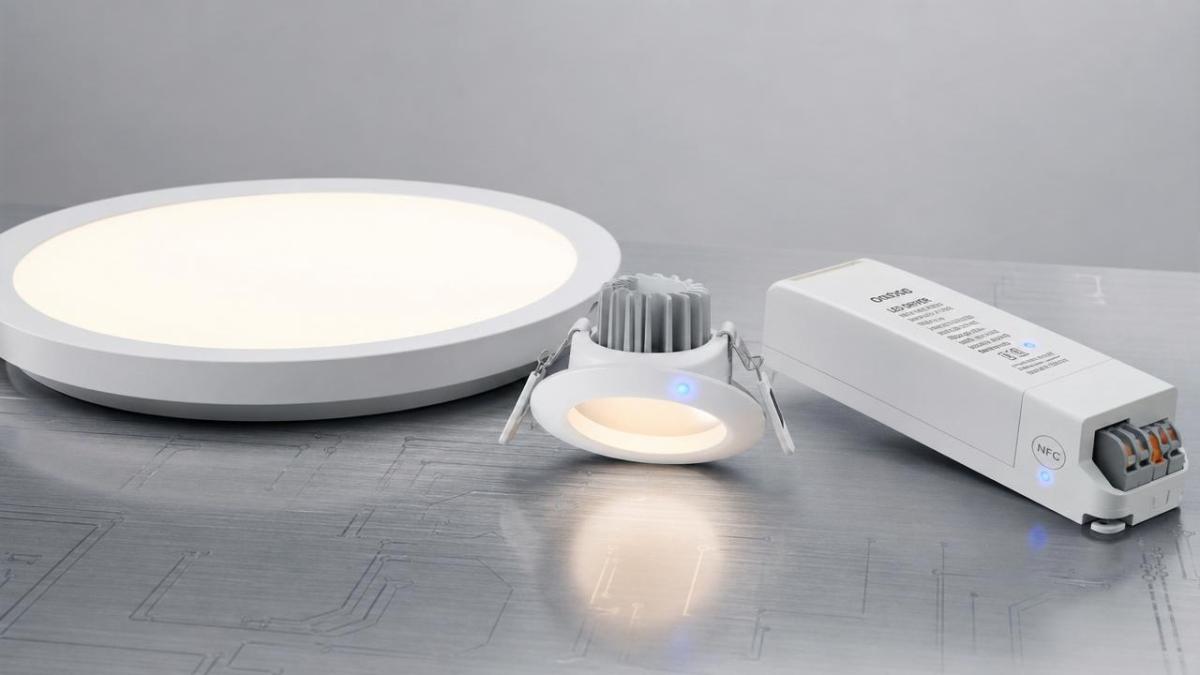
Event Overview
On May 11, 2026, METI revised the technical implementation guidelines under the Electrical Appliance and Material Safety Act. Effective September 1, 2026, all Matter-compliant smart lighting products sold in Japan—including smart lamps, LED drivers, and power monitoring panels—must undergo mandatory ‘offline local control verification’ conducted by METI-authorized conformity assessment bodies (e.g., JET, UL Japan). Verification requires functional validation of basic controls—on/off, dimming, and color temperature adjustment—via Bluetooth LE or NFC while disconnected from the internet.
Industries Affected
Direct Trading Enterprises: Exporters and brand owners distributing Matter-certified lighting into Japan must now revalidate product compliance for local control. This triggers additional certification timelines, documentation updates (including firmware revision logs and test reports), and potential delays at customs if pre-market verification is incomplete. Non-compliant stock may face rejection upon import clearance after September 2026.
Raw Material Procurement Enterprises: Suppliers of wireless SoCs (e.g., Nordic nRF52/54 series, Silicon Labs EFR32), NFC controllers, and certified BLE firmware stacks will see rising demand for dual-mode (Matter + local BLE/NFC) reference designs. However, procurement teams must now verify not only chip-level certifications but also their integration readiness for METI’s specific offline command set and latency thresholds—adding due diligence layers beyond standard Matter qualification.
Contract Manufacturing & ODM Enterprises: Chinese lighting ODMs—particularly those serving North American and European brands—are most exposed. The requirement mandates firmware-level redesign to decouple core lighting functions from Matter’s Thread/Wi-Fi dependency and embed low-latency local control logic. This raises development costs, extends time-to-certification by an estimated 8–12 weeks per SKU, and increases validation complexity for multi-vendor hardware platforms.
Supply Chain Service Providers: Third-party testing labs, certification consultants, and firmware integration partners must expand service offerings to include METI-specific offline control test scripts, interoperability benchmarking against JET’s reference gateway, and bilingual (English/Japanese) technical documentation support. Capacity constraints are anticipated as demand surges ahead of the September 2026 deadline.
Key Focus Areas and Recommended Actions
Verify current firmware architecture against METI’s offline command scope
Manufacturers should audit whether existing Matter firmware supports full local execution of at least three base commands (power toggle, brightness level change, CCT adjustment) via BLE or NFC without any cloud or hub mediation—and confirm response latency remains under 500 ms, per preliminary JET guidance.
Engage METI-authorized bodies early for pre-assessment
Given limited lab capacity and evolving interpretation of ‘local control’, initiating gap analysis with JET or UL Japan before Q3 2026 is strongly advised—not just for final certification, but to align on acceptable communication protocols, secure element usage, and firmware update mechanisms that preserve offline capability.
Re-evaluate component sourcing for dual-mode readiness
Procurement teams should prioritize SoCs with built-in NFC/BLE coexistence features and vendor-provided Matter+local control SDKs (e.g., NXP KW45, Infineon PSoC 64). Avoid components requiring external MCU offloading for local command handling, as such architectures complicate certification traceability.
Editorial Perspective / Industry Observation
Observably, METI’s move does not signal a rejection of Matter—but rather a calibrated insistence on functional sovereignty and user autonomy in critical home infrastructure. Unlike the EU’s EN 303 647 (which focuses on radio emissions), this rule targets behavior: ensuring lighting remains usable during network outages, cyber incidents, or platform discontinuation. Analysis shows Japan is positioning itself as a de facto standard-setter for ‘resilient interoperability’—a concept likely to influence future revisions of IEC 63296 and Korea’s KC 62368-2 adoption pathways. From an industry perspective, this is less about compliance overhead and more about redefining what ‘smart’ means when connectivity fails.
Conclusion
This policy shift underscores a broader global trend: regulatory frameworks are evolving from ‘does it connect?’ to ‘does it work—reliably, safely, and independently—when it must?’. For lighting OEMs and supply chain actors, adapting to METI’s local control mandate is not merely a market-access hurdle—it is an opportunity to strengthen product robustness, diversify control architecture, and build trust in an increasingly volatile digital ecosystem.
Source Attribution
Official notice issued by Japan’s Ministry of Economy, Trade and Industry (METI), Cabinet Office Notification No. 172 of 2026, published May 11, 2026, under the Electrical Appliance and Material Safety Act (Act No. 234 of 1961). Technical specifications referenced in Annex 3-B (Smart Lighting Local Control Verification Protocol). Note: JET’s detailed test procedure document is scheduled for public release on July 15, 2026; stakeholders are advised to monitor JET’s official portal for updates.
Protocol_Architect
Dr. Thorne is a leading architect in IoT mesh protocols with 15+ years at NexusHome Intelligence. His research specializes in high-availability systems and sub-GHz propagation modeling.
Related Recommendations
- Kenji Sato (Infrastructure Arch)Smart Dimmer Switches With RF Control vs Wi-Fi Dimmers: Key Differences for Retrofit Projects
- Kenji Sato (Infrastructure Arch)How to Choose Hotel Sofas for High-Traffic Spaces: Materials, Comfort, and Durability
- Kenji Sato (Infrastructure Arch)Smart Lighting Hardware Verification: What to Test Before Pilot Deployment
- Kenji Sato (Infrastructure Arch)How to Turn Project Specification Planning for Smart Lighting Into a Scalable Retrofit Plan
- Kenji Sato (Infrastructure Arch)SixG301 Gains First-Wave Matter Platform Certification
- Kenji Sato (Infrastructure Arch)Executive Office Desks Buying Guide: Sizes, Materials, Storage, and Cable Management
- Kenji Sato (Infrastructure Arch)PA Systems for Schools: How to Choose Coverage, Zoning, and Emergency Features
- Kenji Sato (Infrastructure Arch)Park Benches Wholesale Buying Guide: Materials, MOQ, Lead Times, and Outdoor Durability
- Kenji Sato (Infrastructure Arch)How to Choose Ceramic Dinnerware for Restaurants: Material, Durability, and Cost
- Kenji Sato (Infrastructure Arch)Wholesale Bath Towels for Hotels: GSM, Material, and Cost Factors Buyers Should Compare
Analyst