
Medical IoT sensors: what testing should come first?
author
Before scaling medical IoT sensors, testing should start with the metrics that expose real-world risk: continuous glucose monitoring latency, SpO2 sensor accuracy, protocol latency benchmark, and hardware root of trust. For buyers, operators, and evaluators navigating the IoT supply chain, NexusHome Intelligence brings IoT engineering truth through smart home hardware testing, health tech hardware testing, and independent IoT hardware benchmarking that turns vendor claims into verifiable data.
Why should medical IoT sensor testing start with risk, not marketing claims?
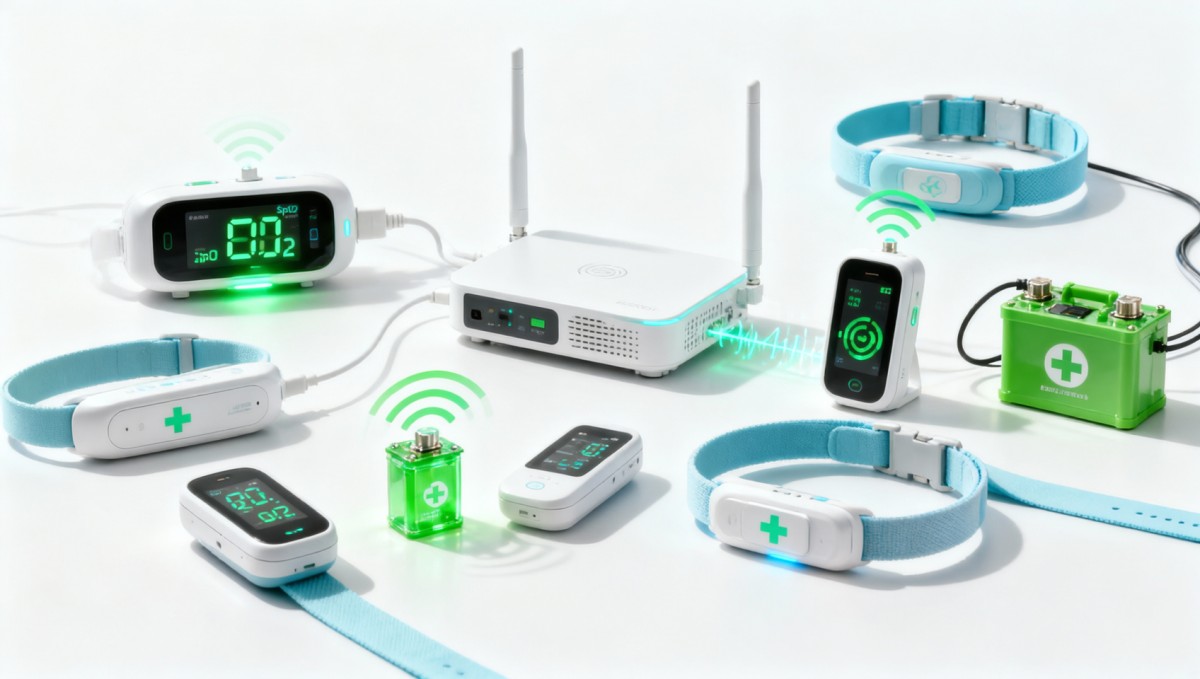
In renewable energy environments, medical IoT sensors are not deployed in isolation. They are increasingly used in worker safety programs, remote field operations, smart buildings attached to energy assets, and distributed care settings powered by microgrids or backup systems. That is why early testing should focus on what fails first in the field: unstable data transmission, delayed alerts, poor optical sensing, battery degradation, and insecure hardware trust anchors.
For operators, the first question is practical: will the sensor deliver readable, timely data during long shifts, temperature swings, and noisy wireless conditions? For procurement teams, the question is broader: which claims can be verified before a pilot expands from 20 units to 2,000 units? For business evaluators, the concern is financial: which hidden failure modes can trigger replacement costs, support load, or compliance exposure within the first 6–12 months?
This is exactly where NexusHome Intelligence (NHI) creates value. NHI does not treat “medical-grade,” “ultra-low power,” or “works with Matter” as proof. It treats them as hypotheses to be tested. In fragmented smart ecosystems, protocol silos and hardware variability create measurable risk. A sensor that performs well in a clean lab may underperform in renewable energy facilities where BLE coexistence, Thread congestion, HVAC interference, and power management constraints overlap.
A practical testing sequence should therefore begin with four categories: sensing accuracy, transmission latency, security at the hardware level, and endurance under environmental stress. These four categories expose most procurement mistakes early, usually within the first 2–4 weeks of engineering validation, before teams lock in vendor contracts, integration budgets, or multi-site deployment plans.
The four metrics that should come first
- Continuous glucose monitoring latency: not because every project uses CGM, but because latency is a model for clinically relevant delay. In any remote health or worker monitoring workflow, delayed readings reduce response value.
- SpO2 sensor accuracy: optical sensing is highly sensitive to motion, skin variability, ambient light, and power conditions. It is one of the fastest ways to reveal whether a wearable sensor platform is robust or only presentation-ready.
- Protocol latency benchmark: whether the device uses BLE, Wi-Fi, Thread, Zigbee, or gateway-based forwarding, transport delay should be measured in realistic node density and interference conditions, not ideal bench setups.
- Hardware root of trust: if secure boot, key storage, or device identity are weak, every downstream software update and every connected renewable energy site inherits unnecessary risk.
Taken together, these metrics give a buyer a faster signal than broad feature lists. They also align with NHI’s verification philosophy: trust should be earned by benchmark data, protocol compliance, and stress testing, not by brochure language.
Which tests matter most in renewable energy and distributed operations?
Renewable energy projects introduce operating conditions that can distort medical IoT sensor performance. Solar farms, wind sites, battery energy storage facilities, and hybrid smart buildings often combine long-distance wireless links, metal-heavy infrastructure, rotating equipment, and irregular maintenance windows. In these settings, a sensor should not be judged only by nominal specification sheets. It should be tested against deployment reality.
For example, a wearable sensor used in remote technician wellness monitoring may operate for 8–12 hours per shift, sync through a gateway at intervals of 1–5 minutes, and experience repeated transitions between indoor and outdoor environments. Under these conditions, battery curve stability, reconnection time, packet loss, and timestamp consistency become more important than headline battery-life claims based on light-duty use.
The table below shows a practical testing framework for medical IoT sensors used in renewable energy adjacent environments. It helps procurement teams and evaluators compare what should be validated first, what failure looks like, and why the result matters to operations.
The priority is clear. Start with the tests that reveal whether the device is trustworthy under routine stress. If a vendor cannot support transparent benchmarking for these areas in the first evaluation round, it becomes harder to justify expansion into larger procurement volumes or multi-site trials.
Three deployment scenarios where first-stage testing changes buying decisions
Remote workforce monitoring at energy sites
In this scenario, the most important checks are sensor uptime, event latency, and gateway interoperability. A device that drops sync after 20–30 minutes of intermittent coverage can create false confidence. Teams should verify reconnection speed, offline buffering, and timestamp continuity before discussing scale pricing.
Smart buildings with integrated energy systems
Here, protocol coexistence matters. Medical IoT sensors may share airspace with HVAC controls, access systems, smart meters, and lighting networks. Testing should include interference-heavy periods, especially in buildings using multiple protocols such as BLE, Zigbee, and Thread across overlapping zones.
Backup power or microgrid supported care environments
When local power conditions fluctuate or failover events occur, low-power behavior becomes critical. Buyers should examine wake cycles, charging resilience, and whether the sensor keeps secure identity and reliable event logging after repeated power transitions over 24–72 hour test windows.
How should buyers compare CGM latency, SpO2 accuracy, protocol delay, and hardware root of trust?
Not every project needs a CGM sensor, but CGM latency is still an instructive benchmark because it forces teams to evaluate time-sensitive sensing end to end. It is not enough to ask whether a sensor reads correctly. Buyers should ask how long it takes to sample, process, transmit, display, and store that reading under realistic network conditions. This mindset also improves evaluation of SpO2 wearables and related health tech hardware.
SpO2 accuracy, meanwhile, should never be reduced to a single headline number. Procurement teams should look for test evidence across movement, rest, changing light conditions, and repeated wear periods. A device may appear stable in static conditions but drift once users move across a site or wear protective equipment. In renewable energy operations, these variables are common rather than exceptional.
Protocol latency benchmarking should also be separated from radio marketing. Terms such as “low-latency wireless” often conceal important details: packet retry rate, gateway buffering, encryption overhead, and multi-node congestion. NHI’s protocol-first approach is especially relevant here because protocol fragmentation remains one of the biggest hidden causes of support escalation after deployment.
Hardware root of trust belongs at the top of the list because security is not a software patch alone. If the device lacks a secure identity foundation, later integrations with cloud platforms, building systems, or energy dashboards inherit avoidable exposure. For business evaluators, this is not only a cyber issue. It affects vendor risk, support effort, update strategy, and long-term total cost.
The comparison below helps decision-makers rank these four testing domains according to operational impact, procurement value, and early screening usefulness.
A balanced decision usually starts with protocol latency and hardware root of trust for fleet-level risk, then adds SpO2 accuracy or other sensing validation based on the intended use case. CGM latency becomes a leading indicator when the application depends on clinically meaningful timing rather than simple periodic wellness logs.
A practical 4-step evaluation path
- Screen documentation in 3 areas: sensing method, wireless architecture, and security architecture.
- Run a 2–4 week bench and pilot validation with repeated environmental and traffic conditions.
- Compare failure behavior, not just normal behavior, including reconnect time, drift trend, and firmware update handling.
- Only then discuss commercial expansion, sample batches, integration support, and longer-term supply planning.
This path prevents a common mistake: approving a vendor based on nominal feature coverage while leaving field reliability unmeasured until after purchase orders are issued.
What should procurement, operators, and business evaluators check before scaling?
Different stakeholders look at the same medical IoT sensor through different risk lenses. Operators care about daily usability. Procurement cares about supply consistency and cost exposure. Business evaluators care about whether the solution can scale across facilities without creating hidden support debt. The best buying process combines all three views into a common evaluation checklist.
In renewable energy organizations, that checklist should also reflect long asset life, distributed sites, mixed connectivity environments, and integration with smart building or energy monitoring systems. A low-cost device may look attractive at 50 units, yet become expensive at 500 units if battery turnover, firmware recovery, or support tickets rise every quarter.
NHI’s independent benchmarking model is useful here because it separates commercial positioning from engineering verification. Instead of asking whether a supplier sounds credible, teams can ask whether measurable benchmark evidence exists across protocol performance, sensor behavior, and hardware integrity.
A disciplined pre-scale review should normally cover at least 5 checkpoints: application fit, protocol fit, endurance fit, security fit, and support fit. If even one of these areas remains unclear, pilot expansion should be delayed until evidence is complete.
Pre-scale checklist for B2B buyers
- Application fit: confirm whether the sensor is intended for continuous monitoring, periodic wellness checks, or event-triggered alerts. Different duty cycles change both battery expectations and latency tolerance.
- Protocol fit: verify interoperability with existing gateways, building systems, or edge nodes. If the project spans BLE and Thread or Wi-Fi and gateway relays, benchmark coexistence before rollout.
- Endurance fit: review charging intervals, battery replacement assumptions, enclosure durability, and drift behavior over repeated usage cycles such as 30, 60, or 90 days.
- Security fit: confirm secure provisioning, update strategy, identity protection, and decommissioning procedures for lost or retired devices.
- Support fit: check sample lead time, firmware issue response path, integration documentation quality, and whether the supplier can support staged volume growth.
Common mistakes that delay ROI
Choosing by nominal battery life only
A “multi-day battery” claim means little without context. Polling interval, radio retry load, encryption overhead, and screen or LED behavior can change actual endurance significantly. Buyers should request validation under expected duty cycles instead of relying on brochure averages.
Ignoring protocol congestion until late pilot stages
Many teams test with 5–10 units, then encounter reliability drops at 50 units or more. Protocol latency benchmarking should include realistic density, not just isolated device tests. This is especially important in energy-smart buildings with overlapping IoT layers.
Treating security as a paperwork item
A vendor questionnaire is useful, but it does not replace hardware trust verification. If device identity and firmware integrity are weak, long-term fleet management becomes riskier and more expensive.
FAQ: what do buyers most often ask about medical IoT sensor testing?
The questions below reflect common search intent from operators, sourcing teams, and commercial evaluators. They also capture where engineering verification adds the most value before contracts, pilot expansions, or framework agreements are finalized.
How long should first-stage medical IoT sensor testing take?
For most B2B projects, an initial cycle of 2–4 weeks is practical. That period is usually enough to test baseline sensing behavior, protocol latency under repeated loads, battery trend over several charge or shift cycles, and basic firmware update handling. More complex multi-site or mixed-protocol deployments may require a second validation stage of another 2–6 weeks.
Which matters more first: accuracy or connectivity?
Both matter, but the order depends on use case. If the business case depends on alert timing or remote operator visibility, connectivity and latency should be validated immediately. If the solution depends on wearable optical sensing for meaningful health insight, accuracy under real wear conditions must also be front-loaded. In practice, the strongest screening combines one sensing test and one network test in the same pilot window.
Are consumer-grade sensors acceptable for renewable energy workforce programs?
They may be acceptable for non-critical wellness tracking, but not automatically for operational or safety-linked workflows. The key is not the label alone. It is whether the hardware, protocol path, and security baseline can be verified against the deployment objective. NHI’s benchmarking perspective is valuable because it compares measurable behavior rather than relying on category claims.
What procurement documents should teams request before scale-up?
At minimum, request protocol architecture details, battery and charging assumptions, firmware update method, device identity or secure element information, integration documents, and sample test conditions for any published performance claims. If the vendor cannot explain how its numbers were produced, the risk of mismatch during rollout increases.
Why choose NHI when evaluating medical IoT sensors for renewable energy-linked deployments?
NexusHome Intelligence is built for a market where protocol silos, unclear vendor claims, and fragmented hardware ecosystems make procurement harder than it should be. Instead of repeating market language, NHI applies engineering verification across connectivity, security, energy performance, hardware components, and health tech behavior. That makes it especially relevant when medical IoT sensors must coexist with smart building systems, energy platforms, and distributed infrastructure.
For procurement teams, NHI helps turn vague claims into decision-ready benchmarks. For operators, it highlights where field performance can break under real conditions. For business evaluators, it reduces the chance of scaling the wrong platform based on incomplete technical evidence. This is not about adding more marketing inputs. It is about reducing uncertainty before investment expands.
If you are assessing medical IoT sensors, wearable health devices, or adjacent smart hardware for renewable energy projects, you can consult NHI on parameter confirmation, protocol suitability, sample screening, test priority planning, delivery-cycle considerations, and supplier comparison logic. These are the points that most often determine whether a pilot becomes a reliable deployment or a costly rework exercise.
Contact NHI to discuss your target use case, expected node scale, preferred protocols, power constraints, certification expectations, sample support needs, and quotation scope. A focused conversation around those 6 areas can shorten supplier screening time, improve technical alignment, and give your team a clearer basis for product selection and rollout planning.
Protocol_Architect
Dr. Thorne is a leading architect in IoT mesh protocols with 15+ years at NexusHome Intelligence. His research specializes in high-availability systems and sub-GHz propagation modeling.
Related Recommendations
- Dr. Sophia Carter (Medical IoT Specialist)Medical IoT sensors: what testing should come first?
- Dr. Sophia Carter (Medical IoT Specialist)SpO2 sensor accuracy: lab result or real-world proof?
- Dr. Sophia Carter (Medical IoT Specialist)Continuous glucose monitoring latency: how much is risky?
- Dr. Sophia Carter (Medical IoT Specialist)How porosity testing affects 3D printed titanium part approval
- Dr. Sophia Carter (Medical IoT Specialist)ISO 13485 quality control checklist for machining suppliers
- Dr. Sophia Carter (Medical IoT Specialist)Does medical grade PEEK pass repeated sterilization tests?
- Dr. Sophia Carter (Medical IoT Specialist)Medical implant machining wholesale and the risk of batch drift
- Dr. Sophia Carter (Medical IoT Specialist)PEEK CNC machining service and the problem of heat distortion
- Dr. Sophia Carter (Medical IoT Specialist)What an ISO13485 medical machining factory should document daily
- Dr. Sophia Carter (Medical IoT Specialist)Can medical machining for orthopedic implants hold repeatability?
Analyst