
How Much SpO2 Sensor Accuracy Is Enough?
author
How much SpO2 sensor accuracy is enough for real-world deployment? For buyers, engineers, and decision-makers navigating the IoT supply chain, the answer depends on verified performance, not claims. At NexusHome Intelligence, we connect SpO2 sensor accuracy with health tech hardware testing, IoT hardware benchmarking, and Matter protocol data—turning fragmented smart wearables benchmark results into actionable engineering truth.
In renewable energy environments, this question is more relevant than it first appears. SpO2 wearables are increasingly used by field technicians working on solar farms, wind turbines, battery energy storage systems, and remote microgrids, where heat stress, altitude, fatigue, and lone-worker monitoring all affect operational safety. In these deployments, sensor accuracy is not a consumer-grade convenience feature. It becomes part of a broader data chain that supports workforce protection, energy site uptime, and risk-aware operations.
For procurement teams and enterprise decision-makers, “enough accuracy” is not a single number. It is a deployment threshold shaped by application risk, environmental interference, battery constraints, device interoperability, and verification methods. A wearable used for general wellness at a rooftop PV maintenance site may tolerate a different error band than one integrated into a remote worker alert workflow at a 200 MW wind installation.
Why SpO2 Accuracy Matters in Renewable Energy Operations
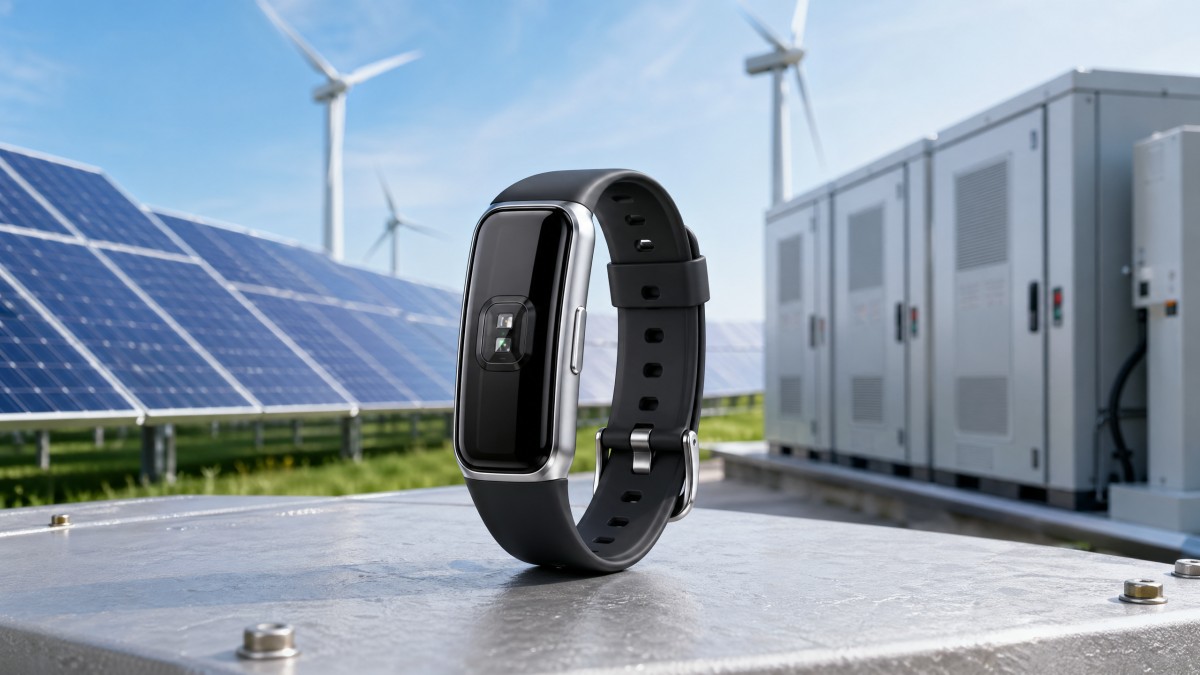
Renewable energy sites are often harsh sensing environments. Utility-scale solar fields can expose wearables to surface temperatures above 45°C, while offshore or mountain wind assets add cold, vibration, and altitude-related challenges. In these conditions, a SpO2 sensor that performs well in a showroom may degrade in actual use because skin temperature, motion, perfusion, and ambient light change the optical signal.
From an operational perspective, SpO2 data is rarely used in isolation. It is usually combined with heart rate, accelerometer data, geofencing, and gateway connectivity. In an energy enterprise, a false low reading can trigger unnecessary intervention, while a false normal reading may delay response to heat strain or oxygen-related stress. That means acceptable accuracy depends on the cost of a wrong decision, not just on a headline specification.
NHI evaluates these devices through the same engineering-first lens used across smart energy and IoT hardware benchmarking. We look beyond “medical-grade inspired” claims and focus on measurable behavior: error bands under motion, data latency over BLE or Matter-connected hubs, battery discharge under continuous sampling, and performance drift after 6 to 12 months of field use.
The operational scenarios that change the accuracy requirement
A technician performing inverter inspection in a controlled indoor substation needs a different sensing profile than a climber on a wind turbine tower. The first scenario may prioritize stable connectivity and 24-hour battery endurance. The second may prioritize motion resilience, fall-event correlation, and reliable threshold alerts within 10 to 30 seconds. The question is not whether one sensor is universally “accurate,” but whether it is accurate enough for the intended risk tier.
- Low-risk wellness use: trend monitoring during normal shifts, where ±3% to ±4% SpO2 error may still be operationally usable.
- Moderate-risk safety support: remote site fatigue or heat monitoring, where tighter consistency and lower motion artifact are needed.
- High-risk escalation workflows: lone-worker alerting tied to command systems, where accuracy, latency, and false alarm rate must all be validated together.
The table below shows how renewable energy use cases typically map to different accuracy expectations and validation priorities.
The key takeaway is that “enough accuracy” rises with operational consequence. In renewable energy fleets, teams should define performance targets by workflow impact, not by marketing language alone.
What “Enough” Accuracy Really Means: Beyond the Spec Sheet
Many buyers focus on one published metric, often a single SpO2 accuracy value under ideal conditions. That is rarely sufficient. Optical oxygen sensing depends on signal quality, LED wavelength stability, photodiode sensitivity, skin contact, firmware filtering, and algorithm tuning. A quoted value such as ±2% may only apply in a narrow band, for example between 90% and 100% saturation, under low-motion laboratory conditions.
For renewable energy applications, procurement teams should assess at least 4 dimensions together: absolute error, repeatability, latency, and failure behavior. A sensor that is off by 2% but remains consistent may be more useful than one that alternates between normal and low readings. Likewise, a device that updates every 20 seconds may be acceptable for wellness dashboards but too slow for a lone-worker intervention workflow.
At NHI, we recommend treating SpO2 performance as a system-level benchmark. That means evaluating the sensor, the wearable enclosure, the sampling logic, and the transport layer together. In a smart energy environment, data does not stop at the wrist. It moves through BLE, edge gateways, local dashboards, or cloud integrations that may also share network space with HVAC controls, smart relays, and other connected assets.
Four decision metrics that matter more than a headline number
- Error range across conditions: compare resting, walking, climbing, and high-temperature scenarios rather than a single bench test.
- Signal recovery time: check whether the reading stabilizes within 5 to 15 seconds after movement or glove removal.
- Dropout rate: measure how often the sensor returns unusable or blank values during a 4-hour or 8-hour shift.
- Threshold reliability: validate behavior around key operational trigger points such as 92%, 94%, or site-defined escalation levels.
Why the low-SpO2 range deserves extra scrutiny
In practice, many wearables are less reliable as saturation drops. Yet this is exactly where safety-related decisions become more sensitive. If a site policy requires review below 94% or escalation below 92%, testing should emphasize those ranges. A device that looks fine from 96% to 99% but becomes unstable below 94% may fail the real business need even if its brochure appears strong.
This is especially relevant at remote renewable sites where a supervisor may not be physically nearby. Delayed interpretation, missed alerts, or over-filtered signals can add 2 to 5 minutes to a response chain. In dispersed wind or solar assets, that delay matters more than a polished dashboard.
Benchmarking SpO2 Sensors for Harsh IoT and Energy-Site Conditions
A meaningful benchmark should reproduce the actual stresses of renewable energy operations. That includes heat, vibration, glove transitions, sweat, direct sunlight, intermittent connectivity, and long battery duty cycles. Testing only in climate-controlled offices misses the variables most likely to distort optical readings in the field.
NHI’s benchmarking philosophy starts with stress mapping. Before comparing products, define 3 layers: environmental load, user motion profile, and network path. For example, a technician on a battery storage site may walk 6 to 10 kilometers per shift in 35°C weather with frequent radio interference near electrical equipment. Those variables should shape the test script and scoring model.
The second step is protocol and data-path verification. If the wearable syncs through BLE to a local hub and then enters a Matter-connected building or energy management environment, the timing of each hop matters. A clean SpO2 measurement has limited value if the alert arrives 45 seconds late because gateway polling intervals or local buffering were not validated.
Field test parameters worth specifying in an RFQ
When issuing an RFQ or evaluating OEM/ODM candidates, buyers should request transparent test conditions. The following matrix helps separate engineering credibility from brochure claims.
The conclusion from this table is straightforward: a valid SpO2 benchmark for renewable energy should cover both physiology and infrastructure. Sensor quality, battery endurance, and protocol performance must be tested as a connected stack.
Common benchmarking mistakes
- Using short 10-minute demos instead of full-shift testing.
- Ignoring sunlight and sweat effects on optical performance.
- Evaluating the wearable but not the gateway, dashboard, or alert logic.
- Accepting average error figures without examining low-saturation behavior.
How Buyers and Engineers Should Define Procurement Thresholds
A strong procurement framework starts by classifying the deployment into risk tiers. If the wearable is intended for wellness analytics only, the buying team may prioritize battery life above 5 days, acceptable trend accuracy, and low total cost of ownership. If it supports workforce safety at remote renewable sites, then the scoring model should assign greater weight to verified threshold reliability, alert latency, and device uptime under harsh conditions.
In many B2B projects, the mistake is buying to the cheapest acceptable spec rather than the lowest verified operational risk. An SpO2 sensor that reduces false alerts by even 15% to 20% can save dispatch time, supervisor interruptions, and unnecessary worker removal from critical maintenance tasks. In energy operations, these secondary costs often outweigh the unit price difference.
NHI recommends a 5-part procurement checklist that links health tech performance to energy-site realities and IoT integration readiness.
A practical procurement checklist
- Define the intervention workflow: monitoring only, supervisor notification, or automatic escalation.
- Set target thresholds: for example, alarm review below 94% and escalation below 92%, if aligned with internal HSE policy.
- Specify test conditions: 8-hour battery test, outdoor light exposure, and active movement scenarios.
- Validate interoperability: BLE stability, gateway compatibility, and integration with existing energy dashboards or IoT middleware.
- Review lifecycle metrics: calibration drift, firmware update policy, and replacement cycle of 12 to 24 months if heavily used.
The procurement table below helps decision-makers compare selection priorities across different buying scenarios.
This comparison makes one point clear: enough SpO2 accuracy is a procurement decision tied to operational intent. Buyers should define success in terms of measurable field outcomes, not just sensor brochure language.
Implementation, Integration, and FAQ for Energy-Site Deployment
After procurement, implementation quality determines whether the promised accuracy remains useful. A wearable deployed at a renewable energy site should be introduced through a staged rollout, typically in 3 phases: lab validation, pilot deployment, and full-scale operational integration. Each stage should have acceptance criteria covering both sensor behavior and data transport reliability.
A practical pilot can run for 2 to 4 weeks across one representative crew, one site condition, and one gateway topology. During that period, teams should track false alert counts, average sync delay, charging frequency, worker acceptance, and maintenance overhead. This produces a far more realistic picture than short proof-of-concept demos.
Because NHI operates at the intersection of smart wearables, IoT hardware components, and connected infrastructure, we advise enterprises to treat SpO2 devices as part of a larger ecosystem. Data quality loses value when it enters fragmented protocol environments without timing validation, edge filtering rules, or clear escalation logic.
FAQ: How should renewable energy teams evaluate deployment readiness?
How accurate should a wearable SpO2 sensor be for solar and wind technicians?
For basic wellness tracking, stable trend consistency may be enough even if error varies within a moderate band. For remote or higher-risk workflows, teams should validate performance near operational thresholds such as 92% to 94%, plus ensure alert data reaches the dashboard in under 30 seconds where possible.
What is the most overlooked factor besides raw accuracy?
Motion artifact and data latency are often underestimated. A sensor that is numerically strong in static testing may become unreliable during climbing, walking, or heavy tool use. In field operations, delayed or unstable data can be more harmful than a small, known error range.
How long should pilot testing last before procurement approval?
A useful pilot is usually at least 2 weeks and often 4 weeks for multi-shift teams. That timeframe helps expose battery degradation, user compliance issues, connectivity gaps, and repeatability under changing weather conditions.
Should Matter compatibility influence wearable selection?
Not as a label alone. What matters is measured interoperability within the actual gateway and dashboard environment. If the wearable contributes to a broader energy or building ecosystem, teams should benchmark hop latency, packet stability, and edge-handling behavior rather than accept generic compatibility claims.
For renewable energy organizations, the right answer to “How much SpO2 sensor accuracy is enough?” is this: enough to support the real decision the data is meant to trigger, under the real site conditions where crews work, and across the real IoT pathways that carry the signal. That is why verified benchmarking matters more than isolated claims.
NexusHome Intelligence helps buyers, engineers, and enterprise teams turn fragmented hardware claims into measurable procurement insight. If you are evaluating wearable sensing, IoT hardware reliability, or protocol-ready deployment for renewable energy operations, contact us to discuss a data-driven benchmarking approach, request a customized evaluation framework, or explore broader connected energy solutions.
Protocol_Architect
Dr. Thorne is a leading architect in IoT mesh protocols with 15+ years at NexusHome Intelligence. His research specializes in high-availability systems and sub-GHz propagation modeling.
Related Recommendations
- Dr. Sophia Carter (Medical IoT Specialist)Health Tech Hardware Testing and the Cost of Delay
- Dr. Sophia Carter (Medical IoT Specialist)Continuous Glucose Monitoring Latency Still Matters
- Dr. Sophia Carter (Medical IoT Specialist)How Much SpO2 Sensor Accuracy Is Enough?
- Dr. Sophia Carter (Medical IoT Specialist)Medical IoT Sensors Fail for Small Reasons
- Dr. Sophia Carter (Medical IoT Specialist)Medical IoT sensors face a tougher validation path in 2026
- Dr. Sophia Carter (Medical IoT Specialist)SpO2 sensor accuracy drops in more conditions than most expect
- Dr. Sophia Carter (Medical IoT Specialist)Why continuous glucose monitoring latency matters in daily use
- Dr. Sophia Carter (Medical IoT Specialist)Health tech hardware testing is changing after tighter claims
- Dr. Sophia Carter (Medical IoT Specialist)Continuous Glucose Monitoring Latency: Is It Good Enough
- Dr. Sophia Carter (Medical IoT Specialist)Medical IoT sensors: what testing should come first?
Analyst