
Why LiDAR Pricing Gaps Matter in Autonomous Vehicle Sourcing
author
For procurement teams navigating autonomous mobility supply chains, LiDAR price gaps are more than a budgeting issue—they signal critical differences in performance validation, durability, and integration risk. When sourcing wholesale LiDAR sensors for autonomous vehicles, relying on price alone can expose projects to hidden failures, inconsistent data quality, and costly redesigns. Understanding what drives these pricing gaps is essential for smarter, evidence-based sourcing decisions.
For most buyers, the real question is not why one LiDAR unit costs more than another. It is whether the lower-priced option will still perform reliably after vibration, dust exposure, temperature swings, software integration, and long deployment cycles. In procurement terms, pricing gaps matter because they often reflect different levels of engineering maturity, quality control, and lifecycle support.
This is especially important for teams that manage large-volume or wholesale LiDAR sensors for autonomous vehicles. A sensor that appears cost-effective at quotation stage can become the most expensive choice once field failures, calibration drift, supply inconsistency, or certification delays begin affecting the program. The smartest sourcing decisions therefore connect price to measurable technical and operational outcomes.
What procurement teams are actually buying when they compare LiDAR prices
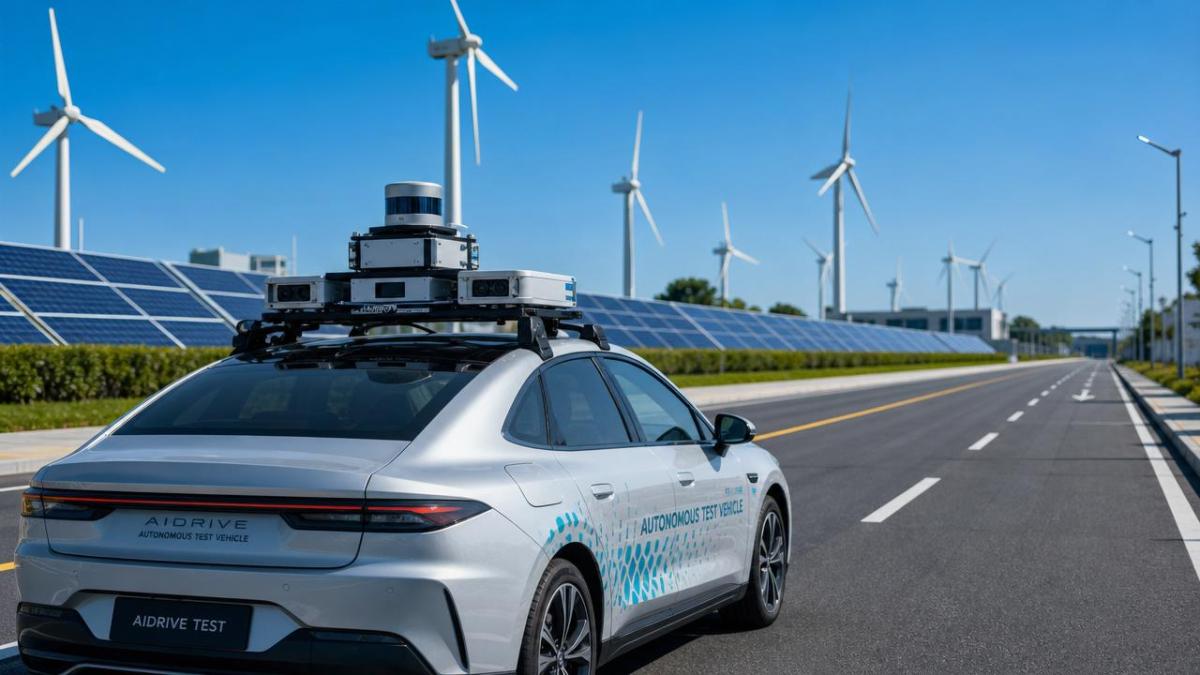
LiDAR pricing is rarely just about the bill of materials. Buyers are purchasing a package of hardware architecture, software stack, validation effort, manufacturing consistency, and supplier accountability. Two products may look similar on a datasheet, yet differ sharply in beam steering design, signal processing quality, thermal stability, or perception-ready output.
That difference matters because autonomous vehicle applications do not reward nominal specifications alone. A vendor may advertise range, resolution, and field of view under controlled conditions, while another supplier prices higher because its numbers hold more consistently in fog, glare, vibration, and mixed urban environments. Procurement teams should treat price as an indicator that needs investigation, not as a standalone decision point.
In practice, buyers are comparing more than sensors. They are comparing risk profiles. A lower upfront price can mean fewer validation datasets, less mature firmware, narrower environmental testing, weaker traceability, or limited engineering support during integration. A higher price may include stronger quality processes, better repeatability across production lots, and a faster path to system-level reliability.
Why large price gaps appear in wholesale LiDAR sensors for autonomous vehicles
Several structural factors create wide pricing gaps in the LiDAR market. The first is sensing architecture. Mechanical, semi-solid-state, and solid-state LiDAR designs carry different costs, durability characteristics, and manufacturing complexities. A cheaper architecture may meet a short-term target, but not the shock resistance, size, or maintenance expectations of a vehicle platform intended for scale.
The second factor is component quality. Laser sources, detectors, optical assemblies, ASICs, and thermal management components can vary significantly in grade and longevity. Suppliers that choose tighter-tolerance parts, stronger sealing methods, and more stable optical packaging will usually have higher costs. For procurement, that premium may translate directly into lower field replacement rates and fewer calibration issues.
Third, software and signal processing contribute heavily to value. Raw point cloud generation is only part of the equation. Noise filtering, object fidelity, low-reflectivity detection, interference mitigation, and synchronization with broader perception systems all influence real-world utility. Some low-cost products underperform not because the hardware is fundamentally weak, but because the processing stack is less mature.
Fourth, testing depth drives pricing. Suppliers that validate under thermal cycling, humidity, corrosion, dust ingress, vibration, EMC conditions, and long-duration endurance testing incur costs that are often invisible at quotation stage. Yet these are exactly the tests that reduce deployment uncertainty. A vendor offering strong validation evidence is not merely charging more; it is reducing downstream failure probability.
Finally, production discipline affects cost. Automotive and mobility sourcing depends on repeatability. Process control, traceability, incoming material inspection, end-of-line calibration, and lot-level quality reporting all increase supplier cost structures. However, these controls are often what separate a prototype-friendly vendor from a true volume-ready partner.
How pricing gaps translate into operational risk for buyers
From a procurement perspective, the biggest mistake is assuming a lower unit price automatically improves total cost. In autonomous vehicle sourcing, hidden costs often emerge after purchase order approval. These include engineering hours for integration fixes, repeated bench testing, delayed validation milestones, software workaround development, and replacement inventory planning.
If LiDAR output quality varies from batch to batch, perception teams may need to re-tune algorithms. If thermal stability is weak, field performance can diverge from lab performance. If enclosure sealing is inconsistent, failure rates may rise sharply in humid or dusty environments. These issues create schedule and budget pressure far beyond the original unit-price savings.
There is also supplier continuity risk. A very low quotation can sometimes indicate aggressive customer acquisition pricing, limited after-sales structure, or weak financial resilience. Procurement teams sourcing at scale should evaluate whether the supplier can support long-term production, firmware maintenance, and change management. In a fast-moving sensor category, continuity can be as important as current cost.
Another overlooked issue is integration risk across the wider vehicle system. A LiDAR sensor does not operate in isolation. It must align with compute platforms, power requirements, thermal constraints, mounting geometry, networking standards, and software interfaces. Price gaps often reflect how much integration burden remains on the buyer. A cheaper product may simply transfer more technical work onto the customer.
What buyers should examine beyond the quote sheet
To make stronger sourcing decisions, procurement teams should ask for evidence in five areas: performance consistency, environmental durability, manufacturing quality, software maturity, and support capability. These areas reveal whether a pricing gap reflects real value or just brand positioning.
For performance consistency, request test data across multiple scenarios rather than a single headline range figure. Ask how the sensor performs against dark objects, reflective surfaces, cross-interference, night conditions, rain simulation, and temperature extremes. Clarify whether results come from internal testing only or from third-party validation.
For durability, look at IP rating claims, but do not stop there. Ask about long-duration thermal cycling, vibration profiles, shock resistance, corrosion resistance, and optical window contamination performance. In mobility programs, durability is often where low-cost options begin to reveal hidden weaknesses.
For manufacturing quality, evaluate process traceability and calibration methodology. Can the supplier show lot-level consistency data? How are optical alignment and end-of-line testing controlled? What are the acceptance thresholds for key parameters? Wholesale LiDAR sensors for autonomous vehicles should come with evidence of repeatable production, not just prototype success.
For software maturity, clarify what is included. Does the supplier provide SDKs, API documentation, diagnostic tools, synchronization support, and firmware update procedures? How quickly are bugs handled? A lower sensor price can become less attractive if software integration consumes excessive engineering resources.
For support capability, assess whether the supplier has dedicated technical contacts, response-time commitments, field failure analysis procedures, and change notification policies. Procurement teams often focus heavily on hardware cost while underestimating the value of responsive engineering support during deployment.
How to compare low-cost and premium LiDAR suppliers more objectively
A practical approach is to replace single-price comparison with a weighted sourcing matrix. This allows teams to score suppliers across cost, detection performance, environmental reliability, software usability, lead time stability, compliance readiness, and after-sales support. Once this framework is in place, pricing gaps become easier to interpret in business terms.
For example, if a premium supplier costs 18 percent more per unit but reduces expected integration time by 30 percent and lowers estimated field failure exposure, that difference may be economically rational. Conversely, if a higher-priced vendor offers little additional proof beyond stronger branding, the premium may not be justified. The key is disciplined evidence review.
Procurement should also involve cross-functional stakeholders early. Engineering, quality, reliability, and operations teams will often identify hidden risks that purchasing alone cannot see from a quotation package. In autonomous mobility sourcing, the best outcomes usually come from combining commercial negotiation with technical due diligence.
Sample-based validation is another essential step. Before committing to volume, compare shortlisted suppliers through controlled testing under actual application conditions. Review point cloud stability, mounting tolerance sensitivity, heat behavior, interface reliability, and perception compatibility. A sourcing decision grounded in sample evidence is far more defensible than one based on price positioning alone.
Why this matters even more in a data-driven supply chain environment
As mobility systems become more software-defined, the cost of bad sensor decisions increases. LiDAR is not just a hardware line item; it is a data source that influences navigation confidence, obstacle detection quality, and overall autonomy performance. If data integrity is unstable, system-level safety and reliability are affected.
That is why pricing analysis should be tied to data quality analysis. Buyers should ask whether the sensor produces stable, usable, and well-documented outputs over time, not simply whether it meets a target range on paper. This mindset aligns with a more modern sourcing philosophy: engineering truth over marketing language.
For organizations that already operate in energy, smart infrastructure, or connected systems procurement, this logic should feel familiar. Across advanced hardware categories, price gaps usually reveal differences in validation depth, component integrity, and deployment risk. LiDAR sourcing is no exception. The procurement advantage goes to teams that translate technical evidence into commercial judgment.
A smarter procurement framework for LiDAR sourcing
If your team is evaluating wholesale LiDAR sensors for autonomous vehicles, start with a simple rule: never treat the lowest quotation as the baseline of value. Instead, define the operational conditions, required lifespan, integration constraints, and acceptable failure thresholds before comparing offers. This changes the conversation from “Which unit is cheapest?” to “Which option best protects program performance?”
Build vendor assessments around total cost of ownership. Include unit pricing, NRE implications, software integration effort, validation workload, spare planning, support responsiveness, and expected reliability outcomes. When those elements are visible, many dramatic price gaps become understandable.
Also, insist on transparency. The best suppliers are willing to discuss trade-offs openly: where they save cost, where they spend more, what they have validated, and what remains application-dependent. That level of openness is often a better sourcing signal than polished claims about disruption or intelligence.
In the end, LiDAR pricing gaps matter because procurement is not buying a commodity. It is buying confidence in performance, consistency, and scalability. The right supplier may not always be the cheapest, but it should be the one whose price can be explained by evidence and whose risks are visible before deployment, not after it.
For procurement leaders, that is the real takeaway: in autonomous vehicle sourcing, price is meaningful only when connected to proof. When buyers evaluate LiDAR through the lens of validation, manufacturability, software readiness, and lifecycle support, they make decisions that protect budgets, timelines, and system reliability all at once.
Protocol_Architect
Dr. Thorne is a leading architect in IoT mesh protocols with 15+ years at NexusHome Intelligence. His research specializes in high-availability systems and sub-GHz propagation modeling.
Related Recommendations
- Lina Zhao(Security Analyst)US-Iran Ceasefire Spurs Vision AI Demand in Middle East
- Lina Zhao(Security Analyst)China Cycle 2026: Wi-Fi 7 IoT & Vision AI Safety Systems in Focus
- Lina Zhao(Security Analyst)When 6 Axis Robot Arm Wholesale Deals Stop Being a Bargain
- Lina Zhao(Security Analyst)6 Axis Robot Arm Wholesale: Which Specs Change Total Cost?
- Lina Zhao(Security Analyst)The Most Common Payload Mistake in 10kg Cobot Selection
- Lina Zhao(Security Analyst)Is a 10kg Collaborative Robot Payload Enough for End-of-Line Work?
- Lina Zhao(Security Analyst)When Custom Robotic End Effectors Cost More Than Expected
- Lina Zhao(Security Analyst)Custom Robotic End Effectors That Reduce Changeover Time
- Lina Zhao(Security Analyst)Why Some Pick and Place Robot Manufacturers Miss Accuracy Targets
- Lina Zhao(Security Analyst)How to Judge a Pick and Place Robot Manufacturer by Cycle Time
Analyst