
What welding robot arm price usually leaves out
author
For finance approvers in renewable energy manufacturing, welding robot arm price often looks straightforward on a quote but leaves out the costs that shape real ROI: integration risk, energy efficiency, maintenance cycles, protocol compatibility, and long-term production stability. This article examines what suppliers rarely quantify, so procurement decisions can move beyond sticker price toward verifiable operational value.
Why does welding robot arm price look simple on paper but become complex in real projects?
A quoted welding robot arm price usually covers the visible hardware: the arm, controller, teach pendant, and sometimes a basic warranty. For finance teams in renewable energy manufacturing, that visible number is attractive because it appears easy to compare across suppliers. Yet the practical cost structure is rarely that narrow. In solar mounting production, battery enclosure fabrication, inverter cabinet assembly, and wind component subassembly, the arm itself is only one part of a working automation cell.
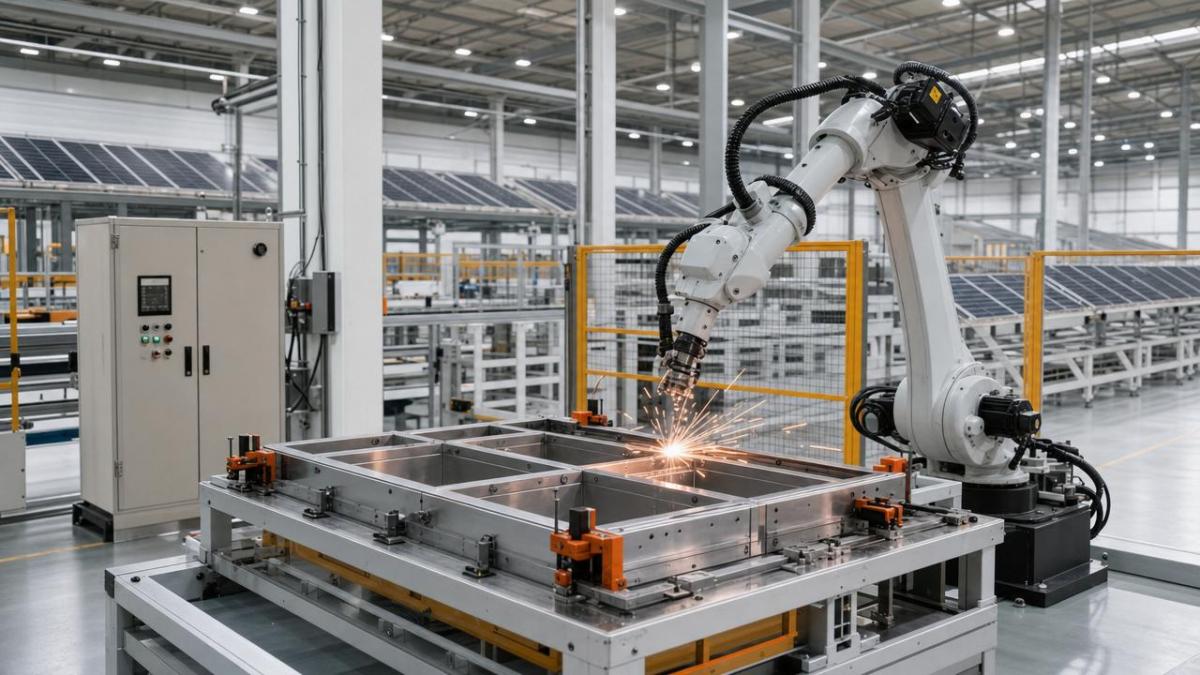
The missing layer is deployment reality. A welding robot arm may need custom fixtures, safety fencing, welding power sources, seam tracking, offline programming, vision alignment, and integration with factory execution systems. If a supplier presents a low welding robot arm price but leaves these items undefined, the approval process can underestimate capital outlay and overestimate speed to productivity. That gap matters because delays in renewable energy manufacturing often ripple into contract deadlines, shipment schedules, and cash flow forecasting.
There is also a data problem. Many vendors still promote general claims such as “high precision” or “low power consumption” without publishing measured duty-cycle energy use, arc stability under long shifts, or maintenance intervals in dusty industrial settings. For a finance approver, this means the budget risk is not only purchase cost but uncertainty cost. A low initial welding robot arm price can become expensive when uptime assumptions are wrong.
What hidden cost categories should finance approvers include before comparing welding robot arm price?
The most reliable way to evaluate welding robot arm price is to convert it into a total cost framework. In renewable energy plants, especially those scaling output quickly, hidden cost categories often determine whether a project achieves payback in two years or drifts far beyond target.
First, include integration engineering. This covers cell design, fixture tuning, path programming, safety validation, and synchronization with conveyors or positioners. Second, include utility impact. Welding automation can change peak power draw, compressed air use, and thermal load, which affects energy budgets and sustainability reporting. Third, include serviceability. Spare parts availability, local technician coverage, and software support can materially affect downtime exposure. Fourth, include training and change management. Operators, maintenance staff, and process engineers all need adaptation time.
In the renewable energy sector, another hidden cost comes from product variation. Battery racks, support frames, smart energy storage cabinets, and heat pump chassis may have frequent design revisions. If the robot cell is not flexible enough to absorb changes, each engineering revision introduces reprogramming cost. That turns a seemingly favorable welding robot arm price into a recurring expense center.
A useful principle is this: if two suppliers show similar welding robot arm price but one provides quantified lifecycle assumptions and the other does not, the first quote is usually safer for approval even if the nominal purchase figure is slightly higher.
How does renewable energy manufacturing change the way you should judge welding robot arm price?
Renewable energy manufacturing is not identical to general metal fabrication. The economics are shaped by growth speed, traceability expectations, margin pressure, and the need to support decarbonization goals. Because of that, welding robot arm price should be assessed against industry-specific operating realities rather than generic automation benchmarks.
For example, solar and energy storage equipment makers often face rapid volume expansion followed by model updates. This means cell flexibility has a financial value. A robot arm that supports quick fixture swaps, repeatable programming, and digital monitoring may protect output continuity better than a cheaper unit optimized only for one product geometry. In wind and grid hardware manufacturing, weld consistency and structural compliance are critical. Rework, scrap, and inspection delays can outweigh any initial discount in welding robot arm price.
There is also a sustainability dimension. NHI’s broader perspective on industrial technology emphasizes measurable performance over marketing language. That same mindset applies here. Finance teams should ask not only for purchase figures but for verified energy consumption, downtime history, and compatibility with data-driven factory systems. If a robot cell can feed production data into energy management or quality analytics platforms, it contributes to both operational control and carbon-efficiency reporting. In that context, welding robot arm price should be viewed as part of a larger digital manufacturing asset, not an isolated machine purchase.
Which supplier claims about welding robot arm price should be treated carefully?
Several common claims deserve scrutiny. One is “complete solution included.” Sometimes this means the supplier includes basic startup only, while tooling, line integration, or welding parameter optimization remain billable extras. Another claim is “low maintenance.” Without documented service intervals, spare parts lead times, and field failure rates, that statement has limited value for budget control.
A third claim is “fast ROI.” Many ROI estimates assume full utilization from day one, stable weld quality immediately after commissioning, and negligible retraining time. In reality, renewable energy manufacturers often introduce new product dimensions, process changes, or compliance checks that slow ramp-up. A fourth claim is “compatible with all major systems.” Compatibility may require additional gateways, software licenses, or custom middleware. If protocol support is not native, the final cost can move well beyond the advertised welding robot arm price.
Finance approvers should also be cautious with unusually low quotes from suppliers that cannot provide transparent documentation. A lower welding robot arm price can reflect lower-grade reducers, limited local service, weak safety integration, or software ecosystems that are expensive to extend later. The right question is not “Why is this quote cheaper?” but “Which future costs have been pushed outside this quote?”
What metrics matter more than sticker welding robot arm price when calculating ROI?
For finance teams, the goal is not to become robotics engineers. The goal is to approve a system whose commercial value can be defended with measurable assumptions. Several metrics are more useful than sticker welding robot arm price alone.
Start with uptime. Request expected availability under your intended shift pattern, not under ideal laboratory conditions. Then look at weld repeatability and first-pass yield. If the system improves consistency in battery cabinet frames or solar support structures, the savings from reduced rework may be more valuable than a purchase discount. Energy efficiency is another overlooked metric. Measured electricity use per production hour matters increasingly in renewable energy manufacturing, where buyers and investors expect operational discipline around energy intensity.
Next, review changeover time and reprogramming effort. A flexible robot cell can preserve asset value when product designs evolve. Also ask for mean time to repair, spare parts stocking strategy, and software update policy. These factors influence production stability. When a supplier cannot quantify them, the apparent welding robot arm price becomes less reliable as a basis for approval.
Finally, compare forecasted cost per welded unit rather than purchase price alone. That metric combines throughput, quality, maintenance, and energy consumption into one practical decision lens. It is often the clearest bridge between engineering performance and financial accountability.
How can finance approvers compare two welding robot arm price proposals without getting lost in technical detail?
A structured comparison model helps. Instead of asking which vendor offers the lowest welding robot arm price, score each proposal across a set of business-critical dimensions. This avoids overreliance on headline cost and gives non-technical approvers a disciplined framework.
A practical model includes five weighted areas: total installed cost, expected uptime, production flexibility, data and protocol compatibility, and support response capability. In renewable energy manufacturing, production flexibility and digital compatibility deserve more weight than they might in static, single-SKU fabrication environments. This is because line evolution and reporting requirements are frequent.
You can ask suppliers to provide evidence for each area. For uptime, request reference data from similar duty cycles. For compatibility, ask which industrial communication standards are supported directly and which require third-party integration. For support, verify regional service coverage and spare parts delivery commitments. Once these answers are on the table, the lowest welding robot arm price may no longer represent the best financial decision.
This approach also aligns with NHI’s data-first philosophy. Procurement decisions improve when claims are translated into comparable operational evidence rather than sales language.
What are the most common mistakes companies make when approving welding robot arm price?
The first mistake is approving based only on capital budget fit. A quote may fit this quarter’s capex plan while creating next year’s maintenance or integration overruns. The second mistake is assuming all robot arms deliver similar lifecycle economics. In practice, controller architecture, software maturity, and parts ecosystem can create large differences in total ownership cost.
The third mistake is ignoring data interoperability. Renewable energy factories increasingly connect production equipment with quality systems, energy monitoring, and planning tools. If that connection is weak, the hidden cost is not just IT work; it is lower visibility into performance, slower issue detection, and poorer decision speed. Another mistake is failing to model line downtime during installation and ramp-up. Even a competitive welding robot arm price can be undermined if commissioning interrupts output during a critical shipment period.
A final mistake is not defining success criteria before purchase. Finance should know which numbers justify the investment: cycle time reduction, labor redeployment, defect reduction, energy savings, or throughput stability. Without those targets, post-purchase evaluation becomes subjective, and the meaning of welding robot arm price remains incomplete.
What should you confirm before moving from welding robot arm price review to supplier negotiation?
Before negotiations, confirm scope boundaries in writing. Define what the welding robot arm price includes in hardware, software, installation, training, commissioning, acceptance testing, and warranty. Confirm utility requirements, estimated energy use, and any infrastructure upgrades needed on your factory floor. Ask how the system performs under your actual product mix, not a generic demonstration part.
Also confirm support mechanics: response time, spare parts lead time, remote diagnostics, software update policy, and escalation process. For renewable energy manufacturers operating across multiple sites, ask whether the supplier can standardize programming, parts strategy, and reporting structures between facilities. That can turn one automation investment into a scalable production model.
If you need to move from price discussion to concrete approval, the best next conversation is not simply “Can you reduce the welding robot arm price?” It is a deeper set of questions: What is the fully installed cost? What performance metrics are guaranteed? What assumptions support the ROI model? How is energy efficiency measured? Which protocols and factory systems are supported natively? What risks remain with product design changes? These questions reveal whether the proposal is engineered for long-term value or optimized only to look competitive at quote stage.
For finance approvers, that distinction is decisive. A credible welding robot arm price is not the lowest number on the page. It is the number attached to transparent scope, measurable production performance, compatible digital integration, and durable operational economics.
Protocol_Architect
Dr. Thorne is a leading architect in IoT mesh protocols with 15+ years at NexusHome Intelligence. His research specializes in high-availability systems and sub-GHz propagation modeling.
Related Recommendations
- Lina Zhao(Security Analyst)6 axis robot arm wholesale quality issues that show up late
- Lina Zhao(Security Analyst)Custom AMR AGV supplier or standard platform: which ages better
- Lina Zhao(Security Analyst)How to shortlist a heavy duty AGV manufacturer for harsh sites
- Lina Zhao(Security Analyst)The hidden limits of a collaborative robot payload 10kg rating
- Lina Zhao(Security Analyst)Factory AGV navigation systems: lidar, QR, or SLAM?
- Lina Zhao(Security Analyst)Custom robotic end effectors that cut downtime, not just cycle time
- Lina Zhao(Security Analyst)Pick and place robot manufacturer red flags before sample testing
- Lina Zhao(Security Analyst)Why welding robot arm price varies so much between quotes
- Lina Zhao(Security Analyst)Palletizing robot suppliers with short lead times are not always safer
- Lina Zhao(Security Analyst)Autonomous mobile robot China options are widening fast
Analyst