
The Hidden Downtime Risk in Choosing Palletizing Robot Suppliers
author
For after-sales maintenance teams in renewable energy operations, the real cost of choosing palletizing robot suppliers rarely appears in the quote—it shows up later as unplanned downtime, spare-parts delays, and integration failures. In a sector where uptime, safety, and service continuity are critical, supplier selection must go beyond price and promises to focus on technical support, data transparency, and long-term reliability.
Why downtime risk starts at the supplier selection stage
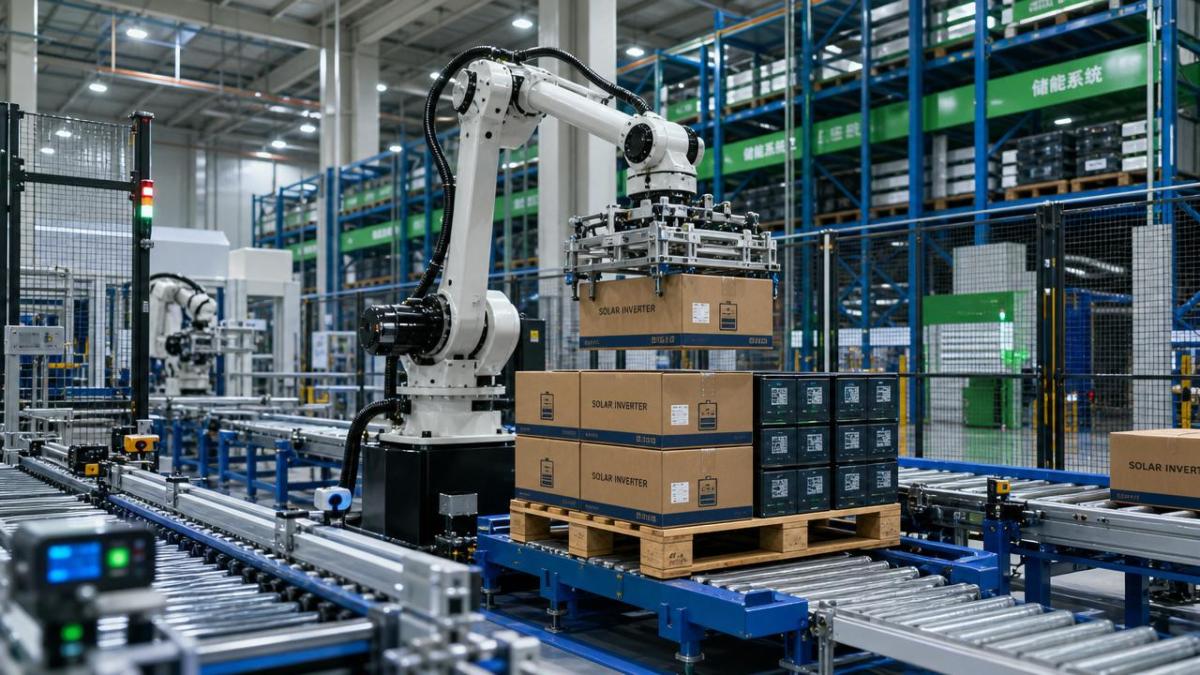
In renewable energy facilities, palletizing robots are often treated as peripheral automation assets. That assumption is risky. Whether the site handles battery packs, inverter cartons, cable reels, solar component packaging, or spare-parts logistics, a palletizing cell can become a production bottleneck the moment it stops. For after-sales maintenance personnel, the problem is not only repair complexity. It is supplier dependency.
Many palletizing robot suppliers compete on payload, speed, and purchase price. Those specifications matter, but they do not explain what happens after installation. Can the supplier provide fault-code transparency? Are replacement servo drives stocked regionally? Does the robot controller integrate cleanly with warehouse systems, SCADA environments, or industrial IoT gateways? These questions determine whether a fault becomes a 30-minute service task or a 3-day disruption.
At NexusHome Intelligence, the core principle is simple: marketing claims do not solve engineering bottlenecks; data does. That mindset is highly relevant when evaluating palletizing robot suppliers for renewable energy operations, where fragmented protocols, mixed hardware environments, and strict uptime targets create hidden operational exposure.
- A low-cost robot with weak spare-parts planning can turn a minor gripper failure into a line stoppage that delays outbound shipments.
- A supplier with poor protocol support may force maintenance teams into manual workarounds when connecting PLCs, sensors, HMIs, or remote diagnostic platforms.
- A supplier without structured technical documentation increases mean time to repair because fault isolation depends on trial and error rather than verified service procedures.
Which renewable energy scenarios make palletizing robot suppliers a higher-risk decision?
Not every site faces the same level of risk. The hidden downtime burden becomes more serious when packaging lines are linked to time-sensitive fulfillment, heavy product handling, or mixed-SKU operations. After-sales maintenance teams should map supplier capability against actual field conditions rather than generic factory demos.
Typical high-exposure scenarios
- Battery energy storage system assembly and packaging, where heavy loads, safety procedures, and outbound scheduling create little tolerance for repetitive stoppages.
- Solar component warehousing, where variable carton dimensions and seasonal peaks require flexible recipe management and dependable gripper control.
- Wind service-parts logistics, where replacement components must be palletized accurately to avoid dispatch delays to remote maintenance sites.
- Hybrid energy equipment distribution centers, where robots need to communicate with barcode readers, conveyors, WMS software, and industrial edge devices.
In these environments, palletizing robot suppliers are not merely machine vendors. They become long-term service partners. If their engineering depth is shallow, maintenance teams inherit the problem every time format changes, firmware issues, communication faults, or gripper wear appear in the field.
The table below shows how downtime risk changes across common renewable energy handling scenarios and why supplier quality matters beyond the initial machine sale.
The practical lesson is clear: the more a palletizing cell touches outbound continuity, the more carefully you must screen palletizing robot suppliers for serviceability, system compatibility, and support discipline.
What after-sales maintenance teams should evaluate before comparing prices
When procurement focuses on capital expenditure alone, maintenance teams usually pay the price later. A better approach is to score palletizing robot suppliers across operational risk categories. This is especially important in renewable energy businesses that already manage distributed assets, complex spare-parts networks, and digital monitoring systems.
Core evaluation dimensions
- Controller openness and protocol compatibility. Ask whether the robot supports the industrial communication standards used on site and how it interfaces with SCADA, MES, WMS, or edge gateways.
- Spare-parts availability. Confirm regional stock strategy for reducers, servo amplifiers, teach pendants, I/O modules, cables, and gripper consumables.
- Documentation quality. Good palletizing robot suppliers provide wiring diagrams, alarm code logic, preventive maintenance checklists, and software backup procedures.
- Remote service readiness. Secure diagnostic access, event logging, and firmware management can dramatically reduce troubleshooting time.
- Integration history in mixed environments. In fragmented automation ecosystems, real experience matters more than generic claims of “seamless integration.”
The following procurement guide helps maintenance and sourcing teams assess palletizing robot suppliers with criteria tied directly to downtime prevention.
This type of table shifts the conversation from brochure language to measurable service preparedness. That is the same data-first logic NHI applies across IoT hardware and connected systems: trust should come from verifiable technical readiness, not presentation quality.
How protocol fragmentation and integration gaps create hidden failures
One of the most underestimated issues with palletizing robot suppliers is integration depth. Renewable energy facilities increasingly rely on layered data environments: machine PLCs, warehouse software, condition monitoring tools, smart power management, and industrial IoT dashboards. A robot that works in isolation can still fail operationally if it cannot exchange reliable data across that stack.
NHI’s perspective on ecosystem fragmentation is highly relevant here. In connected infrastructure, incompatible standards and weak interoperability create latency, blind spots, and unstable field behavior. The same pattern appears in robotic palletizing cells. A supplier may promise support for standard industrial networks, but maintenance teams need proof of stable behavior under live production conditions, not only lab demonstrations.
Common integration fault lines
- Barcode scanners and vision devices send valid signals, but robot recipes do not update reliably during SKU changes.
- Alarm data remains trapped in the robot controller, leaving maintenance teams without usable event history in supervisory systems.
- Firmware or middleware updates break communication timing between conveyors, safety systems, and robot programs.
- Remote access is available, but not secured or structured well enough for safe service use.
This is why the best palletizing robot suppliers are often not the loudest marketers. They are the ones willing to provide interface maps, alarm lists, test procedures, and recovery workflows before the purchase order is issued.
Cost comparison: lower purchase price vs lower lifecycle risk
For maintenance teams, the most expensive robot is often the one that looked cheapest during tendering. Lifecycle cost in renewable energy operations includes spare-parts strategy, technical training, integration effort, service response, and line recovery time. Evaluating palletizing robot suppliers through total cost of downtime provides a more realistic basis for decision-making.
Where hidden cost usually appears
- Emergency shipments for proprietary components not stocked locally.
- Repeated engineering visits to stabilize robot-to-conveyor communication.
- Long retraining time because maintenance manuals are generic or incomplete.
- Output losses during seasonal shipping peaks when one palletizing cell becomes the limiting step.
The comparison below helps frame supplier selection as a risk-control decision rather than a one-time equipment purchase.
This does not mean the most expensive option is always correct. It means the right palletizing robot suppliers are those whose engineering support model matches your operational risk profile.
Which standards, documentation, and service evidence should you request?
After-sales maintenance teams should not limit qualification to a compliance checkbox. In renewable energy operations, practical service evidence matters as much as formal conformity. Depending on the region and application, safety and machinery requirements may involve common frameworks such as CE-related machinery compliance, ISO 10218 for industrial robot safety concepts, ISO 13849 for safety-related control systems, or IEC-oriented electrical practices. The exact obligations vary, but the evaluation principle remains consistent: ask for usable evidence.
Useful documents to request from palletizing robot suppliers
- Electrical schematics and I/O lists that reflect the delivered configuration rather than a generic template.
- Preventive maintenance schedules showing inspection intervals for cables, gearboxes, end-of-arm tooling, and safety devices.
- Backup and disaster recovery procedures for controller software, recipes, and network settings.
- Recommended spare-parts lists separated into critical, wear, and optional stock items.
- Alarm code references with likely causes, first checks, and escalation steps.
If a supplier cannot provide these items clearly during the evaluation phase, maintenance teams should assume that field support will also be reactive and incomplete.
Implementation checklist for reducing downtime after supplier selection
Even strong palletizing robot suppliers need a structured handover to deliver low downtime. Renewable energy facilities can reduce future service burden by defining operational readiness before site acceptance.
Recommended handover steps
- Validate communications with all connected systems under real production loads, including scanners, conveyors, WMS links, and alarm reporting paths.
- Run a fault-recovery drill covering emergency stop reset, power loss recovery, recipe restore, and common gripper alarms.
- Build a local spare-parts cabinet based on critical failure modes, not only the supplier’s optional sales list.
- Train maintenance teams on log extraction, manual jogging limits, backup restoration, and network diagnostics.
- Establish escalation rules with named contacts, expected response windows, and remote access approval procedures.
These steps are especially important when palletizing robot suppliers operate across borders, because service assumptions often differ between sales teams, integrators, and actual support engineers.
FAQ: what maintenance teams often ask about palletizing robot suppliers
How do we compare palletizing robot suppliers if we already know the required payload and reach?
Once core robot sizing is fixed, compare service variables: controller openness, alarm transparency, field support structure, local spare-parts coverage, and integration evidence with your existing automation environment. In many renewable energy sites, these factors determine actual uptime more than small differences in cycle time.
Are local suppliers always safer than overseas palletizing robot suppliers?
Not always. A local sales presence without real engineering depth may still create long downtime. An overseas supplier with disciplined documentation, regional parts stock, secure remote diagnostics, and a qualified integration partner can be the lower-risk option. The key is verified service infrastructure, not geography alone.
What is the most common mistake during procurement?
The most common mistake is treating palletizing robot suppliers as interchangeable machine vendors. They are not. Differences in software maintenance, communication support, and parts logistics can create major downstream cost divergence even when two robots appear similar in specifications.
What should be stocked on site from day one?
The answer depends on the cell design, but maintenance teams typically review critical sensors, gripper wear items, teach pendant accessories, communication cables, selected fuses or relays, and other components with long replenishment lead times. Ask palletizing robot suppliers to separate recommended stock by failure criticality and lead-time exposure.
Why choose us for supplier evaluation and technical due diligence
NexusHome Intelligence approaches industrial supply-chain decisions with the same principle that defines our broader mission: bridge fragmented ecosystems through data, not slogans. For teams evaluating palletizing robot suppliers in renewable energy operations, that means focusing on integration evidence, protocol behavior, maintainability, and long-term support readiness.
We are especially valuable when your procurement team needs more than a brochure comparison. We help translate technical uncertainty into a structured review process that supports maintenance outcomes, not just purchasing speed.
You can contact us to discuss
- Parameter confirmation for palletizing cell environments, including load profile, packaging variation, and communication architecture.
- Supplier screening frameworks for technical documentation, protocol compatibility, service response, and spare-parts planning.
- Delivery-cycle discussions, especially where cross-border sourcing may affect commissioning readiness and replacement-part lead times.
- Customized evaluation criteria for renewable energy packaging lines, logistics nodes, and mixed automation environments.
- Certification and compliance review needs, sample-document checks, and quotation comparison from a maintainability perspective.
If your team is narrowing down palletizing robot suppliers, the right next step is not simply asking who is cheaper. It is asking who will still be dependable when a communication fault, spare-parts shortage, or recovery event hits your line at the worst possible moment.
Protocol_Architect
Dr. Thorne is a leading architect in IoT mesh protocols with 15+ years at NexusHome Intelligence. His research specializes in high-availability systems and sub-GHz propagation modeling.
Related Recommendations
- Lina Zhao(Security Analyst)US-Iran Ceasefire Spurs Vision AI Demand in Middle East
- Lina Zhao(Security Analyst)China Cycle 2026: Wi-Fi 7 IoT & Vision AI Safety Systems in Focus
- Lina Zhao(Security Analyst)When 6 Axis Robot Arm Wholesale Deals Stop Being a Bargain
- Lina Zhao(Security Analyst)6 Axis Robot Arm Wholesale: Which Specs Change Total Cost?
- Lina Zhao(Security Analyst)The Most Common Payload Mistake in 10kg Cobot Selection
- Lina Zhao(Security Analyst)Is a 10kg Collaborative Robot Payload Enough for End-of-Line Work?
- Lina Zhao(Security Analyst)When Custom Robotic End Effectors Cost More Than Expected
- Lina Zhao(Security Analyst)Custom Robotic End Effectors That Reduce Changeover Time
- Lina Zhao(Security Analyst)Why Some Pick and Place Robot Manufacturers Miss Accuracy Targets
- Lina Zhao(Security Analyst)How to Judge a Pick and Place Robot Manufacturer by Cycle Time
Analyst