
Biometric False Rejection Rate FRR in Real Access Use
author
In real access environments, biometric false rejection rate FRR is more than a security metric—it directly affects uptime, user trust, and deployment viability. For buyers, operators, and decision-makers navigating smart security access control, NexusHome Intelligence delivers IoT engineering truth through smart home hardware testing, protocol latency benchmark analysis, and verified data that support confident sourcing across the IoT supply chain.
In the renewable energy sector, that statement carries extra weight. Solar farms, battery energy storage systems, wind substations, microgrid control rooms, and distributed energy assets operate across remote, dusty, humid, and temperature-variable environments where access control must remain both secure and available. A biometric reader with a low lab FRR but weak field stability can slow shift changes, disrupt maintenance windows, and create avoidable service delays.
For research teams, plant operators, procurement managers, and enterprise leaders, understanding FRR in real access use is not just about preventing denied entry. It is about matching biometric hardware performance to renewable energy operations, protocol reliability, edge processing capacity, and total lifecycle cost. This is where data-driven evaluation becomes more valuable than brochure-level claims.
Why FRR Matters in Renewable Energy Access Control
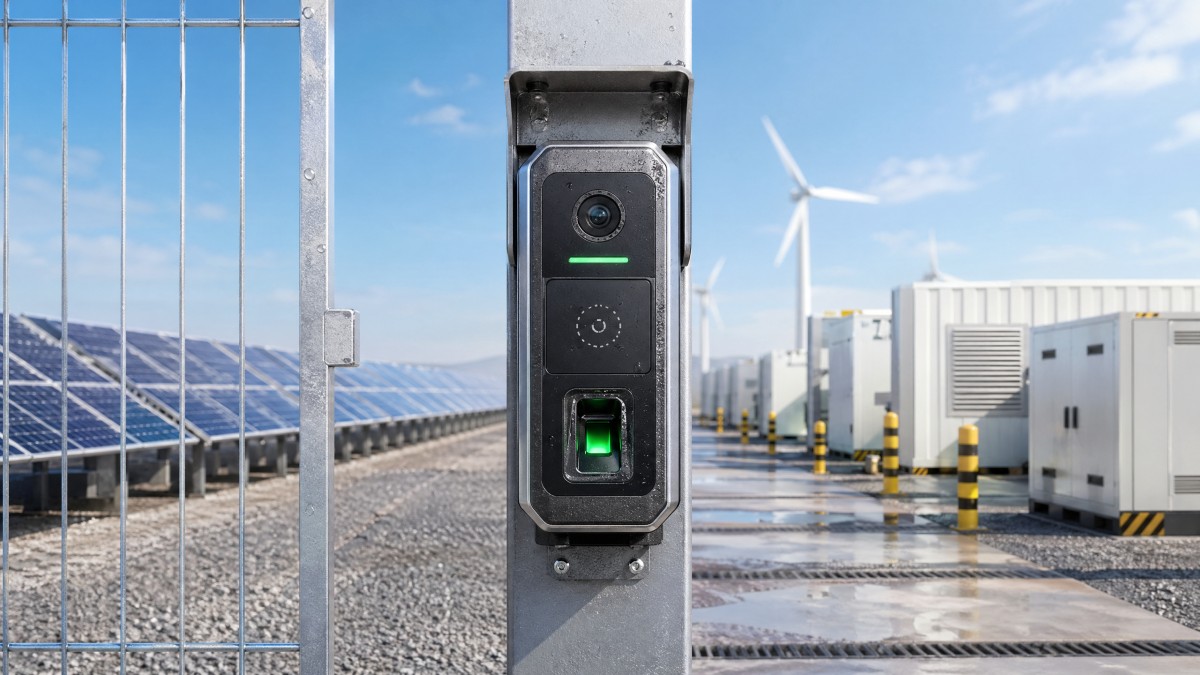
False Rejection Rate refers to the percentage of valid users who are incorrectly denied by a biometric system. In renewable energy facilities, even an FRR difference between 1% and 5% can translate into measurable operational friction when 50, 200, or 500 access events occur per day across field cabinets, inverter stations, and energy management rooms.
Unlike office buildings, renewable energy infrastructure often combines unmanned sites, rotating contractors, and urgent maintenance windows. If a technician is rejected 2 or 3 times before entering a battery enclosure or switchgear area, the delay can affect lockout-tagout procedures, inspection timing, and service-level commitments. That impact is operational, not theoretical.
FRR also influences safety culture. In utility-scale solar and wind projects, access control must work when gloves have been removed, hands are dry from cold air, or fingers are affected by dust, grease, or minor abrasions. A system that performs well only in controlled indoor conditions is poorly matched to field energy assets.
At NHI, the core issue is engineering transparency. A biometric lock or reader should be judged not only by stated matching speed, such as under 1 second, but by how rejection rates change under temperature swings of -10°C to 45°C, after repeated daily use, and across different connectivity environments such as BLE, Zigbee, Thread, or IP-based building systems.
Operational consequences of elevated FRR
- Longer technician entry times during scheduled maintenance windows of 15–30 minutes.
- Higher support overhead when operators must issue backup credentials or remote unlocks.
- Increased temptation to bypass policy, such as sharing PINs or leaving enclosures unsecured.
- Reduced confidence in smart access systems across multi-site renewable portfolios.
Typical renewable energy sites where FRR has direct business impact
The table shows why FRR should be evaluated by site type rather than by generic smart building assumptions. Renewable energy access is exposed to harsher environmental variation, more distributed infrastructure, and stronger pressure for uptime continuity.
What Drives False Rejection in Real Access Environments
FRR rises when biometric matching conditions differ from enrollment conditions. In renewable energy operations, that gap is common. A worker may enroll indoors at 22°C with clean hands, then authenticate outdoors at 6 a.m. in wind, dust, or humidity. The sensor, algorithm, and enclosure design all influence whether the system adapts or fails.
Environmental exposure is a primary factor. Fingerprint systems can struggle with dry skin below 10°C, moisture condensation near coastal wind assets, or fine particulate buildup at solar sites. Facial systems may encounter backlighting, helmets, PPE, and variable shadows. As a result, real FRR often depends on site design and user workflow as much as on matching software.
Network and protocol behavior also matter. If a smart lock depends on cloud confirmation or unstable gateway communication, an access denial may be recorded as a biometric failure even when the root cause is transport latency. In mixed ecosystems using Matter bridges, BLE commissioning, or Zigbee-based door controllers, engineers need to separate identity failure from communications failure.
NHI’s benchmarking philosophy is especially relevant here. Marketing terms like “fast recognition” or “AI-enhanced sensing” do not reveal how a reader behaves after 20,000 cycles, under intermittent signal quality, or when a local battery drops below 20%. For renewable energy buyers, these field conditions determine whether the solution scales.
Key FRR drivers buyers should validate
- Sensor tolerance to dust, moisture, and temperature fluctuation across a -10°C to 45°C range.
- Matching consistency after repeated use, ideally measured across 10,000 to 50,000 authentication events.
- Authentication speed at the edge, such as sub-800 ms local matching instead of cloud-dependent workflows.
- Backup method quality, including PIN, card, or mobile credential recovery within 5–10 seconds.
- Battery and power behavior during low-voltage conditions, especially for remote renewable energy cabinets.
The hidden role of enrollment quality
Many FRR problems begin at setup. If a workforce is enrolled too quickly, with only 1 finger template instead of 2 or 3, the system becomes fragile in the field. For renewable energy contractors with seasonal turnover, enrollment discipline is a practical issue. A stronger process often cuts field rejections more effectively than replacing hardware.
Best practice is to capture multiple samples per user, verify them under at least 2 lighting or handling conditions, and test first-day access on actual site hardware. That extra 3–5 minutes per worker can prevent weeks of support friction later.
How to Evaluate FRR for Solar, Wind, and Energy Storage Projects
For procurement teams, FRR should be measured as part of a broader access performance framework. A strong tender or sourcing process should not ask only whether the biometric device supports fingerprint or face authentication. It should define where the reader will be installed, how many daily access events are expected, which protocols are used, and what failure recovery path is required.
A practical evaluation model for renewable energy sites includes 4 layers: biometric accuracy, environmental resilience, connectivity reliability, and operational fallback. This structure helps decision-makers compare devices that may look similar on a specification sheet but behave very differently after deployment.
For example, a solar O&M site with 80 daily authentications may tolerate a slightly slower lock if local matching remains stable during dust exposure. A battery storage control room with stricter safety requirements may prioritize lower FRR at all times, even if that requires a higher-cost reader with better sealing and stronger edge processing.
The most useful approach is scenario testing. Instead of asking for a single FRR figure, request test results for 3 to 5 conditions that resemble actual deployment: dry finger, wet finger, low-temperature morning access, partial PPE interference, and low-signal gateway conditions. This aligns buying decisions with site reality.
Suggested evaluation matrix for procurement teams
This matrix helps teams move from claim-based sourcing to evidence-based comparison. It also supports cross-functional alignment between engineering, operations, and procurement by converting abstract security language into measurable acceptance criteria.
Questions decision-makers should ask suppliers
- What is the tested FRR range under outdoor or semi-outdoor conditions, not only controlled indoor testing?
- How does the device behave after power fluctuations or low-battery events common in remote energy assets?
- Can logs distinguish biometric mismatch from network timeout, gateway loss, or firmware exception?
- What is the recommended maintenance interval for sensor cleaning: weekly, monthly, or quarterly?
Implementation, Maintenance, and Risk Reduction Strategies
Lowering FRR in renewable energy environments is not only a hardware selection task. It requires alignment across installation design, user enrollment, maintenance routines, and access governance. Even a high-quality biometric device can underperform if mounted in direct glare, exposed to water ingress, or paired with weak onboarding procedures.
Installation planning should start with zone classification. Outdoor gate access, inverter room entry, battery enclosure control, and central operations buildings each present different authentication conditions. In many cases, using one identical biometric method for every zone is less effective than matching modality to risk and environment.
Maintenance is equally important. Sensor surfaces should be inspected on a fixed schedule, often every 2 to 4 weeks in dusty solar environments and more frequently during peak pollen or sand exposure. Firmware review cycles should also be defined, for example every 90 to 180 days, to address matching improvements and communication stability.
NHI’s engineering-first perspective is useful for operators managing mixed ecosystems. A biometric reader is part of a larger chain that may include edge controllers, gateways, relays, cloud dashboards, and building energy systems. When access anomalies occur, the goal is not guesswork; it is root-cause isolation through data.
Practical steps to reduce FRR after deployment
- Enroll at least 2 biometric templates per authorized user and validate both before site activation.
- Install readers away from direct reflective glare, heavy condensation points, and vibration-prone surfaces.
- Define a backup credential policy for 100% of critical personnel, including supervisors and emergency contractors.
- Review access logs monthly to identify repeat rejections by user, site, time, or environmental condition.
- Retest field performance seasonally, especially before winter and peak summer operations.
Common implementation mistakes
The strongest takeaway is that FRR control is a system discipline. Renewable energy operators who combine tested hardware, clean protocol integration, and structured maintenance usually achieve better access reliability than those relying on device specifications alone.
FAQ for Buyers, Operators, and Energy Infrastructure Decision-Makers
How low should FRR be for renewable energy access control?
There is no universal threshold for every site, but buyers should avoid evaluating a single percentage in isolation. For low-frequency indoor access, a modest FRR may be manageable with a fast fallback path. For remote battery storage or high-volume technician movement, teams should target consistently low field rejection behavior and validate performance across at least 100 real-use attempts per scenario.
Should procurement prioritize fingerprint, face, or multi-factor access?
The answer depends on environment and PPE. Fingerprint systems may suit indoor control rooms and protected equipment spaces. Facial recognition can reduce touch points but may be affected by helmets, eyewear, and backlight. In many renewable projects, a multi-factor model using biometrics plus card or mobile credential offers better resilience, especially across 2 or more site types.
How long does a proper field evaluation usually take?
A practical pilot often takes 2 to 4 weeks. That window allows teams to test normal shifts, early morning and afternoon conditions, contractor onboarding, and at least one maintenance cycle. Shorter pilots may miss weather variation and do not always reveal protocol instability or battery-related performance changes.
What metrics should be reviewed alongside FRR?
At minimum, review authentication time, fallback entry time, offline operation capability, event logging quality, environmental protection level, and communication stability. For renewable energy assets, it is also useful to examine standby power draw, edge processing behavior, and compatibility with broader energy facility management systems.
Biometric false rejection rate in real access use is a decisive factor for renewable energy security, uptime, and workforce efficiency. The right question is not whether a device advertises advanced biometrics, but whether it maintains dependable access across dust, temperature swings, protocol complexity, and daily operational pressure.
NexusHome Intelligence approaches this challenge through verified testing, benchmarking discipline, and an engineering-led view of the IoT supply chain. For solar, wind, storage, and smart energy operators, that means clearer sourcing decisions, stronger deployment confidence, and fewer surprises after installation.
If you are evaluating biometric access hardware for renewable energy infrastructure, now is the time to compare field-ready performance, not just marketing claims. Contact NHI to discuss testing priorities, request a tailored evaluation framework, or explore data-driven solutions for secure and reliable smart access deployment.
Protocol_Architect
Dr. Thorne is a leading architect in IoT mesh protocols with 15+ years at NexusHome Intelligence. His research specializes in high-availability systems and sub-GHz propagation modeling.
Related Recommendations
- Lina Zhao (Security Analyst)Biometric False Rejection Rate FRR in Real Access Use
- Lina Zhao (Security Analyst)Japan METI Extends PSE Certification for Biometric Sensors Door Locks to 12 Weeks
- Lina Zhao (Security Analyst)Japan METI Expands PSE Certification for Biometric Smart Locks from Apr 2026
- Lina Zhao (Security Analyst)Japan METI Expands PSE Certification to Biometric Smart Locks from Apr 2026
- Lina Zhao (Security Analyst)Biometric sensor metrics that matter more than headline accuracy
- Lina Zhao (Security Analyst)Biometric false rejection rate FRR can rise after firmware updates
- Lina Zhao (Security Analyst)Japan METI Expands PSE Certification to Biometric Smart Locks from Apr 2026
- Lina Zhao (Security Analyst)Biometric False Rejection Rate FRR Explained Simply
- Lina Zhao (Security Analyst)How to Compare Biometric Sensor Metrics Fairly
- Lina Zhao (Security Analyst)Which Biometric Sensors Work Best in Daily Use
Analyst