
Why Two Welding Robot Arms With Similar Specs Cost Differently
author
In renewable energy manufacturing, two welding robot arms may look nearly identical on paper, yet their welding robot arm price can differ sharply. For technical evaluators, the real gap often lies beyond headline specs—in control precision, duty-cycle stability, protocol compatibility, lifecycle reliability, and data transparency. This article examines the engineering and supply-chain factors that truly drive cost, helping teams make evidence-based sourcing decisions instead of relying on marketing claims.
A checklist-based review is the fastest way to judge whether a higher welding robot arm price reflects real engineering value or just better sales packaging. In renewable energy production lines—such as battery racks, inverter housings, EV charger cabinets, mounting structures, and energy storage enclosures—the cost of a poor welding choice is rarely limited to the purchase order. It appears later as inconsistent seams, downtime, scrap, difficult integration, and unstable throughput. For that reason, technical evaluators should compare robot arms through a structured set of checkpoints rather than through payload, reach, and repeatability alone.
Start Here: Why Similar Specs Can Still Produce a Different Welding Robot Arm Price
At a glance, two models may list the same 6-axis architecture, comparable reach, and similar rated payload. Yet the welding robot arm price can diverge because the specification sheet does not fully reveal how the machine behaves under thermal load, how smoothly it tracks curves, how long it maintains accuracy, or how easily it exchanges data with the rest of the factory. In renewable energy factories, where weld quality often affects corrosion resistance, enclosure sealing, structural endurance, and compliance, these hidden variables matter directly.
A practical rule is this: if a supplier cannot convert performance claims into measurable data, then a lower welding robot arm price may simply mean that evaluation risk has been transferred to the buyer. This is especially important for organizations that need standardized, transparent sourcing decisions across multiple plants or contract manufacturers.
Core Evaluation Checklist for Technical Buyers
Before comparing quotations, confirm the following high-priority items. These checkpoints usually explain most welding robot arm price differences in industrial procurement.
- Control precision under real path conditions: Do not stop at repeatability numbers. Ask for contour tracking data during circular seams, corner transitions, and thin-sheet welding common in solar frames or battery enclosures.
- Duty-cycle stability: Verify whether performance holds during extended shifts. Some lower-cost arms drift after thermal buildup, causing seam deviation and rework.
- Servo and reducer quality: Similar motion specs can hide major differences in backlash, stiffness, and wear rate, all of which affect long-term weld consistency.
- Controller computing and interpolation capability: Better motion planning often justifies a higher welding robot arm price because it reduces spatter, vibration, and cycle variation.
- Protocol compatibility: Check support for Ethernet/IP, PROFINET, Modbus TCP, OPC UA, and plant-level MES connectivity. Integration cost is part of total cost.
- Welding package maturity: Torch alignment, seam tracking, arc sensing, cable dress pack design, and software libraries can materially affect usability.
- Environmental suitability: Renewable energy manufacturing may involve metal dust, temperature shifts, or multi-shift operation. Protection level and cable durability matter.
- Lifecycle support: Spare parts availability, remote diagnostics, firmware support, and service response times often explain why one welding robot arm price is higher.
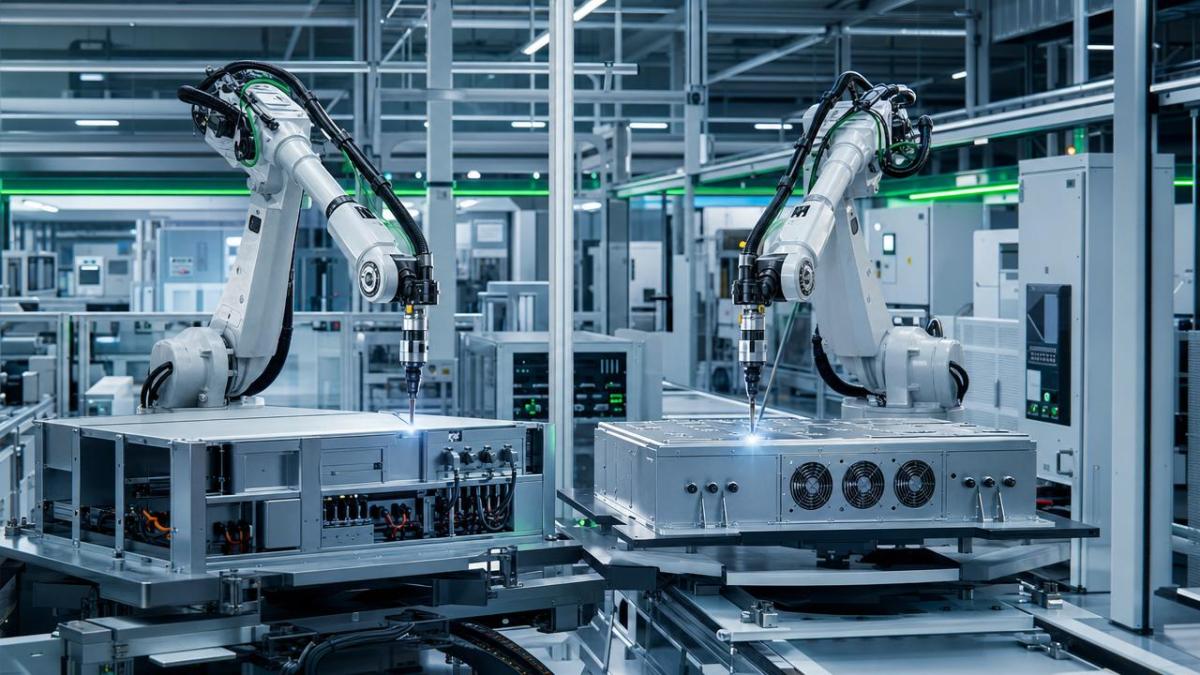
Check the Hidden Cost Drivers Behind the Quote
1. Motion quality is often priced above static specifications
A robot arm may meet catalog accuracy targets while still producing unstable weld paths during acceleration, deceleration, and orientation changes. In renewable energy products with long seams and repetitive patterns, motion smoothness can affect bead uniformity more than nominal repeatability. If one supplier offers better dynamic path control, the welding robot arm price may justifiably be higher because downstream quality costs are lower.
2. Mechanical durability changes long-term economics
Arms built with stronger reducers, higher-grade bearings, better casting control, and cleaner internal cable routing usually cost more. For technical evaluators, the question is not whether the initial welding robot arm price is lower, but whether accuracy retention after 12, 24, or 36 months remains acceptable. In high-volume fabrication for energy storage systems or support brackets, early wear can erase any upfront savings.
3. Controller architecture affects integration effort
In smart manufacturing environments, robot value increasingly depends on data access. A controller that supports stable communication with vision systems, weld power sources, PLCs, and analytics platforms can reduce commissioning friction. For organizations aligned with data-driven operations, this is critical. NHI’s industry perspective is clear: trust in equipment should come from verifiable protocol behavior, not from generic claims of seamless integration. A higher welding robot arm price may actually reflect better interoperability and more transparent diagnostics.
4. Software tools can outweigh hardware differences
Offline programming, digital twin compatibility, error logging, recipe management, and parameter traceability are often missing from low-end comparisons. Yet these tools can significantly reduce setup time for new renewable energy product variants. If your line switches between enclosure geometries or bracket formats, software capability deserves direct weighting in welding robot arm price analysis.
Use This Comparison Table During Supplier Review
Scenario-Based Checks for Renewable Energy Manufacturing
For battery and energy storage enclosures
Prioritize heat input control, thin-sheet distortion management, seam repeatability, and traceable weld parameter logging. A lower welding robot arm price can become expensive if enclosure sealing performance or structural consistency fails post-assembly testing.
For solar mounting and structural fabrication
Focus on cycle time, long-run mechanical durability, and tolerance handling for variable upstream parts. In this scenario, the right welding robot arm price is usually tied to uptime and wear resistance rather than to advanced software alone.
For inverter cabinets and EV charging hardware
Look closely at compact-path accuracy, corner quality, and communication with inspection systems. These products often require cleaner cosmetic welds and more frequent product updates, which makes programmability and data exchange more valuable.
Commonly Ignored Risks That Distort Welding Robot Arm Price Judgments
- Comparing base robot price without the full welding package. Power source integration, torch cleaning, sensors, safety hardware, and software options may change the actual project cost substantially.
- Treating repeatability as a proxy for weld quality. It is useful, but insufficient for evaluating arc behavior in production conditions.
- Ignoring commissioning complexity. A cheaper unit with poor documentation or unstable communication can consume far more engineering hours.
- Overlooking spare parts logistics. For global renewable energy operations, delayed components can stop output during critical project windows.
- Accepting unverified performance claims. If no stress-test data, compliance records, or duty-cycle evidence is available, the apparent welding robot arm price advantage may be misleading.
Practical Execution Plan for a More Defensible Buying Decision
To move from quotation comparison to a defensible sourcing recommendation, technical evaluators should follow a disciplined review process.
- Request sample weld tests on your actual material thickness, joint type, and production speed.
- Ask suppliers to disclose controller interfaces, supported industrial protocols, and available diagnostic data.
- Score each option on total cost of ownership, not just purchase price: uptime, consumables impact, support, and integration effort should be weighted.
- Require evidence of durability through maintenance intervals, reducer service life, and installed-base references in similar factories.
- Run a pilot with traceability enabled so weld quality, fault frequency, and programming efficiency can be observed under realistic workloads.
This process aligns with the broader shift in industrial sourcing: the market is moving away from price-first procurement toward engineering-verification procurement. That shift is especially relevant in renewable energy, where quality failures can propagate into field reliability, warranty exposure, and brand damage.
FAQ: Fast Answers for Technical Evaluators
Does a higher welding robot arm price always mean better quality?
No. It should mean better verified value. The correct test is whether the extra cost delivers measurable gains in weld consistency, uptime, integration simplicity, and serviceability.
What is the first item to verify when two robots have similar specs?
Check dynamic welding performance on your actual parts. Static catalog specs rarely capture the real reason behind a welding robot arm price gap.
Why does protocol compatibility affect welding robot arm price?
Because reliable communication reduces engineering friction, supports traceability, and makes the robot easier to integrate into a data-driven factory environment.
Final Buying Guidance
When assessing welding robot arm price, technical teams should avoid the trap of comparing only visible specifications. In renewable energy manufacturing, the smarter question is whether the robot can sustain quality, data integrity, and maintainability across the full production lifecycle. If you need to move forward with supplier discussions, prioritize these topics first: tested weld performance on your parts, protocol and controller compatibility, maintenance and spare-parts commitments, traceability functions, expected duty-cycle behavior, and the exact scope of the welding package. Those answers will reveal whether the quoted welding robot arm price is inflated, justified, or potentially risky.
Protocol_Architect
Dr. Thorne is a leading architect in IoT mesh protocols with 15+ years at NexusHome Intelligence. His research specializes in high-availability systems and sub-GHz propagation modeling.
Related Recommendations
- NHI Data Lab (Official Account)Why Some Wholesale 6 Axis Robot Arms Cost More to Maintain
- NHI Data Lab (Official Account)6 Axis Robot Arm Wholesale: Which Specs Matter First?
- NHI Data Lab (Official Account)Why Custom AMR AGV Projects Often Run Over Budget
- NHI Data Lab (Official Account)Custom AMR AGV Supplier Options for Narrow Aisle Warehouses
- NHI Data Lab (Official Account)What Delays Heavy Duty AGV Deployment More Than Most Expect
- NHI Data Lab (Official Account)Heavy Duty AGV Manufacturer Claims vs Real Load Performance
- NHI Data Lab (Official Account)Where 10kg Payload Cobots Lose Efficiency in Real Tasks
- NHI Data Lab (Official Account)A 10kg Collaborative Robot Payload Sounds Enough, but Is It?
- NHI Data Lab (Official Account)What Separates a Reliable AGV Navigation Systems Factory
- NHI Data Lab (Official Account)AGV Navigation Systems Factory Checklist Before a Site Visit
Analyst