
Custom AMR AGV Supplier Options for Narrow Aisle Warehouses
author
Choosing the right custom AMR AGV supplier can determine whether a narrow aisle warehouse gains real efficiency or inherits costly integration risks. For enterprise decision-makers in renewable energy and data-driven operations, the priority is no longer marketing claims but verified performance, system compatibility, and long-term reliability. This article explores supplier options through a practical, engineering-focused lens to support smarter procurement decisions.
In renewable energy supply chains, narrow aisle warehouses are rarely simple storage spaces. They often handle battery modules, inverters, power electronics, control boards, smart relays, sensor assemblies, and packaged IoT hardware that must move with precision, traceability, and minimal damage risk. A capable custom AMR AGV supplier is therefore not just a hardware vendor, but a systems partner that can align warehouse automation with energy-sector compliance, digital visibility, and real operating constraints.
For organizations influenced by NexusHome Intelligence’s data-first philosophy, supplier evaluation should focus on measurable outcomes: navigation accuracy, fleet stability, protocol compatibility, charging strategy, software openness, and after-sales response windows. In facilities where aisle widths may range from 1.6 m to 2.4 m and daily picking cycles can exceed 800 movements, poor integration can erase projected savings within the first 12 months.
Why Narrow Aisle Automation Matters in Renewable Energy Warehousing
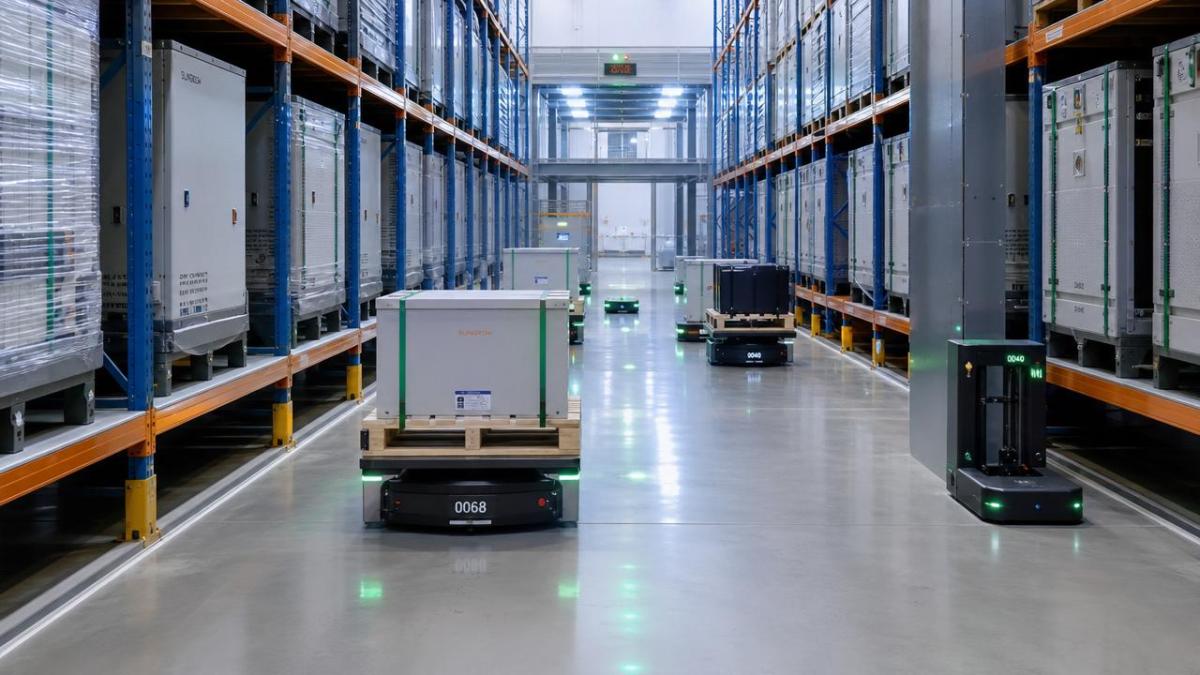
Renewable energy logistics has become more complex over the past 3 to 5 years. Warehouses now need to support higher SKU variety, stricter traceability, and faster outbound cycles for solar, storage, and smart energy systems. Narrow aisle layouts help operators increase storage density by 20% to 40%, but they also reduce tolerance for driving error, turning radius inefficiency, and inconsistent sensor performance.
This is where a custom AMR AGV supplier becomes critical. Standard mobile robots may perform well in generic e-commerce environments, yet renewable energy facilities face different challenges: heavy battery-related loads, electrostatic sensitivity, carton and pallet mix, and integration with energy monitoring or building automation platforms. Customization is often required in three layers: mechanical design, navigation stack, and software interfaces.
Common Operating Pressures in Energy-Focused Warehouses
- High-value components require low-impact transport and controlled acceleration.
- Mixed unit loads can range from 10 kg sensor cartons to 800 kg palletized battery materials.
- Warehouse management systems often need API-level communication with ERP, MES, or energy asset tracking platforms.
- Some sites run 16 to 24 hours per day, making battery strategy and maintenance planning essential.
- Cross-border procurement teams need documented validation, not sales claims.
Where Supplier Failure Usually Appears
In practice, problems rarely start with the robot chassis. They emerge during deployment. A weak supplier may underestimate Wi-Fi congestion, map poorly around reflective surfaces, or fail to handle hybrid traffic with forklifts and human pickers. In narrow aisles, even a repeatable path deviation of 30 mm to 50 mm can reduce safe throughput and force speed limitations that cut planned productivity by 10% to 18%.
For companies managing clean energy products and connected devices, these gaps create downstream costs: delayed kitting, inaccurate inventory movements, higher manual intervention rates, and lower confidence in digital twins or warehouse analytics. That is why decision-makers should assess supplier options through operational evidence, not brochure language.
How to Evaluate a Custom AMR AGV Supplier Beyond Basic Specifications
A serious supplier review should cover at least 4 dimensions: vehicle fit, software compatibility, deployment capability, and lifecycle service. For renewable energy operations, a fifth dimension also matters: data transparency. This is consistent with NHI’s approach of bridging ecosystems through verifiable information rather than generic integration promises.
Core Technical Questions to Ask
- What is the minimum stable aisle width for full-load operation and reverse exit?
- What payload ranges are validated in real deployments: 100 kg, 300 kg, 500 kg, or above?
- What navigation method is used: SLAM, QR, reflector, or hybrid guidance?
- What is the communication architecture for WMS, PLC, elevator, door, and charger integration?
- What are the guaranteed support windows: 4 hours, 24 hours, or next business day?
Mechanical and Safety Fit
Narrow aisle sites usually require tighter turning envelopes, low-clearance sensing, and consistent braking under changing loads. If a facility stores lithium battery packs or inverter modules, the custom AMR AGV supplier should also discuss anti-static measures, load retention options, and controlled speed profiles. Typical travel speeds in constrained aisles may be limited to 0.8 m/s to 1.5 m/s, while transfer zones may allow 1.8 m/s or more.
Software and Protocol Readiness
Many renewable energy businesses now operate connected facilities where warehouse events feed larger operational dashboards. A supplier should be able to explain protocol support, API structure, traffic control logic, and exception handling. If the broader operation uses IoT infrastructure, smart building systems, or edge devices, open integration matters more than closed proprietary control. A supplier that cannot document data exchange latency, event mapping, or interface stability over a 30-day pilot may create long-term silos.
The table below provides a practical framework for comparing supplier options in a renewable energy warehouse context.
The key takeaway is that a custom AMR AGV supplier should be measured by scenario fit, not headline specifications. A robot that carries 1000 kg is not automatically the better choice if it needs 2.8 m to maneuver or if software integration remains opaque.
Supplier Models: OEM, Integrator, and Data-Driven Technical Partner
Enterprise buyers usually encounter 3 supplier models. The first is the pure OEM manufacturer, strong on hardware but sometimes limited in cross-system consulting. The second is the local integrator, often easier for service coordination but dependent on third-party robot platforms. The third is the data-driven technical partner, a supplier or advisory-led ecosystem that combines hardware access with test evidence, protocol insight, and deployment validation.
Which Model Fits Renewable Energy Operations Best?
There is no universal answer. A single-site warehouse with straightforward pallet transfer may succeed with a competent integrator. A regional energy equipment network with multiple facilities, mixed IoT environments, and evolving software architecture often benefits more from a custom AMR AGV supplier that can document engineering performance and adapt over time.
For example, if the warehouse is part of a broader connected building strategy, buyers should examine whether the supplier can coordinate with edge gateways, energy dashboards, and smart access systems. In these cases, deployment quality depends on both automation engineering and digital ecosystem fluency.
Comparison of Supplier Approaches
The following comparison helps procurement teams align supplier type with project complexity, internal resources, and long-term digital goals.
For high-value renewable energy inventories and smart facility environments, the third model often creates the best long-term fit because it reduces hidden interoperability risk. The added value is not just equipment delivery, but validation discipline.
Implementation Factors That Separate Strong Suppliers from Risky Ones
A supplier may look credible during quoting but reveal weaknesses during commissioning. To avoid this, buyers should map implementation into 5 stages: site survey, simulation, pilot, full deployment, and post-launch optimization. Each stage should have measurable deliverables and acceptance criteria.
A Practical 5-Stage Deployment Path
- Site survey: aisle measurement, floor condition review, traffic mapping, wireless assessment.
- Concept validation: workflow modeling, load matrix definition, charger strategy, interface scope.
- Pilot run: 2 to 6 weeks of real movement testing with exception logging.
- Scale-up: fleet expansion, route refinement, operator training, SOP documentation.
- Optimization: KPI tracking for throughput, downtime, intervention rate, and battery utilization.
Important KPIs for Decision-Makers
A qualified custom AMR AGV supplier should be willing to define KPIs before contract finalization. Typical indicators include task completion rate, average pick-to-transfer time, robot idle ratio, manual override frequency, and mean response time for faults. In a narrow aisle warehouse, even reducing manual interventions from 12 events per shift to 3 events per shift can materially improve labor planning and equipment trust.
Service Windows and Spare Parts Readiness
For renewable energy operations with strict outbound commitments, support structure matters as much as robot performance. Buyers should ask whether critical spare parts can be shipped within 24 to 72 hours, whether remote diagnostics are available, and whether software patches are managed under version control. A supplier without documented service escalation paths may turn a minor sensor fault into a 5-day disruption.
Procurement Checklist for Enterprise Buyers in Renewable Energy
Before selecting a custom AMR AGV supplier, enterprise teams should align engineering, operations, IT, procurement, and EHS requirements. In many failed projects, one department approves a solution that another department later cannot support. A disciplined checklist reduces that risk and improves negotiation quality.
Seven Questions to Put into the RFQ or RFP
- Can the supplier provide validated performance in aisle widths similar to our facility?
- What payload and dimension ranges have been tested, not just designed?
- How does the system manage congestion in mixed human-robot traffic?
- What integration methods are available for WMS, ERP, PLC, and IoT platforms?
- What battery charging strategy is proposed: swap, opportunity charge, or scheduled dock?
- What are the commissioning timeline assumptions, usually 4 weeks, 8 weeks, or longer?
- What service-level commitments are contractually available after go-live?
Red Flags During Supplier Screening
Be cautious if the supplier avoids specific numbers, cannot explain exception handling, or frames all integration as “seamless” without detailing protocols, API scope, or testing steps. The same caution applies if projected ROI is presented without assumptions on labor baseline, shift count, throughput volume, or maintenance effort. In data-driven procurement, vague certainty is usually a warning sign.
For organizations influenced by NHI’s benchmarking mindset, the best supplier conversations are transparent. They include constraints, tradeoffs, and test methods. That honesty is often more valuable than an aggressive promise.
Selecting the Right Partner for Long-Term Automation Value
In narrow aisle renewable energy warehouses, the right custom AMR AGV supplier is the one that combines physical fit, software openness, implementation discipline, and accountable support. Cost matters, but lifecycle fit matters more. A lower purchase price can quickly lose appeal if integration takes 3 months longer than planned or if fleet reliability drops during seasonal volume peaks.
Decision-makers should prioritize suppliers that can translate capability into evidence: measurable navigation performance, documented interface logic, realistic commissioning timelines, and service commitments that match business risk. That approach reflects the broader NHI principle of replacing fragmented claims with engineering truth and usable data.
If your organization is evaluating supplier options for a narrow aisle warehouse serving solar, storage, smart grid, or connected energy products, now is the right time to compare technical fit before procurement locks in avoidable complexity. Contact us to discuss your operating conditions, request a tailored evaluation framework, and explore a custom AMR AGV supplier strategy built for renewable energy performance.
Protocol_Architect
Dr. Thorne is a leading architect in IoT mesh protocols with 15+ years at NexusHome Intelligence. His research specializes in high-availability systems and sub-GHz propagation modeling.
Related Recommendations
- NHI Data Lab (Official Account)Why Some Wholesale 6 Axis Robot Arms Cost More to Maintain
- NHI Data Lab (Official Account)6 Axis Robot Arm Wholesale: Which Specs Matter First?
- NHI Data Lab (Official Account)Why Custom AMR AGV Projects Often Run Over Budget
- NHI Data Lab (Official Account)Custom AMR AGV Supplier Options for Narrow Aisle Warehouses
- NHI Data Lab (Official Account)What Delays Heavy Duty AGV Deployment More Than Most Expect
- NHI Data Lab (Official Account)Heavy Duty AGV Manufacturer Claims vs Real Load Performance
- NHI Data Lab (Official Account)Where 10kg Payload Cobots Lose Efficiency in Real Tasks
- NHI Data Lab (Official Account)A 10kg Collaborative Robot Payload Sounds Enough, but Is It?
- NHI Data Lab (Official Account)What Separates a Reliable AGV Navigation Systems Factory
- NHI Data Lab (Official Account)AGV Navigation Systems Factory Checklist Before a Site Visit
Analyst