
Pick and Place Robot Manufacturer Signs of Stable Quality
author
For quality control and safety managers in renewable energy automation, choosing a reliable pick and place robot manufacturer means looking beyond brochures and sales claims. Stable quality is revealed through repeatable placement accuracy, component traceability, safety compliance, and long-cycle performance under real production conditions. This article outlines the clearest signs that separate dependable manufacturers from risky suppliers.
In solar inverter assembly, battery management system production, smart meter PCBA, and control board manufacturing for wind and energy storage equipment, pick and place stability directly affects field reliability. A placement deviation of even ±0.08 mm can create solder defects, latent failures, or intermittent communication problems that only appear after thousands of thermal cycles.
For organizations influenced by NHI’s data-first philosophy, supplier selection should be based on measurable process capability rather than marketing adjectives. The best pick and place robot manufacturer is not always the one with the loudest automation story, but the one that can prove accuracy retention, safety discipline, and traceable quality performance under renewable energy production conditions.
Why Stable Pick and Place Quality Matters in Renewable Energy Manufacturing
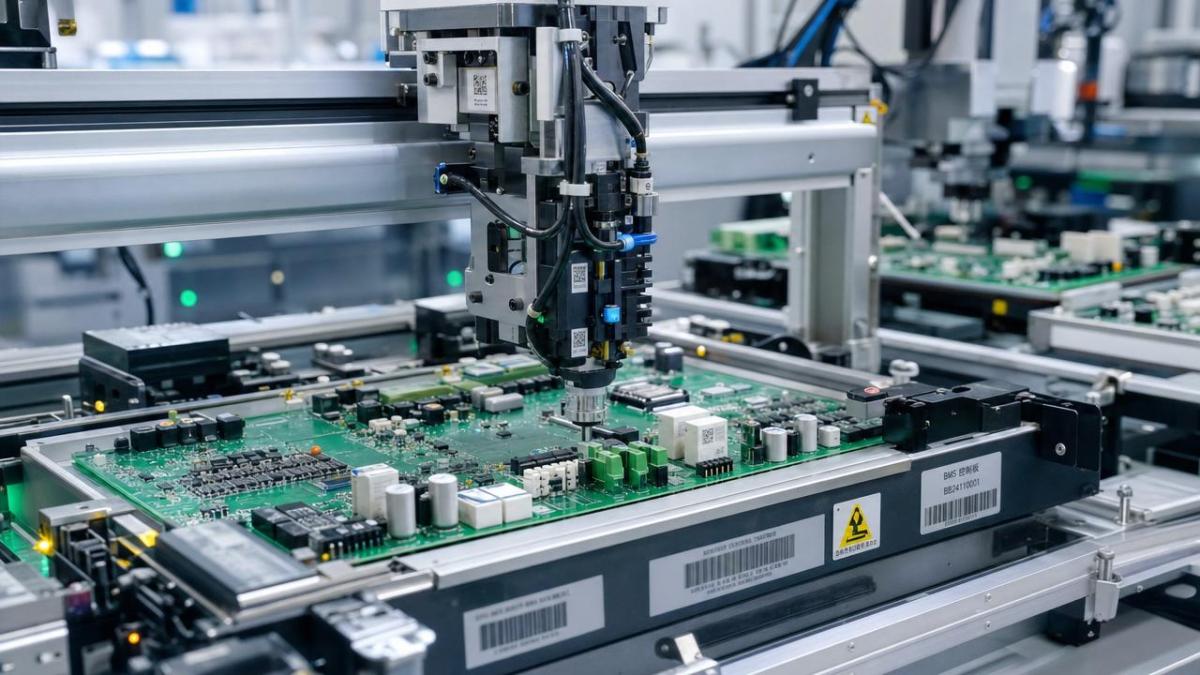
Renewable energy hardware operates in demanding environments: rooftop heat, inverter vibration, utility switching cycles, outdoor humidity, and long asset life expectations of 10 to 20 years. Because of that, assembly defects created in a factory today may become warranty failures years later. For quality and safety managers, robot placement consistency is not only a throughput issue; it is a lifecycle risk control point.
A stable pick and place robot manufacturer should understand the production realities of solar electronics, battery packs, smart relays, energy monitoring devices, and industrial IoT control modules. In these applications, PCB density is increasing, component sizes are shrinking to 0201 and sometimes 01005 formats, and placement speed often exceeds 25,000 to 60,000 CPH depending on line configuration. Stability must therefore be maintained at both high speed and high mix.
Where placement instability creates real downstream risk
- Solar inverter control boards: misaligned power management ICs can increase rework and reduce long-term thermal reliability.
- Battery energy storage systems: poor placement of sensing components may affect BMS accuracy and protection logic.
- Smart grid communication modules: inconsistent solder joints can lead to packet loss, signal instability, or premature field failure.
- HVAC and energy optimization controllers: component offset can reduce performance under repeated heating and cooling cycles.
Four quality outcomes that matter more than headline speed
When reviewing a pick and place robot manufacturer, quality teams should focus on four measurable outcomes: placement repeatability, feeder stability, vision alignment consistency, and traceability completeness. Speed is useful, but a line running at 50,000 CPH with unstable nozzle calibration may cost more than a 35,000 CPH line with controlled Cp and Cpk values.
The table below shows how stable robot quality influences renewable energy electronics production more directly than brochure-level performance claims.
The key takeaway is simple: in renewable energy automation, stability is proven by controlled variance over time. A credible pick and place robot manufacturer should be able to show process evidence across an entire shift, not only a best-case test sample produced in a showroom.
Core Signs of a Stable Pick and Place Robot Manufacturer
Stable quality leaves operational fingerprints. For safety managers and QC teams, the strongest indicators are not branding language but disciplined manufacturing control, validation routines, and transparent service records. The signs below are especially relevant when the equipment will support production of energy devices that must perform for years under electrical, thermal, and environmental stress.
1. Repeatable accuracy is documented, not claimed
A dependable pick and place robot manufacturer should provide validation records showing placement accuracy by component type, board type, and production duration. Ask whether the reported numbers come from single-point internal tests, 3-shift running data, or acceptance trials under real component libraries. For renewable energy electronics, performance on fine-pitch ICs, connectors, power modules, and mixed-size passive components should all be reviewed separately.
What to request from the supplier
- Accuracy and repeatability reports over at least 8 continuous production hours
- Trial data across 3 or more component families, such as 0402 passives, QFN packages, and connectors
- Calibration interval recommendations, such as every 1, 4, or 12 weeks depending on load profile
- Vision system error logs and nozzle wear management procedures
2. Full traceability exists from feeder to finished board
In energy storage and smart grid equipment production, traceability is essential because failures may surface after long deployment cycles. A mature pick and place robot manufacturer supports data capture that links each board to component lot, feeder position, placement program revision, inspection result, and machine event history. This reduces the time needed for root-cause analysis from days to hours.
3. Safety design matches modern factory risk control
Safety managers should evaluate more than emergency stop buttons. A quality-focused manufacturer will address guarding logic, interlock validation, maintenance lockout procedures, electrical cabinet layout, and predictable fault response. In production lines handling high-value power electronics, unsafe intervention during feeder jams or maintenance can damage both people and equipment. Stable quality includes stable safety behavior.
4. Spare parts and service capability are realistic
A machine can perform well during FAT and still become a weak asset if support is slow. Ask about critical spare parts availability, recommended on-site stock, standard response windows, and remote diagnostics capability. For many factories, a 24 to 72 hour support target is more meaningful than general promises of “global service.” Renewable energy production often follows tight shipment commitments, so downtime planning matters.
5. Process compatibility with smart factories and IoT verification
NHI’s perspective is especially relevant here: modern hardware quality must be measured through data integration. A strong pick and place robot manufacturer should support production data export, MES connectivity, alarm history retrieval, and practical integration with inspection systems. In renewable energy automation, this matters because quality decisions increasingly depend on combined data from SMT, AOI, SPI, reflow, and final functional testing.
How QC and Safety Teams Should Audit a Supplier Before Purchase
A structured audit helps separate stable manufacturers from polished sales organizations. Before issuing a purchase order, quality and safety personnel should run a cross-functional review that includes engineering, maintenance, process, and EHS. A 5-step supplier audit is often more effective than relying on a single demo visit.
Recommended 5-step evaluation process
- Define your board mix, component sizes, annual volume, and target defect thresholds.
- Request process data, not only brochures, videos, or generic capability sheets.
- Conduct a sample run using renewable energy control boards or equivalent products.
- Audit safety logic, maintenance access, and operator training procedures on site.
- Validate after-sales readiness, including spare parts lead times and software support.
The following matrix can help quality control and safety managers compare suppliers using operational criteria instead of broad marketing claims.
This type of matrix helps procurement teams convert technical observations into decision-ready criteria. It also supports internal approval because quality, EHS, and operations can align on common evidence rather than subjective impressions.
Questions to ask during FAT or supplier review
- How does the pick and place robot manufacturer verify accuracy drift after 10,000, 50,000, or 100,000 placements?
- What are the recommended preventive maintenance intervals for nozzles, feeders, filters, and vision calibration?
- Can the machine export event logs compatible with MES, SPC, or traceability software?
- How is operator access controlled during troubleshooting to reduce safety incidents?
- What portion of critical spare parts can be delivered within 7 days, and which items require longer lead times?
Common Procurement Mistakes in Renewable Energy SMT Automation
Many renewable energy manufacturers still over-prioritize line speed, machine footprint, or initial purchase price while underestimating quality variation costs. This is risky because a low visible defect rate in the factory does not always mean low lifecycle risk in the field. For power electronics and connected energy devices, latent defects can become expensive warranty events months later.
Mistake 1: Evaluating only nameplate capacity
A machine rated at 60,000 CPH may perform very differently when product mix changes from simple LED boards to dense energy controller PCBAs. Review actual throughput under your part library, feeder count, board size, and changeover frequency. In mixed renewable energy production, stable utilization often matters more than peak speed.
Mistake 2: Ignoring traceability until a failure occurs
Without full traceability, a field return involving 500 or 5,000 boards may force broad containment actions. A capable pick and place robot manufacturer reduces that risk by making placement history searchable by date, batch, board, and feeder event. This is especially important in distributed renewable installations where service access is costly.
Mistake 3: Treating safety as a compliance checkbox
Safety quality affects uptime. Poor access design can encourage operators to bypass procedures during jam clearing or changeovers. For equipment integrated into automated renewable energy electronics lines, safe recovery time, lockout clarity, and maintainability should be reviewed as carefully as placement specs.
Mistake 4: Underestimating long-term support cost
If a low-price supplier requires long spare part lead times or frequent calibration support, total cost can increase quickly over 3 to 5 years. Quality managers should estimate downtime exposure, training burden, and maintenance frequency before final selection.
What Strong Manufacturers Usually Offer Beyond the Machine
A reliable pick and place robot manufacturer contributes more than hardware. The better suppliers act as process partners and support stable output across installation, ramp-up, and scale-up. This broader capability is especially valuable in renewable energy sectors where product revisions, certification cycles, and demand swings can stress production systems.
Useful support capabilities
- Pre-sales line balancing based on actual board and component data
- On-site commissioning with defined acceptance criteria over 2 to 5 days
- Operator and maintenance training with documented checklists
- Remote diagnostics for alarms, placement trends, and recurring stoppages
- Integration support for AOI, SPI, MES, and production traceability systems
Alignment with data-driven supply chain verification
This is where NHI’s manufacturing philosophy becomes practical. In fragmented hardware ecosystems, trust grows when equipment suppliers can expose measurable process behavior instead of relying on generic claims. For quality control and safety teams, that means selecting a pick and place robot manufacturer that can support auditability, machine transparency, and evidence-based continuous improvement across the renewable energy value chain.
Stable quality in renewable energy SMT automation is visible through repeatable accuracy, disciplined traceability, dependable safety logic, and credible service infrastructure. These signals help quality and safety managers reduce line risk before installation and reduce field risk after shipment. If you are comparing suppliers for solar, energy storage, smart grid, or climate-control electronics production, focus on documented process evidence and practical support readiness. To discuss a data-driven evaluation approach or get a tailored supplier assessment framework, contact us today and explore more reliable automation solutions.
Protocol_Architect
Dr. Thorne is a leading architect in IoT mesh protocols with 15+ years at NexusHome Intelligence. His research specializes in high-availability systems and sub-GHz propagation modeling.
Related Recommendations
- NHI Data Lab (Official Account)Why Some Wholesale 6 Axis Robot Arms Cost More to Maintain
- NHI Data Lab (Official Account)6 Axis Robot Arm Wholesale: Which Specs Matter First?
- NHI Data Lab (Official Account)Why Custom AMR AGV Projects Often Run Over Budget
- NHI Data Lab (Official Account)Custom AMR AGV Supplier Options for Narrow Aisle Warehouses
- NHI Data Lab (Official Account)What Delays Heavy Duty AGV Deployment More Than Most Expect
- NHI Data Lab (Official Account)Heavy Duty AGV Manufacturer Claims vs Real Load Performance
- NHI Data Lab (Official Account)Where 10kg Payload Cobots Lose Efficiency in Real Tasks
- NHI Data Lab (Official Account)A 10kg Collaborative Robot Payload Sounds Enough, but Is It?
- NHI Data Lab (Official Account)What Separates a Reliable AGV Navigation Systems Factory
- NHI Data Lab (Official Account)AGV Navigation Systems Factory Checklist Before a Site Visit
Analyst