
Palletizing Robot Suppliers That Support Fast Line Changeovers
author
For project managers in renewable energy manufacturing, choosing palletizing robot suppliers is no longer just about end-of-line automation—it is about securing faster line changeovers, stable uptime, and data-backed performance across evolving production demands. This guide helps engineering-led buyers identify suppliers that reduce disruption, improve flexibility, and support smarter, more resilient operations.
Why line-changeover speed matters more in renewable energy factories
In renewable energy production, line changeovers happen more often than many procurement teams expect. Solar module plants shift between panel dimensions, packaging formats, and destination-specific pallet patterns. Battery pack and energy storage system facilities may alternate between SKUs, carton sizes, and mixed-load shipping requirements. Component makers serving wind, storage, and grid-electrification projects often face shorter order cycles, pilot batches, and region-specific labeling standards. In all of these cases, the real cost is not only robot purchase price; it is the operational penalty of slow reprogramming, manual intervention, unstable gripping, and downstream delays.
That is why palletizing robot suppliers should be evaluated by scenario fit rather than brochure claims. A supplier that performs well in a high-volume, single-SKU warehouse may be a poor choice for a renewable energy plant that changes product format several times per week. For project managers, the key question is simple: can the supplier support fast line changeovers without creating hidden risks in safety, software integration, or maintenance workload?
Scenario-based view: where fast-change palletizing is most needed
Before shortlisting palletizing robot suppliers, it helps to break the demand into real production scenarios. Changeover intensity, payload profile, packaging variability, and traceability requirements can vary greatly across renewable energy operations.
The best palletizing robot suppliers for one scenario are not automatically the best for another. This is especially true when a plant is trying to balance throughput with adaptability. A supplier with strong software, digital diagnostics, and application engineering can often create more value than one offering only higher nominal speed.
Scenario 1: Solar module plants with export-driven packaging variation
Solar manufacturers frequently deal with changing module formats, regional pallet compliance rules, and fragile product surfaces. In this environment, fast line changeovers are tied directly to revenue protection. Every pause during recipe updates can create bottlenecks across lamination, framing, testing, and final packaging.
For this scenario, project managers should ask palletizing robot suppliers about preconfigured pattern libraries, operator-friendly HMI design, and vision-assisted correction when cartons or trays arrive slightly misaligned. End-of-arm tooling matters too. If a supplier requires long mechanical adjustment time for different package sizes, actual line-change speed will be far slower than promised.
Another critical factor is gentle handling. Renewable energy buyers often focus on cycle time but overlook the risk of micro-damage, cosmetic defects, or unstable stacking during transport. Suppliers should be able to demonstrate repeatability under varied pallet patterns, not just under a fixed demonstration setup.
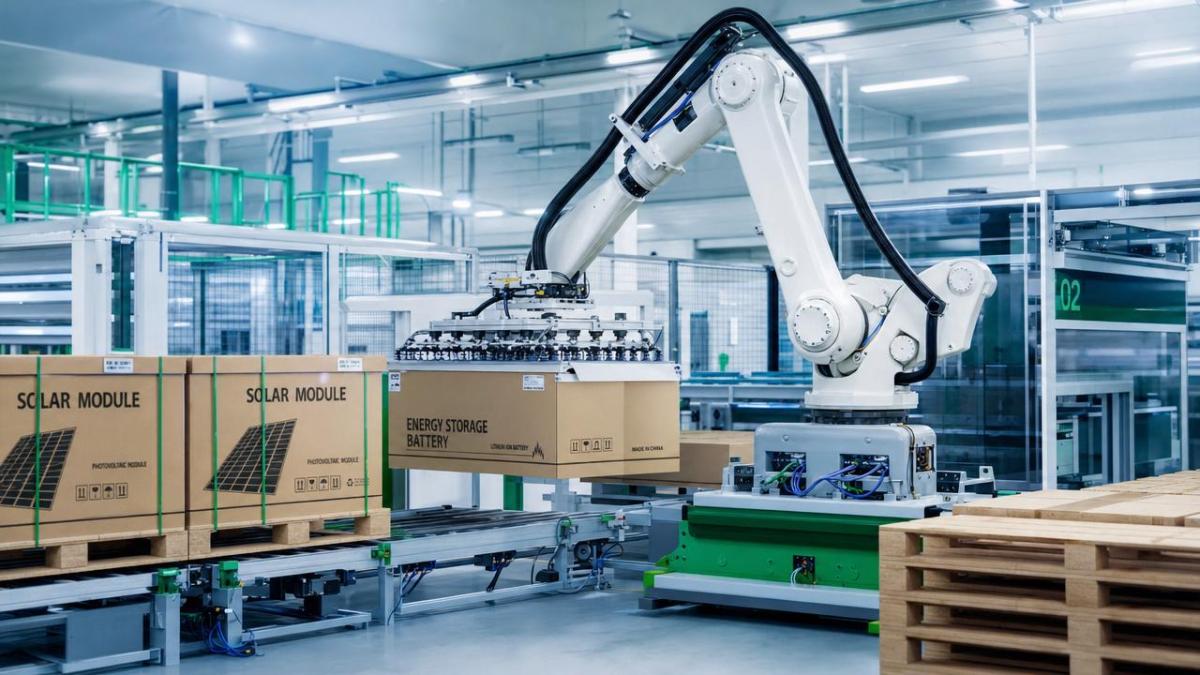
Scenario 2: Battery and energy storage lines where traceability is non-negotiable
In battery manufacturing and energy storage packaging, fast line changeovers are only one part of the decision. The more demanding issue is controlled handling with reliable data flow. Different battery formats, packaging standards, and shipping classifications can force frequent changes in pallet logic. Here, palletizing robot suppliers must support more than motion control; they need to fit into a quality-critical, compliance-heavy environment.
Project managers should evaluate whether the supplier can integrate with MES, WMS, barcode systems, and plant-level quality records. A line that changes SKU quickly but loses serial association or pallet identity creates expensive downstream rework. This is where a data-driven sourcing mindset, similar to the engineering verification philosophy championed by NHI, becomes valuable: claims should be tested against real communication reliability, actual fault recovery time, and stable operation under production noise.
Battery applications also demand stricter safety planning. Ask suppliers how they manage error-proofing during recipe transitions, interlocks for incorrect pallet type, and alarm logic when packaging material does not match the selected program. In this scenario, the strongest suppliers are those that treat changeovers as a controlled process, not just a software shortcut.
Scenario 3: Mixed-SKU renewable energy equipment lines with limited floor space
Manufacturers of inverters, EV charging hardware, heat pump controllers, and power conversion units often run in constrained factory layouts. They need palletizing robot suppliers that can adapt to multiple carton sizes while fitting into compact end-of-line spaces. In these cases, the fastest robot on paper may not be the best option if guarding, infeed alignment, or pallet dispenser layout makes changeovers cumbersome.
For compact lines, ask whether the supplier offers modular cells, side-entry service access, and quick end-effector replacement. If your team expects product updates or future packaging changes, a rigid cell design can become a hidden cost center within a year. Suppliers with strong simulation capability can help validate not only throughput, but also maintenance access, pallet replenishment workflow, and future expansion paths.
What different factory scenarios require from palletizing robot suppliers
A useful way to compare palletizing robot suppliers is to map scenario demands into technical and operational requirements. This helps project leaders avoid generic evaluations based solely on price, payload, or arm reach.
How project managers should qualify suppliers before RFQ
For engineering-led procurement, the best time to filter palletizing robot suppliers is before the formal RFQ stage. Start with a simple scenario checklist. How many SKUs run on the line each week? How often do pallet patterns change? What percentage of changeovers require operator intervention today? How much downtime is acceptable during product transitions? Can the cell be expanded to support new packaging formats in the next 24 months?
Then ask each supplier for evidence, not adjectives. Request a changeover demonstration using at least two product formats similar to your line. Ask for measured recipe switch time, not estimated speed. Review alarm history logic, HMI screenshots, and remote support workflow. If the supplier claims compatibility with your industrial network or data platform, validate protocol behavior under plant conditions rather than relying on marketing language alone. This evidence-based approach aligns well with renewable energy manufacturing, where process stability and long-term serviceability matter as much as initial commissioning.
Common misjudgments when selecting palletizing robot suppliers
One common mistake is overvaluing peak cycle speed. In changeover-heavy plants, a slightly slower robot with better software and easier setup may outperform a faster unit over the full shift. Another mistake is underestimating operator usability. If recipe selection is confusing or validation steps are buried in engineering menus, your line will depend too heavily on specialists.
Project teams also sometimes ignore upstream and downstream coordination. A robot may switch pallet patterns quickly, but if conveyors, labelers, scanners, or pallet dispensers cannot follow the same logic, the total line still loses time. Finally, some buyers choose palletizing robot suppliers based on general automation reputation without checking renewable energy references. Sector-specific experience matters because packaging fragility, compliance demands, and order variability are different from conventional consumer goods.
FAQ: scenario-based questions buyers often ask
Are palletizing robot suppliers with standard cells suitable for renewable energy plants?
They can be, if the production profile is stable and SKU variation is limited. For fast-changing lines, standard cells should be reviewed for tooling flexibility, recipe management, and integration depth before approval.
What is the most important KPI for fast line changeovers?
Use a combination of recipe switch time, first-pass success after changeover, and unplanned intervention frequency. These metrics show whether the solution performs reliably in real operations.
When should a project manager reject a supplier early?
If the supplier cannot provide scenario-matched demos, measurable changeover data, or clear integration responsibility, it is usually a sign of higher commissioning risk and slower ramp-up.
A practical path to the right supplier fit
The strongest palletizing robot suppliers for renewable energy are not defined by one specification sheet. They are defined by how well they match your production scenario, changeover frequency, digital infrastructure, and expansion roadmap. For project managers, the most effective selection process is to compare suppliers through real use cases: solar packaging variability, battery traceability, mixed-SKU compact lines, and contract manufacturing volatility.
If your team is evaluating options now, build the discussion around line-change evidence, integration reliability, and support responsiveness. The right supplier should help you reduce disruption today while preparing the factory for future product changes, regional packaging differences, and smarter data-driven operations. In a renewable energy market where agility increasingly defines competitiveness, scenario-fit is what turns palletizing automation from a purchase into a production advantage.
Protocol_Architect
Dr. Thorne is a leading architect in IoT mesh protocols with 15+ years at NexusHome Intelligence. His research specializes in high-availability systems and sub-GHz propagation modeling.
Related Recommendations
- NHI Data Lab (Official Account)Medical IoT Battery Safety White Paper Released
- NHI Data Lab (Official Account)Custom 5-Axis CNC Machining Aerospace Limits to Check Early
- NHI Data Lab (Official Account)AS9100 CNC Machining Tolerances Chart Where Quotes Go Wrong
- NHI Data Lab (Official Account)Industrial Cobot Manufacturer China How to Judge Real Support
- NHI Data Lab (Official Account)Palletizing Robot Suppliers That Support Fast Line Changeovers
- NHI Data Lab (Official Account)Collaborative Robot Payload 10kg Is It Enough for Real Tasks
- NHI Data Lab (Official Account)Where 15kg Payload Cobots Lose Speed on the Factory Floor
- NHI Data Lab (Official Account)6 Axis Robot Arm Wholesale or Local Stock Which Pays Off
- NHI Data Lab (Official Account)How to Compare Welding Robot Arm Price Beyond Unit Cost
- NHI Data Lab (Official Account)Wi-Fi 7+BLE Dual-Mode PCBA Lead Times Extend to 14 Weeks
Analyst