
Global Medical IoT Battery Safety White Paper Released
author
On May 4, 2026, the International Medical Device Regulators Forum (IMDRF) Battery Working Group published the first global white paper on battery safety for Medical Internet of Things (Medical IoT) devices. The document — Medical IoT Device Battery Safety Best Practices V1.0 — defines thermal runaway thresholds, cycle life validation methods, and PCBA-level safety routing specifications for medical-grade microbatteries used in long-term implantable and wearable applications. This development is particularly relevant for PCBA manufacturing firms, medical device OEMs, regulatory affairs professionals, and supply chain stakeholders operating in or serving high-regulation markets such as the U.S. and EU.
Event Overview
The IMDRF Battery Working Group released Medical IoT Device Battery Safety Best Practices V1.0 on May 4, 2026. The white paper establishes foundational technical guidance for microbattery safety in Medical IoT contexts, including criteria for thermal runaway under clinical-use conditions, standardized test protocols for cycle life verification, and layout rules for safe signal/power routing at the PCBA level. Two China-based PCBA solutions providers — headquartered in Shenzhen and Suzhou — participated in all benchmark testing as the only non-U.S./non-EU members. While not a mandatory standard, the white paper has been formally referenced by the U.S. FDA and the European Medicines Agency (EMA) in premarket review guidance.
Impact on Specific Industry Segments
PCBA Manufacturing Firms
These firms face direct implications because the white paper introduces explicit design and layout requirements at the PCBA level — notably routing separation between high-current paths and sensitive analog/sensor traces, thermal pad placement near battery interfaces, and trace width tolerances under sustained load. Compliance readiness may affect qualification timelines for new medical wearable or implant-adjacent modules.
Medical Device OEMs (especially IoT-enabled wearables & implants)
OEMs relying on third-party PCBA suppliers must now assess whether their current hardware designs align with the white paper’s safety routing and thermal validation expectations. Design iterations may be needed ahead of FDA 510(k) or CE MDR submissions where battery-related risk assessments are scrutinized more closely.
Regulatory Affairs & Quality Assurance Teams
Teams supporting submissions to FDA or EMA should treat this white paper as an emerging reference point for battery-related risk analysis documentation. Its inclusion in agency review materials signals increased expectation for empirical justification of thermal stability and longevity claims — especially for Class II/III devices with rechargeable microbatteries.
Supply Chain & Component Sourcing Managers
Suppliers of microbatteries (e.g., solid-state, thin-film lithium) and battery management ICs will see growing demand for test reports aligned with the white paper’s cycle life and thermal stress protocols. Procurement criteria may soon require evidence of compatibility with PCBA-level safety routing guidelines.
What Stakeholders Should Monitor and Act On Now
Track official updates from FDA and EMA on implementation status
While currently listed as a ‘reference’, both agencies may formalize aspects of the white paper into guidance documents or inspection checklists. Subscribing to FDA CDRH updates and EMA MDCG notifications is advised.
Review current PCBA design files against the white paper’s routing and thermal layout clauses
Focus especially on trace spacing near battery connectors, ground plane continuity under battery pads, and isolation of charging circuitry from RF/analog sections. Early gap assessment avoids late-stage redesigns during regulatory submission.
Distinguish between policy signal and enforceable requirement
This white paper is not a regulation nor a harmonized standard (e.g., IEC 62368-1 or ISO 14971). Its weight lies in its adoption as a review reference — meaning deviations require robust scientific justification, not just internal risk acceptance.
Engage early with qualified PCBA partners experienced in IMDRF-aligned testing
Given that only two Chinese PCBA firms completed full benchmark testing, sourcing partners with documented experience in these specific validation protocols may accelerate design verification and reduce audit findings.
Editorial Perspective / Industry Observation
Observably, this white paper functions less as an immediate compliance mandate and more as a forward-looking technical benchmark — one that consolidates previously fragmented safety expectations across regulators and device categories. Analysis shows it reflects a broader shift toward system-level battery safety evaluation, moving beyond cell-level datasheet specs to include how batteries interact with surrounding electronics at the board level. From an industry perspective, its value lies in signaling convergence: FDA and EMA are aligning on minimum expectations for battery behavior in connected medical products — a trend likely to influence future revisions of IEC 60601-1 and ISO 13485 annexes. Continued attention is warranted not because enforcement is imminent, but because design cycles for next-generation Medical IoT devices span 2–3 years, and architecture decisions made today must anticipate this emerging baseline.
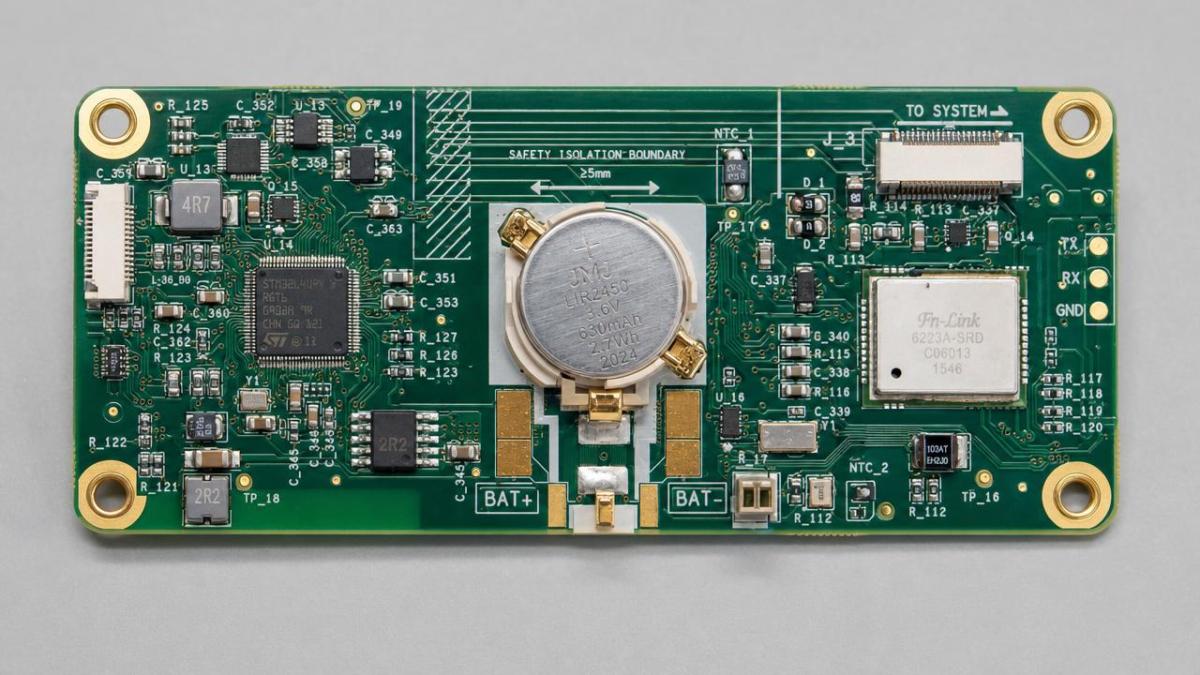
In summary, the release of the IMDRF Medical IoT Battery Safety white paper marks a step toward greater technical alignment among global regulators on a critical subsystem — microbattery integration in connected medical devices. It does not create new legal obligations, but it does raise the evidentiary bar for safety claims in regulatory submissions. Currently, it is best understood as a strategic reference point: shaping design priorities, informing supplier selection, and guiding internal validation planning — rather than triggering immediate compliance actions.
Source: International Medical Device Regulators Forum (IMDRF) Battery Working Group, official publication dated May 4, 2026. Status of adoption by national regulators remains subject to ongoing policy development; no formal incorporation into binding legislation or standards has been confirmed as of publication date.
Protocol_Architect
Dr. Thorne is a leading architect in IoT mesh protocols with 15+ years at NexusHome Intelligence. His research specializes in high-availability systems and sub-GHz propagation modeling.
Related Recommendations
- NHI Data Lab (Official Account)Global Medical IoT Battery Safety White Paper Released
- NHI Data Lab (Official Account)Wi-Fi 7 Dual-Mode PCBA Lead Times Extended to 14 Weeks
- NHI Data Lab (Official Account)Why Some Wholesale 6 Axis Robot Arms Cost More to Maintain
- NHI Data Lab (Official Account)6 Axis Robot Arm Wholesale: Which Specs Matter First?
- NHI Data Lab (Official Account)Why Custom AMR AGV Projects Often Run Over Budget
- NHI Data Lab (Official Account)Custom AMR AGV Supplier Options for Narrow Aisle Warehouses
- NHI Data Lab (Official Account)What Delays Heavy Duty AGV Deployment More Than Most Expect
- NHI Data Lab (Official Account)Heavy Duty AGV Manufacturer Claims vs Real Load Performance
- NHI Data Lab (Official Account)Where 10kg Payload Cobots Lose Efficiency in Real Tasks
- NHI Data Lab (Official Account)A 10kg Collaborative Robot Payload Sounds Enough, but Is It?
Analyst