
Swiss turning concentricity tolerance mistakes that cause rejects
author
Rejected parts often trace back to one overlooked variable: swiss turning concentricity tolerance. In renewable energy hardware, even minor errors can compromise sealing, rotation stability, and lifecycle performance. This guide explains the most common concentricity mistakes, connects them with cnc spindle runout measurement and micro machining tolerance limits, and helps engineers, buyers, and operators reduce scrap before precision issues escalate into costly production failures.
For renewable energy manufacturers, this is not a niche machining problem. Concentricity errors affect sensor housings in battery storage systems, valve sleeves in hydrogen equipment, precision shafts in smart actuators, and micro-connectors used in distributed energy monitoring devices. When tolerance decisions are made only from drawings instead of real process capability, rejects rise, assembly force increases, and field reliability drops.
At NexusHome Intelligence, the focus is always the same: replace vague claims with measurable engineering truth. In a market shaped by electrification, IoT integration, and carbon-efficiency targets, procurement teams and technical leaders need more than supplier promises. They need a clear view of which swiss turning concentricity tolerance mistakes create scrap, how to verify them, and what acceptance logic actually reduces lifecycle risk.
Why concentricity errors matter in renewable energy hardware
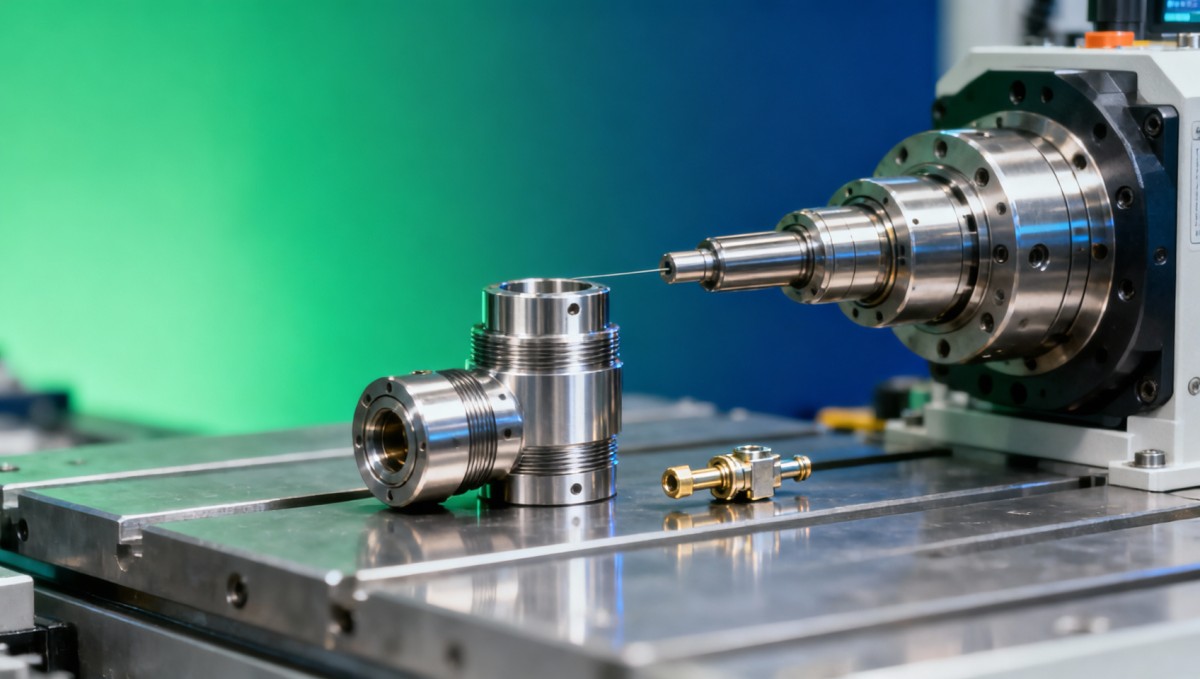
Swiss turning is widely used for slender, small-diameter components where dimensional stability matters over long production runs. In renewable energy systems, these parts often sit inside high-vibration, high-cycle, or sealed assemblies. A shaft or sleeve with only 0.01 mm to 0.03 mm of unintended eccentricity may still appear acceptable on a simple diameter check, yet fail under rotation, sealing, or alignment loading.
This issue is especially relevant in smart energy devices that combine mechanical and electronic functions. For example, a concentricity drift in a miniature valve stem inside a hydrogen control module can increase friction, alter actuator current draw, and shorten service life. In battery energy storage monitoring devices, poor coaxial alignment can create inconsistent engagement in sensor interfaces and degrade data stability over 12 to 36 months of field use.
Many rejects happen because teams confuse concentricity with circular runout, total runout, or simple diameter tolerance. A part can be within outer diameter specification and still be functionally off-axis. That mismatch becomes expensive when the part is installed into a solar tracker motor assembly, a micro-pump, or a smart fluid control system where even low-level imbalance repeats across millions of cycles.
From a B2B decision perspective, the risk is not limited to scrap cost. It extends to delayed PPAP approval, extra incoming inspection time, inconsistent lot acceptance, and warranty exposure. For buyers and plant managers, the real question is not whether a supplier can quote ±0.005 mm on paper, but whether that tolerance is supported by machine condition, measurement method, fixturing strategy, and process control over 5,000 to 50,000 pieces.
Typical renewable energy parts affected by poor concentricity control
- Miniature shafts for solar tracker drive subassemblies where rotational smoothness affects positioning accuracy.
- Valve seats, sleeves, and pins in hydrogen, biogas, or thermal management systems where sealing and coaxial engagement are critical.
- Precision inserts and standoffs in smart energy monitoring devices that combine electronics, sensors, and mechanical fastening.
- Micro-connectors, ferrules, and support pins in battery storage control hardware where cumulative alignment error affects assembly yield.
What failure looks like on the production floor
Operators often see the symptoms before quality teams trace the cause. Parts may show uneven wear marks, variable insertion force, unstable spinning during inspection, or intermittent sealing failures during pressure testing. In production cells running 2 to 3 shifts, those signs can be misread as tooling wear alone when the deeper issue is a poor relationship between datum selection and actual spindle behavior.
In practice, a reject rate of 2% to 4% on a high-value precision part can quickly become a strategic cost problem if the assembly value is 10 to 20 times higher than the machined component itself. That is why concentricity must be treated as a system-level risk in renewable energy manufacturing, not just a machine shop detail.
The most common swiss turning concentricity tolerance mistakes
The first major mistake is assigning a concentricity requirement tighter than the process can repeatedly hold. On small Swiss-turned parts under 6 mm diameter, many teams request 0.005 mm concentricity because the part “looks precision-critical.” But if guide bushing condition, bar straightness, and spindle thermal variation are not tightly controlled, the effective stable capability may be closer to 0.01 mm to 0.015 mm over a full batch. The result is a drawing that guarantees sorting, not quality.
The second mistake is using the wrong datum strategy. Concentricity only makes sense when the datum axis reflects the function of the installed part. If engineers reference an external diameter that is never used for assembly alignment, inspection results become disconnected from field performance. This is common in renewable energy components that interface with bearings, seals, ferrules, or press-fit bores. A poor datum choice can pass bad parts and reject usable ones at the same time.
The third mistake is failing to distinguish between machine-induced runout and part geometry error. If cnc spindle runout measurement is skipped or performed only during annual maintenance, manufacturers may incorrectly blame raw material or tool offsets. In reality, spindle radial error, collet wear, and sub-spindle transfer misalignment often create recurring off-axis conditions, especially after long unattended production windows of 6 to 10 hours.
A fourth mistake is ignoring micro machining tolerance limits on thin-wall or long-slender features. Once the length-to-diameter ratio exceeds roughly 8:1 or 10:1, even minor cutting force variation can deflect the workpiece. Teams may still apply the same concentricity target used for a shorter, more rigid design. In renewable energy sensors and compact actuator parts, this usually leads to unstable Cpk and repeated line-side containment actions.
Mistake-to-impact map for renewable energy applications
The table below shows how common specification and process mistakes translate into actual manufacturing or field problems in energy hardware programs.
The key takeaway is that most rejects are not caused by a single bad machine or operator. They come from an engineering chain failure: unrealistic drawing logic, weak machine verification, and inspection methods that do not match functional use. Correcting any one of these helps, but the best results come when all three are aligned.
A practical warning for procurement teams
If two suppliers quote the same tolerance but only one defines measurement method, gauge frequency, and machine warm-up control, they are not offering the same manufacturing capability. Price comparison without metrology comparison is one of the most common hidden risks in outsourced precision parts sourcing.
How to verify cnc spindle runout measurement and realistic tolerance capability
A reliable concentricity strategy starts with machine truth. Before discussing part acceptance, shops should confirm spindle and sub-spindle condition under operating temperature, not just at startup. In many Swiss turning cells, meaningful thermal stabilization takes 20 to 45 minutes depending on speed, coolant condition, and ambient variation. Measuring too early can hide the real runout pattern that shows up later in production.
Cnc spindle runout measurement should be treated as a scheduled control item, especially for parts going into renewable energy systems with long maintenance intervals. A simple once-per-year verification is often insufficient. For high-precision batches, many plants benefit from checking critical spindle condition weekly, and after crashes, collet changes, or major tooling interventions. Even a few microns of drift can push an already tight process out of control.
The next step is linking machine condition to actual capability data. Instead of asking whether a shop can “hold 5 microns,” buyers should ask for a defined sample size, the inspection fixture used, and whether reported values represent single setup best-case results or multi-lot normal production. A process that holds 0.008 mm on 30 parts in one shift is not automatically robust enough for a 3-month supply contract.
Renewable energy hardware often requires stability across temperature shifts, outdoor exposure, and intermittent duty cycles. That means the tolerance discussion cannot stop at the machining cell. Teams should connect part-axis stability to downstream assembly, pressure test, rotational balance, and electrical interface performance. This cross-functional check is where many costly escapes can be prevented.
Recommended verification checkpoints
- Confirm spindle runout after warm-up, not only at cold start.
- Check collet, guide bushing, and bar stock straightness before blaming tooling offsets.
- Measure at least 3 stages: first-off, mid-run, and end-of-run, especially for lots above 3,000 pieces.
- Compare machine capability with functional assembly outcomes such as torque, insertion force, or leak test performance.
- Separate one-time setup achievement from repeatable production capability over multiple shifts.
A practical capability reference table
The values below are not fixed industry rules, but useful planning ranges when discussing Swiss turning concentricity tolerance in renewable energy component sourcing.
These planning ranges help align design ambition with process reality. When a quoted tolerance is significantly tighter than the geometry and machine condition support, total cost usually rises through inspection burden, capacity loss, and scrap containment rather than through better field performance.
What buyers should request from suppliers
Ask for inspection method, sample quantity, measurement timing, and whether the supplier has a trigger threshold for machine intervention, such as a runout drift above 0.003 mm to 0.005 mm. This turns a marketing promise into an auditable manufacturing control plan.
Design, process, and inspection choices that reduce rejects
Reducing scrap starts before the machine runs. Design teams should review whether concentricity is truly the right geometric control for the part function. In some cases, circular runout or total runout provides a more direct and inspectable requirement. This is particularly useful in renewable energy assemblies where rotating performance, seal contact, or dynamic behavior matters more than abstract geometric purity.
Process teams should also map the entire route from raw material to final inspection. Bar quality, cutoff method, sub-spindle transfer, secondary deburring, and even cleaning can influence the final measured result. For example, a tiny burr or handling mark on a battery system connector pin can distort measurement enough to create false rejects, especially when the total tolerance band is only 0.01 mm to 0.02 mm.
Inspection strategy must match throughput. If the line produces 8,000 to 20,000 pieces per day, relying only on offline CMM checks may be too slow to catch drift early. A layered approach works better: in-process gauging for trend detection, periodic higher-accuracy verification for traceability, and assembly-level confirmation on critical programs. This approach protects both quality and production speed.
For enterprises sourcing across regions, alignment between engineering, quality, and procurement is essential. The drawing should state functionally relevant datums. The supplier should define control frequency. The buyer should define acceptance logic before mass production. Without that three-way agreement, the same part can be judged differently by different teams, extending launch cycles by 2 to 6 weeks.
Reject-reduction checklist for energy hardware programs
- Review whether concentricity, circular runout, or total runout best represents the real function.
- Set tolerance bands according to geometry, machine capability, and lot-size expectations.
- Define datum features based on installed assembly behavior, not drafting convenience.
- Schedule cnc spindle runout measurement with a frequency tied to production risk.
- Validate micro machining tolerance limits on long, thin, or delicate features before RFQ release.
- Use first article plus mid-run verification for batches where a single reject can halt a higher-value assembly.
FAQ for engineers, operators, and buyers
How tight should swiss turning concentricity tolerance be for renewable energy parts?
It depends on function and geometry. For compact, rigid parts, 0.005 mm to 0.01 mm may be achievable with disciplined controls. For more typical small shafts, sleeves, and connector features, 0.01 mm to 0.02 mm is often a more sustainable production target. If the feature is thin-wall or high L/D ratio, forcing a tighter limit may increase rejects without improving field life.
How often should cnc spindle runout measurement be performed?
There is no single answer, but critical energy hardware programs often justify weekly checks, plus verification after crashes, collet replacement, maintenance events, or unexplained dimensional drift. For less critical parts, frequency can be based on lot size and historical stability. What matters is that the interval is defined and documented.
What is the biggest sourcing mistake buyers make?
Comparing price and nominal tolerance without comparing inspection logic and process controls. A lower quote can become more expensive if it leads to 3% scrap, 100% incoming inspection, or delayed assembly approval in a renewable energy project with strict launch milestones.
Swiss turning concentricity tolerance mistakes rarely stay isolated at the machining stage. In renewable energy hardware, they affect sealing efficiency, actuator smoothness, sensor alignment, maintenance intervals, and supply chain confidence. The fastest way to reduce rejects is to align drawing intent, cnc spindle runout measurement, and realistic micro machining tolerance limits before production volume scales.
For researchers, operators, buyers, and business decision-makers, the strongest sourcing position comes from measurable process transparency. That is the same principle behind NexusHome Intelligence: technical truth should be verified through data, not assumed from brochures. If your team is evaluating precision components for smart energy, battery storage, hydrogen, or connected renewable infrastructure, a data-based tolerance review can prevent costly quality drift later.
To discuss part drawings, tolerance feasibility, inspection logic, or supplier benchmarking for renewable energy hardware, contact us to get a more tailored evaluation and explore practical solutions for precision-driven sourcing decisions.
Protocol_Architect
Dr. Thorne is a leading architect in IoT mesh protocols with 15+ years at NexusHome Intelligence. His research specializes in high-availability systems and sub-GHz propagation modeling.
Related Recommendations
- NHI Data Lab (Official Account)Swiss turning concentricity tolerance mistakes that cause rejects
- NHI Data Lab (Official Account)Micro machining tolerance limits and the point where yield drops
- NHI Data Lab (Official Account)What makes a micro machining parts supplier reliable at tiny tolerances
- NHI Data Lab (Official Account)IoT Supply Chain Audit: What Most Teams Miss in Sub-Tier Component Traceability
- NHI Data Lab (Official Account)Smart Home Micro-Sensors: How Humidity Exposure Alters Calibration Drift in Sub-$2 MEMS Designs
- NHI Data Lab (Official Account)Smart home micro-sensors: How MEMS packaging choices affect long-term humidity drift
- NHI Data Lab (Official Account)Is Your IoT Supply Chain Index Score Based on Real Audits — Or Self-Reported Claims?
- NHI Data Lab (Official Account)PIR sensor detection angle vs. actual coverage—why specs mislead
- NHI Data Lab (Official Account)Are your servo motors for robotics applications rated for IP67—or just labeled that way?
- NHI Data Lab (Official Account)OEM manufacturing of MEMS sensors hits yield walls above 92%—what’s causing the bottleneck in high-volume production?
Analyst