
How to Choose an Outdoor LoRaWAN Gateway
author
Choosing the right outdoor LoRaWAN gateway is critical for renewable energy deployments that depend on stable long-range connectivity, low maintenance, and accurate field data. Whether you are comparing lorawan gateway outdoor wholesale options, evaluating lorawan penetration through walls, or planning multi protocol gateway integration with a smart home local control hub, this guide will help engineers, buyers, and decision-makers identify the features that truly affect coverage, reliability, and total cost of ownership.
In renewable energy environments, gateway selection is not a minor hardware decision. It directly affects the availability of inverter data, battery room alarms, weather station telemetry, transformer cabinet monitoring, and remote maintenance workflows across solar farms, wind assets, hybrid microgrids, and distributed energy sites.
At NexusHome Intelligence, we approach gateway evaluation through measurable performance rather than brochure language. For buyers and technical teams, that means checking radio behavior, enclosure resilience, backhaul stability, protocol interoperability, and lifecycle serviceability before comparing price per unit.
Why Outdoor LoRaWAN Gateways Matter in Renewable Energy Projects
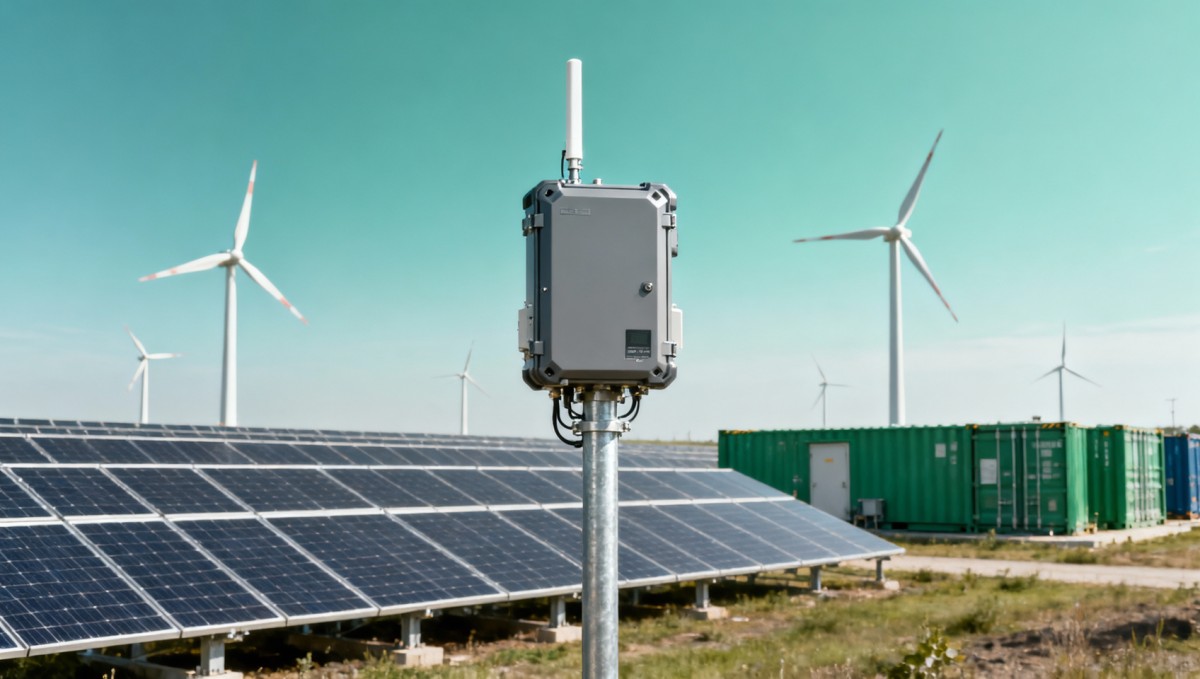
Renewable energy deployments often spread across large, interference-prone, and weather-exposed areas. A rooftop solar cluster may need to connect irradiance sensors, combiner box monitors, and meter points across several buildings. A utility-scale site may stretch over 10 to 50 hectares, where cabling every sensor is costly and difficult to maintain.
This is where an outdoor LoRaWAN gateway becomes valuable. It can aggregate data from hundreds or even thousands of low-power endpoints while reducing trenching, lowering maintenance visits, and extending battery-operated sensor life to 3 to 10 years depending on reporting intervals, payload size, and environmental conditions.
In practice, the gateway is the bridge between field devices and energy management platforms. If that bridge fails, site operators lose visibility into temperature excursions, string anomalies, enclosure humidity, vibration signals, or fuel-level events in backup energy systems. In high-value assets, even a 2-hour blind spot can delay fault response and raise service costs.
For commercial and industrial users, the gateway also supports more predictable OPEX. Compared with purely cellular endpoints, a well-planned LoRaWAN topology can reduce recurring SIM-related costs and simplify large-scale sensor expansion. That matters when a project grows from 80 nodes in year 1 to 500 nodes by year 3.
Typical renewable energy scenarios
- Solar plants monitoring panel temperature, irradiance, tilt angle, and combiner box status across 1 to 5 km coverage zones.
- Wind energy sites collecting nacelle environment data, perimeter sensing, and auxiliary equipment alarms under strong weather exposure.
- Battery energy storage systems tracking room temperature, smoke, humidity, and door access with low-power wireless sensors.
- Microgrids and distributed energy projects requiring integration between LoRaWAN devices, Modbus assets, and cloud or edge dashboards.
What changes when the deployment is outdoors
Outdoor operation introduces UV exposure, salt fog in coastal projects, seasonal temperatures from -20°C to 60°C, lightning risk, pole mounting constraints, and unstable backhaul availability. A gateway that performs well in a warehouse pilot may fail quickly on a remote substation fence line or rooftop parapet.
That is why renewable energy buyers should evaluate field endurance and network architecture together. A strong radio without proper ingress protection, surge design, and remote management features may still lead to repeated truck rolls and avoidable downtime.
Core Technical Criteria for Choosing the Right Gateway
The best outdoor LoRaWAN gateway is not simply the one with the highest advertised range. Renewable energy teams should balance at least 6 technical areas: channel capacity, receive sensitivity, enclosure rating, power input flexibility, backhaul options, and remote diagnostics. These factors together determine whether the device fits a pilot, a multi-site rollout, or a utility-grade deployment.
For many projects, an 8-channel gateway is sufficient for moderate traffic such as environmental sensing, cabinet alarms, and scheduled meter reads. In denser deployments with frequent uplinks or more simultaneous endpoints, a 16-channel or higher-capacity architecture may offer better packet handling and headroom for future expansion.
Backhaul resilience is equally important. Ethernet is stable where site infrastructure exists, while 4G or 5G may be necessary for remote solar arrays and off-grid installations. In some cases, dual backhaul with failover can reduce communication interruptions during ISP outages or maintenance windows.
Another often overlooked factor is power acceptance. Renewable energy cabinets may provide 12V, 24V, 48V, or PoE depending on the site design. A gateway that accepts wider DC input ranges can simplify integration and reduce extra converters, which lowers failure points over a 5 to 7 year operating cycle.
Key specifications to verify before purchase
The table below summarizes the most practical criteria for renewable energy procurement teams. It is designed for technical review, tender comparison, and operator handoff planning rather than marketing-only comparison.
For renewable energy sites, enclosure rating and power flexibility often matter as much as pure RF performance. If a gateway saves 8% on initial purchase cost but needs additional protective housing, voltage conversion, or site visits, the total cost of ownership can quickly become unfavorable.
Do not overlook protocol and integration details
Many buyers now ask for a multi protocol gateway because renewable energy systems increasingly overlap with building energy management, security, and local automation layers. In commercial solar and energy storage sites, LoRaWAN data may need to coexist with Modbus TCP, MQTT, BACnet, or a smart home local control hub used in mixed-use properties.
A practical selection process should verify whether the gateway supports edge filtering, local buffering for at least several hours, and secure export to cloud or on-premise platforms. This is especially important where bandwidth is limited or local control must continue even if the WAN connection drops.
Coverage, Wall Penetration, and Site Survey Strategy
Coverage claims are one of the most misunderstood parts of outdoor LoRaWAN gateway selection. Vendors may advertise 5 km, 10 km, or even longer range, but actual performance depends on terrain, antenna height, gateway placement, building materials, endpoint antenna quality, and packet frequency. In renewable energy projects, the right question is not “What is the maximum distance?” but “What packet success rate is sustainable under site conditions?”
Lorawan penetration through walls is also highly variable. A lightweight service room may allow acceptable signal passage, while reinforced concrete inverter rooms, metal battery containers, and transformer housings can severely attenuate the signal. A gateway placed 30 meters away may perform worse than one mounted 8 meters higher but 60 meters farther from the sensor.
For this reason, site surveys should include both outdoor line-of-sight checks and obstruction mapping. Measure likely signal blockers such as steel cabinets, cable trays, concrete walls, and solar panel rows. In many cases, one well-positioned outdoor gateway plus an external antenna is more effective than deploying several poorly placed units at lower heights.
A practical benchmark for planning is to begin with 1 gateway for small commercial sites under 2 hectares, then reassess when the node count exceeds 200 or when physical segmentation creates blind spots. Large sites with topographic variation or multiple equipment islands may need 2 to 4 gateways for reliable redundancy and uplink balance.
Common site factors affecting RF performance
- Antenna elevation difference of 3 to 10 meters can materially improve coverage in solar arrays and fenced substations.
- Metal enclosures around battery systems can reduce indoor sensor signal quality unless externalized antennas or alternate placement is used.
- Dense rooftop equipment, HVAC units, and parapet structures may create reflection and shadowing effects.
- Reporting intervals under 5 minutes across many nodes increase airtime pressure and may require more careful channel planning.
Planning by site type
The table below helps teams translate coverage theory into deployment planning for renewable energy assets. It can support early budgeting and installation design before formal RF validation.
The main conclusion is simple: outdoor range should be validated as a site-specific design parameter, not accepted as a catalog figure. For high-value renewable energy operations, a pre-deployment survey and a 2 to 4 week pilot can prevent expensive redesign after full installation.
Procurement, Wholesale Evaluation, and Total Cost of Ownership
When comparing lorawan gateway outdoor wholesale offers, many teams focus first on unit price. That is understandable for scale purchases, but procurement decisions should include lifecycle variables such as installation effort, enclosure accessories, firmware support, local compliance alignment, replacement lead time, and remote troubleshooting capability.
For example, a lower-cost gateway may require separate surge accessories, custom mounts, external waterproof enclosures, or manual firmware updates. These additions can raise project cost by 15% to 30% once labor and field service are included. In contrast, a better-integrated platform may reduce installation hours and improve recoverability after outages.
Enterprise buyers should also evaluate supply continuity. Renewable energy rollouts often happen in phases over 6 to 18 months. If the gateway platform changes hardware revisions too quickly, the project may face compatibility drift between early and late batches. That complicates operations, spare parts stocking, and standardized maintenance procedures.
From NHI’s data-driven perspective, the supplier conversation should move beyond “What is your best price?” to “What measurable field stability, revision control, and service process can you support?” That approach helps separate serious industrial vendors from catalog traders.
A practical procurement checklist
- Request full operating range, enclosure rating, and supported regional frequency details for the intended deployment market.
- Ask whether logs, watchdog recovery, and OTA updates are available without site visits.
- Verify lead time for sample units, pilot quantities, and production batches such as 20, 100, and 500 units.
- Confirm whether accessories are included: antennas, brackets, cable glands, power adapters, and lightning protection options.
- Check documentation quality for installers and operators, not only for R&D teams.
Decision factors that affect TCO
The following table is useful for commercial evaluators and enterprise decision-makers who need to compare gateway options across capex and opex dimensions.
Teams that use this framework usually make more defensible vendor decisions. The goal is not to buy the cheapest gateway, but to choose the platform that delivers stable data collection, predictable support, and lower field intervention over the project lifespan.
Deployment, Integration, and Common Mistakes to Avoid
After selecting hardware, success depends on deployment discipline. Renewable energy projects often fail at the integration stage, not at procurement. Common problems include poor antenna placement, underestimating wall attenuation, insufficient grounding, missing failover planning, and assuming the gateway will integrate smoothly with every SCADA, EMS, or building platform without protocol mapping.
A reliable implementation usually follows 5 steps: site survey, pilot deployment, parameter tuning, platform integration, and acceptance testing. For multi-site portfolios, that process should be documented and repeated. Standardization helps reduce commissioning time from several days per site to a more manageable and predictable workflow.
Integration deserves special attention in mixed environments. Some sites need LoRaWAN data pushed into energy dashboards, while others also require local logic through a smart home local control hub or edge controller in a commercial building. In those cases, data mapping, buffering behavior, and event priorities should be defined before installation.
Operators should also establish maintenance rules from day 1. A quarterly visual inspection, semiannual antenna and cable check, and firmware review every 6 to 12 months can reduce avoidable failures. In harsh climates, inspection frequency may need to increase, especially after storms or extreme temperature swings.
Frequent mistakes in outdoor LoRaWAN deployments
- Mounting the gateway too low, which reduces usable coverage more than expected even on open solar sites.
- Ignoring surge and grounding design in exposed energy infrastructure.
- Using indoor-rated accessories with outdoor enclosures, which weakens the whole installation.
- Skipping pilot validation and relying only on nominal range claims.
- Failing to plan for node growth from 50 sensors to 300 or more over the next 12 to 24 months.
FAQ for buyers and operators
How many sensors can one outdoor LoRaWAN gateway support?
It depends on reporting frequency, payload size, channel count, and radio conditions. In renewable energy monitoring, a gateway may handle a few hundred low-frequency environmental nodes comfortably, but dense alarm traffic or short reporting intervals can reduce practical capacity. Pilot measurement is more reliable than a headline number.
Is wall penetration strong enough for battery rooms and inverter rooms?
Sometimes yes, sometimes no. Standard walls may be manageable, but reinforced concrete and metal enclosures create significant attenuation. If critical alarms are involved, test penetration on site and consider antenna relocation or additional gateway coverage instead of assuming success from office conditions.
What is a reasonable pilot period before full rollout?
A 2 to 4 week pilot is common for renewable energy projects. That window usually captures weather variation, operational cycles, and communication stability well enough to identify placement issues and integration gaps before a larger procurement commitment.
When does a multi protocol gateway become necessary?
It becomes valuable when LoRaWAN field data must interact with building automation, Modbus devices, MQTT brokers, or local control logic. This is common in commercial energy projects where solar, storage, HVAC, and facility systems are managed together.
Choosing an outdoor LoRaWAN gateway for renewable energy is ultimately about measurable fit: radio coverage under real site conditions, ruggedness for outdoor exposure, backhaul resilience, integration readiness, and lifecycle support. A disciplined selection process protects data continuity, improves operational efficiency, and lowers the hidden cost of field maintenance.
For engineers, operators, procurement teams, and enterprise decision-makers, the strongest gateway choice is the one that matches actual deployment conditions rather than generic specification claims. If you are evaluating outdoor LoRaWAN gateway options for solar, storage, wind, or distributed energy projects, contact us to discuss a tailored selection framework, compare technical requirements, or explore more data-driven connectivity solutions.
Protocol_Architect
Dr. Thorne is a leading architect in IoT mesh protocols with 15+ years at NexusHome Intelligence. His research specializes in high-availability systems and sub-GHz propagation modeling.
Related Recommendations
- Dr. Aris ThorneWiFi Switch Module No Neutral: Is It Worth It
- Dr. Aris ThorneHow Well Does LoRaWAN Penetrate Walls
- Dr. Aris ThorneWiFi 6E vs WiFi 7 Latency for IoT in 2026
- Dr. Aris ThorneHow to Choose an Outdoor LoRaWAN Gateway
- Dr. Aris ThorneWhere edge computing helps most in smart city deployments
- Dr. Aris ThorneWhat an IoT gateway for CNC machine monitoring must handle
- Dr. Aris ThorneIoT gateway throughput benchmark under mixed sensor traffic
- Dr. Aris ThorneLidar for autonomous driving vehicles — why 905 nm systems struggle with wet asphalt reflectivity
- Dr. Aris ThorneSubmit IoT Benchmark Data: What Format Actually Gets Used in Cross-Vendor Interop Modeling?
- Dr. Aris ThorneIoT Hardware Benchmarking: Can Wi-Fi 7 Modules Maintain Low Latency Under Simultaneous Matter + Thread Load?
Analyst