
How Well Does LoRaWAN Penetrate Walls
author
How well does LoRaWAN penetrate walls in renewable energy and smart building deployments? For engineers, operators, and decision-makers, understanding LoRaWAN penetration through walls is essential when planning reliable metering, smart home peak load shifting, and energy monitoring accuracy class 1.0 across complex indoor environments. This guide explains what really affects signal performance beyond marketing claims.
In short: LoRaWAN usually penetrates walls better than Wi-Fi, BLE, and many short-range building protocols, but its real indoor performance depends far more on wall material, gateway placement, antenna quality, building layout, frequency band, and data rate than on the word “long range” alone. In renewable energy sites, multi-floor buildings, utility rooms, basements, and meter cabinets, LoRaWAN can work very well—but only when link budgeting and on-site validation are treated as engineering tasks, not assumptions.
What decision-makers and engineers really need to know first
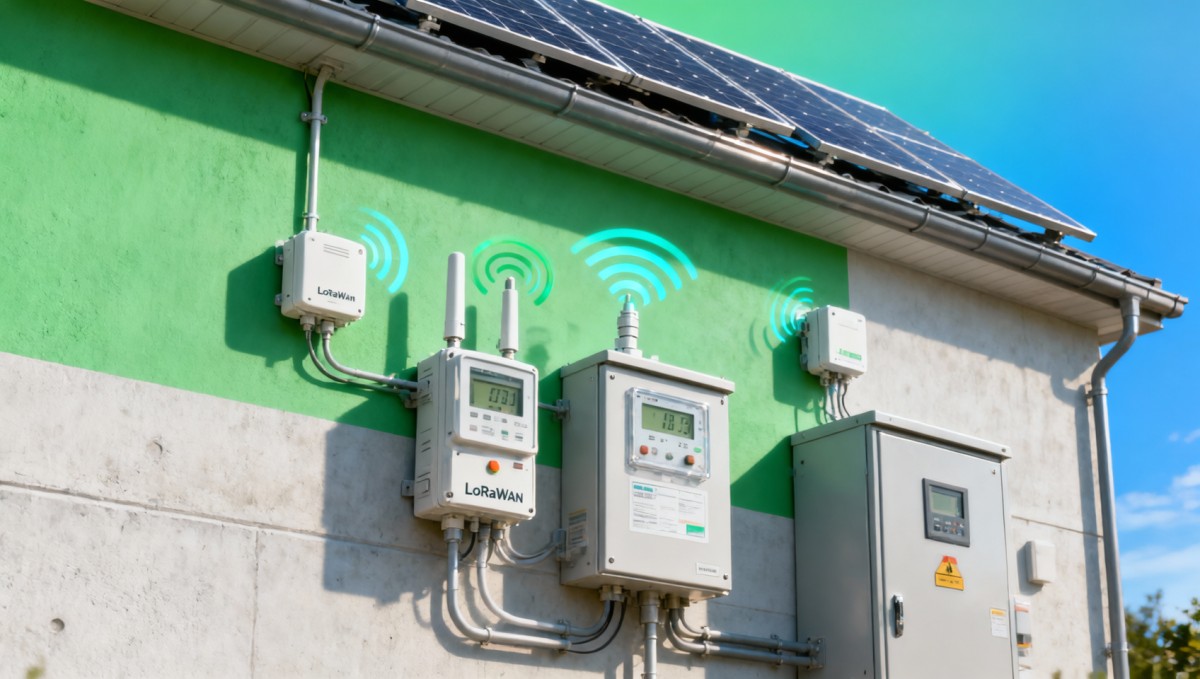
If your practical question is “Will LoRaWAN get through the walls in my building?” the most useful answer is: often yes, but not always reliably enough for every location without planning. For smart metering, solar asset monitoring, HVAC optimization, battery room telemetry, and peak-load shifting, the key issue is not whether a packet can pass through one wall. The real issue is whether the network can maintain stable, repeatable communication margins across many devices, during different times of day, with acceptable latency and battery life.
This matters because a renewable energy or smart building deployment is rarely a clean RF environment. You may be dealing with reinforced concrete, metal distribution cabinets, elevator shafts, utility risers, low-emissivity glass, underground plant rooms, and electrical noise from inverters or switchgear. In that context, asking only about “wall penetration” is too narrow. What you need to evaluate is whole-path loss.
For business evaluators and enterprise buyers, this leads to a simple operational principle: LoRaWAN is often a strong candidate for indoor telemetry at scale, but it should never be approved solely on vendor distance claims. It should be approved on measured packet delivery, signal margin, battery impact, and gateway count for your real site.
How well does LoRaWAN penetrate walls compared with other wireless options?
LoRaWAN generally performs well through walls because it uses low-power wide-area modulation designed for sensitivity rather than high throughput. In practice, this means it can often reach farther indoors than Wi-Fi or BLE at the same site, especially for low-bandwidth sensor traffic such as temperature, energy pulses, tank levels, or equipment status.
That said, “better than Wi-Fi” does not mean “immune to walls.” A lightweight internal partition is very different from a concrete shear wall or a metal-lined plant room. Here is the practical comparison most readers care about:
- Drywall, wood, standard interior partitions: LoRaWAN usually handles these well.
- Brick and masonry walls: Often manageable, but signal loss can become meaningful over multiple walls.
- Reinforced concrete: Can reduce reliability significantly, especially across several floors or deep interior zones.
- Metal enclosures, switch cabinets, elevator cores, mechanical rooms: These are common failure points.
- Basements and underground rooms: Possible, but highly dependent on gateway position and vertical path blockage.
Compared with mesh protocols, LoRaWAN also has a different planning logic. It does not rely on dense device-to-device relaying like Zigbee or Thread. That can be an advantage in metering and distributed energy monitoring because the network is simpler to maintain. But it also means poor gateway placement cannot be rescued by hoping nearby sensors will forward traffic.
What most affects LoRaWAN wall penetration in real buildings?
The strongest predictor of success is not a single wall. It is the cumulative loss across the full path between endpoint and gateway. The main variables are:
1. Wall material and density
Concrete with rebar, foil-backed insulation, metal cladding, and fire-rated service shafts can degrade LoRaWAN much more than standard interior partitions. Renewable energy deployments often place devices in electrically dense, physically shielded spaces, which makes this especially relevant.
2. Number of obstructions
One difficult wall may be survivable. Five moderate barriers plus a long corridor plus a floor slab may not be. The question is not “Can it pass a wall?” but “How much margin remains after the whole route?”
3. Frequency band and regional profile
Lower frequencies generally support better penetration than higher ones. Actual performance depends on the regional LoRaWAN band in use and local regulatory limits. This is one reason copied case studies from another country can be misleading.
4. Spreading factor and data rate
Higher spreading factors improve sensitivity and can help marginal links penetrate more difficult structures. However, that tradeoff increases airtime, which may reduce network capacity and affect battery strategy if used excessively.
5. Gateway placement and antenna installation
This is often the biggest controllable factor. A well-positioned gateway with proper antenna height, cable quality, and minimal shielding can outperform a theoretically “better” radio placed in a bad location. In smart buildings, moving a gateway from a plant room to a central riser or upper-level open area can change outcomes dramatically.
6. Endpoint installation details
A sensor inside a metal cabinet, mounted behind electrical panels, or attached flush to dense structural material may underperform even if the building-level design looked acceptable on paper.
7. Interference and electrical environment
LoRaWAN is robust, but no protocol is magic. Inverter rooms, substations, dense utility corridors, and mixed-protocol smart buildings can create conditions where field performance differs from laboratory expectations.
Where LoRaWAN works well in renewable energy and smart building use cases
For the target audience in renewable energy and energy-aware buildings, LoRaWAN can be especially valuable in applications where data packets are small, reporting intervals are moderate, and battery life matters more than high bandwidth.
Typical strong-fit scenarios include:
- Electricity, water, gas, and heat meter reading across apartments, campuses, and mixed-use buildings
- Solar and distributed energy monitoring where sensors are spread across rooftops, service spaces, or remote assets
- Indoor environmental monitoring for HVAC tuning, occupancy-based control, and energy optimization
- Peak-load shifting support through distributed sensing of loads, temperatures, relay states, and submetered zones
- Battery storage room and utility-space telemetry where low maintenance and broad coverage are priorities
In these scenarios, the value proposition is not just range. It is the ability to connect many low-data devices with comparatively low power demand and manageable infrastructure cost. For enterprise decision-makers, that can translate to lower truck rolls, fewer battery replacements, and wider telemetry coverage in hard-to-wire areas.
Where wall penetration becomes a real risk
LoRaWAN is not the right choice to assume blindly in every indoor environment. Risk increases when projects involve:
- Deep basements or underground utility spaces
- Reinforced concrete cores across multiple floors
- Metal meter cabinets or electrical distribution rooms
- Dense industrial plant structures around renewable energy systems
- Mission-critical control loops needing deterministic low latency
- High message frequency from many devices using conservative spreading factors
This distinction matters commercially. If your use case is periodic monitoring, alarms, or energy trend collection, LoRaWAN may be a strong fit. If your use case requires real-time control with strict responsiveness, wall penetration is only one part of the decision and may not be the limiting factor.
How to evaluate LoRaWAN penetration before procurement or rollout
The most helpful way to reduce risk is to replace generic “coverage” claims with a structured validation process.
Start with a site-specific RF survey
Review floor plans, construction materials, risers, plant rooms, rooftop zones, and any known shielded spaces. Mark where sensors will actually be mounted, not just where they appear on conceptual drawings.
Test worst-case device locations
Do not validate only easy areas like corridors or open offices. Test behind meter panels, inside service closets, near electrical rooms, in basements, and across floor slabs.
Measure reliability, not just connectivity
One successful packet proves almost nothing. Measure packet success rate, RSSI, SNR, retransmission behavior if applicable, and performance over time.
Check battery impact
If devices need higher spreading factors or repeated uplinks to overcome difficult wall paths, battery assumptions may degrade. For operators, that changes maintenance economics.
Model gateway count against business goals
The cheapest design on paper may become expensive if poor wall penetration forces later gateway additions, manual interventions, or device relocation.
For commercial teams and enterprise decision-makers, the most useful procurement question is: What gateway density and installation standard are required to achieve target coverage and battery life in our actual buildings?
What good planning looks like in practice
If you want dependable indoor LoRaWAN performance in renewable energy or smart building deployments, these planning habits usually matter more than brand slogans:
- Place gateways above major obstructions where possible
- Avoid locating gateways inside metal-heavy service rooms unless unavoidable
- Use proper antennas and minimize cable losses
- Separate “easy coverage zones” from “hard RF zones” in design documents
- Budget for pilot testing before full rollout
- Validate performance during normal building operation, not only during commissioning
- Align network design with data interval, battery target, and required monitoring accuracy
This is especially important when LoRaWAN supports energy monitoring accuracy class 1.0 workflows or peak-load optimization programs. If a network drops data in the hardest indoor zones, the analytics layer may look complete while the operational picture is actually incomplete.
Final answer: how well does LoRaWAN penetrate walls?
LoRaWAN penetrates walls well enough to be a strong option for many indoor monitoring and metering deployments, and it often outperforms common short-range wireless technologies in difficult buildings. But its real-world success depends on materials, obstructions, gateway design, endpoint placement, and validation discipline.
For renewable energy sites, smart buildings, and distributed energy monitoring, the right conclusion is not “LoRaWAN always penetrates walls well.” The right conclusion is: LoRaWAN can deliver strong indoor coverage and business value when the deployment is engineered around real building conditions.
If you are comparing solutions, focus less on marketing range claims and more on measurable proof: worst-case location testing, packet reliability, battery impact, and total gateway requirements. That is the level of evidence that helps engineers design confidently, operators maintain efficiently, and decision-makers invest with fewer surprises.
Protocol_Architect
Dr. Thorne is a leading architect in IoT mesh protocols with 15+ years at NexusHome Intelligence. His research specializes in high-availability systems and sub-GHz propagation modeling.
Related Recommendations
- Dr. Aris ThorneWiFi Switch Module No Neutral: Is It Worth It
- Dr. Aris ThorneHow Well Does LoRaWAN Penetrate Walls
- Dr. Aris ThorneWiFi 6E vs WiFi 7 Latency for IoT in 2026
- Dr. Aris ThorneHow to Choose an Outdoor LoRaWAN Gateway
- Dr. Aris ThorneWhere edge computing helps most in smart city deployments
- Dr. Aris ThorneWhat an IoT gateway for CNC machine monitoring must handle
- Dr. Aris ThorneIoT gateway throughput benchmark under mixed sensor traffic
- Dr. Aris ThorneLidar for autonomous driving vehicles — why 905 nm systems struggle with wet asphalt reflectivity
- Dr. Aris ThorneSubmit IoT Benchmark Data: What Format Actually Gets Used in Cross-Vendor Interop Modeling?
- Dr. Aris ThorneIoT Hardware Benchmarking: Can Wi-Fi 7 Modules Maintain Low Latency Under Simultaneous Matter + Thread Load?
Analyst