
Why Matter Devices Fail Despite Passing Basic Compliance
author
Why do Matter devices still fail in the field after passing basic certification? In renewable energy and smart building deployments, Matter standard compatibility alone cannot guarantee resilience, protocol latency benchmark stability, or true IoT ecosystem compliance. This article explores how smart home hardware testing, Matter protocol data, and IoT hardware benchmarking reveal hidden risks across the IoT supply chain—helping procurement teams, operators, and decision-makers separate marketing claims from engineering truth.
For renewable energy operators, the issue is not academic. A certified Matter thermostat, relay, sensor, or gateway may work in a demo apartment yet underperform in a solar-powered building, a microgrid control room, or a battery-backed HVAC system. Once field conditions introduce packet loss, voltage instability, RF congestion, and multi-vendor integration, basic compliance often proves too shallow to predict operational reliability.
This is exactly where NexusHome Intelligence (NHI) positions its value. NHI was built on the belief that smart infrastructure should be judged by measured engineering performance, not brochure language. In renewable energy environments where energy efficiency, peak-load response, and climate control precision affect both carbon targets and operating costs, hard benchmarking data becomes a procurement necessity rather than a technical luxury.
Why Basic Matter Compliance Does Not Equal Field Reliability
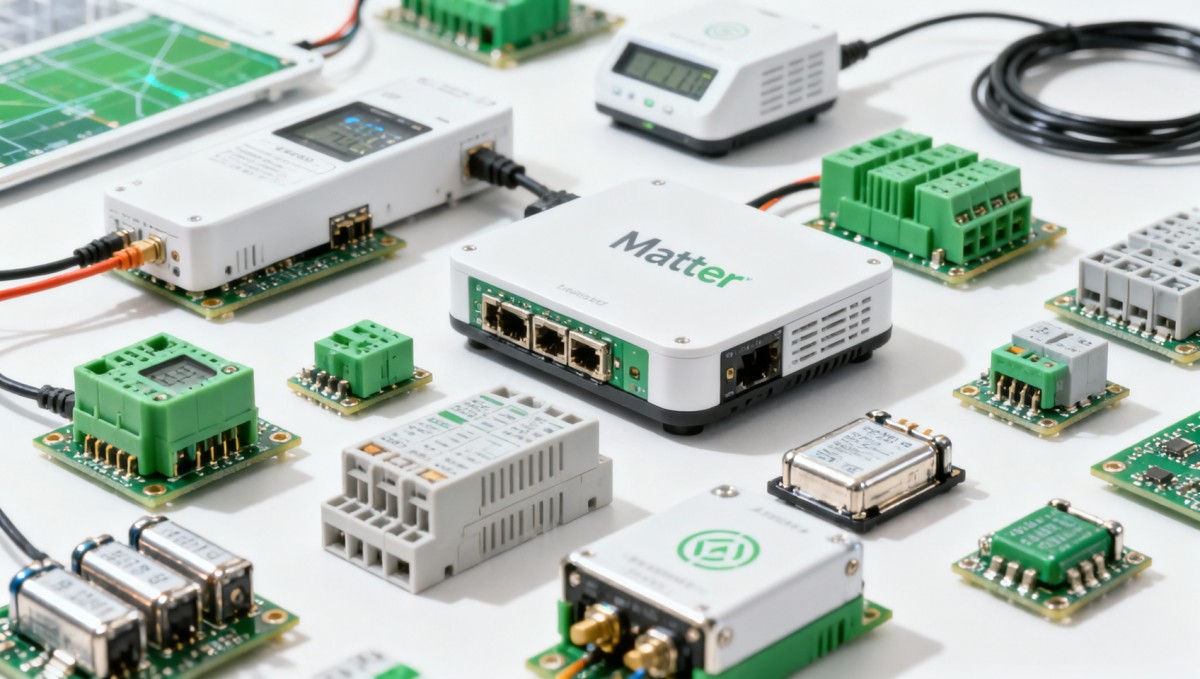
Basic certification verifies that a device can meet defined protocol requirements under controlled conditions. It does not automatically validate how that product behaves after 6 to 18 months in a renewable energy deployment where network density, edge control logic, and power-state changes are far more aggressive than in lab scenarios. Passing a compliance checklist is therefore only the first gate, not the final proof of readiness.
In smart buildings tied to rooftop PV, battery storage, heat pumps, and demand-response programs, Matter devices are expected to exchange state data continuously with gateways, submeters, smart relays, occupancy sensors, and HVAC controllers. Even a latency increase from 80 ms to 350 ms can distort automation timing. That may not matter for a light bulb in a living room, but it does matter when ventilation or thermal balancing logic depends on synchronized signals across multiple zones.
Another reason failures occur is that certification usually focuses on protocol conformance rather than system resilience. A product may technically “work with Matter” while still struggling with Thread border router handoffs, firmware update recovery, battery drain during repeated reconnection cycles, or interoperability with older building management layers. Renewable energy projects often combine new and legacy infrastructure, so these hidden weaknesses surface quickly.
For procurement teams, this creates a common blind spot: selecting devices by logo compliance instead of by operational profile. A certified smart relay for a low-duty residential load may behave very differently when used in a commercial building that cycles equipment dozens of times per day. A certified sensor with acceptable standby current on paper may still shorten battery service life by 30% to 40% under high-reporting intervals required by energy optimization systems.
Where certification usually stops
- Protocol handshake validation under controlled network conditions
- Basic command and response testing with limited node counts
- Standardized functional checks without sustained RF interference
- Interoperability at a feature level, not always at a lifecycle level
What renewable energy deployments additionally require
- Stable behavior during peak-load switching windows of 5 to 15 minutes
- Reliable reporting across 50 to 200 nodes in dense multi-floor buildings
- Battery and power tolerance during inverter noise or backup transitions
- Predictable recovery after firmware updates and border router resets
NHI’s methodology is designed around this gap. Rather than accepting a “Matter-ready” claim at face value, the lab examines millisecond-level latency variation, packet retransmission behavior, and long-duration stress stability. That approach is especially relevant for renewable energy assets where delayed or lost data can affect not only user comfort, but also energy balancing, occupancy-based control, and carbon reporting integrity.
The Hidden Failure Modes in Renewable Energy and Smart Building Deployments
In renewable energy projects, smart devices rarely operate in isolation. They sit inside a wider control fabric that may include solar inverters, battery systems, EV charging logic, HVAC automation, smart meters, and energy dashboards. When Matter devices fail, the root cause is often not a single broken component but an interaction problem between protocols, power environments, and application timing requirements.
One recurring issue is RF congestion. Commercial buildings and energy-positive campuses often run Wi-Fi, BLE, Zigbee, Thread, and proprietary sub-systems in parallel. Under low interference, a sensor may report every 30 seconds with little trouble. Under heavy congestion, delivery intervals may stretch beyond 90 seconds, and command retries can multiply. In ventilation optimization or room-level demand control, that delay can produce meaningful inefficiency.
Power conditions also matter more than many buyers expect. Renewable energy installations sometimes expose edge devices to fluctuating states during battery charge-discharge cycles, generator changeovers, or low-voltage events. Devices that pass compliance in a clean lab supply environment may become unstable during brownout-like behavior, entering reboot loops or missing state acknowledgments after temporary disruption.
Battery degradation is another hidden risk. Sensors used for occupancy, temperature, humidity, leakage, or window status are frequently promoted as “ultra-low power.” Yet if a Matter-over-Thread device experiences repeated route repair, aggressive keepalive behavior, or dense polling, battery lifespan can shrink from an advertised 24 months to 10 to 14 months. For facilities managing hundreds of nodes, this changes maintenance cost and labor planning significantly.
Typical failure patterns observed after deployment
The table below summarizes common post-certification failure patterns in renewable energy and smart building scenarios, along with likely operational consequences.
The key takeaway is that most field failures are not dramatic hardware collapses. They are partial degradations: slower response, shorter battery life, unstable commissioning, or inconsistent data fidelity. In renewable energy operations, those “small” degradations can accumulate into larger cost, comfort, and energy-efficiency losses over a 12-month cycle.
Why these failures matter to different stakeholders
- Researchers need benchmark data that distinguishes protocol compliance from deployment-grade robustness.
- Operators need fewer truck rolls, fewer battery replacements, and predictable reset behavior.
- Procurement teams need selection criteria that reduce lifecycle cost, not just unit price.
- Decision-makers need assurance that smart energy investments will scale from pilot to portfolio.
This is why NHI emphasizes transparent, stress-based validation across the IoT supply chain. It allows buyers to compare devices not only by feature list, but by sustained performance under realistic conditions that mirror energy and climate control deployments.
What Real Benchmarking Should Measure Beyond a Matter Logo
A meaningful evaluation framework for renewable energy projects must go deeper than feature compatibility. It should test whether a device remains stable across network load, temperature shifts, firmware updates, and long operating cycles. The benchmark should also measure how well data remains accurate when devices participate in energy orchestration rather than simple on-off control.
NHI’s five-pillar model is particularly useful here because it reflects actual engineering dependencies. Connectivity and protocol behavior affect command timing. Security and access layers affect trust and update resilience. Energy and climate control metrics determine whether automation improves efficiency or merely adds complexity. Hardware quality at the PCB, sensor, and battery level decides whether the product survives real service intervals.
For example, a smart relay intended for load shifting should not only switch correctly in a short validation test. It should also be assessed for standby consumption in the microwatt to low-milliwatt range, relay endurance across thousands of cycles, and communication stability when switched repeatedly during peak tariff windows. Similarly, room sensors used to tune HVAC should be checked for drift over time, not just initial calibration accuracy.
Procurement teams can use a structured benchmark checklist to avoid buying devices that appear compliant but create hidden cost later. The following comparison shows what a stronger evaluation model looks like.
The difference is practical. A compliance-oriented selection process tends to reduce initial screening time, but it increases downstream uncertainty. A benchmark-oriented process adds diligence up front, yet it lowers the risk of retrofit cost, maintenance escalation, and user dissatisfaction. For facilities scaling from 1 pilot site to 20 or more assets, that difference can shape the economics of the entire rollout.
Core metrics that deserve attention
- End-to-end latency under normal and congested conditions, ideally measured across 3 to 5 network states.
- Packet loss and retransmission rate during 24-hour stress tests with realistic node density.
- Battery life projection based on actual report intervals such as 15 seconds, 60 seconds, and 5 minutes.
- Recovery behavior after power interruption, firmware rollback, or border router restart.
- Sensor drift and switching endurance when devices support energy management logic.
How Buyers and Operators Should Select Matter Devices for Energy-Critical Projects
In renewable energy projects, the right question is not “Does this device support Matter?” but “Can this device maintain stable performance in my operating profile?” That shift in thinking changes how buyers evaluate suppliers, how operators prepare commissioning, and how decision-makers forecast lifecycle value. It also aligns with NHI’s mission of turning technical capability into verifiable procurement intelligence.
A practical selection process should start by mapping the deployment environment. A low-density residential energy retrofit with 15 to 25 nodes has very different requirements from a commercial retrofit with 120 nodes, distributed HVAC zones, solar forecasting inputs, and battery-supported peak shaving. Without this context, suppliers can provide technically true but commercially misleading claims.
Buyers should also evaluate total service burden. A cheaper sensor becomes expensive if batteries require replacement every 9 months instead of every 24 months, or if firmware failures require on-site resets. Likewise, a gateway that saves time during initial installation may create cost later if it cannot maintain interoperability with legacy metering, access control, or building automation layers.
The table below offers a procurement-oriented decision framework tailored to renewable energy and smart building environments.
A strong vendor conversation should include data logs, stress test summaries, and real implementation assumptions. If the supplier can only confirm certification status but cannot discuss latency bands, recovery windows, or battery behavior under different intervals, the buyer is still missing critical decision input.
A practical 5-step selection process
- Define operating context: node count, reporting interval, power architecture, and control criticality.
- Request benchmark data: latency, packet loss, battery profile, and interruption recovery results.
- Run a pilot for 2 to 4 weeks in a realistic zone, not only in a showroom environment.
- Compare maintenance implications, including battery replacement and firmware support effort.
- Scale only after validating interoperability with energy meters, HVAC logic, and site gateways.
This process may extend pre-purchase evaluation by a few weeks, but it can prevent years of avoidable service friction. In B2B energy and building portfolios, disciplined validation is often the difference between a successful digital retrofit and a fragmented, high-maintenance system.
FAQ: Common Questions About Matter Devices in Renewable Energy Applications
The most common questions from researchers, operators, and buyers tend to focus on certification, interoperability, and lifecycle cost. The answers below address recurring decision points in renewable energy and smart building projects.
Are Matter-certified devices suitable for energy management by default?
Not by default. Certification confirms baseline compatibility, but energy management requires stable timing, accurate state reporting, and predictable recovery. If devices support HVAC optimization, load shifting, or occupancy-driven automation, buyers should verify latency, reporting integrity, and long-term power behavior under realistic operating intervals such as 15-second, 1-minute, and 5-minute reporting cycles.
Which devices are most likely to fail after passing compliance?
Battery-powered sensors, low-cost relays, and gateways under mixed-protocol pressure are common risk points. They are more vulnerable to route repair overhead, firmware mismatch, or power fluctuation sensitivity. In practice, devices with aggressive low-power claims or broad interoperability claims deserve extra scrutiny before they are deployed at scale.
How long should a realistic pilot test last?
For most commercial renewable energy and smart building applications, 2 to 4 weeks is a practical minimum. That period is long enough to observe commissioning behavior, routine network fluctuation, and battery or reporting anomalies. For high-density sites or multi-vendor environments, extending the pilot to 6 weeks may reveal issues that short validation windows miss.
What should be documented during the pilot?
- Average and peak response time across normal and congested periods
- Frequency of offline events, rejoin attempts, and manual intervention
- Battery trend or standby consumption under actual reporting policies
- Any mismatch between device state, dashboard state, and control action
What role does NHI play in this process?
NHI serves as a data-driven engineering filter between hardware suppliers and global buyers. Instead of repeating generalized claims like “seamless integration,” the NHI approach focuses on verifiable protocol benchmarking, stress testing, and supply-chain transparency. For renewable energy stakeholders, this supports more defensible purchasing decisions and more stable long-term deployment outcomes.
Matter compliance is valuable, but it is not the same as field resilience. In renewable energy and smart building deployments, success depends on latency stability, battery realism, interoperability depth, and recovery under stress. That is why buyers increasingly need benchmark-driven selection instead of certification-only filtering. NexusHome Intelligence helps turn fragmented device claims into measurable engineering truth, giving researchers, operators, procurement teams, and enterprise leaders a clearer basis for action. If you are evaluating connected hardware for energy-critical environments, contact NHI to discuss benchmarking priorities, request a tailored assessment framework, or explore more data-driven solutions for your next deployment.
Protocol_Architect
Dr. Thorne is a leading architect in IoT mesh protocols with 15+ years at NexusHome Intelligence. His research specializes in high-availability systems and sub-GHz propagation modeling.
Related Recommendations
- Dr. Aris ThorneChina Customs Launches Smart Hardware Export Compliance Platform
- Dr. Aris ThorneChina Customs Launches Smart Hardware Export Compliance Platform
- Dr. Aris ThorneChina Customs Launches Smart Hardware Export Compliance Platform
- Dr. Aris ThorneMatter standard compatibility issues still appear after certification
- Dr. Aris ThorneProtocol latency benchmark results need more than average delay
- Dr. Aris ThorneWhat makes a smart home hub OEM harder to replace later
- Dr. Aris ThorneWhat makes a smart home think tank worth following?
- Dr. Aris ThorneAbout NexusHome Intelligence and the data behind its rankings
- Dr. Aris ThorneWhy an IoT independent think tank can change vendor screening
- Dr. Aris ThorneWhat to expect from a smart home compliance laboratory
Analyst