
How to Compare Matter Protocol Data Across OEMs
author
Comparing Matter protocol data across OEMs requires more than marketing claims—it demands verifiable benchmarks, protocol latency analysis, and clear Matter standard compatibility evidence. For procurement teams, engineers, and decision-makers in renewable energy and smart building projects, NexusHome Intelligence turns smart home OEM data into actionable insight through IoT hardware benchmarking, smart home hardware testing, and independent IoT engineering truth.
In renewable energy environments, this comparison work is not a niche technical exercise. It directly affects solar-plus-storage coordination, HVAC optimization, demand response reliability, microgrid visibility, and the long-term maintainability of smart building infrastructure. When an OEM says a controller, sensor, relay, or gateway “supports Matter,” buyers still need to know how that support performs under real load, interference, and mixed-device conditions.
For operators, the cost of weak protocol performance shows up as delayed control events, unstable commissioning, battery drain, and fragmented dashboards. For procurement teams, poor comparison methods can lead to 2–5 year lock-in with hardware that technically connects but fails operationally. For enterprise decision-makers, the issue is strategic: protocol data quality influences integration cost, energy efficiency, and upgrade flexibility across entire portfolios.
Why Matter Data Comparison Matters in Renewable Energy Projects
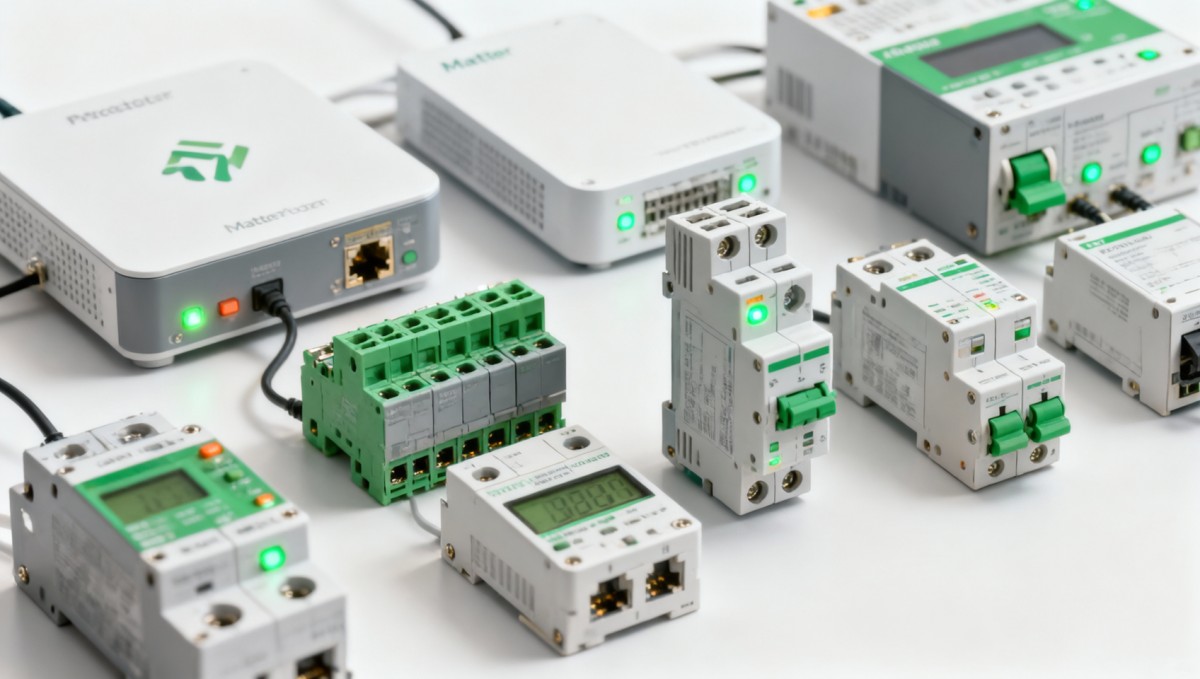
Matter is increasingly relevant in renewable energy and smart building deployments because energy assets no longer operate in isolation. Smart thermostats, occupancy sensors, EV charging interfaces, lighting controls, smart plugs, and gateway devices often share data paths with energy management systems. In a commercial building with 200–1,000 endpoints, small differences in protocol handling can compound into measurable operational drag.
A vendor’s claim of interoperability is only the starting point. What matters in practice is whether a Matter-enabled OEM device maintains stable response times during peak traffic, preserves battery life in Thread-based deployments, and communicates consistently when tied to solar generation curves or load-shifting schedules. In renewable energy use cases, even a 150–300 millisecond control delay may be acceptable for lighting, but problematic for coordinated HVAC and storage response logic.
This is where independent benchmarking becomes valuable. NexusHome Intelligence evaluates hard metrics instead of slogans. For example, multi-hop Matter-over-Thread latency, packet retry behavior, standby consumption in smart relays, and provisioning success rates under interference are more useful than broad product descriptors. These measurements help buyers compare OEMs on deployment fitness, not presentation quality.
Renewable energy operators also need comparison data because buildings are shifting toward unified control stacks. A facility that combines rooftop PV, battery storage, smart meters, and connected climate control may depend on 3–4 protocol layers at once. If one OEM’s Matter implementation introduces unstable handoffs or poor event consistency, that weakness can distort scheduling logic and reduce the value of energy automation.
Where protocol quality affects energy outcomes
- Load shifting accuracy during peak pricing windows, often scheduled in 15-minute or 30-minute intervals.
- HVAC response stability in commercial buildings targeting 8%–20% energy savings through automation.
- Battery-backed control continuity when network quality degrades during grid events or failover scenarios.
- Device maintenance cycles, especially for battery-powered sensors expected to operate for 18–36 months.
Common procurement mistake
A frequent mistake is comparing only certification status and unit price. Certification confirms a baseline, but it does not automatically reveal latency spread, onboarding friction, telemetry consistency, or behavior under dense node conditions. In energy-sensitive environments, a device that is 8% cheaper at purchase may create much higher integration and service cost over a 24-month period.
Which Matter Metrics Should Be Compared Across OEMs
To compare Matter protocol data across OEMs effectively, teams need a consistent metric framework. The objective is not to collect more data, but to collect the right data for renewable energy and smart building decisions. A good comparison model includes communication performance, power behavior, commissioning reliability, and data integrity across repeated test cycles.
The first key metric is latency. Measure average response time and also tail latency, such as 95th percentile behavior. Two OEMs can both report “fast control,” yet one may average 90 milliseconds while another swings between 80 and 450 milliseconds under network congestion. For demand response or HVAC staging, that variation matters more than brochure language.
The second metric is commissioning success rate. In large deployments, onboarding friction is expensive. If one OEM completes secure provisioning successfully in 97 out of 100 attempts while another drops to 88 out of 100 under mixed-network conditions, the labor impact becomes visible during rollout. Installation teams, especially across multi-site renewable portfolios, need devices that behave predictably.
The third metric is power profile. Battery-powered occupancy, temperature, and environmental sensors may be expected to last 24 months or longer, but protocol inefficiencies can cut that interval significantly. Standby draw in relays and gateways should also be checked. In energy-conscious projects, a few hundred milliwatts multiplied across hundreds of devices is not trivial.
Core comparison metrics for OEM evaluation
The table below summarizes a practical benchmark set that engineers and procurement teams can use when screening Matter-capable OEMs for renewable energy and smart building applications.
The most useful conclusion from this framework is that no single metric should decide the purchase. A low-latency device with weak onboarding reliability can still be expensive to deploy. A low-power sensor with unstable event delivery can undermine occupancy-based energy savings. Cross-OEM comparison must balance at least 4 dimensions at once.
Recommended minimum test structure
- Test at least 3 device categories, such as sensors, relays, and gateways.
- Run 30–50 repeated command cycles per device role.
- Measure under both low-interference and congested conditions.
- Record battery or standby behavior over a 7-day to 14-day interval where relevant.
How to Build a Fair OEM Comparison Method for Smart Energy Deployments
A fair OEM comparison requires a repeatable test environment. Without that, teams may confuse environmental noise with device quality. The cleanest approach is to compare like for like: same node count, same gateway class, same firmware generation when possible, and the same command interval. In renewable energy buildings, this should also include realistic energy workflow triggers rather than isolated lab actions alone.
For example, instead of testing only switch toggles, simulate a practical sequence: occupancy event, thermostat setpoint change, relay activation, meter read request, and status confirmation. This reflects the chained behavior common in energy-saving automation. When repeated over 100 cycles, differences between OEM implementations become much easier to see.
Environmental variables should also be documented. Interference from Wi-Fi congestion, metal cabinet placement, floor-to-floor distance, and mixed protocol coexistence all influence outcomes. In energy retrofits, especially older commercial sites, Thread or Matter performance can degrade because of physical layout rather than software issues alone. Comparison data is only useful if these constraints are visible.
NHI’s perspective is that protocol truth must be engineering-grade. That means comparing OEMs with scenario-based testing, not only certification checklists. Buyers should ask whether results include multi-node hops, failover behavior, event consistency, and post-provisioning stability after 24, 48, and 72 hours of runtime.
A practical evaluation workflow
- Define the target use case: solar-integrated building controls, battery-linked load management, or HVAC optimization.
- Select 2–4 OEMs with comparable device categories and firmware maturity.
- Create a shared test matrix covering latency, reliability, power use, and provisioning stability.
- Run tests in at least 2 environments: controlled lab and site-representative field setup.
- Score findings using weighted criteria tied to project goals, not generic product marketing.
Sample scoring model for procurement teams
The following table shows a simple but useful way to compare OEMs when the project goal is reliable energy automation across distributed smart building assets.
This scoring method helps align technical reality with commercial decision-making. It is especially useful when a cheaper OEM wins on unit price but loses on installation effort, battery stability, or firmware support. For portfolio-scale renewable deployments, those hidden costs can exceed the initial savings within 12–18 months.
What operators should document during pilots
Operators should log failed pairings, time-to-recovery after interruptions, battery decline curves, and whether devices retain stable behavior after software updates. These details often decide whether a Matter deployment can scale from a 1-floor pilot to a 10-building program.
Common Risks, Misread Signals, and OEM Red Flags
One major risk is assuming that a Matter badge means equal real-world quality. It does not. OEMs can differ significantly in firmware maturity, telemetry consistency, and support discipline. In renewable energy settings, these differences become visible when systems run continuously, interact with occupancy schedules, and need accurate state reporting for energy optimization.
Another risk is overvaluing peak performance and ignoring stability. A device that posts 70-millisecond latency in a demo but rises sharply under interference may be less useful than a device that holds steady at 140 milliseconds across 500 repeated events. Energy automation values predictability more than occasional speed spikes.
A third issue is incomplete data disclosure. Some OEMs publish protocol support but not test conditions. Buyers should ask how many nodes were active, what radio environment was present, whether tests covered 1-hop and 3-hop paths, and how long devices were observed after onboarding. Missing detail is not always a deal breaker, but it is a signal that verification may be shallow.
Procurement teams should also watch for hidden operational burdens. A device may work well in a controlled pilot but require excessive technician intervention during updates or replacements. In distributed renewable portfolios, every extra truck roll, battery replacement, or manual reset increases lifecycle cost and weakens return on automation investment.
Red flags during OEM review
- No clear latency data beyond broad claims such as “fast response” or “real-time control.”
- No battery or standby consumption information under actual Matter communication patterns.
- No explanation of firmware update policy, regression testing, or rollback procedures.
- No field evidence from dense-node, mixed-protocol, or interference-prone installations.
Risk reduction checklist
Before issuing a volume order, run a pilot of at least 20–50 devices, maintain the test for 2–4 weeks, and review both protocol metrics and maintenance effort. This approach is slower than buying off a datasheet, but it is much cheaper than replacing underperforming devices across an energy-sensitive building estate.
How NHI Supports Better Matter Decisions for Renewable Energy Buyers
NexusHome Intelligence positions itself as an engineering filter between OEM marketing and real deployment decisions. That matters in a market where interoperability claims are abundant but field-grade comparison data is limited. For renewable energy buyers, the value lies in turning protocol-level evidence into procurement clarity.
NHI’s benchmarking approach is particularly relevant for organizations managing smart buildings, energy retrofits, campus infrastructure, and mixed-vendor automation estates. Instead of accepting “Works with Matter” as a final answer, teams can review measurable indicators such as command latency, multi-node route behavior, standby energy use, and commissioning stability under practical conditions.
This creates better alignment across four stakeholder groups. Researchers gain cleaner comparative data. Operators gain fewer surprises during installation and maintenance. Procurement professionals gain a stronger basis for supplier selection. Enterprise leaders gain a more defensible path to scale, especially where carbon reduction goals depend on connected control systems performing reliably over time.
In a fragmented ecosystem spanning Matter, Thread, Zigbee, BLE, and adjacent building systems, independent testing is not an academic extra. It is a practical safeguard. As renewable energy projects become more data-driven, the OEMs that stand out will be those whose hardware behavior can be verified, repeated, and trusted under stress.
Questions buyers should ask before final selection
- What is the measured latency range under normal and congested network conditions?
- How many successful commissioning cycles were recorded, and in what environment?
- What is the expected battery interval or standby draw under realistic operating patterns?
- How does the device behave after 24, 48, and 72 hours of continuous runtime?
- What firmware support and diagnostic transparency can the OEM provide post-purchase?
Final decision perspective
The best OEM is rarely the one with the loudest interoperability claim. It is the one whose data holds up across repeated tests, site realities, and energy-critical workflows. If your team is evaluating Matter-enabled devices for renewable energy, smart buildings, or connected climate control, now is the right time to move from claims to benchmarks. Contact NHI to discuss comparative testing, request a tailored evaluation framework, or explore a data-driven sourcing approach built for scalable deployment.
Protocol_Architect
Dr. Thorne is a leading architect in IoT mesh protocols with 15+ years at NexusHome Intelligence. His research specializes in high-availability systems and sub-GHz propagation modeling.
Related Recommendations
- Dr. Aris ThorneChina Customs Launches Smart Hardware Export Compliance Platform
- Dr. Aris ThorneChina Customs Launches Smart Hardware Export Compliance Platform
- Dr. Aris ThorneChina Customs Launches Smart Hardware Export Compliance Platform
- Dr. Aris ThorneMatter standard compatibility issues still appear after certification
- Dr. Aris ThorneProtocol latency benchmark results need more than average delay
- Dr. Aris ThorneWhat makes a smart home hub OEM harder to replace later
- Dr. Aris ThorneWhat makes a smart home think tank worth following?
- Dr. Aris ThorneAbout NexusHome Intelligence and the data behind its rankings
- Dr. Aris ThorneWhy an IoT independent think tank can change vendor screening
- Dr. Aris ThorneWhat to expect from a smart home compliance laboratory
Analyst