
Smart Dimmer Switch China: What to Compare
author
Choosing a smart dimmer switch China supplier is no longer just about price. For renewable-energy projects and data-driven smart buildings, buyers must compare triac dimmer minimum load, wifi switch module no neutral compatibility, smart lighting cri and cct range, and smart plug standby power consumption. This guide helps researchers, operators, and decision-makers evaluate real performance, integration potential, and long-term energy efficiency.
Why smart dimmer switch comparison now matters in renewable-energy buildings
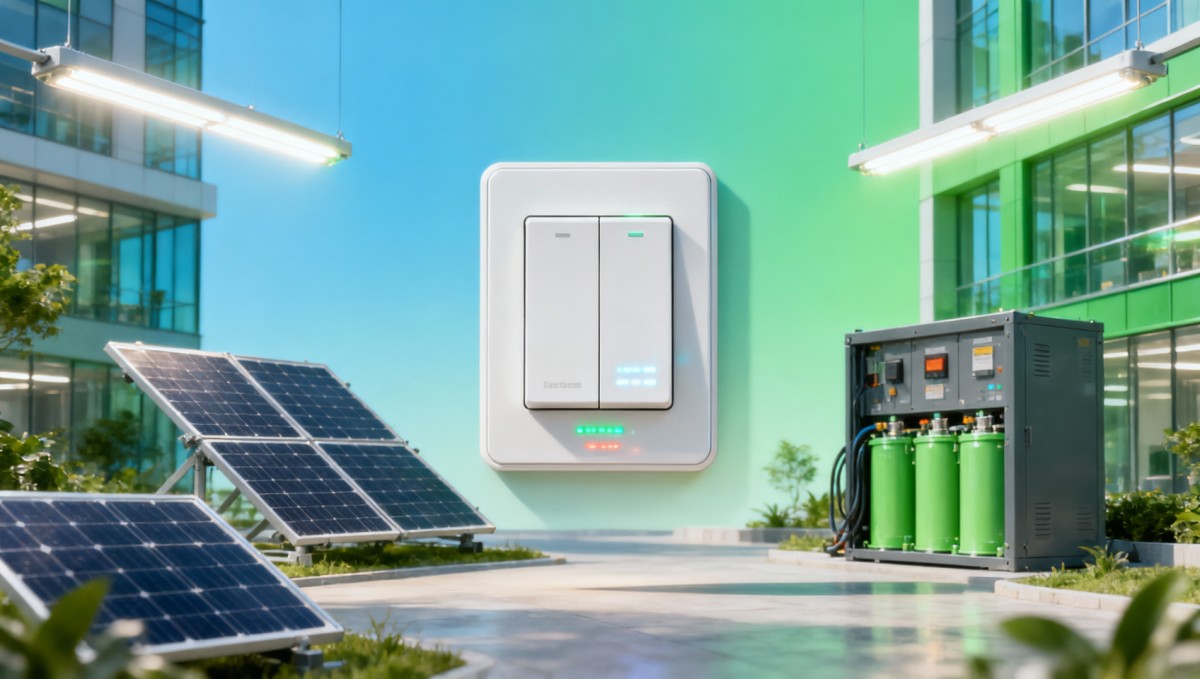
In renewable-energy projects, lighting controls are no longer isolated wall devices. A smart dimmer switch China sourcing decision can influence solar self-consumption, battery discharge behavior, demand response logic, and occupant comfort across offices, schools, hospitality spaces, and mixed-use buildings. When PV generation varies hour by hour, dimming precision and standby consumption become operational variables, not cosmetic features.
This is where many procurement teams struggle. A brochure may say a dimmer is “smart,” but it often omits minimum load limits, flicker behavior at low brightness, no-neutral wiring constraints, protocol latency, and compatibility with LED drivers. In a building that runs 12–16 hours per day, those omissions can create service calls, wasted energy, and poor user acceptance within the first 3–6 months.
For information researchers, the challenge is separating marketing claims from engineering evidence. For operators, the concern is stable daily use with fewer resets and less flicker. For business evaluators, the focus is lifecycle cost, compliance, and integration effort. For decision-makers, the central question is whether the selected hardware supports a scalable energy strategy across 1 building or 20 sites.
NexusHome Intelligence approaches this issue from a data-first perspective. Instead of accepting “works with Matter” or “ultra-low standby” at face value, the better purchasing path is to compare protocol behavior, energy characteristics, dimming curves, and hardware consistency. In fragmented IoT ecosystems, procurement quality increasingly depends on measurable performance rather than the loudest product page.
What changes when lighting is part of an energy strategy
Once lighting is linked to solar production, occupancy schedules, and energy dashboards, a dimmer switch affects more than ambience. It can reduce unnecessary load during peak tariff windows, coordinate with room-level automation, and improve comfort without forcing full on/off operation. In practical terms, even small standby differences become meaningful when multiplied across 50, 200, or 1,000 control points.
- Lower standby power helps reduce parasitic load in buildings designed for high efficiency and carbon reporting.
- Better dimming stability supports longer LED service life and fewer complaints about shimmer or low-end flicker.
- Reliable protocol support improves integration with BMS, smart relays, occupancy sensors, and renewable-energy management layers.
That is why comparison should begin with system behavior, not just unit price. A lower-cost switch with poor low-load performance can trigger hidden commissioning costs, driver replacements, and maintenance visits that exceed the initial savings within a single operating year.
Which technical parameters should buyers compare first?
When evaluating a smart dimmer switch China supplier, start with five core dimensions: electrical compatibility, dimming performance, connectivity, idle energy use, and installation constraints. In renewable-energy facilities, these parameters directly affect whether lighting control supports efficiency targets or becomes a source of instability. Buyers should request test conditions, not just headline specifications.
Triac dimmer minimum load is one of the first checks. Some dimmers behave poorly when connected to low-wattage LED loads, especially below common field ranges such as 3W–20W per channel. If the installed fixtures use high-efficiency drivers and low total wattage, mismatch can cause flashing, ghosting, or failure to dim smoothly between roughly 5% and 20% output.
Wifi switch module no neutral compatibility is another frequent issue in retrofits. Older buildings and many renovation projects do not have a neutral wire in the wall box. No-neutral products can simplify deployment, but they may require bypass components, have stricter load constraints, or show weaker performance with specific LED drivers. This should be confirmed early in the design review, not after purchase.
Smart lighting cri and cct range matter because dimming quality is not only about lowering brightness. In energy-conscious spaces, users still expect visual comfort. If the project combines tunable white fixtures, occupancy scenes, or daylight harvesting, the control layer must support the intended CCT range and preserve perceived color quality. Procurement should review compatibility at both 100% and low-brightness conditions.
Recommended comparison checklist for early-stage screening
The table below helps teams compare a smart dimmer switch, related wifi switch module no neutral options, and adjacent energy-control factors before moving to samples or pilot deployment. It is not a fixed industry standard, but it reflects the evaluation logic commonly used in building automation and renewable-energy integration projects.
A useful screening rule is to eliminate suppliers that cannot explain test conditions in 3 areas: load type, wiring topology, and protocol environment. If a vendor only provides nominal values without context, sample testing should be considered mandatory before any volume decision.
Three specification traps that often distort comparison
- Rated wattage alone does not reveal low-load behavior. A dimmer listed for 150W may still behave poorly at 6W or 8W LED loads.
- “No neutral” does not guarantee universal retrofit success. Driver design, bypass requirements, and wall-box conditions still matter.
- Protocol labels do not guarantee smooth integration. Latency, rejoin stability, and local fallback logic should be reviewed over at least a short pilot cycle.
For teams managing mixed ecosystems, this is where NHI-style benchmarking becomes valuable. The question is not whether a switch has a protocol badge, but how it behaves in real buildings under interference, retrofit constraints, and long duty cycles.
How do application scenarios change the right supplier choice?
Not every smart dimmer switch China sourcing project has the same priorities. A solar-powered office retrofit may prioritize no-neutral installation and low standby power. A hospitality project may focus on dimming smoothness, scene control, and visual comfort. A campus or industrial office may place more weight on central monitoring, protocol stability, and maintenance efficiency over 24-month operating cycles.
Renewable-energy use cases often involve variable generation and load-shifting logic. In that setting, lighting controls should support flexible scheduling, local override, and reliable response to automation rules. Operators often need a balance between centralized logic and room-level usability, especially when occupancy patterns change across weekdays, weekends, and seasonal demand periods.
Another practical factor is site maturity. New construction can plan neutral wiring, gateway placement, and protocol architecture from day one. Retrofit projects rarely have that luxury. There may be mixed driver brands, uncertain wiring, and phased installation windows of 7–15 days per block. This means the best supplier is often the one with clearer engineering disclosure, not merely the broadest catalog.
The following scenario table helps decision-makers align product choice with building type, installation risk, and energy-management goals. It is especially useful when technical teams and purchasing teams need one shared comparison framework.
Scenario-based selection map
The practical lesson is simple: the “best” supplier depends on the building’s electrical reality and energy objectives. A product that performs well in a newly built smart apartment may not be the right choice for an older renewable-energy retrofit with mixed LED loads and limited access for rewiring.
Four questions operators should ask before site rollout
- Can the dimmer remain stable at low brightness for the actual fixture mix installed on site?
- Does local control still work if cloud access is interrupted for several hours?
- How many device groups or rooms can be commissioned efficiently during a 1-day or 3-day installation window?
- Can replacement units match the same faceplate, firmware branch, and electrical behavior in future batches?
These are not minor details. They determine whether the solution remains serviceable over time and whether energy-saving logic survives real occupancy patterns rather than only lab demonstrations.
What should procurement teams verify beyond the datasheet?
Procurement often fails when teams compare only visible specifications and ignore process control. In a smart dimmer switch China project, the real difference between suppliers frequently appears in consistency, documentation quality, pilot support, and issue response. For B2B buyers, especially in renewable-energy and smart-building deployments, process transparency can be as important as the electrical design itself.
A good evaluation sequence usually has 4 stages: specification review, sample testing, pilot deployment, and batch confirmation. Depending on project scale, the full cycle may take 2–6 weeks. Skipping the pilot can look efficient, but it often shifts risk downstream into site delays, rework, and uncertain performance under real network and load conditions.
Compliance should also be reviewed carefully. Exact certification needs vary by market, but buyers commonly assess electrical safety, EMC considerations, radio compliance for wireless products, and material declarations where required. If the project is going into commercial buildings, facility teams may additionally request documentation related to installation instructions, environmental use range, and firmware update procedures.
NHI’s supply-chain perspective is relevant here: trust should be built through verifiable data and repeatable testing. A supplier that can clearly explain batch control, protocol behavior, and power metrics is usually easier to work with than one that relies on generic “smart home” language.
Procurement checklist for business evaluators and decision-makers
- Ask for sample validation on the actual LED driver types used in the project, not only generic lab fixtures.
- Request clarification on triac dimmer minimum load, startup behavior, and whether bypass accessories are recommended.
- Confirm wifi switch module no neutral limitations, especially for old circuits and mixed lamp wattage conditions.
- Review smart plug standby power consumption or related standby metrics across connected control nodes if the project includes auxiliary plugs, relays, or edge devices.
- Check whether firmware maintenance, replacement policy, and batch traceability are documented for at least the next procurement cycle.
Common mistakes that increase total project cost
One common mistake is assuming that all LED dimming problems can be solved on site. In reality, if the dimmer and driver combination is fundamentally mismatched, commissioning tweaks may only reduce symptoms. Another mistake is underestimating standby losses. In energy-sensitive buildings, a difference of fractions of a watt per node can accumulate across large deployments running every day of the year.
A third mistake is choosing a protocol only because it is fashionable. Wi-Fi can be simple in small projects, but larger properties may need closer review of network density, local control strategy, and recovery behavior after outages. The right answer depends on building topology, maintenance capability, and integration goals rather than a single trend label.
FAQ: practical questions before selecting a smart dimmer switch supplier
The questions below reflect the search intent of researchers, installers, commercial evaluators, and enterprise buyers who need decisions that hold up in real projects. They also help bridge the gap between a product shortlist and a workable procurement plan.
How should I compare suppliers if my project has both new buildings and retrofit sites?
Use a dual-track approach. For new buildings, prioritize protocol architecture, long-term scalability, and integration with energy dashboards. For retrofits, place no-neutral compatibility, low-load stability, and installation speed at the top of the list. If one supplier claims to cover both, request 2 sample scenarios and validate each under the actual site conditions rather than assuming one device fits all.
What is the most overlooked parameter in smart dimmer switch China sourcing?
Triac dimmer minimum load is frequently overlooked, especially when buyers focus only on maximum wattage. Many modern LED fixtures draw relatively low power, and that is where dimming instability can appear. For renewable-energy buildings that emphasize efficient fixtures, this issue becomes more likely, not less. Always match dimmer behavior to the project’s real fixture and driver profile.
Do I really need to care about smart plug standby power consumption if I am buying dimmers?
Yes, because dimmers are rarely deployed alone in modern buildings. They often sit alongside smart plugs, relays, gateways, sensors, and other control points. In low-carbon facilities, the system’s aggregate idle load matters. When a project includes 100–500 connected nodes, standby consumption becomes part of the building’s operating profile and should be reviewed across the whole control layer.
How long does a typical B2B validation cycle take before volume order?
For many commercial projects, a practical cycle is 2–4 weeks for samples and compatibility checks, followed by a pilot of 1–2 weeks in a live area if installation conditions are complex. Larger or multi-site projects may require 4–8 weeks when protocol integration, firmware review, and stakeholder approval are included. The exact timeline depends on whether wiring, fixtures, and control platforms are already standardized.
What makes a data-driven evaluation partner valuable?
A data-driven partner helps convert vague product claims into engineering decisions. That means comparing protocol behavior, standby characteristics, low-load dimming, and hardware consistency in a structured way. In fragmented ecosystems, this reduces the risk of buying components that look compatible on paper but create operational friction after deployment. For enterprise teams, it shortens the path from shortlist to defensible procurement.
Why work with a data-driven evaluation partner before final selection
If your project involves solar-linked buildings, commercial retrofits, or multi-site smart lighting upgrades, the right next step is not just collecting more catalogs. It is narrowing the field through measurable comparison. That includes confirming parameters, sample behavior, protocol fit, standby consumption, and expected delivery rhythm before a larger purchase commitment is made.
NexusHome Intelligence is built around that need for technical clarity. Our perspective is shaped by protocol fragmentation, real-world stress conditions, and the belief that supply-chain trust must be earned through data. For buyers comparing a smart dimmer switch China source, this means focusing on what the hardware actually does in renewable-energy and smart-building environments, not what marketing language suggests.
You can contact us to discuss 6 practical topics: parameter confirmation, triac dimmer minimum load screening, wifi switch module no neutral evaluation, smart lighting cri and cct range compatibility, standby power review across adjacent control devices, and supplier comparison for pilot planning. We can also support conversations around sample strategy, delivery timing, customization boundaries, and documentation needed for commercial review.
If you are preparing a shortlist now, start with your actual wiring conditions, fixture mix, protocol expectations, and rollout schedule. A focused technical discussion at this stage can prevent costly revisions later and help your team choose a solution that fits both energy goals and operational reality.
Protocol_Architect
Dr. Thorne is a leading architect in IoT mesh protocols with 15+ years at NexusHome Intelligence. His research specializes in high-availability systems and sub-GHz propagation modeling.
Related Recommendations
- Kenji Sato (Infrastructure Arch)How to Pick CRI and CCT for Smart Lighting
- Kenji Sato (Infrastructure Arch)Triac Dimmer Minimum Load Problems Explained
- Kenji Sato (Infrastructure Arch)Smart Dimmer Switch China: What to Compare
- Kenji Sato (Infrastructure Arch)Xiaohongshu's Cross-Border E-Commerce Platform Redshop Launches in June 2026
- Kenji Sato (Infrastructure Arch)Smart home compliance laboratory: Do they test under real load—or just idle conditions?
- Kenji Sato (Infrastructure Arch)Smart lighting energy metrics: How dimming algorithms impact total lifecycle kWh—not just lumens per watt
- Kenji Sato (Infrastructure Arch)Contact NHI Analysts — But First: Are You Asking the Right Questions About Firmware Integrity?
- Kenji Sato (Infrastructure Arch)About NexusHome Intelligence: How It Translates Matter Protocol Data Into Actual Lighting Behavior
- Kenji Sato (Infrastructure Arch)Smart lighting control via Matter still lacks reliable dimming consistency across brands
Analyst