
Dutch Groups Ask Court to Ban Meta Smart Glasses Sales
author
On November 26, 2026, Dutch consumer and digital rights groups filed a lawsuit seeking to stop sales of Meta AI smart glasses in the Netherlands, arguing that the devices enable secret recording in violation of European privacy law. The case brings privacy expectations for wearable cameras into focus for manufacturers, suppliers, distributors and buyers. Its outcome remains unknown, but the challenge could influence how businesses assess product design, market access and evidence of privacy compliance.
A Dutch Sales Ban Is Sought Over Secret Recording
The plaintiffs brought their case before the Amsterdam District Court. They are asking the court to prohibit sales of Meta AI smart glasses in the Netherlands and contend that the product permits secret recording, contrary to European privacy law.
The action is confined to the Netherlands. The supplied account also describes the case as reflecting closer regulatory scrutiny of wearable camera devices and identifies possible implications for privacy compliance standards and market access across the global smart glasses industry.
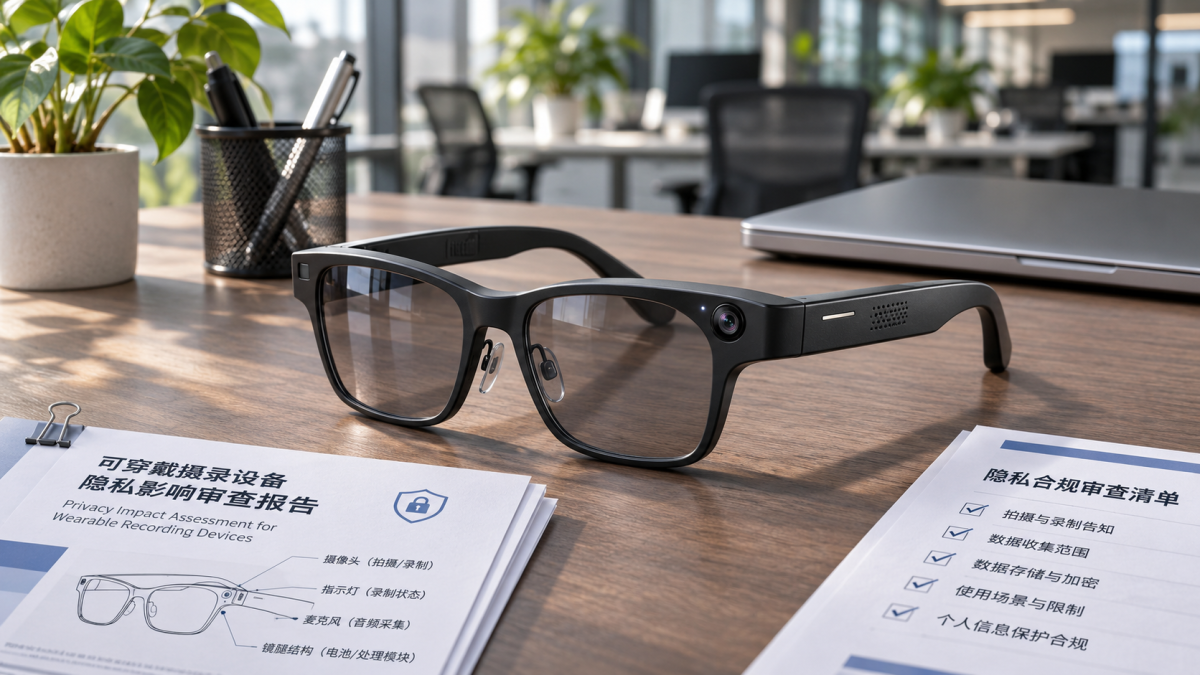
Where a Privacy Challenge Could Reach the Supply Chain
Product design and manufacturing
For manufacturers, the immediate issue is whether a wearable camera can record people without their knowledge. From an industry perspective, the lawsuit may prompt closer examination of how a device indicates that recording is taking place, how users operate recording features and what information is available to people who may be captured. These are areas for assessment, not design requirements established by the supplied information.
Manufacturers may also need to review how hardware, software and user instructions work together. A visible or audible signal, for example, would be useful to assess only in the context of the product's actual operation and the legal interpretation that applies. The lawsuit does not establish that any particular signal, setting or technical solution is required or sufficient.
Suppliers involved in cameras, controls or software could face more detailed questions from device makers about the functions their components support. Analysis suggests that the practical impact would depend on product architecture, commercial agreements and any later court findings. Companies can prepare to explain relevant capabilities without assuming that a component is itself the subject of the claim.
Distribution and market access
For distributors and retailers, a requested sales prohibition raises a question about continuity of supply in the Netherlands. No ban or court decision is identified in the input, so a requested remedy should not be treated as a restriction already in force. Nevertheless, businesses planning sales may want to monitor the proceedings and understand which products and transactions could be affected if a decision is eventually issued.
From a trade perspective, the case could make privacy documentation more relevant to conversations between manufacturers and sales partners. A distributor may seek a clearer account of recording features, product instructions and the basis for the supplier's compliance assessment. Any such requests would be commercial responses to uncertainty; they should not be presented as new official conditions of sale.
The potential influence beyond the Netherlands is less direct. The supplied account suggests that the case could affect global industry expectations, but it does not establish that a Dutch ruling would automatically change sales rules elsewhere. Businesses operating across markets may therefore find it useful to track the reasoning and reactions to any decision while assessing each market separately.
Buyers, integrators and support providers
Organizations considering smart glasses for their own operations may need to assess how recording could affect people around the wearer. Procurement teams could ask suppliers to demonstrate how recording is initiated, indicated and stopped, and to explain what information is given to users. Such questions would help buyers understand the product and its intended use; the input does not identify a mandatory procurement test.
Where a device is integrated into a broader service, the integrator may also need to understand which party controls recording functions and how changes to the software could affect them. Support teams could be asked to explain these functions consistently and to handle questions about privacy. These are foreseeable operational considerations, not confirmed consequences of the lawsuit.
Preparing for Questions About Recording and Sales
Review what the product actually does
A practical starting point is to document the recording functions of each relevant device and software configuration. Manufacturers and buyers could check how a user starts and stops recording, what indications are available to others, and whether settings or updates can change that behavior. The purpose is to connect any privacy assessment to the product as delivered, rather than rely solely on a general description of smart glasses.
Businesses may also wish to examine instructions and sales materials for consistency with observed operation. If descriptions of recording controls are unclear, more precise information could help commercial partners assess their own exposure and answer customer questions. Whether any particular wording or feature meets legal requirements would need separate verification.
Organize evidence for commercial review
Companies involved in design, procurement or distribution could assemble relevant technical descriptions, operating instructions and records of their privacy assessments. Where testing has been performed, retaining an explanation of the conditions and results may help reviewers understand what was examined. The input does not specify a required certificate, test report or approval process, and it does not establish that existing documentation is deficient.
For buyers, a focused supplier inquiry may be more useful than a broad request for assurances. Questions could address the device version being supplied, the recording functions included, how changes are communicated and which party can provide technical clarification. The answers may inform contract and purchasing decisions, subject to the buyer's own review.
Keep procurement and delivery plans under review
Businesses with planned purchases or deliveries in the Netherlands could identify their exposure to the requested remedy and review how their agreements address changes that might affect sales. They may also consider how much notice would be needed to adjust an order or evaluate another product. These are contingency planning steps; the available account does not establish a delivery interruption, a compliance deadline or an obligation to replace devices.
If an alternative is considered, buyers could verify its recording functions and supporting information before treating it as a solution. A different product may present different questions, and the outcome of this case cannot be assumed to resolve them. Procurement decisions should reflect verified product details and any applicable developments as they become available.
Follow the case and related official communications
The most relevant next step is to watch for reliable information about the proceedings, including whether the court issues a decision, what products and conduct it addresses, and what remedy, if any, it orders. Businesses should also check for relevant regulatory communications before changing compliance procedures on the assumption that an official position has been adopted.
Companies that use outside testing or compliance services may wish to discuss whether existing evaluations address the recording concerns raised in the lawsuit. At this stage, however, the supplied information does not identify a new certification scheme or a revised testing standard. Any proposed additional review should be judged against the product, its intended market and verified developments.
Why the Court's Reasoning May Matter Beyond One Product
At this stage, the case is best understood as a legal challenge and a signal for closer observation, not as a confirmed change to sales rules. The plaintiffs have made an allegation and requested a remedy; the information provided does not state how the court will assess that allegation or whether it will grant the requested ban.
Analysis suggests that the reasoning behind any eventual decision could be as relevant to the industry as the immediate outcome. Manufacturers and buyers would need to know whether the court focuses on a particular device feature, the way the product is presented, the circumstances of recording or another issue. Those details could affect how broadly businesses regard the decision when reviewing comparable products.
Market response is also uncertain. Suppliers could revise documentation or buyers could ask more detailed questions even before a final outcome, but neither response is established by the supplied facts. Conversely, the legal significance of the case may remain limited to its particular circumstances. Tracking court materials, official statements and industry feedback would help distinguish those possibilities.
The reference to closer regulatory scrutiny in the supplied account is relevant context, but it does not identify a specific regulatory measure or enforcement action. It should therefore guide monitoring rather than be treated as proof that a new industry-wide requirement has taken effect.
A Measured Response While the Case Continues
The request to ban Meta AI smart glasses sales places the privacy implications of wearable recording before a Dutch court and gives the wider industry a reason to examine product evidence and supply arrangements. Its potential reach remains uncertain: the claim is contested litigation as described in the input, and no outcome or new compliance standard has been provided.
For businesses, the proportionate response is to verify product behavior, keep relevant documentation accessible and follow reliable developments in the Netherlands. Decisions about sales, procurement or design should be revisited as verified information emerges, rather than assuming either a ban or an industry-wide rule change.
Basis for This Report and What Still Needs Verification
This article is based on the user-provided news title, event date and event summary. No specific official source link was supplied. The filing, subsequent proceedings and any official communications therefore require continued verification against reliable materials.
Relevant sources to monitor may include court publications, regulatory announcements, industry association information and authoritative media reports. Further review should focus on the court's treatment of the claim and requested remedy, any related compliance or certification guidance, changes to purchasing documents or trade practice, and feedback from businesses involved in the supply and use of smart glasses.
Protocol_Architect
Dr. Thorne is a leading architect in IoT mesh protocols with 15+ years at NexusHome Intelligence. His research specializes in high-availability systems and sub-GHz propagation modeling.
Related Recommendations
- Dr. Sophia Carter (Medical IoT Specialist)Dutch Groups Ask Court to Ban Meta Smart Glasses Sales
- Dr. Sophia Carter (Medical IoT Specialist)Miru and Biel Crystal Partner to Develop Electrochromic Lenses for AR Glasses
- Dr. Sophia Carter (Medical IoT Specialist)KAIST Finds Crystal That Could Make Smart Glasses Optics 120 Times Thinner
- Dr. Sophia Carter (Medical IoT Specialist)Dutch Privacy Regulator Advises Consumers Against Buying Camera-Equipped Smart Glasses
- Dr. Sophia Carter (Medical IoT Specialist)JBD Secures New Funding for 12-Inch MicroLED Expansion and Multi-Application R&D
- Dr. Sophia Carter (Medical IoT Specialist)AR Display Glasses for Field Service: Selection Criteria for Hands-Free Repair Work
- Dr. Sophia Carter (Medical IoT Specialist)Industrial AR Devices Cost: What Affects Pricing for Remote Support and Maintenance
- Dr. Sophia Carter (Medical IoT Specialist)Enamel Jewelry OEM Explained: Customization Options, MOQ, Lead Times, and Quality Checkpoints
- Dr. Sophia Carter (Medical IoT Specialist)Meta Launches $299 Smart Glasses Ahead of AR Race
- Dr. Sophia Carter (Medical IoT Specialist)Camping Glamping Tents for Eco Resorts: What to Compare Before You Buy
Analyst