
Vision AI Camera Accuracy Drops in Routine Conditions
author
When Vision AI camera accuracy drops in routine conditions, the issue is rarely just optics—it often exposes deeper gaps in Matter standard compatibility, protocol latency benchmark performance, and smart home hardware testing discipline. For procurement teams, operators, and decision-makers in renewable energy and connected infrastructure, NexusHome Intelligence delivers IoT engineering truth through independent benchmarking, IoT supply chain audit data, and verified insights on trusted smart home factories.
Why routine-condition accuracy failures matter in renewable energy operations
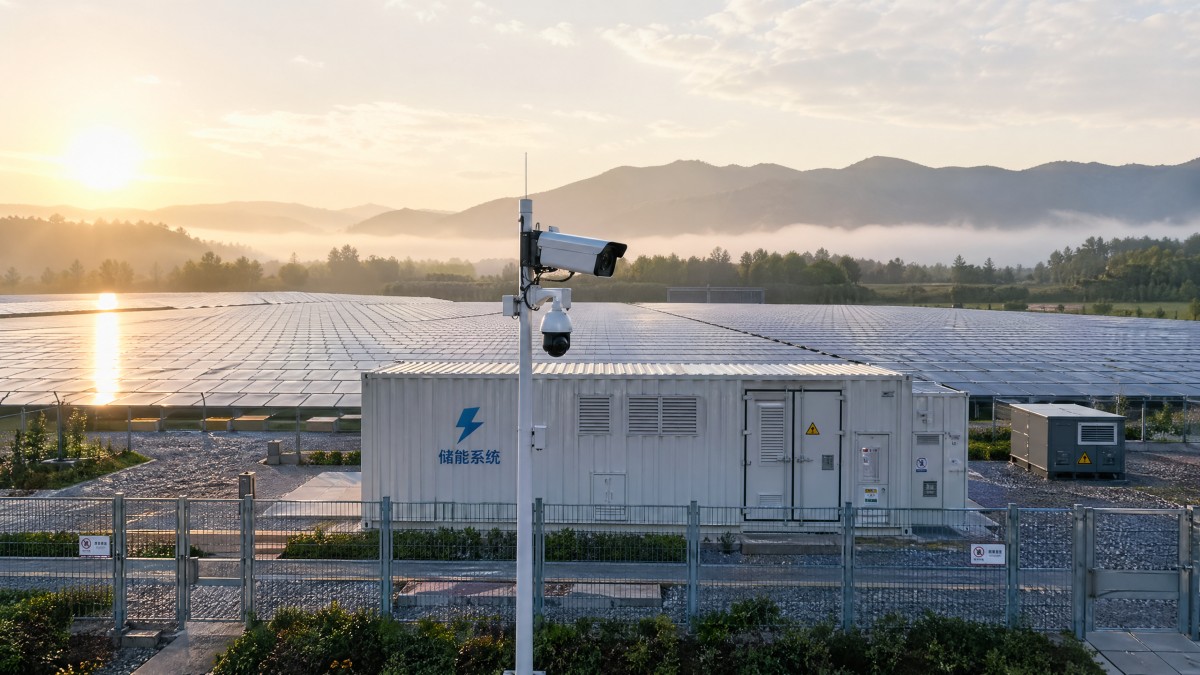
In renewable energy environments, a Vision AI camera is not just a security device. It can support access control at solar farms, monitor restricted battery storage rooms, verify perimeter activity around inverters, and help coordinate remote operations in hybrid energy sites. When accuracy drops under everyday conditions such as dust haze, low morning sun, rain scatter, or moderate network congestion, the operational risk moves from inconvenience to decision failure.
This is especially important for distributed energy projects where operators may supervise 5 to 50 sites from one control layer. A false alert can waste maintenance hours, while a missed event can delay response to equipment tampering or unauthorized entry. In battery energy storage systems and microgrid facilities, even a 2 to 5 minute delay in visual verification can complicate incident handling, insurance reporting, and contractor accountability.
Many buyers still evaluate camera performance through showroom demos, fixed-lighting samples, or polished product brochures. That approach hides what really happens in routine field conditions: changing contrast, edge shadows, wireless interference, protocol mismatch, and unstable power quality. NHI addresses this gap by treating camera accuracy as a system outcome rather than a lens-only feature.
For information researchers, the central question is simple: why does a camera that performs well in a clean demo fail in normal deployment? For operators, the pain point is practical: why do recognition errors increase during normal shift transitions, mixed lighting, or gateway load spikes? For procurement teams and business leaders, the concern is financial: how many hidden integration costs appear after installation week 2, month 1, or the first seasonal change?
The routine conditions that most often expose hidden weaknesses
In renewable energy facilities, routine conditions are rarely “laboratory normal.” A camera may face direct glare for 1 to 3 hours after sunrise, airborne dust during dry seasons, reflective surfaces from panel arrays, and intermittent bandwidth contention when multiple devices report simultaneously. These variables often reduce confidence scores, increase false rejection, and trigger unstable event classification.
- Low-angle sunlight and reflective photovoltaic surfaces that distort facial or object contrast during morning and late-afternoon periods.
- Protocol latency during multi-device communication, especially when cameras, locks, sensors, and gateways share constrained wireless paths.
- Environmental particles such as dust, mist, and light rain that do not look severe to the human eye but still degrade edge detection and image segmentation.
- Power fluctuation and thermal stress around outdoor enclosures, inverters, and battery rooms, which can affect edge processing stability over continuous 24/7 operation.
These are not rare exceptions. They are normal operating conditions. That is why NHI emphasizes independent benchmarking across connectivity, smart security, edge processing, and hardware reliability. In connected energy infrastructure, the right question is not whether the camera can recognize a subject once, but whether the whole chain can sustain usable accuracy over daily cycles, seasonal shifts, and cross-protocol environments.
What actually causes Vision AI camera accuracy to drop
Accuracy loss usually comes from stacked variables rather than one dramatic fault. In field deployments, the image pipeline, local processor, communication protocol, power profile, and cloud or edge decision path all influence the final result. A camera may have strong sensor specifications on paper, yet still underperform if the system introduces compression artifacts, delayed handshakes, or unstable synchronization with access devices.
Matter compatibility claims also require careful interpretation. “Works with Matter” does not automatically mean low-latency coordination in real installations. If a Vision AI camera is part of a wider access and monitoring workflow, even modest latency across gateways, bridges, and edge nodes can affect event timing. In renewable energy control rooms, where alarm correlation often depends on logs within seconds rather than minutes, this matters.
NHI’s approach is useful because it connects camera behavior to protocol and hardware verification. A procurement team comparing vendors should not only ask about resolution, frame rate, or claimed AI features. They should also ask about multi-node communication delay, local processing throughput, environmental tolerance, and long-duration stability over 8-hour, 24-hour, and multi-day operating windows.
The table below helps clarify how common failure sources appear in renewable energy sites and what they mean for selection decisions.
For buyers, the key lesson is that routine-condition failure often begins outside the camera module itself. A lower-cost device may appear economical at quotation stage, but if it increases false alarms, requires more site visits every quarter, or creates integration delays across multiple protocols, the total cost of ownership rises quickly.
Three technical checkpoints that should never be skipped
1. Protocol and gateway behavior
Check whether the camera interacts directly with the target ecosystem or depends on translation layers. In connected renewable sites, each added bridge can increase complexity. Even when average delay looks acceptable, peak load behavior during alarm bursts may be the real risk.
2. Edge processing under continuous load
Ask how the device behaves over continuous operation periods such as 12 hours, 24 hours, and 72 hours. Short demonstrations rarely reveal memory pressure, temperature accumulation, or inference slowdown in enclosed outdoor cabinets.
3. Image integrity under normal contamination
A useful test is not a storm simulation alone, but light contamination that builds gradually. Fine dust films, slight lens moisture, and common smudging can all affect sub-pixel recognition performance more than many buyers expect.
How to evaluate Vision AI cameras for solar, storage, and smart energy sites
A practical evaluation framework should fit both technical teams and procurement teams. In renewable energy projects, camera selection usually intersects with access control, remote supervision, cybersecurity review, maintenance planning, and supplier qualification. That means the best shortlist is built through structured scoring, not feature overload.
NHI recommends separating evaluation into 4 layers: scene performance, protocol performance, hardware durability, and supply-chain transparency. This helps operators focus on daily usability, while decision-makers can compare lifecycle risk and vendor credibility. It also reduces the common mistake of choosing a camera based only on advertised AI functions.
The following table can be adapted into an RFQ or pre-purchase technical review. It is particularly relevant for solar parks, distributed energy assets, microgrids, and commercial clean-energy buildings where systems from different vendors must work together.
If a supplier cannot explain how accuracy changes across 3 to 4 common site conditions, or cannot describe the protocol path between camera events and downstream devices, that is already useful selection data. In complex energy infrastructure, incomplete answers usually predict difficult integration later.
A field-oriented 4-step selection process
- Define the primary task set: access verification, perimeter monitoring, contractor tracking, battery room control, or mixed use across 2 to 3 zones.
- Map the protocol environment: direct IP, Matter-based interoperability, existing Zigbee or BLE devices, and whether a bridge is required.
- Run a limited pilot over at least 7 to 14 days, including sunrise, dusk, dust exposure, and peak communication periods.
- Score results against operations burden, event trustworthiness, maintenance frequency, and vendor responsiveness during issue handling.
This process is useful for small and mid-scale projects because it keeps testing focused. Instead of asking for perfect conditions, teams can ask for representative conditions and verify whether routine performance remains stable enough for real operations.
Procurement mistakes, compliance checks, and total-cost implications
The most expensive Vision AI camera is not always the best fit, but the cheapest unit often becomes costly when hidden integration work appears. In renewable energy deployments, indirect costs may include additional gateways, more technician visits, reconfiguration time, retraining for operators, and delayed handover to the asset owner. These costs usually emerge over the first 30 to 90 days rather than on day 1.
Procurement teams should also separate compliance language from operational evidence. Depending on project geography and use case, data handling, local processing, and access control policies may require careful review. It is reasonable to ask how video-related personal data is handled, whether edge computing can reduce cloud exposure, and how logs are retained across equipment categories.
NHI’s value in this stage is not limited to product commentary. As an independent benchmarking and technical verification platform, NHI helps global buyers move beyond marketing vocabulary and examine protocol compliance, hardware stress behavior, and supplier credibility. That matters when sourcing from large manufacturing regions where product claims can sound similar but technical discipline varies widely.
A disciplined buyer should review at least 5 core checkpoints before final approval:
- Whether the camera’s AI function is validated under ordinary field contamination, not just clean indoor demos.
- Whether protocol claims include practical interoperability details rather than label-only compatibility statements.
- Whether local processing supports acceptable response during backhaul instability or temporary cloud unavailability.
- Whether maintenance intervals, firmware update behavior, and parts traceability are clearly documented.
- Whether the supplier can support sample evaluation, engineering clarification, and realistic lead-time discussion, often within 2 to 6 weeks depending on build status.
Common misconceptions that distort buying decisions
“Higher resolution guarantees higher AI accuracy”
Not necessarily. If lighting, protocol timing, or edge compute is weak, higher resolution may add processing load without improving the final operational outcome.
“Matter support means seamless deployment”
Matter can improve interoperability, but it does not erase real-world latency, bridge behavior, or device-specific implementation differences. Benchmarking is still necessary.
“Routine conditions are easy conditions”
At renewable energy sites, ordinary conditions often include glare, dust, thermal cycling, and mixed networks. Those are exactly the conditions that reveal design discipline.
FAQ and next-step guidance for buyers, operators, and decision-makers
The questions below reflect common search intent from energy infrastructure teams comparing Vision AI camera options, reviewing smart home hardware testing methods, or assessing trusted smart home factories for connected renewable projects.
How should we test a Vision AI camera before full deployment?
Use a pilot that lasts at least 7 to 14 days and includes three practical windows: sunrise or glare period, normal daytime traffic, and low-light evening operation. Include at least one protocol-stress condition where the camera shares network activity with other sensors or access devices. This shows whether accuracy drops come from optics, processing, or system timing.
Which renewable energy scenarios need stricter evaluation?
Solar farms with strong reflectivity, battery storage sites with access restrictions, remote wind or hybrid installations with constrained backhaul, and commercial energy buildings using multiple IoT protocols all require stricter review. In these settings, camera performance affects not just security, but maintenance workflows and event accountability.
What should procurement teams request from suppliers?
Request protocol details, test conditions, local processing information, environmental operating guidance, sample support options, and realistic lead-time ranges. Ask specifically how performance changes under glare, dust, and mixed-device communication. If answers stay general, the sourcing risk remains high.
Why involve an independent benchmarking partner?
Independent verification helps separate engineering truth from broad marketing language. For global buyers sourcing through OEM or ODM channels, this reduces the chance of selecting hardware that looks compatible on paper but fails under routine field conditions. It is particularly valuable when deployments must balance security, interoperability, and energy-site reliability.
Why choose NHI for evaluation and sourcing support?
NexusHome Intelligence operates as a data-driven think tank and technical benchmarking laboratory rather than a generic product directory. That means the focus stays on measurable protocol behavior, hardware stress testing, environmental realism, and supply-chain transparency. For renewable energy stakeholders, NHI can help clarify parameter confirmation, product selection logic, lead-time expectations, protocol compatibility concerns, sample evaluation paths, certification questions, and quotation discussions with stronger technical confidence.
If your team is comparing Vision AI cameras for solar assets, battery storage access, smart building energy control, or mixed-protocol infrastructure, contact NHI with your target deployment scenario, required device count, protocol environment, and project timeline. You can consult on test priorities, shortlist criteria, supplier audit depth, sample support planning, and integration risk before purchase orders are finalized.
Protocol_Architect
Dr. Thorne is a leading architect in IoT mesh protocols with 15+ years at NexusHome Intelligence. His research specializes in high-availability systems and sub-GHz propagation modeling.
Related Recommendations
- Lina Zhao(Security Analyst)How to Design a Smart Building Security Ecosystem That Integrates Access, Video, and Energy Data
- Lina Zhao(Security Analyst)How Lidar-Camera Fusion Improves Autonomous Inspection Robots for Solar Farms
- Lina Zhao(Security Analyst)How to Choose AI Security Cameras for Apartments Without Compromising Privacy
- Lina Zhao(Security Analyst)How to Evaluate a Commercial AI Camera Supplier for Long-Term Project Reliability
- Lina Zhao(Security Analyst)How to Plan Smart Security for Warehouses: Access Control, AI Monitoring, and ROI
- Lina Zhao(Security Analyst)How to Choose a Smart Traffic Sensor for Intersections: Key Specs and Deployment Factors
- Lina Zhao(Security Analyst)How to Evaluate Custom AMR AGV Navigation for Complex Warehouse Routes
- Lina Zhao(Security Analyst)METI Tightens Audit Rules for Vision AI Security Devices
- Lina Zhao(Security Analyst)Smart Camera Infrared Range Explained: What Affects Night Detection Distance?
- Lina Zhao(Security Analyst)Vision AI for Renewable Energy: 7 Inspection Tasks It Can Automate
Analyst