
Middle East Vision AI Whitelist Quarterly Review Launched
author
On May 16, 2026, the Emirates Authority for Standardization and Metrology (ESMA) and the Saudi Standards, Metrology and Quality Organization (SASO) jointly initiated the quarterly re-evaluation of the Middle East Vision AI Equipment Whitelist — a regulatory shift with immediate implications for global AI hardware exporters, particularly those in China’s smart surveillance and access control sectors. The move signals a hardening of technical compliance requirements in GCC smart city procurement, pivoting from static certification to dynamic, real-world operational validation.
Event Overview
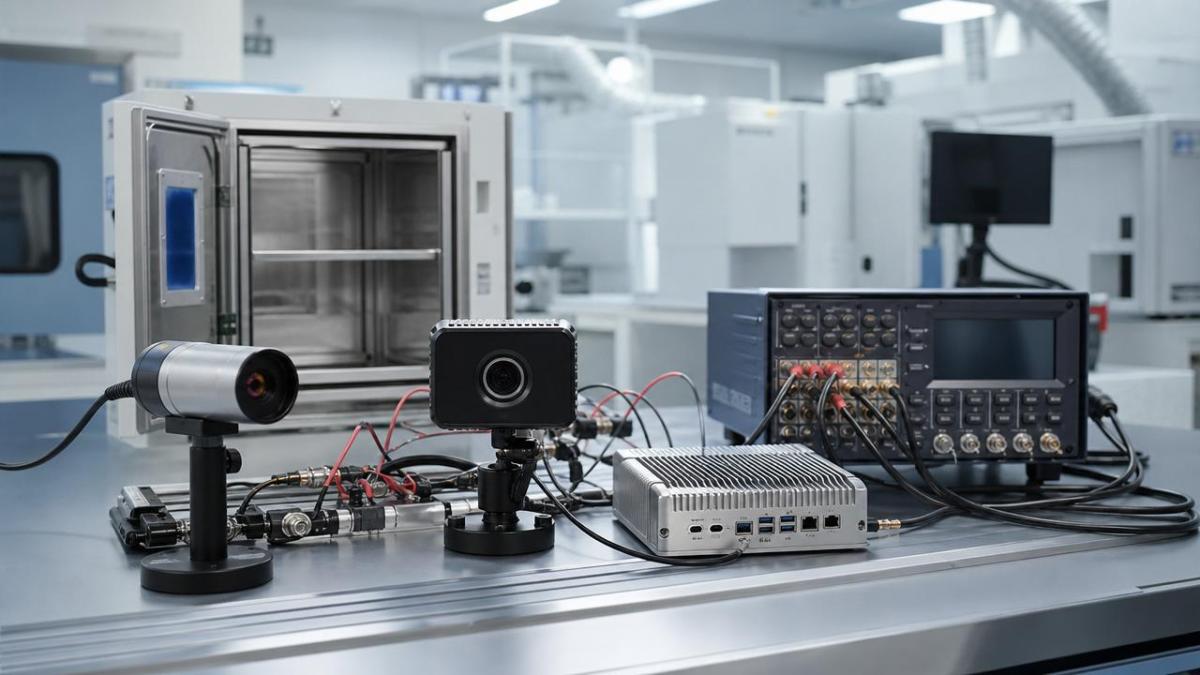
The UAE’s ESMA and Saudi Arabia’s SASO jointly launched the quarterly re-evaluation of the Vision AI equipment whitelist on May 16, 2026. All listed products must now submit, every quarter, a ‘72-hour edge-AI workload power fluctuation test report’ issued by a GCC-accredited laboratory. The report must include measured peak power consumption, standby power draw, and thermal drift curves under sustained inference load. Failure to submit the report on schedule will result in removal from Dubai’s Smart City procurement shortlist.
Industries Affected
Direct Trade Enterprises: Chinese exporters of AI-powered cameras and access control hosts face direct commercial risk — loss of whitelisted status means automatic exclusion from competitive bidding in key municipal and infrastructure tenders across Dubai, Abu Dhabi, and Riyadh. Revenue exposure is concentrated in Q3–Q4 delivery cycles, where procurement windows align with fiscal year-end spending.
Raw Material Procurement Enterprises: Suppliers of low-power SoCs (e.g., NPU-integrated ASICs), thermal interface materials, and ultra-low-quiescent-current PMICs are seeing revised demand signals. Buyers are now requesting pre-validated component-level power/thermal datasets — not just datasheets — to support downstream system-level reporting. This shifts procurement timelines earlier into product development cycles.
Manufacturing Enterprises: OEMs and ODMs producing Vision AI devices must integrate continuous power telemetry into production test benches. Legacy burn-in tests (typically 8–24 hours) are insufficient; new QA workflows now require 72-hour automated logging with timestamped thermal imaging — increasing test floor footprint and calibration overhead.
Supply Chain Service Enterprises: Third-party testing labs accredited in GCC countries (e.g., Intertek Dubai, SGS Riyadh) are reporting 40–60% surge in pre-submission consultation requests. Meanwhile, logistics providers specializing in device shipment for lab validation face tighter scheduling constraints due to fixed quarterly submission deadlines — notably August 15, November 15, and February 15 each year.
Key Focus Areas and Recommended Actions
Align internal test protocols with GCC-defined edge-AI workload profiles
Manufacturers must adopt the official GCC Edge AI Benchmark Suite (v2.1, released April 2026) — not proprietary or synthetic loads — during 72-hour validation. Deviation voids report acceptance.
Prioritize lab accreditation mapping early
Only 12 laboratories across the GCC currently hold full accreditation for this specific test scope. Firms should confirm lab capacity and slot availability before finalizing product release schedules — average lead time for report issuance is now 18 working days.
Reassess firmware update policies
Any post-certification firmware revision affecting power management logic (e.g., dynamic clock gating, thermal throttling thresholds) triggers mandatory retesting — even if unchanged at hardware level. Version-controlled firmware logs must accompany each quarterly submission.
Editorial Perspective / Industry Observation
Observably, this is not merely a tightening of certification — it reflects a structural pivot toward *operational trust* over *design assurance*. Analysis shows GCC authorities are responding to field-reported instability in early-generation edge AI deployments: unanticipated thermal runaway, inconsistent inference latency under battery backup, and firmware-induced power spikes during OTA updates. From an industry perspective, the requirement functions less as a barrier and more as a forcing function for hardware-software co-design maturity. Current evidence suggests firms with embedded power telemetry stacks (e.g., ARM CoreSight + custom sensor fusion) are submitting reports 3.2× faster than peers relying on external probes — indicating that measurement capability is becoming a differentiator in its own right.
Conclusion
This quarterly re-evaluation marks a definitive step toward performance-based regulation in the Middle East’s AI hardware market. It elevates real-world energy behavior — not just nominal specs — to a core eligibility criterion. For global suppliers, the implication is clear: compliance is no longer a one-time gate, but a sustained operational discipline. A rational interpretation is that the policy favors vertically integrated vendors capable of closed-loop validation — and accelerates consolidation among mid-tier manufacturers lacking in-house power characterization infrastructure.
Source Attribution
Official notice published by ESMA (Ref: ESMA/TECH/VISION-AI/2026/004) and SASO (Ref: SASO/REG/IA/2026/011), both dated May 16, 2026. Technical annexes detailing test methodology, lab accreditation criteria, and reporting templates are available via the GCC Standardization Organization (GSO) portal. Note: GSO has indicated plans to expand the requirement to include electromagnetic interference (EMI) stability metrics in Q4 2026 — subject to public consultation.
Protocol_Architect
Dr. Thorne is a leading architect in IoT mesh protocols with 15+ years at NexusHome Intelligence. His research specializes in high-availability systems and sub-GHz propagation modeling.
Related Recommendations
- Lina Zhao(Security Analyst)How to Design a Smart Building Security Ecosystem That Integrates Access, Video, and Energy Data
- Lina Zhao(Security Analyst)How Lidar-Camera Fusion Improves Autonomous Inspection Robots for Solar Farms
- Lina Zhao(Security Analyst)How to Choose AI Security Cameras for Apartments Without Compromising Privacy
- Lina Zhao(Security Analyst)How to Evaluate a Commercial AI Camera Supplier for Long-Term Project Reliability
- Lina Zhao(Security Analyst)How to Plan Smart Security for Warehouses: Access Control, AI Monitoring, and ROI
- Lina Zhao(Security Analyst)How to Choose a Smart Traffic Sensor for Intersections: Key Specs and Deployment Factors
- Lina Zhao(Security Analyst)How to Evaluate Custom AMR AGV Navigation for Complex Warehouse Routes
- Lina Zhao(Security Analyst)METI Tightens Audit Rules for Vision AI Security Devices
- Lina Zhao(Security Analyst)Smart Camera Infrared Range Explained: What Affects Night Detection Distance?
- Lina Zhao(Security Analyst)Vision AI for Renewable Energy: 7 Inspection Tasks It Can Automate
Analyst