
Which Biometric Sensor Metrics Predict Usable Performance
author
Which biometric sensor metrics truly predict usable performance in connected devices? For buyers, engineers, and decision-makers navigating the renewable-energy-linked IoT ecosystem, metrics like biometric false rejection rate FRR, biometric sensor metrics, protocol latency benchmark, and hardware root of trust reveal far more than marketing claims. At NexusHome Intelligence, our IoT hardware benchmarking approach turns smart security access control and health tech hardware testing into actionable engineering truth.
Why usable biometric performance matters in renewable energy operations
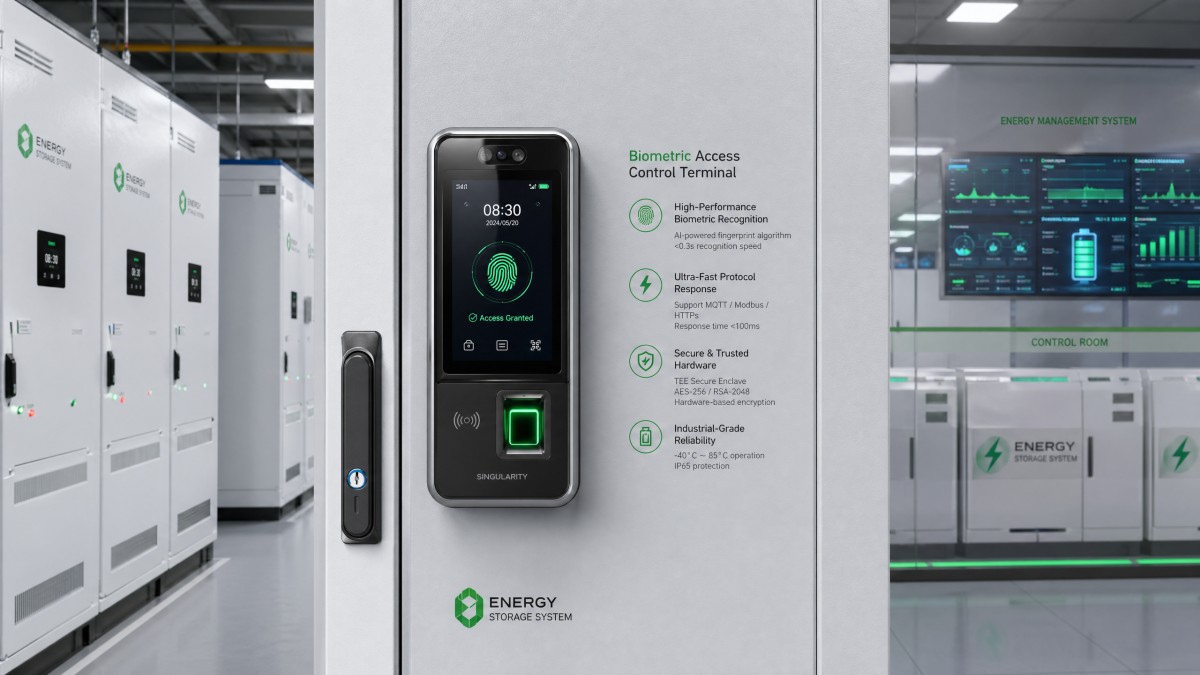
In renewable energy environments, biometric authentication is no longer limited to office doors. It now controls access to battery storage rooms, inverter cabinets, wind farm maintenance zones, dispatch consoles, and remote microgrid assets. In these settings, usable performance means more than a lab-grade match score. It means the sensor still works during shift changes, under dust, gloves-off handling, solar heat exposure, and unstable network conditions across 24/7 operations.
For information researchers and procurement teams, the main challenge is that brochure claims rarely connect sensor metrics to field outcomes. A fingerprint module may show high template accuracy in controlled conditions, yet fail when frontline operators authenticate after handling tools, insulation material, or outdoor equipment. In a renewable energy facility, even a 2–5 second delay at a secure access point can create queuing, safety friction, and maintenance downtime.
This is why biometric sensor metrics must be interpreted alongside connectivity, energy consumption, and device trust architecture. At NHI, we look beyond isolated component claims. We connect biometric false rejection rate FRR to protocol latency benchmark data, local processing behavior, and hardware root of trust. That integrated view is especially important in sites that mix solar, storage, HVAC control, and industrial IoT security within one fragmented protocol environment.
Enterprise decision-makers usually need answers to 3 practical questions. First, will users be rejected too often in real conditions? Second, does the access device remain responsive when the network is congested or segmented? Third, can the device be trusted as part of a broader smart security access control system tied to energy infrastructure? Those questions define usable performance more accurately than any single headline specification.
- Operational risk: poor biometric performance can slow maintenance access during peak generation windows or fault response periods.
- Security risk: weak trust architecture can expose distributed renewable assets to spoofing, credential theft, or device replacement attacks.
- Procurement risk: choosing by sensor type alone ignores integration costs across Zigbee, BLE, Thread, Wi-Fi, or wired gateway layers.
Which biometric sensor metrics actually predict usability?
Not every metric predicts day-to-day usability equally well. In purchasing reviews, teams often overvalue one number such as match accuracy and undervalue operating thresholds that affect real access behavior. In practice, 5 groups of metrics give a much better prediction of whether a biometric system will work in a renewable energy deployment: rejection behavior, acceptance control, response speed, environmental tolerance, and device trust.
The first metric: biometric false rejection rate FRR
Biometric false rejection rate FRR is often the clearest predictor of operator frustration. It measures how often an authorized user is rejected. For a corporate office, occasional retries may be acceptable. For a substation annex, wind turbine base, or energy storage enclosure, repeated rejection can delay urgent interventions. A low FRR matters most when user hands are dry, dirty, cold, or slightly worn from fieldwork.
Procurement teams should ask how FRR is tested across at least 3 dimensions: temperature range, moisture or contamination exposure, and repeated daily use cycles. A sensor that performs well only at room temperature cannot be assumed usable in solar farms or outdoor battery installations. Usable performance depends on whether FRR remains controlled during seasonal and shift-based operating changes, not just in certification-style demos.
The second metric: false acceptance rate and spoof resistance
A low false acceptance rate is critical where access rights map to energy resilience and grid safety. If a biometric device accepts an unauthorized user, the impact is far greater than a minor convenience issue. Renewable energy sites often combine cyber-physical control systems, so a weak front-end sensor can become the first step in a larger breach. Spoof testing should cover presentation attacks, replay attempts, and enrollment abuse scenarios.
Decision-makers should avoid buying devices that advertise anti-spoofing in vague terms. Instead, ask whether the sensor uses liveness detection, whether matching occurs locally or through a cloud dependency, and whether a hardware root of trust protects templates, firmware integrity, and secure boot. This is where security becomes measurable rather than promotional.
The third metric: authentication latency under real protocols
A biometric sensor can be accurate and still feel unusable if the full authentication path is slow. Buyers should separate capture latency from system latency. Capture latency is how quickly the sensor reads a biometric trait. System latency includes local decision time, gateway transmission, protocol translation, edge processing, and lock or actuator response. In multi-protocol buildings, that chain can add hundreds of milliseconds or more.
This is why protocol latency benchmark data matters. If a biometric lock works through Matter-over-Thread in one building and BLE plus Wi-Fi gateway in another, identical sensors can produce very different user experiences. For busy operations, target validation should include repeated tests across 20–50 authentication events, at different times of day, and during concurrent traffic loads from HVAC, metering, and monitoring devices.
Quick reference for the most decision-relevant metrics
The table below links biometric sensor metrics to the operational questions renewable energy teams actually ask during evaluation, pilot deployment, and supplier comparison.
A useful rule is simple: if a vendor cannot explain how FRR, latency, and trust architecture interact, the product is not ready for high-consequence deployment. Usable biometric performance is system behavior, not just sensor behavior.
How protocol fragmentation changes biometric performance in energy-linked IoT
In renewable energy facilities, biometric devices rarely operate alone. They sit inside mixed environments that may include smart relays, energy meters, battery controllers, HVAC automation, occupancy sensors, and edge gateways. This is where protocol silos create hidden usability problems. A sensor may authenticate correctly, but packet retries, mesh congestion, or poor gateway translation can still make the door, cabinet, or console respond too slowly for real operations.
For example, a biometric access point connected through a Thread border router may behave differently from the same unit deployed through BLE-to-Wi-Fi bridging. One environment may be optimized for low-power periodic traffic; another may be crowded by building telemetry and energy monitoring bursts every few seconds. In both cases, the user blames the biometric sensor, even when the deeper issue is protocol latency benchmark failure.
NHI’s benchmarking philosophy is built around this reality. We do not accept a claim such as “works with Matter” without examining multi-node behavior, local processing dependency, and failure modes under interference. In smart security access control for renewable assets, a delay of even 1–2 seconds can make a system feel unreliable. For staffed facilities, that becomes an efficiency issue. For remote sites, it becomes a serviceability issue.
This is also why hardware root of trust cannot be separated from connectivity. If a device loses secure provisioning integrity during firmware updates or identity handoff between gateway layers, the biometric function may remain operational while the security chain degrades. Procurement teams need test evidence covering both usability and trust continuity over a realistic 12–36 month device lifecycle.
Comparison of deployment conditions and likely failure points
The next table helps compare where biometric sensor metrics most often break down in renewable energy-linked IoT deployments.
The practical takeaway is that “best sensor” depends on network architecture, physical environment, and risk exposure. A strong benchmark program should compare at least 4 scenario types before volume procurement or framework agreement approval.
What should buyers, operators, and decision-makers verify before procurement?
A good procurement process converts biometric sensor metrics into buying criteria that non-specialist stakeholders can still understand. Researchers want clarity. Operators want reliability. Procurement managers want lower risk of returns and integration surprises. Executives want confidence that the chosen platform will remain supportable across product generations and protocol changes over the next 2–5 years.
Start with a 4-step review. First, define the access event type: door, cabinet, terminal, or mobile credential confirmation. Second, define the environmental envelope: indoor technical room, semi-exposed enclosure, or outdoor operations point. Third, define the identity and compliance model: local-only, edge-managed, or centrally synchronized. Fourth, define acceptable response time and failover behavior during network disruption.
For renewable energy buyers, it is also essential to ask how the device behaves under power constraints. Some remote nodes depend on battery-backed or solar-assisted auxiliary power. In these cases, an always-on biometric module may add maintenance burden if energy optimization is poor. A lower-power sensor with efficient wake logic can outperform a feature-rich unit that drains backup resources too quickly during low-generation periods.
NHI’s value in this stage is not to sell a generic “smart lock.” It is to act as the engineering filter between supplier claims and deployment reality. We help buyers translate abstract metrics into practical decisions about interoperability, response consistency, trust architecture, and total integration burden.
A procurement checklist that prevents common mistakes
- Request FRR and false acceptance data under non-ideal handling conditions, not only clean-lab enrollment and verification.
- Confirm whether matching occurs on-device, at the edge, or through cloud dependency, especially for remote renewable assets.
- Review protocol latency benchmark results under mixed traffic, including metering, HVAC, and occupancy automation loads.
- Verify hardware root of trust, secure boot, signed firmware updates, and protected biometric template storage.
- Ask for expected implementation timing such as sample review in 7–15 days, pilot validation in 2–4 weeks, and integration adjustment after field feedback.
Common buyer misconceptions
One misconception is that a lower FRR always means the best system. Not necessarily. If false acceptance control weakens to reduce FRR, the result may be operationally convenient but security-poor. Another misconception is that a protocol-certified device will automatically provide good user experience. Certification may confirm interoperability scope, but not full end-to-end responsiveness in a congested building or distributed energy environment.
A third misconception is that biometric performance can be judged without considering maintenance and update policy. In reality, firmware aging, template management, and sensor contamination can slowly alter usability over time. That is why benchmark-driven procurement should include a revalidation point every quarter or after major firmware revisions in critical installations.
FAQ: practical questions about biometric sensor metrics in renewable-energy IoT
How do I choose between a “secure” biometric device and a “fast” one?
Do not treat security and speed as separate categories. Compare end-to-end authentication time, false acceptance control, and trust architecture together. In most renewable energy access scenarios, a stable and predictable response within a defined operational window is more valuable than a fast demo unlock that depends on perfect connectivity. Ask for measurements over repeated cycles, not just best-case readings.
Which metrics matter most for outdoor or semi-industrial renewable sites?
Prioritize FRR under contamination, environmental tolerance, offline decision capability, and hardware root of trust. Outdoor and semi-industrial sites often face dust, thermal swings, and intermittent backhaul. In such cases, a sensor with modest headline speed but strong consistency is often the better operational choice over a more feature-dense unit designed for indoor commercial lobbies.
What is the most overlooked performance factor during procurement?
Protocol latency benchmark data is often overlooked. Many teams compare biometric modules as if they were isolated components, then discover that gateway translation or mesh congestion creates most of the user-facing delay. Always test the complete path from user presentation to final actuator response, especially if the site combines security, energy monitoring, and building automation traffic.
How long should a realistic evaluation process take?
A practical review commonly spans 3 stages: requirement definition, pilot validation, and procurement decision. Depending on integration complexity, sample assessment may take 1–2 weeks, controlled pilot work 2–4 weeks, and cross-team signoff another 1–3 weeks. Sites with strict energy or security compliance controls may need additional time for network architecture review and local processing policy checks.
Why choose NHI when the market is full of similar claims?
NexusHome Intelligence exists because the connected hardware market is crowded with claims that sound precise but fail under deployment pressure. Our role is to bridge ecosystems through data. We examine biometric sensor metrics in the context that matters: protocol fragmentation, renewable energy operations, local processing behavior, hardware trust, and long-term field usability. That perspective helps reduce procurement uncertainty before it becomes integration cost.
For researchers, we help clarify which specifications are decision-relevant. For operators, we focus on whether the device can be used reliably during daily work. For procurement teams, we support comparison across suppliers, architectures, and risk profiles. For enterprise decision-makers, we provide a fact-based foundation for selecting hardware that can scale without hidden interoperability penalties.
If you are evaluating biometric smart locks, secure access terminals, or sensor-integrated control endpoints for renewable energy projects, you can consult NHI on parameter confirmation, product selection, protocol latency benchmark priorities, hardware root of trust checks, sample strategy, and expected delivery planning. We can also help map whether your use case is better served by local matching, edge-managed authentication, or a hybrid architecture.
Contact us when you need structured support on 5 core questions: which biometric sensor metrics matter most for your scenario, how to compare vendors fairly, what test plan should be run before PO approval, how protocol silos may affect access reliability, and which compliance or security requirements should be reviewed before rollout. In a fragmented IoT market, better decisions start with measurable engineering evidence.
Protocol_Architect
Dr. Thorne is a leading architect in IoT mesh protocols with 15+ years at NexusHome Intelligence. His research specializes in high-availability systems and sub-GHz propagation modeling.
Related Recommendations
- Lina Zhao (Security Analyst)HID Agrees to Sell PKI Business to Vista Equity Partners for $58 Million
- Lina Zhao (Security Analyst)Choosing a Wearable Biosensor Module: Power Budgets for Energy Harvesting
- Lina Zhao (Security Analyst)Selecting Capacitive Fingerprint Sensor Modules for Smart Lock Designs
- Lina Zhao (Security Analyst)EU EN 303 645:2026 Mandates DEPT for Exports
- Lina Zhao (Security Analyst)Fingerprint Sensor Modules and RED Compliance: Key Testing Points for EU Market Entry
- Lina Zhao (Security Analyst)FCC Tightens EMC Limits for mmWave Biometric Sensors
- Lina Zhao (Security Analyst)FCC Sets Immediate EMC Limits for mmWave Biometric Sensors
- Lina Zhao (Security Analyst)FCC Adds EMC Limits for mmWave Biometric Sensors
- Lina Zhao (Security Analyst)FCC Tightens Rules for mmWave Biometric Sensors
- Lina Zhao (Security Analyst)FCC Adds SAR Filing Rule for 24-30 GHz Biometric Sensors
Analyst