
What Separates a Reliable IoT PCBA Manufacturer
author
In renewable energy and smart infrastructure, choosing a reliable IoT PCBA manufacturer means more than comparing quotes. Buyers need verified IoT manufacturers backed by IoT hardware benchmarking, Matter protocol data, and smart home PCB assembly compliance. This guide explains how to assess engineering depth, quality control, and IoT supply chain audit readiness before sourcing mission-critical hardware.
For solar storage systems, energy management gateways, smart meters, EV charging controllers, and building automation nodes, PCBA quality directly affects uptime, safety, and long-term operating cost. A board that performs well in a lab but fails after 6 to 12 months in humid electrical rooms or heat-stressed rooftop enclosures can erase any unit-price advantage gained during procurement.
That is why renewable energy buyers, operators, procurement teams, and enterprise decision-makers increasingly look beyond brochures. They want evidence: protocol stability, component traceability, SMT consistency, environmental test records, and realistic production control. In fragmented IoT ecosystems, the reliable manufacturer is the one that can prove performance under field conditions, not simply promise compatibility.
Why Reliability Matters More in Renewable Energy IoT Hardware
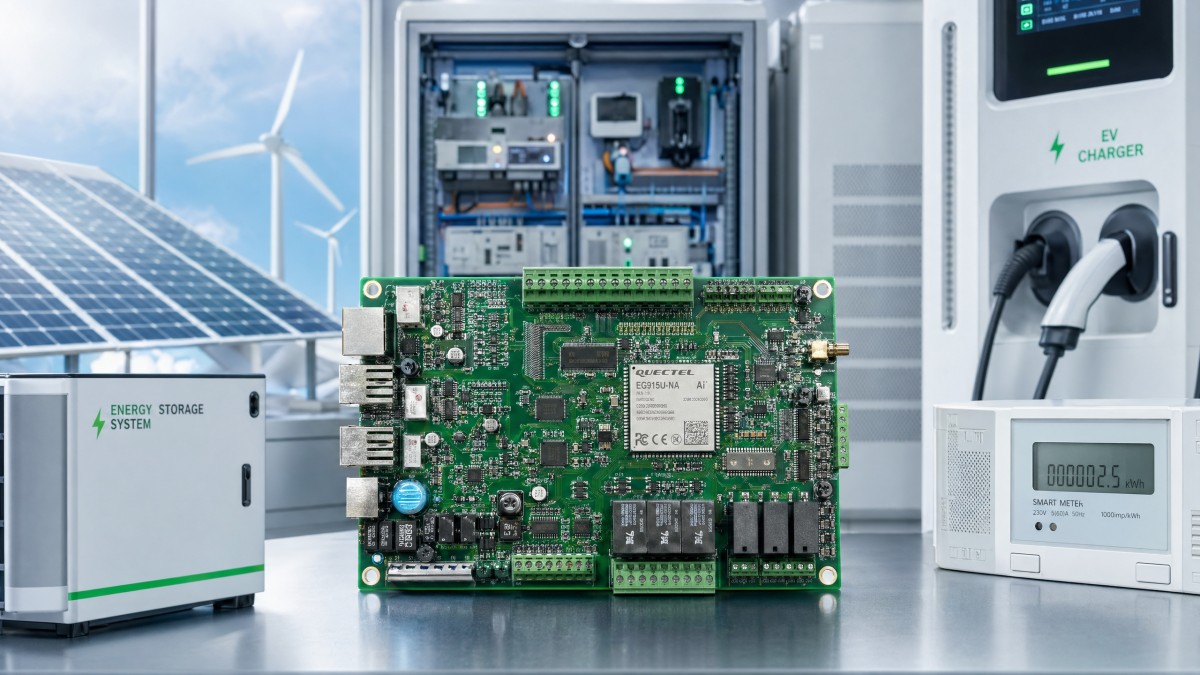
In renewable energy, an IoT PCBA is rarely an isolated board. It often sits inside a larger chain that includes inverters, battery systems, HVAC controls, relays, sensors, edge gateways, and cloud dashboards. If one communication or control board becomes unstable, the impact can spread across an entire site, from reduced energy visibility to delayed fault response and inefficient load balancing.
A reliable IoT PCBA manufacturer understands that renewable energy devices must operate across wider environmental ranges than typical consumer hardware. Common requirements include continuous operation at 0°C to 50°C indoors, or even -20°C to 70°C in semi-protected outdoor installations. Humidity, dust, voltage fluctuation, and electromagnetic interference from power equipment all raise the failure risk if board design and assembly control are weak.
This is especially important in protocol-diverse projects. A smart energy controller may need Matter for building integration, Thread or Zigbee for low-power node communication, BLE for provisioning, and Wi-Fi or Ethernet for backhaul. A manufacturer that only claims “supports multi-protocol” without measured latency, packet retention, and power behavior leaves buyers exposed to deployment surprises.
NexusHome Intelligence emphasizes data-driven verification because renewable infrastructure cannot rely on vague claims. In a microgrid, a 200 ms delay in a non-critical dashboard may be acceptable, but repeated packet loss in a load-control relay or battery monitoring node can lead to poor switching decisions, unnecessary truck rolls, or unstable occupancy-based energy optimization.
Typical failure costs buyers underestimate
- Rework cost after field deployment, often 3 to 5 times higher than correcting issues during EVT or pilot build.
- Battery replacement cycles shortened from 3 years to less than 12 months due to poor low-power design.
- Protocol instability that increases commissioning time from 2 days to 1 or 2 weeks on multi-building projects.
- Data inaccuracy in energy monitoring that weakens peak-load shifting and demand response decisions.
The following comparison highlights why renewable energy applications demand a more disciplined manufacturer selection process than standard consumer IoT products.
The key takeaway is simple: in renewable energy environments, reliability is not a premium add-on. It is a design, assembly, and verification discipline. The right IoT PCBA manufacturer reduces system risk long before shipment leaves the factory.
Engineering Signals That Separate a Reliable IoT PCBA Manufacturer
A reliable supplier can explain its engineering process at board level and system level. That includes design-for-manufacturing review, SMT line capability, component derating logic, protocol validation, and environmental testing. If a manufacturer only discusses MOQ, unit cost, and lead time, it is not giving buyers enough information for renewable energy hardware sourcing.
One of the first indicators is SMT precision and process control. For compact IoT boards with RF modules, power regulation, and sensing circuits, placement accuracy, solder paste consistency, and reflow profile discipline matter. Even a minor variation can weaken RF performance or shorten component life under thermal cycling. Manufacturers should be able to discuss AOI, SPI, X-ray inspection where needed, and defect response procedures by batch.
Another signal is how they validate low-power and connectivity behavior. In renewable installations, battery-assisted sensors or remote nodes often need standby performance in the microwatt to low milliwatt range, depending on use case. At the same time, the board must maintain stable communication under mesh congestion, metal enclosures, or electrically noisy mechanical rooms. Real manufacturers measure these trade-offs instead of repeating generic “ultra-low power” language.
Manufacturers serving advanced buyers should also show cross-functional competence. In practice, board reliability depends on interaction between hardware, firmware, enclosure, antenna placement, and final deployment. For example, a Matter-over-Thread design may pass bench testing but still show higher latency after enclosure integration or power subsystem interference. A dependable partner flags those risks during NPI, not after mass production.
What procurement and engineering teams should verify
- Whether DFM review is completed before pilot build and documented within 3 to 7 working days.
- Whether the manufacturer can provide traceability for critical ICs, RF modules, PMICs, and protection devices.
- Whether protocol testing includes interference conditions, not just ideal lab conditions.
- Whether there is a clear process for ECO handling, firmware version control, and sample-to-mass-production consistency.
Useful engineering questions during supplier evaluation
Ask for the acceptable defect threshold by build stage, the standard turnaround for first article inspection, and the way the factory handles mixed-protocol RF layouts. Also ask how they test boards intended for 24/7 duty cycles, and whether they can provide burn-in windows such as 8, 24, or 48 hours depending on product category. Specific answers reveal real capability.
A serious manufacturer should also discuss component lifecycle planning. Renewable energy devices are often deployed for 5 to 10 years, which is longer than the market life of many wireless chipsets. Suppliers that proactively address alternates, redesign triggers, and last-time-buy strategy are usually more dependable than those focused only on the current quote.
Quality Control, Compliance, and Audit Readiness for Energy Applications
Quality control in renewable energy IoT hardware must go beyond pass/fail output. Buyers need to know whether the manufacturer can support audit-ready documentation, incoming material control, process verification, and shipment consistency. This matters for enterprise projects where a failed batch can delay site rollouts across 10, 50, or 200 locations.
Audit readiness starts with visibility. Can the supplier trace lot codes for critical components? Can it separate approved alternates from unauthorized substitutions? Can it show in-process inspection records and corrective action logs? In regulated or semi-regulated energy environments, weak documentation can become as risky as technical defects because it slows root-cause analysis and warranty handling.
For smart home PCB assembly used in renewable infrastructure, compliance also includes protocol and interoperability discipline. If a board is intended to connect to building management systems, smart relays, or energy dashboards, protocol stack claims should be supported by test records. A “Matter compatible” label is not enough unless there is measured behavior across commissioning, multi-node routing, and recovery after power cycling.
Environmental and electrical stress validation is another dividing line. A reliable IoT PCBA manufacturer should define test ranges appropriate to the product category, such as temperature cycling, humidity exposure, ESD robustness, and functional verification after repeated restarts. For energy assets with remote deployment, the cost of under-testing is usually far higher than the cost of stronger pre-shipment screening.
Core audit checkpoints for renewable energy buyers
The table below summarizes practical checkpoints used by procurement and technical teams when assessing whether a supplier is ready for energy-related IoT programs.
If a manufacturer can address these areas clearly, it is far more likely to support large-scale renewable energy deployments without introducing hidden operational risk. Buyers should treat documentation quality as part of product quality, not as a separate administrative issue.
Common compliance blind spots
- Assuming protocol logo claims equal stable field interoperability.
- Accepting alternate components without reviewing thermal or power impact.
- Skipping pilot stress testing to save 1 to 2 weeks in the launch timeline.
- Treating energy metering accuracy and communication integrity as separate issues when they influence each other in live systems.
How to Compare Suppliers: Cost, Lead Time, and Long-Term Field Performance
Price remains important, but in renewable energy hardware sourcing, the cheapest quote is often the least predictable total-cost option. Decision-makers should compare suppliers across at least 4 dimensions: engineering capability, manufacturing control, delivery stability, and support responsiveness. This prevents short-term purchasing wins from turning into high service costs later.
Lead time must also be interpreted carefully. A standard build may be quoted at 3 to 5 weeks, but what matters is whether the supplier can maintain that window during component shortages or ECO events. Reliable manufacturers usually explain the lead-time split between sourcing, SMT, testing, and packaging, instead of offering a single number with no underlying assumptions.
For renewable energy programs, after-sales support can be just as valuable as production capability. When a field issue appears, buyers need response pathways that include failure analysis, firmware-hardware coordination, and corrective action timing. Waiting 10 business days for initial technical feedback is often unacceptable for active deployments, especially when the hardware controls energy reporting or automation functions.
The strongest suppliers are usually those that behave like technical partners. They help align board-level choices with deployment realities such as enclosure heat, antenna constraints, standby power targets, installation skill level, and maintenance access intervals of 6, 12, or 24 months.
Practical supplier comparison matrix
A structured scorecard helps procurement teams avoid decisions based only on landed cost. The example below can be adapted for solar, storage, HVAC efficiency, or smart building energy projects.
This type of comparison typically changes sourcing outcomes. A board priced 6% lower may be less attractive if it carries a 2-week commissioning risk, weaker traceability, or uncertain support after rollout. In renewable energy operations, predictability often creates more value than nominal unit savings.
A simple 5-step sourcing workflow
- Define the deployment environment, protocol stack, expected service life, and power budget.
- Shortlist 2 to 4 suppliers able to discuss RF, power, and environmental testing in detail.
- Run pilot builds with a documented verification plan, not just a basic functional check.
- Audit traceability, ECO control, and escalation process before volume release.
- Review post-pilot lessons and lock a controlled production baseline.
FAQ: What Buyers Often Ask Before Selecting an IoT PCBA Manufacturer
The questions below reflect common concerns from information researchers, operators, procurement managers, and enterprise decision-makers involved in renewable energy hardware sourcing. The answers focus on practical risk reduction rather than promotional claims.
How do I know whether a manufacturer is truly suitable for renewable energy projects?
Look for evidence of environmental validation, protocol testing, and traceability discipline. A suitable manufacturer should discuss thermal exposure, EMI conditions, 24/7 duty cycles, and long service windows of 5 years or more. It should also explain how board behavior changes after enclosure integration, not just on an open bench.
What production volume should a reliable supplier be able to support?
There is no single threshold, because some projects start with 100 to 500 pilot units while others move directly to multi-thousand annual demand. The better question is whether the supplier can keep process stability from prototype through ramp. Buyers should verify sample consistency, capacity planning, and change-control discipline before focusing on headline volume claims.
How long should pilot testing take before mass production?
For most renewable energy IoT devices, a practical pilot verification cycle is 2 to 6 weeks depending on complexity. This usually includes functional verification, power testing, protocol behavior, and limited stress exposure. Extremely short pilot schedules may save time upfront but often increase rework risk after deployment.
Which metrics matter most for low-power renewable energy IoT nodes?
Standby current, wake-up behavior, packet success rate, reconnection time, and battery discharge profile are among the most useful metrics. For battery-backed devices, even small inefficiencies can dramatically shorten replacement intervals. A node designed for a 36-month service cycle can become operationally expensive if real-world power behavior cuts that to 12 or 18 months.
What is the biggest sourcing mistake buyers make?
The most common mistake is treating PCBA sourcing as a pure price negotiation. In renewable energy systems, board quality, protocol integrity, and audit readiness are all part of the business case. A lower initial quote may still be the wrong decision if it introduces field instability, delayed commissioning, or weak corrective action capability.
A reliable IoT PCBA manufacturer stands out through measurable engineering depth, disciplined assembly control, protocol validation, and readiness for the documentation demands of renewable energy projects. For buyers navigating fragmented ecosystems and high-stakes infrastructure deployments, benchmark-driven evaluation is far safer than marketing-led selection.
NexusHome Intelligence advocates this evidence-first approach because smart energy, smart buildings, and connected climate systems depend on hardware that performs consistently in the real world. If you are evaluating verified IoT manufacturers, comparing smart home PCB assembly capability, or preparing an IoT supply chain audit, now is the right time to build your shortlist around proof, not promises.
Contact us to discuss your renewable energy IoT hardware requirements, request a tailored evaluation framework, or explore more data-driven sourcing strategies for mission-critical connected devices.
Protocol_Architect
Dr. Thorne is a leading architect in IoT mesh protocols with 15+ years at NexusHome Intelligence. His research specializes in high-availability systems and sub-GHz propagation modeling.
Related Recommendations
- NHI Data Lab (Official Account)IEC 61810-1 Relay Endurance Tests: Choosing Loads for Solar Inverters
- NHI Data Lab (Official Account)How Customizable IoT Components Enable Scalable Solar and Energy Monitoring Systems
- NHI Data Lab (Official Account)Hardware Benchmarking for Vibration Testing: Metrics for Comparing Test Systems
- NHI Data Lab (Official Account)IoT Sourcing Guide for Distributors: Vet Suppliers, Certifications, and Supply Risk
- NHI Data Lab (Official Account)How to Evaluate a CNC Automation Manufacturer for Custom Production Lines
- NHI Data Lab (Official Account)Interactive Brokers Adds Bucharest Exchange Trading Access
- NHI Data Lab (Official Account)How to Plan RoHS Compliance for Commercial IoT Devices Before Mass Production
- NHI Data Lab (Official Account)How to Assess Supplier Capability in Southeast Asia for Renewable Energy Projects
- NHI Data Lab (Official Account)How Surface Mount PCB Assembly Improves Reliability in Renewable Energy Devices
- NHI Data Lab (Official Account)Sensor Surge Extends South China PCBA Lead Times
Analyst