
EU Adds 3 Phthalates to REACH Annex XVII
author
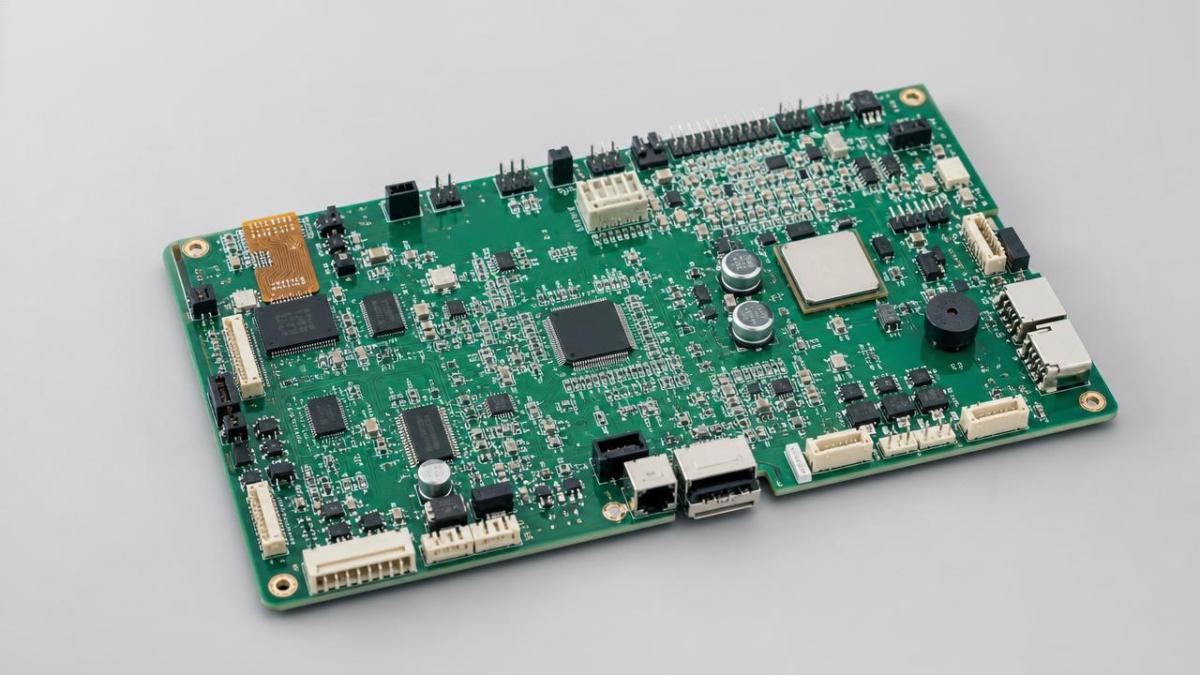
On 21 May 2026, the European Commission adopted Regulation (EU) 2026/892, amending Annex XVII of the REACH Regulation to restrict three phthalate plasticizers — DIBP, DPENP, and DHEXP — in printed circuit board assemblies (PCBAs) used in smart terminal products. This development directly impacts Chinese exporters supplying HVAC controllers, smart lighting drivers, and biometric sensor modules to the EU market, as compliance now mandates full-BOM SVHC screening reports confirming concentrations ≤0.1% prior to shipment.
Event Overview
The European Commission published Regulation (EU) 2026/892 on 21 May 2026. It adds diisobutyl phthalate (DIBP), dipentyl phthalate (DPENP), and dihexyl phthalate (DHEXP) to Annex XVII of the REACH Regulation as restricted substances. The restriction applies immediately to PCBAs integrated into smart terminal equipment, including HVAC controllers, smart lighting driver boards, and biometric sensor modules. Exporters must submit third-party SVHC screening reports covering the entire bill of materials (BOM), verifying that none of the three substances exceeds 0.1% by weight in any homogeneous material.
Industries Affected
Direct Trading Enterprises
Export-oriented trading firms handling PCBA-based smart terminals face immediate customs clearance risk in the EU. Non-compliant shipments may be detained or rejected at EU ports, triggering contractual penalties, delayed revenue recognition, and reputational damage. Since the regulation applies “as of publication”, retroactive verification is not required—but all new consignments after 21 May 2026 must include updated SVHC documentation aligned with the expanded scope.
Raw Material Procurement Enterprises
Procurement teams sourcing substrates, solder masks, conformal coatings, connectors, or passive components must now verify upstream supplier declarations for DIBP, DPENP, and DHEXP—substances previously unmonitored under legacy SVHC checklists. These three phthalates are commonly used as secondary plasticizers in PVC-based insulation sleeves, flexible adhesives, and encapsulation resins; their inclusion necessitates requalification of long-standing material suppliers and revision of technical datasheets.
Contract Manufacturing & EMS Providers
Electronics manufacturing services (EMS) and contract manufacturers assembling PCBA-level modules must update internal quality control protocols. In-process inspections now require traceability of phthalate content across solder paste carriers, flux residues, and post-assembly cleaning agents. Unlike RoHS, which targets finished products, this REACH restriction applies to each homogeneous material within the assembly—making layer-by-layer material declaration essential.
Supply Chain Service Providers
Testing laboratories, certification bodies, and compliance consultancies are seeing accelerated demand for expanded SVHC screening packages. However, current ISO/IEC 17025-accredited methods for DPENP and DHEXP quantification remain limited outside major EU labs. As a result, lead times for full-BOM reports have extended from 7 to 12+ working days, and cost premiums of 15–25% are emerging for multi-phthalate testing against the new Annex XVII entries.
Key Focus Areas and Recommended Actions
Update BOM-Level Substance Declarations Immediately
Enterprises should audit all active PCBA designs—not just final products—to identify materials potentially containing DIBP, DPENP, or DHEXP (e.g., flexible cables, rubber gaskets, thermal interface pads). Supplier declarations must now explicitly cover these three substances, not merely reference the older SVHC Candidate List.
Prioritize Third-Party Testing for High-Risk Subassemblies
Focus initial testing on components with polymer-rich interfaces: connector housings, LED lens mounts, sensor encapsulants, and fan motor insulators. These are statistically more likely to contain functionalized phthalates than rigid FR-4 substrates or ceramic passives.
Verify Lab Accreditation Scope Before Engaging
Confirm that the selected testing laboratory holds current accreditation specifically for DIBP, DPENP, and DHEXP quantification in electronic materials (e.g., per EN 14372 or modified IEC 62321-8). Generic “phthalate screening” packages may omit these newly restricted compounds or use non-validated extraction protocols.
Editorial Perspective / Industry Observation
Analysis shows this amendment reflects a strategic shift in EU chemical policy: moving beyond end-of-life exposure concerns (e.g., DEHP in toys) toward lifecycle-based restrictions targeting intermediate industrial uses—particularly where alternatives exist and substitution feasibility is high. Observably, DIBP has been widely substituted in EU-sourced PCB laminates since 2022, but DPENP and DHEXP remain common in cost-sensitive Asian-sourced thermal management materials. From an industry perspective, this regulation is less about novelty and more about enforcement convergence—closing a gap between REACH’s authorization regime (Annex XIV) and its restriction regime (Annex XVII) for structurally similar phthalates. Current more critical attention should focus on whether downstream notification obligations under Article 33 will be extended to these three substances in future revisions of the Candidate List.
Conclusion
This regulatory update does not introduce unprecedented technical complexity—but it does raise the operational bar for supply chain transparency in electronics exports. Rather than signaling a broader crackdown on plasticizers, it functions as a targeted calibration: aligning REACH restrictions with evolving scientific consensus on metabolic persistence and endocrine disruption potential among branched-chain phthalates. For exporters, sustained compliance hinges less on reactive testing and more on embedding substance-aware design and procurement disciplines across R&D and sourcing functions.
Source Attribution
Official text: Commission Regulation (EU) 2026/892, published in the Official Journal of the European Union on 21 May 2026. Enforcement guidance is pending release by the European Chemicals Agency (ECHA); stakeholders should monitor ECHA’s Restrictions Corrigenda Portal for updates on transitional provisions, analytical method harmonization, and enforcement timelines. Note: National market surveillance authorities’ interpretation of “homogeneous material” for multi-layer PCBAs remains subject to case-by-case assessment and is under active review.
Protocol_Architect
Dr. Thorne is a leading architect in IoT mesh protocols with 15+ years at NexusHome Intelligence. His research specializes in high-availability systems and sub-GHz propagation modeling.
Related Recommendations
- NHI Data Lab (Official Account)How Customizable IoT Components Enable Scalable Solar and Energy Monitoring Systems
- NHI Data Lab (Official Account)Hardware Benchmarking for Vibration Testing: Metrics for Comparing Test Systems
- NHI Data Lab (Official Account)IoT Sourcing Guide for Distributors: Vet Suppliers, Certifications, and Supply Risk
- NHI Data Lab (Official Account)How to Evaluate a CNC Automation Manufacturer for Custom Production Lines
- NHI Data Lab (Official Account)Interactive Brokers Adds Bucharest Exchange Trading Access
- NHI Data Lab (Official Account)How to Plan RoHS Compliance for Commercial IoT Devices Before Mass Production
- NHI Data Lab (Official Account)How to Assess Supplier Capability in Southeast Asia for Renewable Energy Projects
- NHI Data Lab (Official Account)How Surface Mount PCB Assembly Improves Reliability in Renewable Energy Devices
- NHI Data Lab (Official Account)Sensor Surge Extends South China PCBA Lead Times
- NHI Data Lab (Official Account)SLA 3D Printing China: How to Evaluate Quality, Lead Time, and Export Support
Analyst