
Vietnam Tightens Zigbee Import Testing Requirements
author
Vietnam has introduced new mandatory radio-frequency (RF) stability testing requirements for Zigbee 3.0 devices entering the country, effective May 12, 2026. The regulation targets widespread network instability reported in northern mountainous and southern tropical-humid regions, and is expected to reshape compliance strategies and cost structures for exporters—particularly those based in China—serving the Vietnamese smart-home and industrial automation markets.
Event Overview
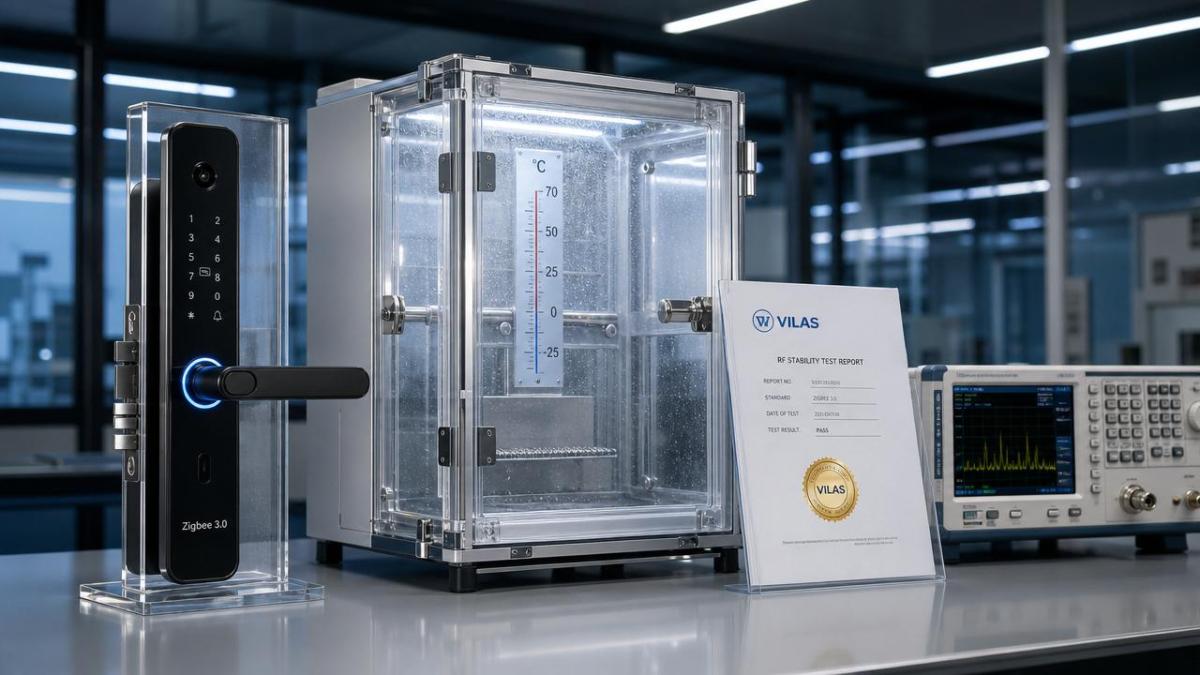
The Ministry of Industry and Trade of Vietnam (MOIT) officially implemented new import requirements for Zigbee 3.0 terminals on May 12, 2026. All declared imports—including Smart Locks, Biometric Sensors, and HVAC Automation nodes—must be accompanied by RF stability test reports covering the full temperature range of −25°C to +70°C, issued by laboratories accredited by the Vietnam Laboratory Accreditation Scheme (VILAS). Devices lacking such documentation will be denied customs clearance.
Industries Affected
Direct Trading Enterprises: Exporters and distributors engaging in cross-border trade of Zigbee-enabled products face immediate operational impact. Compliance now requires pre-shipment validation at VILAS-recognized labs—often located outside Vietnam—adding lead time, logistical complexity, and third-party testing fees. For SMEs with lean compliance teams, this may delay market entry or trigger inventory write-downs if existing stock fails retrospective review.
Raw Material Procurement Enterprises: Firms sourcing RF modules, antenna substrates, or temperature-hardened ICs must reassess supplier qualification criteria. Components previously certified only under standard ambient conditions (e.g., 25°C ±5°C) may no longer support end-product compliance. Procurement contracts now need explicit thermal performance clauses—especially for oscillators, power amplifiers, and PCB laminates—raising technical due diligence burdens.
Contract Manufacturing Enterprises: EMS and ODM providers serving global brands must upgrade internal environmental stress screening protocols. Production-line RF validation at extreme temperatures was previously optional or limited to reliability sampling; it is now a mandatory pre-shipment checkpoint. This implies capital investment in climate chambers, staff retraining, and revised quality control workflows—potentially compressing margins unless passed through via revised service agreements.
Supply Chain Service Providers: Certification consultants, lab coordination platforms, and customs brokers are seeing increased demand for end-to-end thermal-compliance support—from test plan alignment and sample logistics to MOIT submission documentation. However, capacity constraints exist: as of Q1 2026, only 14 VILAS-accredited labs globally list Zigbee 3.0 RF stability testing in their scope, with just three operating in ASEAN. Lead times for report issuance have extended from 10 to 22 business days on average.
Key Considerations and Response Measures
Verify Lab Accreditation Scope Before Engagement
Not all VILAS-accredited labs are authorized for Zigbee 3.0 RF stability testing across the full −25°C to +70°C range. Enterprises must validate each lab’s published scope against MOIT Circular No. 18/2026/TT-BCT Annex III—specifically checking inclusion of ‘Zigbee PHY layer stability under thermal cycling’ and ‘channel hopping consistency per IEEE 802.15.4-2015 Clause 6.7.2’.
Reassess Product Thermal Design Margins
Many commercially deployed Zigbee modules meet FCC/CE RF specs at room temperature but exhibit ≥3 dBm output drift beyond 60°C. Engineering teams should prioritize thermal simulation of antenna matching networks and conduct accelerated life testing (e.g., 500-cycle thermal shock from −25°C ↔ +70°C) during design verification—not just final certification.
Explore Localized Pre-Certification Partnerships
Given the scarcity of regional testing capacity, forward-looking exporters are co-investing with Vietnamese test houses to expand capability. Two such pilot initiatives—launched in Ho Chi Minh City and Da Nang in March 2026—offer shared-access thermal RF chambers and joint reporting templates accepted by MOIT. Participation requires minimum annual volume commitments but reduces turnaround by up to 40%.
Editorial Perspective / Industry Observation
Analysis shows this regulation is not an isolated compliance hurdle but part of Vietnam’s broader shift toward performance-based market access—mirroring trends seen earlier in South Korea (KCC RF resilience rules, 2023) and the EU’s upcoming ETSI EN 303 645 revision cycle. Observably, MOIT’s emphasis on real-world environmental stress reflects growing policy attention to IoT device lifecycle reliability—not just electromagnetic compatibility. From an industry perspective, this signals that ‘certification-ready’ can no longer mean ‘lab-passed at 25°C’. Instead, it increasingly implies ‘field-stable across intended deployment zones’. Current more critical question: whether similar thermal RF mandates will emerge for Matter-over-Thread or Bluetooth LE Mesh devices in Vietnam’s next regulatory update cycle.
Conclusion
This policy marks a material step toward higher baseline reliability expectations for wireless IoT infrastructure in emerging markets. While compliance costs will rise in the short term, the long-term effect may be healthier market maturity—reducing field failures, strengthening brand trust, and incentivizing engineering rigor over speed-to-market alone. A rational observation is that regulatory convergence around environmental RF stability is accelerating faster than supply chain adaptation capacity—a gap that will define competitive advantage in ASEAN IoT trade over the next 24 months.
Source Attribution
Official source: Vietnam Ministry of Industry and Trade (MOIT), Circular No. 18/2026/TT-BCT, issued April 3, 2026, effective May 12, 2026. Full text available at moit.gov.vn/van-ban/18-2026-tt-bct.
Accreditation details: Vietnam Laboratory Accreditation Scheme (VILAS), List of Accredited Laboratories, updated April 2026.
Note: MOIT has indicated potential expansion of the requirement to include humidity-coupled RF testing (85% RH at 60°C) in Q4 2026; this remains under consultation and is not yet binding.
Protocol_Architect
Dr. Thorne is a leading architect in IoT mesh protocols with 15+ years at NexusHome Intelligence. His research specializes in high-availability systems and sub-GHz propagation modeling.
Related Recommendations
- Dr. Aris ThorneIEEE 802.15.4z-2026 Sets New UWB Compliance Signal
- Dr. Aris ThorneIEEE 802.15.4z-2026 Sets New Zigbee UWB Test Bar
- Dr. Aris ThorneIEEE 802.15.4z-2026 Sets New UWB Benchmark for Zigbee Tech
- Dr. Aris ThorneIEEE 802.15.4-2026 Lifts Zigbee Mesh to 256 Nodes
- Dr. Aris ThorneZigbee Mesh Capacity in the USA: How Many Devices Can a Network Handle Reliably?
- Dr. Aris ThorneEU Enforces Matter 1.3 for Zigbee Device Imports
- Dr. Aris ThorneTelink Joins CSA Board as Multi-Protocol SoC Output Scales
- Dr. Aris ThorneEU Enforces EN 303 647 v2.1.1 for Zigbee Exports
- Dr. Aris ThorneEN 303 647 v2.1.1 Now Mandatory for Zigbee Devices
- Dr. Aris ThorneGSHE 2026 Adds Matter/Zigbee Sourcing Zone
Analyst