
How to Check Matter Standard Compatibility Before You Buy
author
Before investing in connected energy and smart home devices, verify Matter standard compatibility with real Matter protocol data—not marketing claims. NexusHome Intelligence, an IoT independent think tank and smart home compliance laboratory, helps buyers assess protocol latency benchmark results, IoT hardware benchmarking, and hardware compliance inquiry records to reduce sourcing risk. For procurement teams and operators, this is the first step toward trusted smart home factories and verified IoT manufacturers.
In renewable energy projects, compatibility is not a cosmetic feature. It affects whether a smart thermostat can coordinate with a heat pump, whether a battery gateway can exchange status data with a home energy management system, and whether a property portfolio can scale from 20 units to 2,000 without protocol conflict. Buying a device labeled “Matter-ready” without checking technical evidence can lead to integration delays, higher commissioning costs, and avoidable energy waste.
For researchers, operators, sourcing teams, and commercial evaluators, the right question is not simply “Does it support Matter?” The better question is “Which transport layer, device type, software maturity level, and benchmark conditions support that claim?” In energy-aware buildings, even a 300–800 millisecond control delay can affect comfort logic, load shifting accuracy, and user trust.
Why Matter Compatibility Matters in Renewable Energy Environments
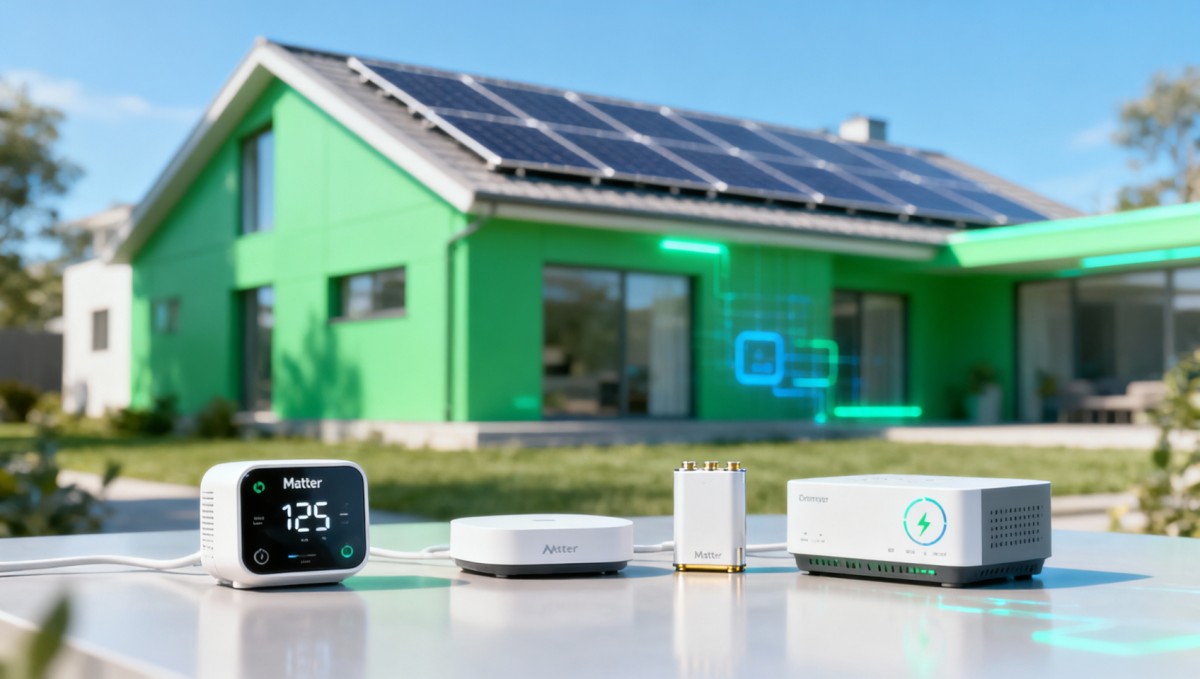
Matter was designed to reduce fragmentation across smart home ecosystems, but renewable energy deployments add a more demanding layer of complexity. Solar inverters, EV chargers, smart relays, HVAC controllers, storage systems, and occupancy-based automation often operate across mixed networks such as Thread, Wi-Fi, Ethernet, BLE, and legacy field devices. In that environment, a basic compatibility badge is not enough.
A connected energy device must do more than pair successfully. It should maintain stable state synchronization, handle command retries, and respond within practical thresholds during peak-load events. In many commercial or prosumer settings, useful control latency should stay within a low hundreds-of-milliseconds range for basic switching and within a few seconds for non-critical reporting. If the response drifts beyond that window during interference, the result may be poor demand response execution or misaligned energy schedules.
This matters especially in buildings trying to optimize carbon reduction. A smart load controller that cannot reliably coordinate with occupancy sensing, time-of-use tariffs, and local battery dispatch may erode the value of a renewable energy strategy. The hardware may still function, but the system will underperform where it counts: peak shaving, self-consumption improvement, and operational efficiency.
NexusHome Intelligence approaches this problem through data. Instead of accepting “Works with Matter” as a marketing phrase, procurement teams should ask for protocol-level verification, transport details, device category support, firmware maturity, and stress-test evidence under realistic interference conditions. That is particularly relevant for solar-plus-storage homes, multi-dwelling retrofits, and smart commercial buildings where the cost of a wrong purchasing decision can multiply across dozens or hundreds of endpoints.
Typical renewable energy scenarios where Matter validation is essential
- Heat pump and thermostat coordination in electrically heated homes, where comfort and energy savings depend on stable command execution across 24/7 operating cycles.
- Smart relay and sub-meter integration for solar self-consumption strategies, where inaccurate device states can distort load shifting decisions by 5%–15%.
- Portfolio-level residential deployments, where 50–500 apartments may require consistent onboarding, OTA maintenance, and predictable cross-vendor behavior.
- Microgrid or backup power environments, where communication reliability becomes more important during network congestion or grid interruption events.
What to Check Before You Buy a Matter-Compatible Energy Device
The first checkpoint is device scope. Matter compatibility is not one universal condition; it depends on what device type is implemented and which clusters, functions, and commissioning flows are supported. A vendor may support basic on/off control but not advanced energy reporting. For renewable energy use cases, this distinction is critical because energy optimization often depends on granular data rather than simple switching.
The second checkpoint is the transport layer. Matter can run over Wi-Fi, Thread, and Ethernet depending on device design. In an energy-conscious environment, Thread can be attractive for low-power sensors and controls, while Wi-Fi may be more common for gateways and higher-throughput devices. Yet the correct choice depends on node density, building materials, and expected battery life. A battery-powered device expected to run 18–36 months should not be judged the same way as a mains-powered controller.
The third checkpoint is benchmark evidence. Ask for measured latency, packet loss behavior, recovery after power cycling, OTA update stability, and operation under RF interference. In mixed-protocol buildings, dropped packets and repeated commissioning failures often appear only under stress. A compatibility statement without test conditions is incomplete from a procurement perspective.
The table below outlines a practical pre-purchase checklist for teams evaluating Matter compatibility in renewable energy and smart building projects.
For buyers, the key takeaway is simple: compatibility should be documented at the functional and operational level. A device that joins a Matter fabric but fails to expose useful energy-related telemetry is not enough for meaningful renewable energy control. This is where an independent benchmarking laboratory adds value, because it separates protocol claims from deployable performance.
Four questions procurement teams should ask suppliers
- What exact Matter device category and feature set are implemented today, not just planned on the roadmap?
- Under what test conditions were latency and stability measured: node count, interference level, distance, and transport type?
- Can the supplier provide compliance inquiry records, firmware history, and field issue resolution timelines from prior deployments?
- How does the device behave in hybrid environments with solar controls, HVAC automation, and third-party platforms already in operation?
How to Read Matter Protocol Data and Benchmark Results
Many buyers receive specification sheets filled with broad claims but very little engineering context. To evaluate Matter standard compatibility properly, you need to read benchmark results the way an operator or integrator would. Three measurements usually deserve early attention: latency, stability under load, and recovery time after interruption.
Latency refers to the time between a command and the device response. In practical building controls, a command latency around 100–500 milliseconds may be acceptable for lights or relays, while sensor reporting intervals may vary from 5 seconds to several minutes depending on battery strategy. The important point is consistency. A median latency that looks fine can still hide severe spikes at the 95th percentile.
Stability under load becomes critical in larger energy deployments. A network that works with 10 devices may degrade sharply at 80 or 120 nodes, especially in metal-heavy buildings or dense multi-dwelling units. For renewable energy use cases, that instability can affect tariff-based switching, ventilation schedules, and occupancy-linked energy savings. Benchmark reports should therefore describe node count, transport path, retry behavior, and interference conditions.
Recovery time is another overlooked metric. After a power loss, router restart, or firmware update, how long does the device take to rejoin and report accurately? In some environments, recovery within 30–120 seconds may be reasonable; in others, longer periods can disrupt coordinated energy controls and trigger manual support calls. The next table shows how to interpret common benchmark fields in a procurement review.
When benchmark records are available, buyers should compare devices under similar conditions rather than isolated headline figures. A vendor showing 150 milliseconds in a clean lab with 5 nodes is not directly comparable to a device measured at 220 milliseconds in a dense 60-node test bed. Context turns raw numbers into purchasing insight.
Red flags in protocol documentation
Missing test conditions
If no node count, RF environment, distance, firmware version, or transport path is documented, the result has limited decision value. This is especially risky in commercial retrofits where walls, meters, and electrical cabinets can create interference patterns very different from a showroom setup.
Feature claims without operational boundaries
A product may support onboarding and basic control but still lack reliable scene execution, telemetry depth, or stable OTA behavior. For renewable energy operators, that gap usually appears only after installation, when changing vendors becomes expensive.
A Practical Buying Framework for Procurement and Commercial Evaluation
A strong procurement decision combines protocol evidence, hardware quality, and service readiness. Matter standard compatibility is only one layer of risk assessment. In renewable energy-related smart building projects, buyers should also review standby power consumption, enclosure suitability, relay endurance, metering accuracy, and firmware support capability. A connected relay that draws unnecessary standby power across 500 units can create measurable operational waste over time.
Commercial evaluators should separate short-term price from lifecycle value. A lower-cost device may seem attractive during tendering, but repeated truck rolls, unstable onboarding, or high battery replacement frequency can erase savings within 12–18 months. For operating teams, reliability often matters more than a small unit price difference when the deployment scale exceeds 100 devices.
The most effective sourcing framework typically uses 4 dimensions: protocol integrity, energy relevance, hardware durability, and supplier transparency. These dimensions can be weighted differently depending on whether the project is a pilot, a retrofit, or a multi-site rollout. The table below offers a practical scoring view for decision-making.
This framework helps decision-makers avoid a common mistake: overvaluing app experience while undervaluing protocol resilience and hardware consistency. In renewable energy projects, the most expensive failure is not always device replacement. It is the lost efficiency, service disruption, and credibility damage caused by underperforming controls.
Recommended buying process in 5 steps
- Define the energy use case clearly: HVAC optimization, solar self-consumption, occupancy-linked controls, or EV charging coordination.
- Map required Matter functions and transport options before collecting quotes.
- Request benchmark data, compliance inquiry history, and firmware support details from shortlisted suppliers.
- Run a pilot with 10–30 devices under realistic building and network conditions for at least 2–4 weeks.
- Score vendors using lifecycle criteria, not just unit price and lead time.
Common Mistakes, FAQs, and Next Actions for Buyers
One frequent mistake is assuming that certification language automatically means application fit. A Matter-compatible product can still be a poor choice for renewable energy environments if it lacks reliable telemetry, draws too much standby power, or struggles in dense RF conditions. Another mistake is testing only onboarding, while ignoring OTA stability and multi-device recovery after a network interruption.
Another risk appears during supplier comparison. Teams may evaluate datasheets side by side without normalizing for firmware version, test topology, and device role. This can make a technically weaker product look equivalent on paper. Independent hardware benchmarking and protocol latency review reduce that blind spot and improve sourcing confidence.
For operators and procurement teams, the goal is not simply to buy a connected product. The goal is to buy a device that will still be manageable, measurable, and energy-relevant after the first 6 months, after the first OTA cycle, and after the site expands. That is why trusted smart home factories and verified IoT manufacturers increasingly win on transparency rather than slogans.
How do I know if a Matter device is suitable for solar or HVAC optimization?
Check whether it supports the control logic and telemetry you actually need. For example, a relay used in solar self-consumption should offer dependable switching and status reporting, while an HVAC control device should maintain stable communication during frequent state changes. Review latency, reconnection behavior, and standby consumption instead of relying on feature badges alone.
What is a reasonable pilot duration before bulk procurement?
In most B2B deployments, 2–4 weeks is a practical minimum, and 4–8 weeks is stronger when multiple vendors or network types are involved. The pilot should include normal daily use, interference exposure, one firmware event if possible, and at least one recovery scenario such as router restart or temporary power interruption.
Which records should I request from a supplier?
Ask for compliance inquiry records, benchmark summaries, firmware release history, known issue handling process, and support response commitments. If the project involves 100+ devices, request details on batch consistency, onboarding workflow, and replacement or service procedures to avoid downstream operating friction.
Final decision guidance
Checking Matter standard compatibility before you buy is not a paperwork exercise. It is a risk-control step for renewable energy performance, smart building reliability, and procurement accountability. NexusHome Intelligence helps teams move beyond claims by reviewing protocol data, hardware benchmarking results, and compliance evidence in a way that supports real deployment decisions.
If your team is comparing connected energy devices, planning a smart retrofit, or screening OEM/ODM partners, now is the right time to validate compatibility with measurable data. Contact NHI to discuss product details, request a tailored evaluation framework, or explore more solutions for trusted sourcing and verified IoT performance.
Protocol_Architect
Dr. Thorne is a leading architect in IoT mesh protocols with 15+ years at NexusHome Intelligence. His research specializes in high-availability systems and sub-GHz propagation modeling.
Related Recommendations
- Dr. Aris ThorneMatter 1.6.1 Reaches First Platforms as Open-Source SDK Adds Full Support
- Dr. Aris ThorneHow to Build a Voice-Enabled Smart Home Ecosystem That Works Across Brands
- Dr. Aris ThorneHow to Choose a Jewelry Pliers Set for Precision Wirework and Small Repairs
- Dr. Aris ThorneSupplier Capability Criteria for Renewable Energy Projects: A Procurement Checklist
- Dr. Aris ThorneCustom Printed Lanyards for Renewable Energy Sites: What Buyers Should Specify
- Dr. Aris ThorneSmart Home Protocol Analysis: How to Compare Matter, Zigbee, and Wi-Fi for Device Interoperability
- Dr. Aris ThorneMatter 1.4 Released as EU CE Rules Add Mandatory Thread/Zigbee Interoperability Tests
- Dr. Aris ThorneNorth America Property Technology: Market Opportunities, Adoption Drivers, and Key Challenges
- Dr. Aris Thorne7075 vs 6061 Aluminum in Europe: Which Alloy Fits Renewable Energy Structures?
- Dr. Aris ThorneMatter Compatibility Certification: What Device Makers Need to Pass Testing
Analyst