
Japan METI Ends Smart Lighting Matter Exemption
author
Japan’s Ministry of Economy, Trade and Industry (METI) has announced the termination of the Smart Lighting Matter local control exemption, effective July 1, 2026 — a policy shift with immediate implications for global smart lighting exporters, particularly Chinese LED ODM manufacturers supplying the Japanese market.
Event Overview
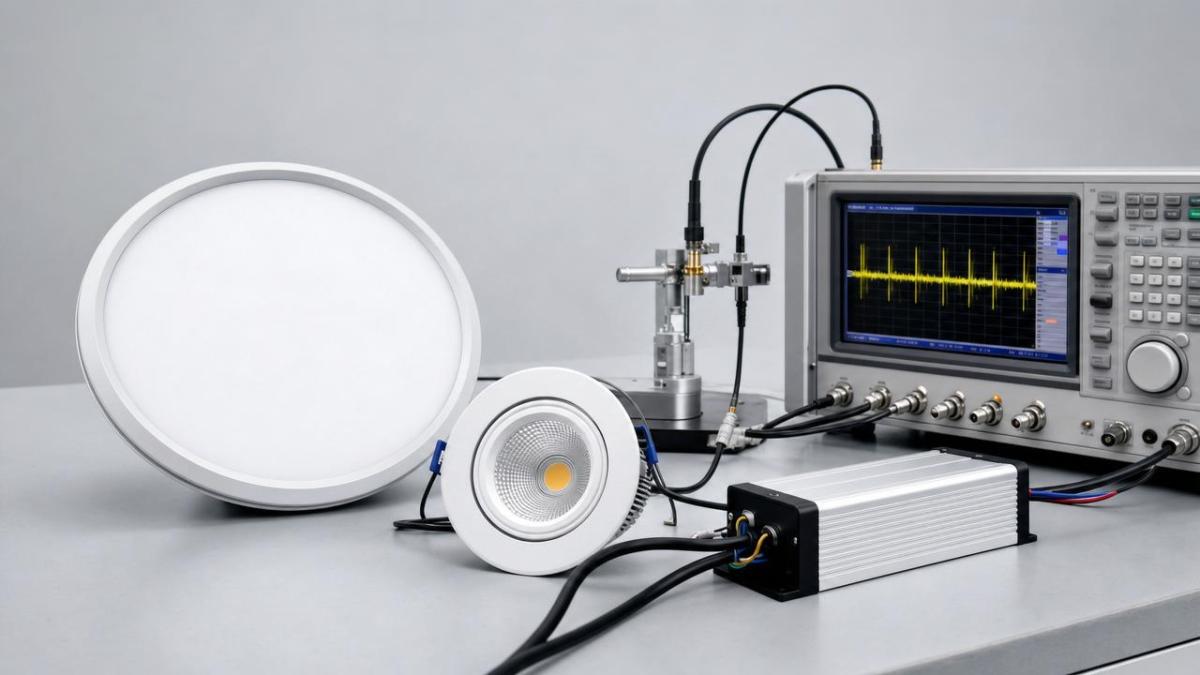
On May 23, 2026, METI officially declared the full termination of the exemption clause for local control functionality in Matter-enabled smart lighting products. Starting July 1, 2026, all imported Smart Lighting devices must pass the PSE-Matter Local Control Test — which mandates sub-0.8-second response time in offline scenarios and sustained configuration retention for ≥72 hours without network connectivity. Failure to comply will result in denial of the PSE mark, prohibiting market entry.
Industries Affected
Direct Trading Enterprises
Export-oriented trading companies face urgent revalidation timelines: existing inventory with pre-July firmware may no longer qualify for PSE certification. Their exposure lies not only in delayed customs clearance but also in contractual liability toward Japanese importers who rely on certified compliance for retail shelf placement and JIS-compliant procurement frameworks.
Raw Material Procurement Enterprises
Suppliers of microcontrollers (MCUs), secure elements, and wireless SoCs are seeing revised demand signals. The requirement for deterministic low-latency local execution pushes buyers toward higher-tier MCUs with integrated real-time OS support and hardware-based crypto acceleration — shifting procurement away from legacy cost-optimized chips previously accepted under the exemption.
Contract Manufacturing & ODM Enterprises
Chinese LED lighting ODMs — especially those serving Tier-2 and Tier-3 Japanese brands — are under pressure to revise firmware architecture, requalify hardware-software integration, and undergo full PSE-Matter test cycles. Many lack in-house Matter certification labs or local Japanese technical liaison capacity, extending time-to-market by 8–12 weeks per SKU.
Supply Chain Service Providers
Third-party testing labs, PSE regulatory consultants, and firmware validation service providers report surging inbound inquiries — particularly for cross-border remote test supervision and localized documentation support (e.g., Japanese-language test reports, METI-designated conformity declarations). Capacity constraints are emerging, especially for labs accredited for both PSE and Matter 1.3+ local control protocols.
Key Focus Areas and Recommended Actions
Immediate Firmware Reassessment
Manufacturers must audit current Matter stack implementations against METI’s updated PSE-Matter Local Control Test specification (JIS C 0950-2:2026 Annex D). Emphasis should be placed on offline state persistence, deterministic interrupt latency, and fallback behavior during Wi-Fi/Ethernet disconnection — not just cloud-connected operation.
MCU Hardware Evaluation and Upgrade Planning
Legacy MCUs lacking sufficient RAM, flash, or real-time scheduling capabilities may fail timing benchmarks. Engineering teams should prioritize evaluation of dual-core Arm Cortex-M series with TrustZone, or RISC-V variants validated for Matter’s local control profile — factoring in lead times for new part qualification and supply chain availability.
PSE Certification Timeline Alignment
Given METI’s hard July 1, 2026 enforcement date and typical PSE-Matter test duration (4–6 weeks including remediation), first submission to an accredited lab must occur no later than May 15, 2026. Late submissions risk non-compliant stockpiling and forced discount liquidation.
Editorial Perspective / Industry Observation
Observably, this is not merely a technical compliance update — it reflects Japan’s strategic pivot toward sovereign edge intelligence in consumer IoT. Unlike the U.S. or EU, where Matter local control remains largely voluntary, METI’s mandate signals deeper alignment with national cybersecurity and infrastructure resilience goals. Analysis shows that the 0.8-second offline response threshold exceeds typical Matter reference implementation benchmarks, suggesting METI collaborated closely with domestic utilities and smart home platform operators to define operational thresholds rooted in real-world use cases — such as emergency lighting activation during natural disasters.
Conclusion
This policy marks a structural inflection point: local control is transitioning from a feature to a foundational requirement in Japan’s smart lighting ecosystem. For global suppliers, success hinges less on Matter compatibility alone and more on verifiable, production-ready edge determinism — a capability gap currently widening across mid-tier manufacturing tiers. A measured, hardware-aware compliance strategy — rather than pure software patching — will define competitive differentiation moving forward.
Source Attribution
Official notice issued by Japan’s Ministry of Economy, Trade and Industry (METI), dated May 23, 2026; referenced specification: JIS C 0950-2:2026 (PSE Requirements for IoT Devices Using Matter Protocol), Annex D — Local Control Functional Verification. Note: METI has indicated that detailed test procedure documentation and accredited lab lists will be published by June 10, 2026 — subject to ongoing monitoring.
Protocol_Architect
Dr. Thorne is a leading architect in IoT mesh protocols with 15+ years at NexusHome Intelligence. His research specializes in high-availability systems and sub-GHz propagation modeling.
Related Recommendations
- Kenji Sato (Infrastructure Arch)METI Tightens Smart Lighting Label Rules for LED Drivers
- Kenji Sato (Infrastructure Arch)METI Draft Rule Ties Smart Lighting Labels to Power Data
- Kenji Sato (Infrastructure Arch)Smart Home Installation Cost Trends: What Drives Pricing for Lighting, Locks, and HVAC Controls?
- Kenji Sato (Infrastructure Arch)Smart Lighting in North America: Key Standards, Retrofit Options, and ROI Factors
- Kenji Sato (Infrastructure Arch)IoT Interoperability for Smart Lighting: Matter, Zigbee, or Wi-Fi for Multi-Vendor Systems?
- Kenji Sato (Infrastructure Arch)Smart Building IoT Lighting Management: Best Use Cases for Offices and Campuses
- Kenji Sato (Infrastructure Arch)Smart Dimmer Switches With RF Control vs Wi-Fi Dimmers: Key Differences for Retrofit Projects
- Kenji Sato (Infrastructure Arch)How to Choose Hotel Sofas for High-Traffic Spaces: Materials, Comfort, and Durability
- Kenji Sato (Infrastructure Arch)Smart Lighting Hardware Verification: What to Test Before Pilot Deployment
- Kenji Sato (Infrastructure Arch)How to Turn Project Specification Planning for Smart Lighting Into a Scalable Retrofit Plan
Analyst