
INMETRO Launches Local Calibration Pilot for Power Monitoring Devices in Brazil
author
On April 28, 2026, Brazil’s National Institute of Metrology (INMETRO) launched a pilot program in São Paulo state requiring localized calibration for imported smart meters and power monitoring terminals — with specific demands on Chinese and other foreign suppliers to submit core metrological algorithm source code, verification protocols, and reproducible local calibration procedures. This development directly affects manufacturers, exporters, and certification service providers engaged in the smart grid instrumentation, energy metering, and industrial power quality monitoring sectors — as it signals a potential shift toward data sovereignty–driven regulatory requirements across Latin America.
Event Overview
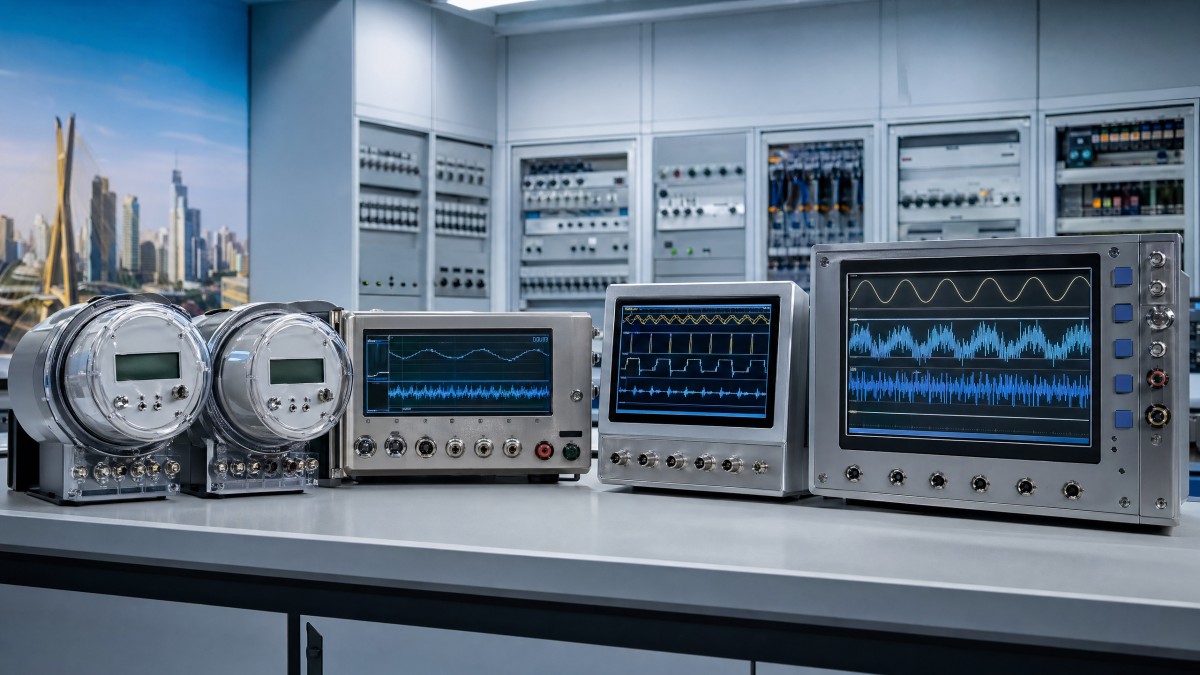
On April 28, 2026, INMETRO announced the initiation of a pilot program for local calibration of power monitoring devices in São Paulo state. The pilot applies to imported smart meters and power monitoring terminals. All foreign manufacturers — including those based in China — are required to submit: (1) source code of core metrological algorithms; (2) documented calibration verification protocols; and (3) a fully reproducible local calibration process. The stated objective is to strengthen national control over grid-related measurement data.
Industries Affected
Direct Exporters and OEM Manufacturers
Exporters and original equipment manufacturers supplying power monitoring devices to Brazil face immediate compliance pressure. Submission of source code and calibration documentation introduces new technical disclosure obligations not previously mandated under INMETRO’s existing certification framework (e.g., Portaria 105/2021). Impact includes increased pre-market preparation time, internal review of intellectual property exposure, and potential re-engineering of calibration architecture to support third-party reproducibility.
Testing, Certification, and Conformity Assessment Service Providers
Third-party labs and certification bodies supporting Brazilian market access must now accommodate new technical validation steps. Their scope of work may expand to include source code review (where permitted), protocol traceability assessment, and on-site verification of local calibration repeatability — all requiring updated accreditation scopes and staff training. Delays in certification timelines are possible pending clarification of INMETRO’s evaluation methodology.
Supply Chain and Localization Partners
Local representatives, distributors, or joint-venture partners in Brazil may be asked to host or facilitate on-site calibration audits. Their operational responsibilities could extend beyond logistics and documentation handling to include hosting technical demonstrations, maintaining calibration infrastructure, and coordinating with INMETRO-appointed auditors — raising resource and liability considerations.
What Companies and Practitioners Should Monitor and Do Now
Track official implementation guidance from INMETRO
As of April 28, 2026, only the pilot’s launch and high-level requirements have been published. No formal regulation, technical annexes, or submission templates have been released. Companies should monitor INMETRO’s official portal and official gazette (DOU) for updates on deadlines, acceptable formats for source code submission, and definitions of ‘reproducible local calibration’.
Distinguish between pilot scope and future regulatory scope
The current requirement applies only to the São Paulo pilot and only to smart meters and power monitoring terminals. It does not yet extend to other device categories (e.g., PQ analyzers, IoT-based sensors) or other Brazilian states. Observably, this pilot serves as a testbed — not an immediate nationwide mandate — and its outcomes will inform whether and how requirements scale.
Assess source code disclosure implications internally
Manufacturers should initiate internal reviews of source code licensing terms, export control classifications (e.g., EAR99 or controlled under Wassenaar Arrangement), and contractual obligations to customers or IP partners. Analysis shows that voluntary submission without clear legal safeguards may create precedents affecting other regulated markets.
Prepare technical documentation packages proactively
Even before formal templates are issued, companies can begin assembling modular documentation: algorithm description (non-proprietary level), calibration flow diagrams, uncertainty budgeting methodology, and hardware/software environment specifications. Doing so reduces lead time once submission windows open.
Editorial Perspective / Industry Observation
This initiative is better understood as a regulatory signal — not yet an enforceable standard. From an industry perspective, INMETRO’s move reflects growing emphasis on measurement data sovereignty in critical infrastructure domains, particularly where real-time grid telemetry informs tariff structures, demand response, and grid stability decisions. While the pilot remains narrowly scoped, its design — demanding algorithmic transparency and local procedural control — suggests a departure from traditional type-approval models toward active lifecycle oversight. Continued observation is warranted to determine whether similar requirements emerge in Chile’s CNE, Colombia’s CRC, or Argentina’s ENRESS.
Conclusion: The INMETRO pilot represents an early-stage, geographically limited regulatory experiment focused on enhancing national metrological autonomy in electricity monitoring. It does not yet constitute a binding market entry barrier, but rather a high-signal indicator of evolving expectations for transparency, reproducibility, and local technical engagement in South America’s energy instrumentation sector. For stakeholders, the current priority is structured monitoring — not immediate compliance overhaul.
Source: Official announcement by Instituto Nacional de Metrologia, Qualidade e Tecnologia (INMETRO), published April 28, 2026. Note: Implementation details, timelines, and scope expansion remain subject to official updates and require ongoing observation.
Protocol_Architect
Dr. Thorne is a leading architect in IoT mesh protocols with 15+ years at NexusHome Intelligence. His research specializes in high-availability systems and sub-GHz propagation modeling.
Related Recommendations
- Kenji Sato (Infrastructure Arch)EU Battery Rules Set DBP Mandate From Aug. 18
- Kenji Sato (Infrastructure Arch)Power Monitoring for Commercial Solar Systems: Which Metrics Matter Most?
- Kenji Sato (Infrastructure Arch)PID Controller Price Breakdown: What Impacts Cost and Which Specs Are Worth Paying For?
- Kenji Sato (Infrastructure Arch)Property Technology IoT for Multi-Site Energy Monitoring: Use Cases, ROI, and Integration Risks
- Kenji Sato (Infrastructure Arch)How to Choose Audio Racks and Flight Cases for Mobile Power Monitoring Systems
- Kenji Sato (Infrastructure Arch)High Precision Servo Drive Supplier Selection: 7 Specs That Matter for Clean Energy Equipment
- Kenji Sato (Infrastructure Arch)Power Monitoring with Zigbee Tech: How to Choose the Right Metering Architecture
- Kenji Sato (Infrastructure Arch)How to Choose Chromebook Charging Stations for Schools, Libraries, and Shared Workspaces
- Kenji Sato (Infrastructure Arch)Satellite IoT Launch Targets Off-Grid African and Latin American Markets
- Kenji Sato (Infrastructure Arch)Wind Instruments for Renewable Energy Sites: What They Measure and How to Choose
Analyst