
Climate Control Hardware Benchmarking Needs Real Loads
author
Climate control hardware benchmarking only matters when devices face real HVAC loads, unstable grids, and protocol interference. For buyers, engineers, and decision-makers navigating the IoT supply chain, NexusHome Intelligence applies IoT hardware benchmarking, smart home hardware testing, and Matter protocol data to reveal which verified IoT manufacturers and smart thermostat OEM partners deliver measurable performance beyond marketing claims.
Why real-load benchmarking matters in renewable energy climate control
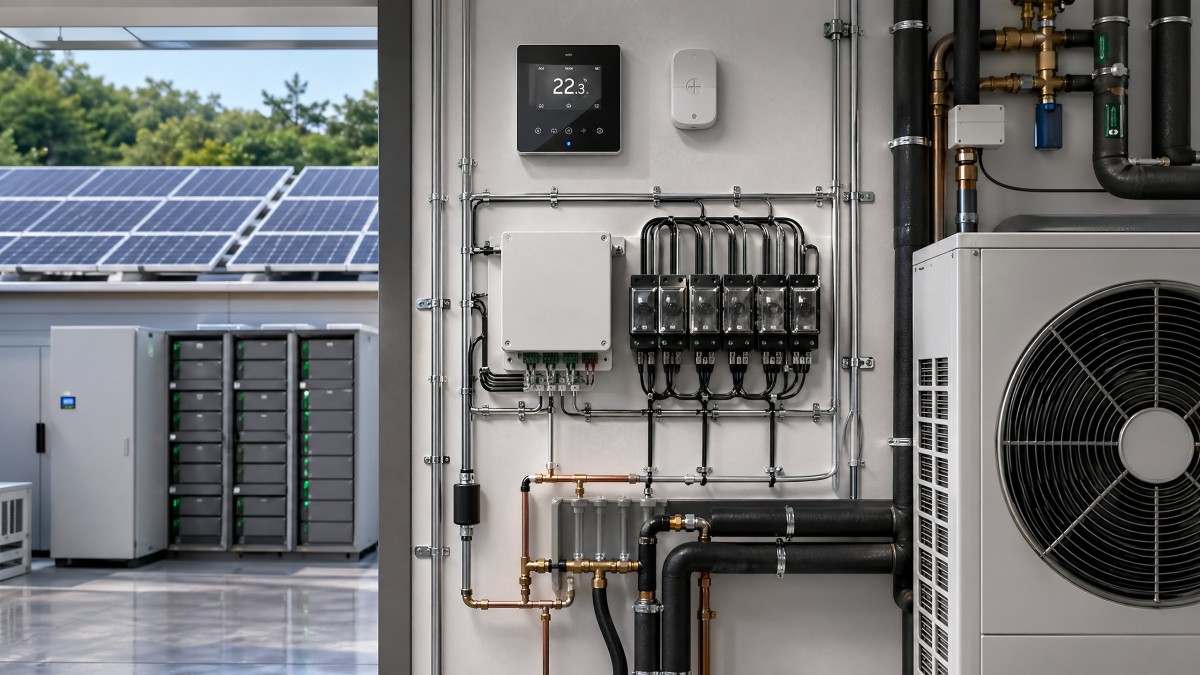
In renewable energy projects, climate control hardware does not operate in a stable laboratory environment. It works inside solar-powered homes, battery-backed buildings, heat pump systems, and mixed-use commercial sites where voltage quality, occupancy patterns, and wireless congestion change throughout the day. A thermostat, relay, controller, or sensor that performs well under light bench conditions may fail when compressors cycle repeatedly for 8–12 hours, when inrush current spikes occur, or when the local network carries hundreds of IoT messages per minute.
This is why climate control benchmarking must include real HVAC loads rather than marketing claims such as “stable connection” or “low power.” For information researchers, the key question is not whether a device supports Matter, Zigbee, Thread, BLE, or Wi-Fi in theory. The practical question is whether it maintains acceptable latency, command reliability, and measurement accuracy when installed in a renewable energy environment that includes energy storage systems, peak-load management, and building automation logic.
For operators and maintenance teams, poor benchmarking leads to very concrete problems: short cycling, delayed valve actuation, temperature overshoot, sensor drift, and battery drain. For procurement teams, it creates hidden replacement costs within 6–18 months. For enterprise decision-makers, it introduces performance risk into carbon reduction targets, comfort guarantees, and smart building service contracts. Real-load testing turns vague selection criteria into measurable procurement standards.
NexusHome Intelligence approaches this challenge as an engineering filter. Instead of repeating brochures, NHI focuses on measurable behavior under protocol interference, dynamic power conditions, and continuous control cycles. In renewable energy applications, this data-first method helps identify verified IoT manufacturers and smart thermostat OEM partners that can support actual deployment requirements, not just pass showroom demonstrations.
What changes when hardware is tested under real loads?
Real-load testing usually reveals three categories of differences within the first 2–4 weeks of evaluation. First, communication behavior changes under interference from neighboring networks and high node counts. Second, electrical behavior changes under relay switching, standby demand, and power fluctuations. Third, control quality changes when PID-driven HVAC sequences run continuously across daytime and nighttime conditions. These are the areas where climate control hardware benchmarking becomes genuinely useful.
- Connectivity under stress: command delay, packet loss, multi-hop recovery, and commissioning stability in dense wireless environments.
- Electrical resilience: standby draw, relay endurance, response to brownout conditions, and impact on battery-backed circuits.
- Control accuracy: temperature stability, actuator timing, deadband consistency, and interaction with heat pumps, fan coils, or variable-speed systems.
If a supplier cannot present this level of testing logic, procurement decisions are often based on incomplete evidence. In renewable energy buildings, incomplete evidence usually becomes an operating problem later.
Which benchmark metrics actually matter for buyers and engineers?
Not every metric deserves equal weight. A useful smart home hardware testing framework for climate control should connect engineering data to business consequences. Buyers need to know which measurements affect total cost of ownership. Engineers need to know which measurements affect commissioning and reliability. Operators need to know which measurements affect alarms, comfort complaints, and service intervals.
The most relevant benchmark categories usually include communication latency, command success rate, standby consumption, sensor accuracy, relay switching endurance, and recovery behavior after power disturbance. In renewable energy projects, energy monitoring alignment also matters because peak-load shifting and self-consumption strategies depend on dependable climate control response during specific tariff windows, often in 15-minute or 30-minute intervals.
The table below shows a practical framework that links climate control hardware benchmarking metrics to deployment risks. It is especially useful when comparing verified IoT manufacturers that offer similar datasheets but different real-world behavior.
This framework helps teams move from generic compatibility claims to measurable selection criteria. If two vendors both claim Matter support, the better supplier is the one that can document behavior under interference, not the one with the louder brochure. For procurement, this also creates a consistent scoring model across pilot, pre-mass production, and rollout phases.
Three core indicators to prioritize first
When budget or schedule limits deep evaluation, start with 3 core indicators. First, verify control stability during continuous HVAC operation for at least 48–72 hours. Second, verify communication performance in a congested network with realistic node density. Third, verify standby and switching behavior under the intended power architecture, especially if the site includes solar inverters, ESS, or backup power paths.
Why protocol data should never be isolated from hardware data
Matter protocol data is valuable, but only when interpreted together with hardware design, PCB quality, firmware maturity, and power management behavior. A controller may pass protocol onboarding but still perform poorly due to thermal design limits, noisy power stages, or unstable radio modules. NHI’s benchmarking logic is valuable because it connects protocol compliance with practical hardware behavior rather than treating them as separate checkboxes.
How do deployment scenarios change the right hardware choice?
Climate control hardware should not be sourced as a one-size-fits-all category. Renewable energy applications create different electrical and control demands depending on building type, occupancy profile, and energy strategy. A solar-powered residential project, a battery-buffered office floor, and a smart commercial building with demand response targets may all need different thermostat logic, different sensor architecture, and different wireless topology.
This is where many sourcing projects go wrong. Teams compare unit price before they classify the deployment scenario. As a result, they may buy hardware optimized for standard room comfort control when the site actually requires peak-load coordination, remote diagnostics, or multi-zone scheduling. Benchmarking should therefore begin with scenario mapping, followed by hardware testing against those conditions.
The following table outlines how scenario differences affect selection logic. It is useful for operators, purchasing teams, and enterprise leaders who need a faster path from technical requirements to supplier shortlists.
The right benchmark plan changes with the scenario. For example, a small pilot of 20–50 units can emphasize commissioning speed and comfort response, while a portfolio rollout of 1,000+ units should emphasize OTA stability, batch variation, and supplier process control. Benchmarking is not only about product comparison; it is also about scaling risk management.
Common deployment mistakes that distort selection
- Testing only one protocol path while the final site will use mixed Matter, Thread, Zigbee, or gateway-based bridging.
- Validating comfort control in mild weather but not checking behavior during extreme heating or cooling periods.
- Ignoring standby draw in large device fleets, where even small per-device differences compound across hundreds of endpoints.
- Choosing by unit cost alone without accounting for truck rolls, firmware support, field replacements, and commissioning labor.
These mistakes are expensive because they usually appear after installation, not before purchase. A data-driven benchmark process reduces that exposure early.
What should procurement teams check before choosing a smart thermostat OEM?
For procurement professionals, the most important shift is moving from feature comparison to supply-chain verification. A smart thermostat OEM may offer an attractive specification sheet, but climate control hardware benchmarking should also examine manufacturing consistency, firmware update discipline, protocol roadmap, and responsiveness to custom integration needs. In renewable energy deployments, these factors matter because field conditions evolve after installation.
A practical sourcing review usually covers 5 key checkpoints: hardware design maturity, protocol validation evidence, power behavior under load, production quality control, and implementation support. If a supplier cannot explain test methods, sample variation, or update strategy, procurement teams should treat that as a material risk. The challenge is especially relevant when comparing several verified IoT manufacturers from different manufacturing hubs.
Below is a useful selection matrix for early supplier screening. It helps B2B buyers build a shortlist before requesting samples, pilot units, or custom quotations.
A supplier that answers these questions clearly is usually easier to work with during pilot and rollout. A supplier that avoids them may still be suitable, but only after deeper validation. NHI’s role in the process is to reduce that ambiguity by converting hardware and protocol performance into comparable benchmark evidence.
A simple 4-step procurement path
- Define the actual deployment scenario, including HVAC type, protocol environment, and renewable energy architecture.
- Shortlist 2–4 suppliers based on evidence of IoT hardware benchmarking, not brochure features alone.
- Run a pilot for 2–8 weeks using real loads, real occupancy patterns, and real communication density.
- Review lifecycle implications, including support response, firmware path, replacement risk, and rollout consistency.
This sequence keeps procurement aligned with engineering reality and reduces expensive surprises after purchase orders are issued.
Standards, misconceptions, and what decision-makers often miss
Decision-makers often assume that protocol logos and basic compliance documents are enough to validate climate control hardware. They are not. Standards matter, but they should be read as a foundation rather than a complete proof of field readiness. In climate control applications tied to renewable energy goals, teams should combine protocol conformity, electrical safety, EMC suitability, and installation-region requirements with performance testing under realistic duty cycles.
Common references may include Matter-related interoperability requirements, regional electrical compliance, EMC expectations, and building automation integration practices. However, even when a device aligns with relevant standards, real-world issues can still emerge in 3 areas: protocol coexistence, field update reliability, and long-duration control behavior. That is why benchmarking should not stop at certification review.
Another misconception is that low unit price means lower project cost. In distributed climate control fleets, service calls, failed onboarding, comfort complaints, and replacement logistics can easily outweigh small upfront savings. A more useful commercial metric is cost of dependable operation over 12–36 months, not just invoice value on day one.
FAQ for research, operations, and sourcing teams
How long should a climate control hardware pilot run?
A meaningful pilot usually runs 2–8 weeks, depending on system complexity and weather variation. The goal is to observe command reliability, sensor stability, user interaction, and HVAC cycling under real occupancy and energy conditions. Shorter tests can support screening, but they rarely reveal drift, intermittent packet loss, or update-related problems.
Is Matter support enough for a procurement decision?
No. Matter support is helpful, but procurement should also review hardware design, power behavior, gateway dependence, commissioning flow, and control stability. Matter protocol data becomes valuable when it is matched with smart home hardware testing under realistic HVAC loads and network conditions.
What is the biggest risk in renewable energy HVAC sourcing?
The biggest risk is assuming that brochure claims will translate directly into peak-load coordination, energy optimization, and occupant comfort. In practice, small weaknesses in latency, relay endurance, or standby draw can create operational losses across large installations.
When should buyers request sample support?
Sample support should be requested before final vendor lock-in and ideally after the first shortlist is reduced to 2–3 candidates. Samples are most valuable when tied to a defined test plan covering protocol conditions, HVAC loads, installation time, and reporting format.
Why choose NHI for climate control hardware benchmarking and supplier screening?
NexusHome Intelligence is built for organizations that need evidence before commitment. In a market crowded with protocol silos and generic smart device marketing, NHI connects engineering verification with procurement decisions. That means evaluating not only whether a product can connect, but whether it can sustain useful performance in renewable energy buildings, smart grids, and demanding HVAC control environments.
Our value is especially relevant for teams comparing verified IoT manufacturers, screening smart thermostat OEM candidates, or planning a pilot in mixed-protocol sites. NHI’s benchmarking perspective covers connectivity and protocols, energy and climate control behavior, component-level quality signals, and the practical realities of scaling from sample units to broader deployment. This reduces sourcing uncertainty and shortens the path from research to usable vendor decisions.
If you are evaluating climate control hardware for solar-integrated homes, energy storage-enabled buildings, or smart commercial retrofits, you can contact NHI for parameter confirmation, protocol-path review, sample planning, OEM shortlist screening, delivery cycle discussion, compliance considerations, and custom benchmarking scope. These conversations are most productive when you already know your HVAC type, expected protocol stack, target volume, and rollout timeline.
For B2B buyers and decision-makers, the goal is simple: reduce ambiguity before procurement. If you need a data-driven view of IoT hardware benchmarking, smart home hardware testing, Matter protocol behavior, or supplier comparison in climate control applications, NHI can help translate technical performance into sourcing decisions that hold up under real loads.
Protocol_Architect
Dr. Thorne is a leading architect in IoT mesh protocols with 15+ years at NexusHome Intelligence. His research specializes in high-availability systems and sub-GHz propagation modeling.
Related Recommendations
- Kenji Sato (Infrastructure Arch)PID HVAC Control for Smart Buildings: Tuning for Comfort and Energy Savings
- Kenji Sato (Infrastructure Arch)What CE Requirements Apply to PID HVAC Controllers in Commercial Installations?
- Kenji Sato (Infrastructure Arch)Which IEC Standards Govern Building Energy Automation for Commercial Projects?
- Kenji Sato (Infrastructure Arch)How to Tune PID HVAC Controllers for Stable Temperature Control in Commercial Buildings
- Kenji Sato (Infrastructure Arch)Building Energy Automation in Saudi Arabia: A Guide to Cooling and Peak-Demand Control
- Kenji Sato (Infrastructure Arch)CSA Opens Matter 1.4.2 Pre-Certification
- Kenji Sato (Infrastructure Arch)CSA Opens Matter 1.4.2 Pre-Certification for HVAC and Lighting
- Kenji Sato (Infrastructure Arch)Matter 1.4.2 Preview Expands HVAC and Lighting Certification
- Kenji Sato (Infrastructure Arch)How to Specify a Custom Glass Touch Panel for Smart Thermostat Design
- Kenji Sato (Infrastructure Arch)PID HVAC Automation Controllers: How to Choose Inputs, Outputs, and Control Accuracy
Analyst