
Chile Mandates Localized Energy Efficiency Algorithms for HVAC Controllers
author
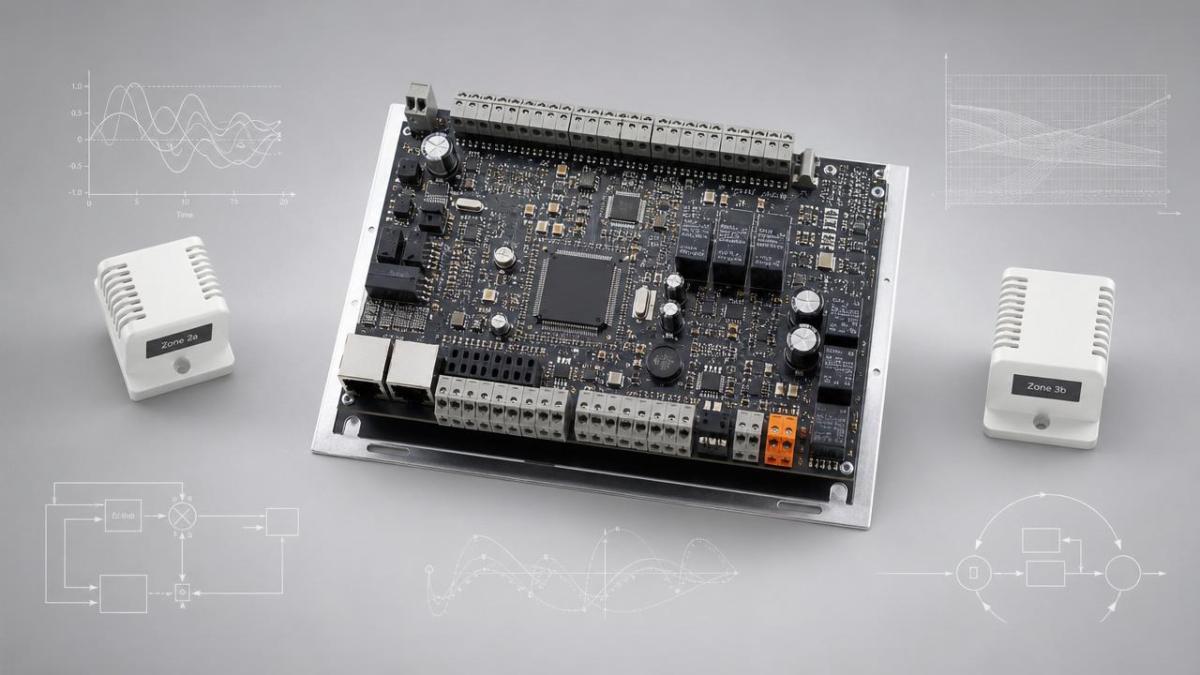
On May 29, 2026, Chile’s Ministry of Energy (ME) issued Resolution No. 112/2026, requiring all imported HVAC automation controllers to embed dynamic PID energy efficiency algorithms calibrated to Chile’s specific climate zones—Santiago (Zone 3b) and Antofagasta (Zone 2a)—effective November 1, 2026. This regulatory shift directly impacts manufacturers, exporters, and distributors of HVAC control hardware, particularly those supplying standardized PCBA-based controllers without regional climate adaptation.
Event Overview
Chile’s Ministry of Energy published Resolution No. 112/2026 on May 29, 2026. The resolution mandates that, starting November 1, 2026, all HVAC automation controllers imported into Chile must incorporate built-in dynamic PID energy efficiency algorithms tailored to Chile’s designated climate zones (Santiago: Zone 3b; Antofagasta: Zone 2a). Compliance requires verification by an accredited local third-party laboratory. The measure applies exclusively to imported controllers; no provisions regarding domestic production or software-only solutions are specified in the publicly released text.
Industries Affected
Direct Exporters and Trade Enterprises
Companies exporting HVAC automation controllers from China—and other non-Chilean jurisdictions—to Chile face immediate compliance requirements. The regulation targets product-level functionality, not just labeling or documentation. Since the rule applies to all imports effective November 2026, firms with ongoing shipments must revise firmware logic, revalidate control strategies, and secure new lab reports before clearance.
PCBA and Embedded Systems Manufacturers
Suppliers delivering generic, off-the-shelf PCBA modules—including those pre-flashed with universal PID tuning—are directly affected. The requirement for climate-zone-specific dynamic PID behavior means algorithmic logic—not just parameter tables—must be adapted. Firms relying on single-firmware SKUs for global distribution will need region-specific firmware variants and associated version control protocols.
Supply Chain and Certification Service Providers
Third-party testing labs outside Chile cannot fulfill the verification requirement; only locally accredited laboratories in Chile may issue compliance reports. This creates a dependency on Chilean certification infrastructure and introduces lead-time and cost variables previously absent in export workflows. Logistics and customs intermediaries must now verify lab report validity as part of pre-arrival documentation checks.
Key Considerations and Recommended Actions
Monitor official ME guidance and lab accreditation updates
The Ministry of Energy has not yet published a list of approved third-party laboratories or detailed technical validation protocols. Exporters should track ME’s official portal and subscribe to notifications from Chile’s National Institute of Standards (INN), which oversees laboratory accreditation under this resolution.
Identify and prioritize controller SKUs destined for Chilean markets
Not all HVAC controllers fall under the scope—only those classified as ‘automation controllers’ per Chilean tariff nomenclature (likely aligned with HS 8537.10 or related subheadings). Companies should cross-reference current export SKUs against Chile’s official import classification database and isolate models requiring algorithmic revision and retesting.
Distinguish between regulatory signal and operational deadline
The November 1, 2026 enforcement date is fixed, but implementation details—including acceptable test methods, firmware update mechanisms (e.g., field-upgradable vs. factory-burned), and grandfathering clauses for existing stock—are not yet defined. Treat early announcements as procedural signals, not finalized operational instructions.
Initiate internal firmware review and lab engagement planning now
Algorithm localization involves more than recalibrating setpoints: dynamic PID logic must respond to real-time ambient temperature, humidity, and solar load profiles typical of Zone 2a and 3b. Engineering teams should audit current control architectures for modularity and begin scoping lab engagement timelines—given limited capacity at Chilean accredited facilities, early reservation is advisable.
Editorial Perspective / Industry Observation
Observably, this resolution marks Chile’s first explicit regulatory intervention targeting embedded control logic—not just energy consumption metrics—in building automation hardware. It reflects a broader trend among emerging-market regulators shifting from passive efficiency labeling toward active, context-aware performance mandates. Analysis shows the policy is less about immediate market exclusion and more about establishing a technical sovereignty baseline: ensuring HVAC systems operate efficiently under local climatic stressors, rather than relying on generalized international tuning. From an industry standpoint, it signals growing divergence in regional algorithmic compliance expectations—a development likely to influence similar measures in Peru, Colombia, and other Andean Community members over the next 24 months.
Consequently, this is best understood not as an isolated trade barrier, but as an early indicator of localized intelligence requirements entering building technology supply chains. Its operational impact remains constrained to Chile for now—but its conceptual precedent is already portable.
Chile’s new HVAC controller algorithm mandate underscores a structural shift: energy policy is increasingly governing not just how much energy a device uses, but how intelligently it responds to local environmental conditions. For global suppliers, the implication is clear—regulatory compliance is evolving from hardware certification to embedded software governance. At present, this resolution is most accurately interpreted as a targeted, enforceable requirement for Chile-bound shipments—not a broad industry transformation, but a concrete operational checkpoint demanding technical and logistical preparation.
Source: Chilean Ministry of Energy (Ministerio de Energía), Resolution No. 112/2026, published May 29, 2026.
Note: Accredited laboratory list, test methodology annexes, and potential exemptions remain pending official publication and are under continuous observation.
Protocol_Architect
Dr. Thorne is a leading architect in IoT mesh protocols with 15+ years at NexusHome Intelligence. His research specializes in high-availability systems and sub-GHz propagation modeling.
Related Recommendations
- Kenji Sato (Infrastructure Arch)Building an IoT Compliance Framework for Renewable Energy Monitoring Systems
- Kenji Sato (Infrastructure Arch)How to Evaluate an IoT Application Analysis Platform Provider for Renewable Energy Assets
- Kenji Sato (Infrastructure Arch)PID HVAC Control for Smart Buildings: Tuning for Comfort and Energy Savings
- Dr. Sophia Carter (Medical IoT Specialist)How Signal Processing Determines Motion Accuracy in Wearable Activity Tracking Sensors
- Lina Zhao (Security Analyst)What Smart Lock Data Should Home Hardware Teams Collect to Improve Security and Reliability?
- Kenji Sato (Infrastructure Arch)What CE Requirements Apply to PID HVAC Controllers in Commercial Installations?
- Kenji Sato (Infrastructure Arch)Selecting High-Temperature IoT Components for Solar Inverters and Battery Storage
- Lina Zhao(Security Analyst)How to Design a Smart Building Security Ecosystem That Integrates Access, Video, and Energy Data
- NHI Data Lab (Official Account)How Procurement Teams Can Build Clear Project Specifications for Renewable Energy RFQs
- Dr. Sophia Carter (Medical IoT Specialist)Middle East Wearable Technology Market: Growth Drivers, Risks, and Entry Opportunities
Analyst