
UL Launches Medical IoT Battery SOH Transparency Pilot
author
UL Solutions announced the launch of its voluntary ‘Medical IoT Battery Health Transparency’ certification pilot on May 3, 2026 — a development with direct implications for manufacturers of portable medical devices, U.S. importers, and healthcare procurement entities. This initiative introduces new transparency requirements for battery State of Health (SOH) reporting and electronic audit trail compliance, signaling a shift in regulatory expectations for connected medical hardware entering the U.S. market.
Event Overview
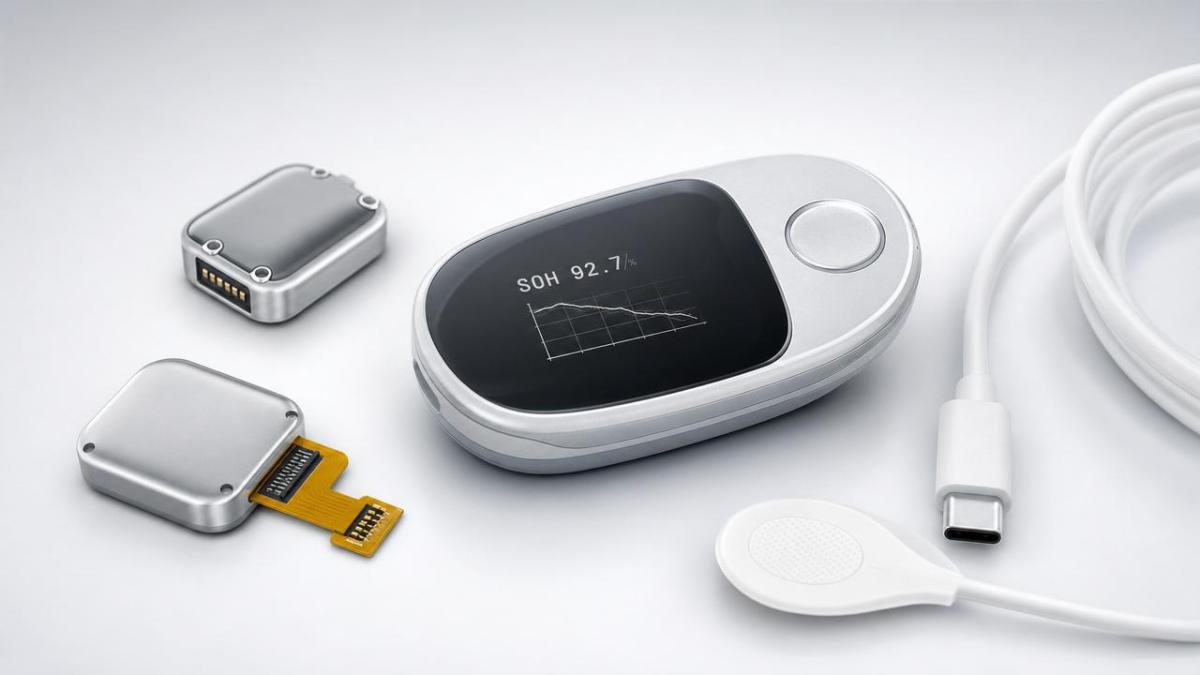
On May 3, 2026, UL Solutions initiated a voluntary certification pilot program titled ‘Medical IoT Battery Health Transparency’. Participating devices — including portable patient monitors, remote glucose meters, and wearable ECG patches — must provide real-time reporting of battery State of Health (SOH) degradation curves and comply with FDA 21 CFR Part 11 electronic audit trail requirements. The pilot currently includes 12 China-based Medical IoT manufacturers. Starting in Q3 2026, this certification is expected to serve as a key differentiator for Medicare reimbursement eligibility and hospital tender evaluations; non-certified products may be excluded from U.S. government procurement shortlists.
Industries Affected
Medical Device Manufacturers (OEMs/ODMs)
Manufacturers supplying Medical IoT devices to the U.S. market are directly affected because the pilot imposes new technical and documentation requirements — notably real-time SOH telemetry and FDA-compliant audit logging. Impact manifests in firmware architecture updates, data logging validation, and traceability system integration.
U.S. Importers and Distributors
Importers handling these devices face increased due diligence obligations: verifying SOH reporting functionality, validating Part 11 compliance, and maintaining documentation for procurement reviews. Failure to confirm certification status may affect product eligibility in hospital tenders or payer reimbursement pathways.
Hospital Procurement and Health System Sourcing Teams
Healthcare procurement departments are impacted operationally: starting Q3 2026, certification status may become a formal evaluation criterion in RFPs and vendor assessments. Unverified devices risk exclusion from shortlisted suppliers — affecting device selection, inventory planning, and clinical deployment timelines.
What Stakeholders Should Monitor and Do Now
Track official scope expansion and timeline confirmation
While the pilot launched on May 3, 2026, UL has not yet published formal criteria documents or finalized rollout timing beyond Q3 2026. Stakeholders should monitor UL’s official communications for updates on certification requirements, test protocols, and potential transition from pilot to mandatory expectation.
Assess SOH data architecture and audit trail readiness
Manufacturers should review whether their current battery management systems support time-stamped, tamper-evident SOH curve export — including calibration history, cycle count, capacity fade modeling, and secure logging aligned with 21 CFR Part 11. Gaps in firmware, cloud API design, or local storage integrity require prioritized remediation.
Evaluate impact on existing U.S. supply chain contracts
Importers and distributors should review contractual terms with OEMs to clarify responsibility for certification-related testing, documentation, and liability in case of non-compliance. Contractual language around regulatory conformance, audit support, and warranty coverage may need updating ahead of Q3 2026.
Prepare for procurement documentation requests
Hospitals and group purchasing organizations (GPOs) should anticipate vendor submissions requiring third-party verification reports, SOH data schema documentation, and audit trail implementation summaries. Internal sourcing teams may begin drafting preliminary evaluation checklists ahead of formal guidance release.
Editorial Perspective / Industry Observation
Observably, this pilot reflects an emerging emphasis on lifecycle transparency — not just safety or interoperability — for connected medical devices. Analysis shows it is not yet a regulatory mandate but functions as a de facto gatekeeper for market access, especially in value-sensitive segments like federal procurement and payer reimbursement. From an industry perspective, it signals that battery health is increasingly treated as clinical data — subject to the same integrity, traceability, and accountability standards as physiological measurements. Current developments are best understood as a procedural signal rather than an immediate enforcement outcome; however, the linkage to Q3 2026 reimbursement and tender processes means early alignment carries tangible commercial weight.
Conclusion: This pilot does not introduce new legislation, but it establishes a clear operational benchmark for U.S. market entry of Medical IoT devices. Its significance lies less in novelty and more in its functional integration with financial and procurement decision-making — making battery SOH transparency a measurable component of device trustworthiness. For now, it is more accurately interpreted as a high-signal preparatory step than a fully implemented requirement.
Source: UL Solutions official announcement (May 3, 2026).
Note: Certification criteria documents, test methods, and formal adoption timelines remain pending and are subject to ongoing observation.
Protocol_Architect
Dr. Thorne is a leading architect in IoT mesh protocols with 15+ years at NexusHome Intelligence. His research specializes in high-availability systems and sub-GHz propagation modeling.
Related Recommendations
- Dr. Sophia Carter (Medical IoT Specialist)UL Launches Medical IoT Battery SOH Transparency Pilot
- Dr. Sophia Carter (Medical IoT Specialist)UL 2900-2-2:2026 Enforces AI Robustness Testing for Medical IoT in US Market
- Dr. Sophia Carter (Medical IoT Specialist)UL 2900-2-2 Updated: AI Models in Medical IoT Must Pass Adversarial Robustness Testing
- Dr. Sophia Carter (Medical IoT Specialist)UL 2900-2-2 Rev.4: AI Robustness Testing Mandatory for Medical IoT
- Dr. Sophia Carter (Medical IoT Specialist)UL 2900-2-2 Ed.4 Adds Adversarial Robustness Testing for Medical IoT AI
- Dr. Sophia Carter (Medical IoT Specialist)Medical IoT Deployment Challenges in Off-Grid Facilities
- Dr. Sophia Carter (Medical IoT Specialist)Why Medical IoT Depends on Reliable Renewable Power
- Dr. Sophia Carter (Medical IoT Specialist)Medical IoT Power Backup Risks in Remote Energy Sites
- Dr. Sophia Carter (Medical IoT Specialist)UL 2900-2-2 Ed.3: AI Robustness Testing Mandatory for Medical IoT
- Dr. Sophia Carter (Medical IoT Specialist)UL 2900-2-2:2026 Released: AI Robustness Testing Mandatory for Medical IoT
Analyst