
Which Fitness Sensors Give Reliable Daily Data
author
Which fitness sensors give reliable daily data? The short answer is: motion sensors and heart rate tracking are usually the most dependable for everyday use, while SpO2, skin temperature, and calorie estimates are more conditional, and continuous glucose monitoring should be judged by latency and trend quality rather than headline claims alone. For researchers, operators, buyers, and commercial evaluators, the real issue is not whether a wearable has more sensors, but whether its daily data remains stable under normal wear, acceptable battery cycles, and imperfect wireless conditions. In a fragmented IoT environment, reliable daily data comes from the combination of sensor quality, firmware tuning, protocol stability, and power management—not from feature lists alone.
What daily fitness sensor data is actually trustworthy for regular use?
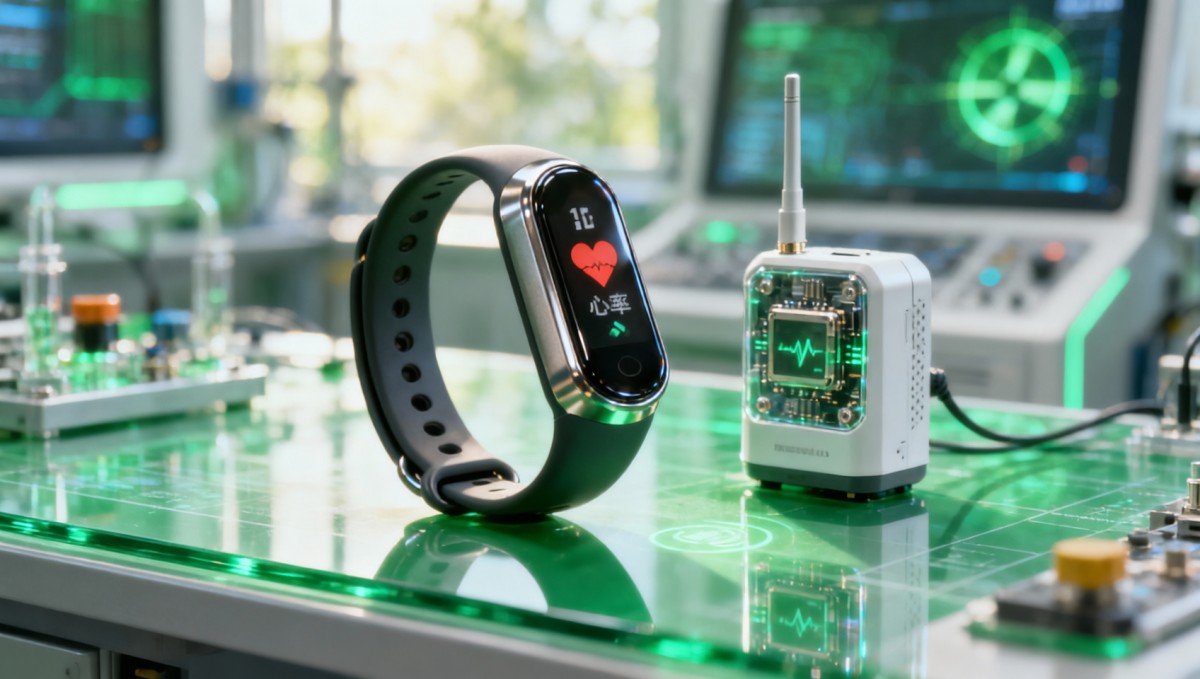
When people search for reliable fitness sensors, they usually want to know which measurements they can use with confidence every day, and which ones should be treated as directional only. That distinction matters for both consumer decision-making and B2B procurement.
In practical smart wearables benchmark work, the most consistently reliable sensor categories are:
- Accelerometers and gyroscopes: Usually strong for step counting, movement patterns, sleep timing approximation, and workout detection when algorithms are mature.
- Optical heart rate sensors (PPG): Often reliable at rest and during steady-state activity, but performance can degrade during high-intensity intervals, wrist flexion, cold weather, and poor skin contact.
- GPS in fitness devices: Useful for outdoor distance and route tracking, though signal stability depends heavily on antenna design, sampling strategy, and urban interference.
Sensor categories that are useful but should be interpreted more carefully include:
- SpO2 sensors: Good for spot checks and trend awareness, but daily wrist-based readings can vary due to fit, skin tone effects, motion, ambient light leakage, and algorithm filtering. SpO2 sensor accuracy claims should always be treated with caution unless backed by test conditions.
- Skin temperature sensors: Better for trend shifts than precise body temperature replacement.
- Stress, recovery, readiness, and calorie metrics: These are not direct measurements. They are algorithmic outputs derived from raw sensor data and therefore vary widely between brands.
For health-adjacent wearables, continuous glucose monitoring latency is a separate evaluation category. CGM systems can provide highly valuable daily trend data, but users and procurement teams need to understand that interstitial glucose readings naturally lag behind blood glucose changes. A device can still be clinically useful or operationally reliable even if it is not truly “real-time” in the marketing sense.
What makes one fitness sensor reliable and another unreliable?
Reliability in daily use is shaped by four layers working together.
1. Sensor hardware quality.
The raw component matters. MEMS sensor drift, optical emitter consistency, photodiode sensitivity, ADC quality, and shielding design directly affect noise and stability. Two products can claim the same measurement type but deliver very different real-world data because of component grade and board-level design.
2. Mechanical and industrial design.
Wearables live on the body, so placement stability is critical. A good heart rate sensor can still perform poorly if strap pressure is inconsistent or the housing allows light leakage. Daily reliability often depends more on contact quality than on sensor specification sheets.
3. Firmware and signal processing.
Filtering, sampling frequency, motion compensation, and outlier rejection often determine whether daily data is usable. Many weak devices fail not because the sensor is incapable, but because the firmware over-smooths, under-samples, or handles artifacts poorly.
4. Connectivity and protocol stability.
In connected wearables, data reliability is not only a sensing problem. It is also a transmission problem. BLE stability, packet retention, sync frequency, app dependency, and gateway compatibility all influence whether data arrives intact. For enterprise deployments and ecosystem builders, Matter protocol data and broader interoperability considerations become relevant when wearables connect into larger home, care, or energy-aware environments.
Which metrics matter most when evaluating daily-use fitness sensors?
For serious comparison, buyers and evaluators should focus less on marketing promises and more on measurable performance indicators.
- Accuracy under typical daily conditions: Not just lab accuracy, but walking, sleeping, desk work, commuting, and exercise transitions.
- Repeatability: Does the same user get stable readings under similar conditions day after day?
- Latency: Especially important for continuous monitoring, such as heart rate response and continuous glucose monitoring latency.
- Battery impact: A sensor that is accurate only when sampling aggressively may be impractical for all-day use.
- Dropout rate: How often does the device fail to record or sync usable data?
- Drift over time: Long-term stability matters for procurement and lifecycle cost evaluation.
- Protocol resilience: Can the wearable maintain data continuity across common BLE or hub connection issues?
For procurement teams, these factors are often more valuable than a long sensor list. A device with fewer but better-validated sensors can outperform a feature-rich product with unstable firmware or poor power optimization.
How should different sensor types be judged in real-world benchmarking?
A practical benchmarking framework should reflect actual usage, not idealized demo conditions.
Motion sensing: Compare step count consistency, workout classification accuracy, sedentary detection, and sleep-wake transition reliability. These are usually the strongest daily-use functions in mainstream wearables.
Heart rate sensing: Test at rest, during walks, interval training, cycling, and recovery. Wrist PPG can look excellent in static conditions yet fail badly during dynamic movement.
SpO2 measurement: Evaluate repeated spot checks, overnight behavior, and failure rates caused by poor fit or motion. SpO2 sensor accuracy should be benchmarked against a reference under controlled conditions, but also reviewed for usability in normal environments.
CGM platforms: Focus on trend coherence, alert usefulness, warm-up behavior, sensor replacement burden, and continuous glucose monitoring latency during meals, workouts, and sleep periods.
Battery behavior: Review not only total battery life, but performance under full sensor activation, frequent syncing, and degraded wireless environments. Catastrophic battery degradation remains a major hidden risk in wearable deployment.
What should procurement and business evaluation teams ask before choosing a device?
For commercial decision-makers, the best question is not “Which wearable has the most advanced sensor stack?” but “Which platform produces reliable enough daily data for the intended workflow at an acceptable operating cost?”
Key questions include:
- What reference method was used to validate each sensor claim?
- How does performance change with motion, sweat, temperature, and skin-contact variation?
- What is the real battery life when the device syncs at operational frequency?
- How often are firmware updates needed to correct sensor or sync issues?
- What is the data export and integration model for enterprise systems?
- Are there documented packet loss, latency, or app dependency issues?
- How does the product perform across different user populations and use cases?
In sectors connected to renewable energy, smart buildings, and wider IoT deployments, wearables may also participate in occupancy logic, wellness programs, or distributed sensing ecosystems. In those cases, protocol stability and low-power performance are not side concerns. They directly affect system value.
So which fitness sensors are the best choice for reliable daily data?
If the goal is dependable daily tracking, prioritize devices with strong motion sensing, mature heart rate algorithms, proven battery management, and stable data synchronization. Treat step counts, activity classification, and resting heart rate as the most reliable everyday outputs. View SpO2, stress, readiness, and calorie estimates as useful secondary indicators rather than absolute truths. For CGM, judge the system on trend reliability, alert behavior, and latency realism rather than marketing language.
The most useful buying rule is simple: trust validated consistency over sensor quantity. In smart wearables benchmark work, the best products are rarely the ones with the loudest claims. They are the ones that maintain acceptable accuracy, battery efficiency, and protocol stability in ordinary daily life.
For readers evaluating suppliers, products, or integration partners, that is the clearest path to separating marketing from engineering truth: test the sensor, test the firmware, test the power profile, and test the link. Reliable daily data is never created by hardware alone.
Protocol_Architect
Dr. Thorne is a leading architect in IoT mesh protocols with 15+ years at NexusHome Intelligence. His research specializes in high-availability systems and sub-GHz propagation modeling.
Related Recommendations
- Dr. Sophia Carter (Medical IoT Specialist)Smart Wearables Benchmark: What to Measure First
- Dr. Sophia Carter (Medical IoT Specialist)Which Fitness Sensors Give Reliable Daily Data
- Dr. Sophia Carter (Medical IoT Specialist)How to Judge a Health Tracking Sensor Beyond Marketing
- Dr. Sophia Carter (Medical IoT Specialist)Smart Wearables Benchmark: How to Judge Sensor Quality
- Dr. Sophia Carter (Medical IoT Specialist)SpO2 Sensor Accuracy: What Counts as Reliable Data
- Dr. Sophia Carter (Medical IoT Specialist)Fitness sensor accuracy: what users notice first
- Dr. Sophia Carter (Medical IoT Specialist)How reliable is smartwatch OEM factory test data?
- Dr. Sophia Carter (Medical IoT Specialist)Smart wearables benchmark: which metrics mean more?
- Dr. Sophia Carter (Medical IoT Specialist)BLE 5.4 Power Use: What Benchmarks Show
- Dr. Sophia Carter (Medical IoT Specialist)Edge AI for smart manufacturing — where model quantization cuts inference speed but hurts defect recall
Analyst