
What delays usually appear with a custom AMR AGV supplier
author
When working with a custom AMR AGV supplier, project managers in renewable energy often face delays that go far beyond shipping schedules. From software integration and safety validation to battery performance testing and site-specific customization, each stage can affect deployment timelines and ROI. Understanding where these delays usually appear is essential for planning smarter procurement, reducing risk, and keeping complex automation projects on track.
Why delay patterns vary by renewable energy scenario
A delay with a custom AMR AGV supplier rarely comes from one single issue. In renewable energy projects, the root cause is usually the mismatch between the operating environment and the supplier’s standard development flow. A solar module factory, a battery energy storage assembly line, a wind turbine component warehouse, and a smart-grid equipment plant may all ask for “custom AMR automation,” but the timing risks are very different.
For project managers and engineering leads, this matters because deployment timing affects commissioning windows, labor planning, safety approval, and production ramp-up. In renewable energy, many automation projects are also linked to grant deadlines, EPC milestones, utility contracts, or seasonal installation schedules. That means a six-week delay from a custom AMR AGV supplier can create secondary delays across procurement, testing, and site acceptance.
The practical question is not whether delays will happen, but where they usually appear in your specific application. Once the scenario is clear, a project team can predict risk earlier, define realistic buffers, and evaluate suppliers on engineering readiness rather than marketing claims alone.
Typical renewable energy scenarios where custom AMR AGV delays appear
Below are the most common scenarios where a custom AMR AGV supplier is involved in renewable energy operations, along with the delay points that usually emerge first.
This is why comparing two suppliers only on lead time quotation can be misleading. A capable custom AMR AGV supplier should be assessed by how well it handles your scenario-specific constraints, not just how fast it promises delivery.
Where delays usually appear in solar and battery manufacturing projects
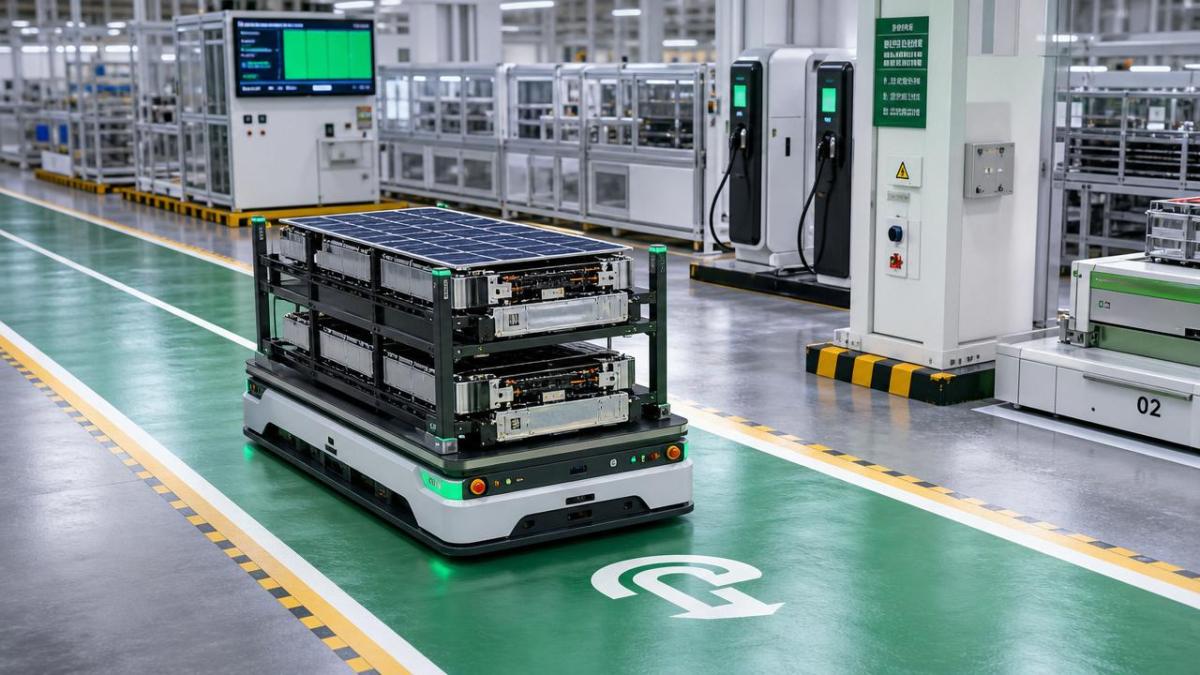
In solar module and battery manufacturing, delays often start during the requirements freeze stage. The customer may request one AMR model, then later add lifting modules, ESD protection, barcode verification, or docking alignment with semi-automatic stations. Each added function looks small in isolation, but together they trigger electrical redesign, software changes, and repeated testing.
Another common issue is data integration. Renewable energy factories increasingly require AMRs to exchange information with MES, WMS, SCADA, or quality traceability systems. A custom AMR AGV supplier may have stable navigation hardware, but if its middleware does not fit the factory’s API logic, deployment slows down. Integration delays are especially common when the plant uses legacy interfaces or highly customized production reporting rules.
Battery-related projects add a further layer of complexity: safety. Transporting cells, modules, or battery packs may require zone restrictions, fire-response logic, anti-collision sensitivity changes, and charging policy validation. These are not merely software settings. They often involve EHS review, simulation, and extra site testing before approval is granted.
Where delays usually appear in wind and outdoor-heavy logistics scenarios
Wind energy operations create a very different delay profile. In this scenario, a custom AMR AGV supplier may need to adapt the machine for oversized components, wide turning radii, mixed indoor-outdoor routes, and rough surfaces. These factors frequently push the project out of standard product boundaries.
Mechanical adaptation is a major risk. If payload distribution, frame rigidity, towing structure, or suspension needs modification, the supplier may need new calculations, prototype verification, and longer sourcing for non-standard parts. Even if the software side is ready, mechanical changes can become the pacing item.
Site mapping is another hidden source of delay. Wind component warehouses and staging areas often change layout as project phases advance. Temporary obstructions, shared traffic lanes, and inconsistent floor conditions can invalidate an early navigation map. The result is repeated route calibration, slower pilot runs, and extra on-site engineering visits.
For project leaders, this means outdoor or heavy-load scenarios should not be scheduled like ordinary indoor factory AMR projects. The supplier may still be qualified, but the implementation rhythm is fundamentally different.
The delay sources that project managers most often underestimate
1. Requirement drift after technical kickoff
One of the biggest problems with any custom AMR AGV supplier relationship is late-stage requirement expansion. Teams may initially define payload, route, and charging needs, but later request fleet scheduling rules, elevator control, cleanroom constraints, or new workstation interfaces. When this happens after design lock, almost every function becomes slower to deliver.
2. Safety certification and compliance alignment
Renewable energy facilities often apply stricter internal rules due to electrical hazards, battery handling, flammable materials, or mixed human-machine zones. If compliance expectations are discussed too late, the custom AMR AGV supplier may need to revise sensor configuration, warning logic, speed limits, or documentation packages.
3. Battery and charging performance under real workloads
The AMR’s own battery system is often tested under ideal conditions, while the actual site includes long routes, ramps, idle waiting, and peak traffic. In renewable energy plants running multiple shifts, the supplier may need additional endurance tests or charging optimization. This is especially important when uptime commitments affect production continuity.
4. Factory digital integration
A project may look mechanically simple but become digitally complex. ERP, MES, WMS, PLCs, access control, and traceability systems all introduce interface risks. A skilled custom AMR AGV supplier should demonstrate integration methodology early, including protocol scope, test cases, and fallback logic.
How to judge supplier fit based on your renewable energy application
Instead of asking only, “Can this supplier build a custom AMR?” project managers should ask, “Can this custom AMR AGV supplier deliver in my operating scenario with acceptable schedule risk?” The answer depends on application fit.
Common misjudgments when selecting a custom AMR AGV supplier
A frequent mistake is assuming that a supplier with many standard AMR case studies will automatically perform well in renewable energy customization. Standard warehouse success does not always translate into battery assembly safety logic, traceability-intensive solar manufacturing, or outdoor wind logistics.
Another misjudgment is treating prototype success as schedule certainty. A demo run may prove route feasibility, but it does not confirm full-cycle charging behavior, multi-shift durability, or long-term software stability. A reliable custom AMR AGV supplier should be able to separate prototype validation from production-ready deployment milestones.
Some buyers also underestimate the customer-side contribution required. Delays do not always originate from the supplier. Incomplete layout data, changing traffic rules, unclear workstation ownership, and slow IT responses can all stretch timelines. The best custom automation projects are co-managed, not outsourced blindly.
Planning actions that reduce delay risk before purchase order release
If your project depends on a custom AMR AGV supplier, the most effective risk control starts before contract signing. For renewable energy applications, consider these actions:
- Freeze the must-have functions separately from later optimization requests.
- Define environmental conditions clearly, including ramps, dust, traffic density, and shift patterns.
- Map every required system interface and assign one owner on both sides.
- Request a milestone plan covering design review, FAT, SAT, and safety approval gates.
- Ask which parts, sensors, batteries, or control modules are non-standard and subject to longer sourcing cycles.
These steps help transform a vague quotation into a realistic implementation roadmap. For project managers, that is often the difference between a controllable delay and a cascading project overrun.
FAQ for project managers evaluating schedule risk
How early should I involve a custom AMR AGV supplier?
Ideally during layout planning or process design, not after the factory flow is fixed. Earlier involvement reduces route conflicts, interface surprises, and redesign loops.
Which delay is usually the hardest to detect at bidding stage?
Software and system integration delays. They often stay hidden behind generic claims until detailed technical workshops begin.
Are custom projects always slower than standard AMR deployments?
Not always, but custom renewable energy scenarios usually involve more validation steps. The real issue is not customization itself, but unmanaged scope and poor scenario fit.
Final takeaway: match the supplier to the scenario, not just the specification
The most common delays with a custom AMR AGV supplier appear where renewable energy projects become truly site-specific: software integration, safety validation, heavy-load adaptation, battery endurance, and layout changes. Different scenarios create different risk patterns, so procurement decisions should be based on application fit, engineering depth, and milestone transparency.
If you are managing a solar, battery, wind, or smart-grid automation project, use your real operating scenario as the primary filter. Define the workflow, validate the interfaces, challenge the assumptions, and ask each custom AMR AGV supplier to show evidence from similar environments. That approach will do more to protect schedule and ROI than any headline lead time promise.
Protocol_Architect
Dr. Thorne is a leading architect in IoT mesh protocols with 15+ years at NexusHome Intelligence. His research specializes in high-availability systems and sub-GHz propagation modeling.
Related Recommendations
- Lina Zhao(Security Analyst)6 axis robot arm wholesale quality issues that show up late
- Lina Zhao(Security Analyst)Custom AMR AGV supplier or standard platform: which ages better
- Lina Zhao(Security Analyst)How to shortlist a heavy duty AGV manufacturer for harsh sites
- Lina Zhao(Security Analyst)The hidden limits of a collaborative robot payload 10kg rating
- Lina Zhao(Security Analyst)Factory AGV navigation systems: lidar, QR, or SLAM?
- Lina Zhao(Security Analyst)Custom robotic end effectors that cut downtime, not just cycle time
- Lina Zhao(Security Analyst)Pick and place robot manufacturer red flags before sample testing
- Lina Zhao(Security Analyst)Why welding robot arm price varies so much between quotes
- Lina Zhao(Security Analyst)Palletizing robot suppliers with short lead times are not always safer
- Lina Zhao(Security Analyst)Autonomous mobile robot China options are widening fast
Analyst