
What IP Camera Hardware Benchmarks Rarely Show
author
Most IP camera hardware benchmarks highlight resolution and frame rates, but they rarely tell you whether a camera will stay reliable in a noisy, energy-sensitive, multi-protocol environment. For renewable-energy sites, smart infrastructure operators, procurement teams, and enterprise decision-makers, the real questions are more practical: Will the camera keep transmitting during network congestion? How accurate is its onboard Vision AI in difficult light? How much power does it really consume over time? And can its security architecture be trusted in unattended deployments? The short answer is this: common benchmark sheets often miss the factors that matter most in the field.
For teams evaluating IP cameras as part of distributed energy, facility automation, or broader IoT infrastructure, the best buying decisions come from looking beyond headline specs and into protocol behavior, edge processing consistency, environmental resilience, power profiles, and hardware-level trust. That is where meaningful IoT hardware benchmarking creates real value.
Why standard IP camera benchmarks often fail real-world buyers
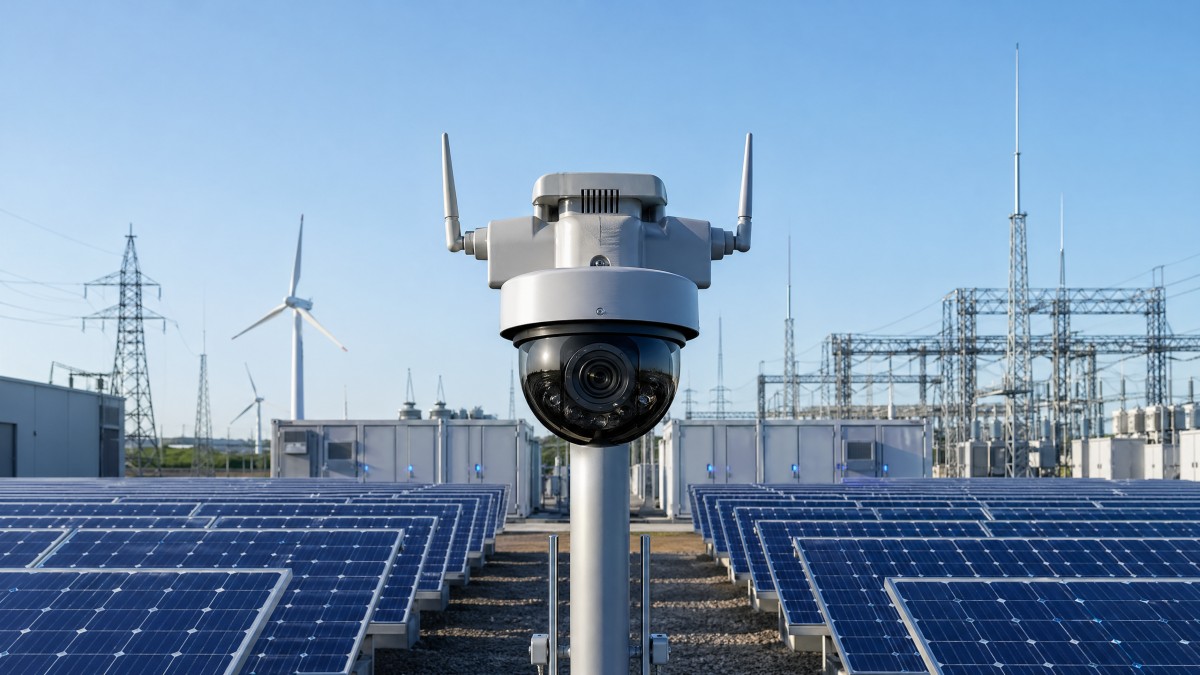
Most product comparisons focus on visible, easy-to-market metrics: megapixels, frame rate, lens angle, storage support, and sometimes advertised AI features. These are not useless, but they are incomplete. In actual deployments, especially across renewable-energy facilities, commercial buildings, substations, battery sites, or mixed smart infrastructure, camera performance depends on far more than image sharpness.
What typical benchmarks rarely show is how a device behaves under protocol contention, unstable backhaul, edge-compute load, thermal stress, or low-power design constraints. A camera that looks excellent in a controlled lab may produce delayed alerts, false detections, overheating issues, or unexplained packet loss once installed in a live environment with gateways, relays, smart controllers, and competing wireless traffic.
This gap matters to different readers in different ways:
- Researchers and evaluators want comparable technical data they can trust.
- Operators need stable performance, low maintenance, and predictable troubleshooting.
- Procurement teams need a way to separate engineering substance from brochure claims.
- Business leaders care about operational risk, lifecycle cost, and whether deployments scale safely.
What buyers should examine instead of relying on resolution alone
If your goal is to judge whether an IP camera is fit for real deployment, several benchmark areas deserve more attention than standard spec sheets usually provide.
1. Protocol latency and transmission stability
For connected environments, image quality is only part of the story. The camera must also move data reliably through the network stack. That includes latency from image capture to event delivery, behavior under packet loss, recovery after disconnection, and performance when multiple devices share bandwidth.
In smart infrastructure and renewable-energy environments, cameras may coexist with sensors, meters, gateways, HVAC controllers, access systems, and edge nodes. In those conditions, network congestion and protocol interaction can materially affect alert timing and recording continuity. A benchmark should ideally show:
- End-to-end event latency under normal and congested network conditions
- Packet retry behavior and stream recovery after interference
- Performance across Ethernet, Wi-Fi, or bridge-connected architectures
- Compatibility behavior when integrated into broader IoT stacks
This is particularly relevant when cameras are used not only for security, but also for remote asset visibility, perimeter monitoring, or operational verification at distributed energy sites.
2. Vision AI accuracy under difficult conditions
Many vendors advertise smart detection, people counting, intrusion alarms, vehicle recognition, or face-related analytics. But the benchmark question is not whether the function exists. It is how accurately it works when lighting is poor, subjects are partially obscured, the angle is suboptimal, or motion is irregular.
Useful smart home hardware testing and IP camera benchmarking should measure false positives, false negatives, detection distance, small-object recognition limits, and inference consistency at the edge. This matters because weak Vision AI can create two expensive outcomes: operators stop trusting alerts, or teams spend time reviewing noise instead of real events.
In energy and infrastructure scenarios, examples include:
- Misclassifying authorized technicians as intruders
- Failing to detect perimeter movement at dawn or dusk
- Generating repeated false alarms from shadows, glare, or weather
- Dropping inference quality when multiple objects enter a frame
A benchmark that does not quantify these conditions is usually not sufficient for serious sourcing decisions.
3. Power behavior over time, not just nominal wattage
Because this article sits in the renewable-energy context, power behavior deserves much more attention than it usually gets. Many IP cameras are evaluated using headline consumption numbers, but field performance depends on operating state transitions, IR illumination cycles, onboard AI processing load, heating or cooling design, and standby characteristics.
For solar-linked, off-grid, hybrid, or backup-sensitive installations, a camera’s actual energy profile affects system sizing, battery runtime, and maintenance planning. The better benchmark questions are:
- What is the idle draw versus active inference draw?
- How much does nighttime operation increase consumption?
- Does power use spike during recording, streaming, or firmware events?
- How stable is operation when voltage fluctuates within supported tolerance?
Even in grid-connected buildings, cumulative camera power consumption influences operating expense and sustainability metrics. For organizations pursuing energy efficiency targets, these details are not minor—they are part of procurement logic.
4. Thermal reliability and environmental tolerance
Benchmarks often list an operating temperature range, but that does not tell you how image sensors, processors, storage, and radios behave after long exposure to heat, dust, humidity, or enclosure stress. Real-world reliability comes from sustained testing, not label claims.
A camera installed near rooftop solar assets, parking structures, inverter rooms, industrial enclosures, or exposed boundaries may face fluctuating temperatures and harsh light conditions. What matters is whether the device throttles, drops frames, slows inference, or shortens component lifespan under those stresses.
For operators, thermal weakness usually appears later as intermittent faults that are expensive to diagnose.
5. Hardware root of trust and update integrity
One of the most overlooked areas in IP camera hardware benchmarking is security at the hardware level. Enterprise buyers often ask about encryption, but fewer benchmark reports examine secure boot, trusted execution, key storage, firmware signing, tamper resistance, or update-chain integrity.
For unattended infrastructure deployments, this is critical. If a camera can be compromised physically or through weak firmware architecture, it becomes more than a device problem—it becomes a network and operational risk. In regulated or high-value environments, a weak hardware trust model can undermine the entire surveillance layer.
Security claims should therefore be tested, not accepted at face value. A serious benchmark should ask whether the device can verify firmware authenticity, protect credentials locally, and recover safely from interrupted updates.
How these hidden benchmark factors affect renewable-energy and smart infrastructure projects
In residential applications, a mediocre camera might be an inconvenience. In renewable-energy and commercial infrastructure projects, it can become a workflow issue, a compliance issue, or a cost issue.
Consider several practical examples:
- Solar farms and distributed energy assets: delayed or unstable video can slow incident verification and remote inspection.
- Battery energy storage systems: reliable edge alerts matter when fast situational awareness is needed.
- Commercial buildings: poor protocol handling can create integration friction with access control, building management, and smart security platforms.
- Mixed-vendor IoT environments: weak interoperability increases troubleshooting burden and vendor lock-in.
For decision-makers, the consequence is simple: cameras chosen on superficial benchmark data often create hidden operating costs later. These may show up as higher truck rolls, more manual review, replacement cycles, integration delays, or increased cybersecurity exposure.
How procurement teams can evaluate IP cameras more intelligently
For sourcing teams and enterprise buyers, the goal is not just to collect specifications. It is to reduce uncertainty. A more useful evaluation framework includes the following questions:
- What benchmark data was measured independently versus claimed by the vendor?
- Were latency, AI accuracy, and power use tested under realistic load conditions?
- What happens when the camera is integrated with broader gateways, NVRs, or smart platforms?
- Is the hardware architecture secure enough for unattended deployment?
- How does the device behave during firmware updates, reboots, or unstable connectivity?
- What evidence exists for long-term reliability rather than first-day performance?
This is where a data-driven approach such as IoT hardware benchmarking becomes especially valuable. It helps buyers compare products based on engineering outcomes instead of marketing phrases. In fragmented ecosystems, that transparency is often the difference between a smooth rollout and a high-friction deployment.
What a useful benchmark report should include
If you are reading or commissioning IP camera benchmark reports, the most useful ones should include measurable, decision-oriented data rather than generic product descriptions. At minimum, a strong report should provide:
- Latency and packet behavior under variable network conditions
- Vision AI camera accuracy metrics across lighting and motion scenarios
- Power consumption by operating mode and time of day
- Thermal and environmental stress observations
- Security architecture validation, including firmware trust mechanisms
- Integration notes for multi-device or mixed-protocol deployments
- Clear pass/fail thresholds or comparison criteria
These are the benchmark layers that actually help researchers, users, procurement specialists, and executives make better judgments.
Final takeaway: the best IP camera benchmark is the one closest to field reality
What IP camera hardware benchmarks rarely show is often exactly what matters most after purchase. Resolution, bitrate, and frame rate may help narrow a shortlist, but they do not reliably predict operational success. For renewable-energy and smart infrastructure deployments, the more important signals are protocol stability, Vision AI accuracy, real power behavior, thermal resilience, and hardware root of trust.
For teams that need dependable surveillance as part of larger connected systems, the right approach is to prioritize evidence over claims. The closer a benchmark comes to real environmental, network, and lifecycle conditions, the more useful it becomes. That is how buyers move from attractive specifications to informed, lower-risk decisions.
Protocol_Architect
Dr. Thorne is a leading architect in IoT mesh protocols with 15+ years at NexusHome Intelligence. His research specializes in high-availability systems and sub-GHz propagation modeling.
Related Recommendations
- Lina Zhao(Security Analyst)What IP Camera Hardware Benchmarks Rarely Show
- Lina Zhao(Security Analyst)UAE Launches AI-Ready Hardware Certification for Vision AI Cameras
- Lina Zhao(Security Analyst)UAE Launches AI-Ready Certification for Vision AI Cameras
- Lina Zhao(Security Analyst)6th National Auto Standardization TC Launches Vision AI & HMI Standards
- Lina Zhao(Security Analyst)Vision AI camera accuracy looks different outside lab lighting
- Lina Zhao(Security Analyst)IP camera hardware benchmarks often overlook night scene tradeoffs
- Lina Zhao(Security Analyst)How Accurate Is Vision AI Camera Detection Today
- Lina Zhao(Security Analyst)Vision AI Camera Accuracy: What Buyers Should Verify
- Lina Zhao(Security Analyst)IP Camera Hardware Benchmarks That Reveal Real Gaps
- Lina Zhao(Security Analyst)UL Launches Adversarial Robustness Testing for Vision AI Cameras
Analyst