
Palletizing robot suppliers with fast delivery may hide integration risks
author
Fast-shipping palletizing robot suppliers can look attractive when renewable energy projects face aggressive timelines, but delivery speed alone rarely guarantees deployment success. For project managers and engineering leads, the real risk often appears later—in software compatibility, site integration, safety validation, and lifecycle support. This article examines why procurement decisions should balance lead time with measurable technical due diligence.
Why fast delivery has become a louder signal in renewable energy projects
Across the renewable energy sector, project schedules are getting tighter while automation expectations are rising. Battery pack assembly, inverter handling, solar component packaging, and warehouse dispatch operations increasingly depend on robotic material flow. In this environment, palletizing robot suppliers that promise short lead times naturally gain attention. Delayed equipment can push back commissioning, disrupt EPC milestones, and trigger contract penalties. For a project manager, a supplier that can ship quickly may look like a practical answer to a very real scheduling problem.
Yet the market has changed in a more complex way than “faster is better.” Renewable energy facilities are no longer buying isolated machines. They are building connected production and logistics environments that must align with MES layers, SCADA visibility, energy monitoring targets, cybersecurity requirements, and worker safety rules. As a result, the value of palletizing robot suppliers is shifting from hardware availability alone to integration readiness. This is the key trend: delivery speed has become more visible, but integration quality has become more decisive.
That shift matters because many deployment failures do not happen at purchase order stage. They surface during FAT and SAT, during PLC handshaking, during recipe changeover, or after the line starts running under variable loads. A robot may arrive on time and still delay the project if gripper logic conflicts with conveyor timing, if safety zoning forces a redesign, or if software interfaces are not validated for the site’s control architecture. For teams evaluating palletizing robot suppliers, this is where hidden risk lives.
The market signal is changing from “machine delivery” to “system deployment certainty”
One of the clearest signals in recent industrial procurement is that buyers are asking different questions than they did a few years ago. Instead of focusing only on payload, reach, and shipping date, more project leaders now want evidence of application libraries, interface documentation, remote diagnostics, spare parts strategy, and compliance support. This is especially true in renewable energy manufacturing and logistics, where throughput variations, fragile loads, and traceability demands are common.
The rise of digital operations is one reason. Another is labor and safety pressure. A third is the broader expectation that automation assets should contribute not only to output, but also to energy efficiency and resilience. Palletizing robot suppliers are therefore being judged less as equipment vendors and more as long-term integration partners. Fast delivery remains valuable, but it now functions as only one signal inside a larger risk model.
For engineering-led organizations, this trend changes supplier evaluation methods. A supplier that can prove repeatable integration performance may create more value than one that simply ships first. In many cases, the total delay caused by poor integration is greater than the delay avoided by rapid shipment.
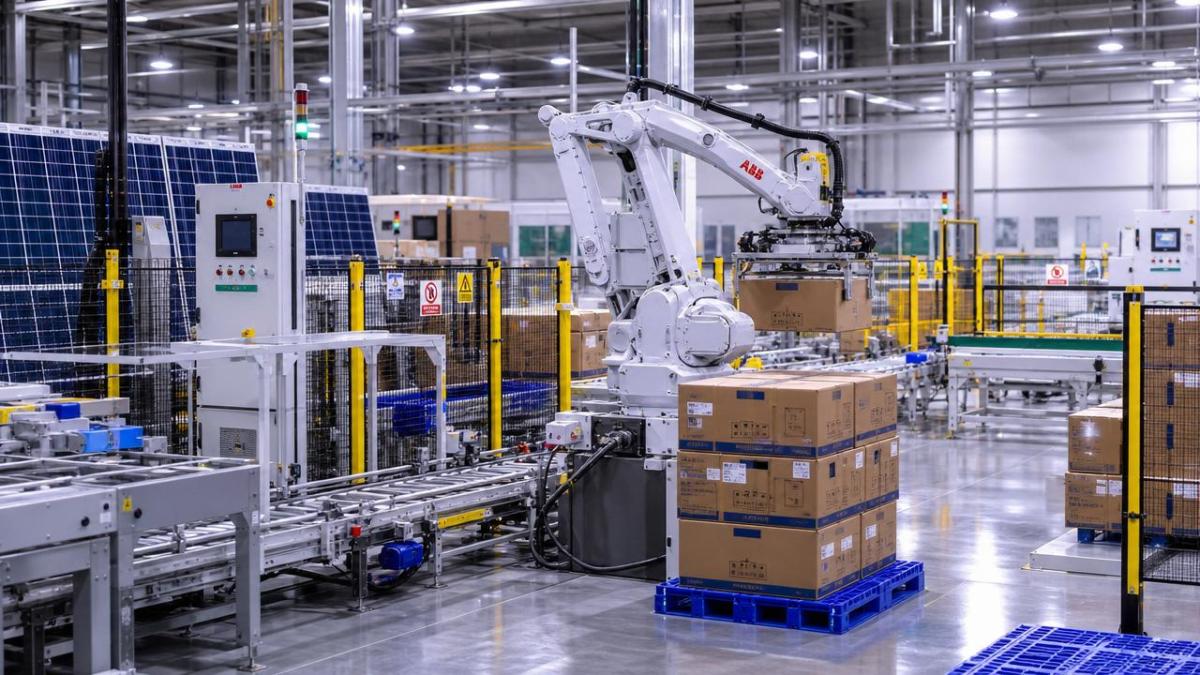
Why some palletizing robot suppliers hide risk behind short lead times
There are several reasons why fast-shipping palletizing robot suppliers may still create downstream problems. First, short lead times sometimes reflect standard hardware availability, not application readiness. A robot arm may be in stock, but the actual project also depends on end-of-arm tooling, vision setup, pallet pattern software, line-side guarding, and integration with upstream and downstream equipment. If those elements are not equally mature, the delivery promise is incomplete.
Second, some suppliers compress engineering review to win urgent orders. That can leave unresolved issues around load stability, carton variability, battery module handling sensitivity, or environmental conditions such as dust, temperature, and vibration. In renewable energy settings, these factors matter. A warehouse serving lithium battery products has different handling and safety implications than a generic consumer goods facility. A solar module packaging line may impose stricter care requirements than standard pallet loads. Application context cannot be treated as a minor detail.
Third, integration risk is increasingly software-driven. Palletizing robot suppliers may offer attractive mechanics but weak support for PLC communication, recipe management, error recovery logic, or data exchange into plant systems. If the robot cell cannot report alarms cleanly, synchronize with conveyor states, or support traceability expectations, then the site team inherits hidden engineering debt. The project appears fast at procurement stage but slow in commissioning reality.
Fourth, service infrastructure is often overlooked. Renewable energy manufacturers and logistics operators frequently run time-sensitive operations where downtime is expensive. If spare parts are unclear, remote support is limited, or local technicians are unavailable, then initial delivery speed becomes irrelevant. The trend toward 24/7 uptime expectations makes after-sales capability a strategic selection factor, not a secondary commercial issue.
What is driving this trend in the renewable energy industry
Several forces are pushing buyers to look beyond headline delivery promises from palletizing robot suppliers. The first is capacity expansion. Renewable energy equipment manufacturers are scaling plants faster, often under investor pressure and policy-supported demand. When facilities are launched quickly, the tolerance for commissioning surprises drops sharply.
The second driver is product complexity. Battery systems, power electronics, and solar-related assemblies are becoming more diverse in format, packaging, and traceability requirements. This makes robotic end-of-line handling less repetitive than before. Suppliers must support more changeovers, more data exchange, and more nuanced material handling logic.
The third driver is digital accountability. Management teams increasingly want visibility into OEE, fault history, energy use, and maintenance planning. A robot cell that cannot produce structured operational data is harder to justify, especially in organizations influenced by smart factory and decarbonization targets. This is where the broader NHI perspective is useful: engineering truth is found in measurable performance, not in polished marketing claims.
The fourth driver is compliance pressure. Safety regulations, cybersecurity expectations, and internal governance standards are tightening. Fast-moving projects still need validated risk assessments, functional safety alignment, and documented integration behavior. As a result, the market increasingly rewards palletizing robot suppliers that can support formal engineering review instead of rushing past it.
How the impact differs for project managers, engineering leads, and operations teams
The same supplier decision affects different stakeholders in different ways. For project managers, the main risk is milestone disruption. A supplier that ships quickly but struggles in commissioning can consume contingency time, inflate coordination effort, and create difficult conversations with investors or plant leadership. Lead time looked protected, but schedule certainty was not.
For engineering leads, the main risk is technical mismatch. They must absorb unresolved questions around control architecture, line balancing, sensor integration, and safety logic. When palletizing robot suppliers provide incomplete documentation or weak technical support, internal engineering teams become the integration buffer. That often increases hidden labor cost and stretches scarce technical resources.
For operations teams, the risk appears after handover. The robot may run, but not reliably enough for a high-volume renewable energy facility. Frequent resets, poor exception handling, inconsistent pallet quality, or difficult maintenance access can reduce output and frustrate operators. In this phase, the original delivery promise offers no operational relief.
The signals that deserve closer attention before selecting palletizing robot suppliers
In a trend environment shaped by compressed schedules and higher integration expectations, buyers need stronger filters. One useful filter is evidence of application repeatability. Has the supplier deployed similar systems for battery plants, inverter packaging, or high-throughput industrial warehousing? Similar payload is not enough; similarity in process logic matters.
Another signal is documentation maturity. Serious palletizing robot suppliers should be able to discuss communication maps, safety concepts, layout constraints, maintenance intervals, and spare parts structure early in the process. Vague language about “easy integration” is not a technical answer. Teams should also examine how the supplier handles abnormal scenarios such as mixed carton quality, interrupted conveyors, pallet skew, or line restart after a stop.
A third signal is lifecycle support depth. This includes local or regional service coverage, remote access policy, response commitments, software update practice, and training quality. In renewable energy production environments, stable support capability often distinguishes scalable partners from transactional vendors.
A better decision framework for urgent projects
Urgent projects do not need slower procurement. They need smarter sequencing. The most effective approach is to separate hardware speed from integration certainty and evaluate both in parallel. Project teams can ask palletizing robot suppliers for a two-layer commitment: confirmed physical lead time, and confirmed application readiness with defined assumptions. This simple distinction prevents many misunderstandings.
It is also wise to require an integration checklist before final award. That checklist should cover PLC protocol compatibility, network architecture assumptions, safety interface scope, gripper validation, pallet pattern flexibility, upstream/downstream synchronization, environmental requirements, and post-startup service arrangements. In practice, this converts a sales promise into an engineering review artifact.
For renewable energy companies pursuing expansion, another useful tactic is pilot standardization. Rather than assessing each supplier from zero, teams can define a preferred control philosophy, data model, and service expectation baseline. Palletizing robot suppliers that align with that baseline move faster through technical approval. This reduces future procurement friction without sacrificing quality.
What to do next if your timeline is aggressive
If your project schedule is under pressure, do not reject fast suppliers automatically. Instead, test whether their speed is supported by engineering substance. Ask for proof of comparable deployments, documented interface scope, safety concept clarity, commissioning responsibility boundaries, and support response structure. In many cases, the best palletizing robot suppliers are not the ones that simply ship fastest, but the ones that reduce the most uncertainty between factory floor reality and procurement expectations.
For project managers and engineering leaders in renewable energy, the strategic question is no longer just “Who can deliver first?” It is “Who can help us reach stable production with the least hidden integration risk?” That question aligns better with current market conditions, digital manufacturing trends, and the growing demand for measurable operational resilience.
If your team wants to judge how these trends affect a current automation project, focus on five checkpoints: true application readiness, protocol and software compatibility, safety validation path, local service depth, and fault recovery performance after startup. These are the areas where procurement speed turns either into deployment confidence or into expensive delay. In the coming years, the most credible palletizing robot suppliers will be those that can prove both responsiveness and integration discipline.
Protocol_Architect
Dr. Thorne is a leading architect in IoT mesh protocols with 15+ years at NexusHome Intelligence. His research specializes in high-availability systems and sub-GHz propagation modeling.
Related Recommendations
- Lina Zhao(Security Analyst)6 axis robot arm wholesale deals that look cheap but cost more later
- Lina Zhao(Security Analyst)Collaborative robot payload 10kg: where real-world limits appear first
- Lina Zhao(Security Analyst)When a pick and place robot manufacturer is not ready for scale
- Lina Zhao(Security Analyst)A 15kg payload cobot factory setup can stall for one simple reason
- Lina Zhao(Security Analyst)Palletizing robot suppliers with fast delivery may hide integration risks
- Lina Zhao(Security Analyst)Industrial cobot manufacturer China options: what affects long-term support
- Lina Zhao(Security Analyst)6 axis robot arm wholesale orders: when volume discounts mislead
- Lina Zhao(Security Analyst)Is a collaborative robot payload 10kg enough for mixed-line work?
- Lina Zhao(Security Analyst)Pick and place robot manufacturer shortlist: 7 details that matter
- Lina Zhao(Security Analyst)What changes when a 15kg payload cobot enters a small factory
Analyst